Executive Overview
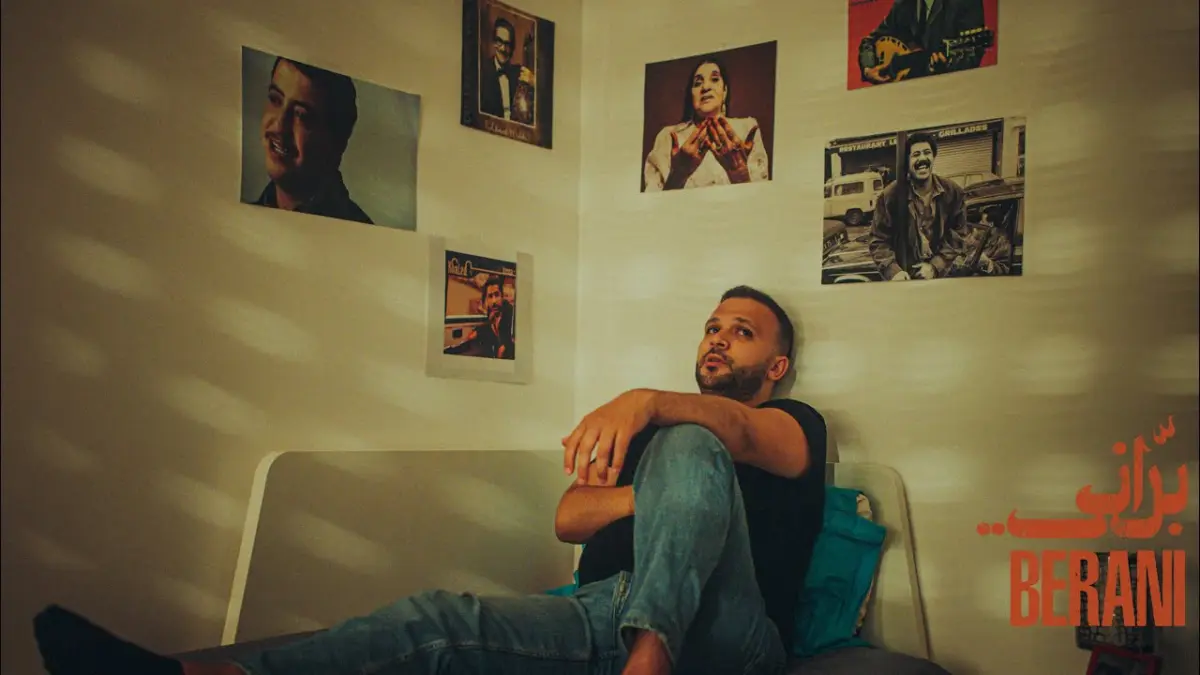
In an era where musical borders are increasingly porous, few artists manage to forge a synthesis as visceral and geographically resonant as violinist and vocalist Rabie Houti. With the release of his latest single, "Berani," Houti has not only signaled a bold new artistic direction but has also cemented his position as a vital torchbearer for the sono mondiale movement. Translated from North African vernacular, "Berani" means "the exile"—a deeply evocative title that mirrors the physical and emotional trajectory of its creator. Leaving behind his native Oran, Algeria—the historic crucible of raï music—Houti relocated to Montpellier, France, around 2014. This geographic displacement serves as the creative epicenter of his upcoming album, of which "Berani" is the second major preview, following the earlier release of the single "Rwahou."
At its core, "Berani" is a sonic exploration of dislocation, freedom, and the relentless pursuit of a better future. Musically, the track represents a significant evolution for the Rabie Houti Band, an ensemble born out of Montpellier’s vibrant, cross-cultural artistic ecosystem. While Houti’s lead instrument—the Algerian violin—remains firmly anchored in the ornate, rigorous traditions of the Arab-Andalusian repertoire, it is thrust into an invigorating dialogue with Western instrumentation. The traditional strains of the Maghreb are aggressively pitched against the grit of electric blues guitars, driving drums, foundational basslines, and atmospheric synthesizers.
Industry analysts and world music critics have been quick to note the lineage to which Houti belongs. He is a natural heir to the sono mondiale tradition, a French world-music phenomenon most famously championed by the late, great Rachid Taha, the pioneering Algerian-French artist who successfully fused raï and chaabi with high-energy punk and rock. However, Houti is not merely replicating the past; he is updating the blueprint for the 2020s. The forthcoming EP, heralded by "Berani," leans markedly harder into rock sensibilities than his previous recorded works, creating a trans-Mediterranean bridge that connects the shores of North Africa with the urban landscapes of contemporary Europe.
Detailed Chronology: From the Streets of Oran to the Stages of Montpellier
To truly understand the weight and texture of "Berani," one must retrace the geographical and artistic footsteps of Rabie Houti. His story begins in Oran, Algeria’s vibrant coastal metropolis. Oran is far more than a port city; it is the legendary birthplace of raï—a genre of folk music that grew out of the struggles of working-class youth, later transforming into a global phenomenon of rebellion, social commentary, and hedonistic dance rhythms. Growing up immersed in this rich sonic tapestry, Houti developed an intimate, foundational understanding of North African musical structures, eventually mastering the violin and absorbing the intricate, sweeping complexities of the Arab-Andalusian classical canon.
Yet, artistic ambition often demands radical change. Around 2014, Houti made the monumental decision to leave Oran, crossing the Mediterranean to settle in Montpellier, France. This transition from the familiar warmth and cultural weight of North Africa to the bureaucratic and artistic landscapes of southern France was fraught with the psychological complexities familiar to many expatriates and exiles. This transition would ultimately become the crucible for his musical identity.
In Montpellier, a city boasting a diverse and dynamic underground arts scene, Houti found fertile ground for collaboration. Rather than retreating into an insular ethnic enclave, he sought out musicians from disparate stylistic backgrounds, founding the Rabie Houti Band. This period of incubation involved relentless live performances across French venues, slowly building a reputation for an act that defied easy categorization.
The chronology of Houti’s international breakout gained serious momentum with the release of his earlier single, "Rwahou," which introduced audiences to his unique brand of intercultural fusion. However, it is the rollout of his current project—highlighted by the release of the music video and streaming launch of "Berani"—that marks a maturation of his sound. By deliberately steering his upcoming EP into rockier, heavier sonic territories, Houti has transitioned from an underground curiosity into a formidable, driving force in contemporary European world music.
Supporting Context & Metrics: The Mechanics of Cross-Cultural Fusion
The release of "Berani" arrives at a fascinating juncture for global music consumption. Streaming data over the past half-decade demonstrates an unprecedented appetite for non-Western music performed in native languages, provided it is packaged with innovative production techniques. Houti’s approach—melding the microtonal intricacies of Arab-Andalusian violin playing with Western rock arrangements—taps directly into this growing demographic demand.
The Anatomy of the Sound
To appreciate what makes the Rabie Houti Band distinctive, one must analyze the sonic architecture of "Berani":
- The Lead Violin: Houti’s primary instrument is an Algerian violin, which differs in subtle construction and tuning nuances from its Western classical counterpart. It carries the emotional weight of malouf and Arab-Andalusian suites, capable of sliding through quarter-tones that evoke both immense melancholy and celebratory ecstasy.
- The Rock Foundation: Opposing the acoustic warmth of the violin is a hard-edged Western rhythm section. The inclusion of electric blues guitars introduces a raw, rebellious energy that echoes the ethos of early rock-and-roll and delta blues, creating an unexpected structural harmony with the rebellious roots of raï.
- Electronic Textures: The integration of synthesizers provides a modern, cinematic breadth. Rather than sounding dated, the electronic pads and bass interventions anchor the acoustic traditions firmly in the 21st century, making the track equally at home in an underground European club or a specialized world-music festival.
The Legacy of Sono Mondiale
Houti’s placement within the sono mondiale lineage is both a critical classification and a cultural responsibility. Coined in France, sono mondiale describes a movement of transnational artists who refuse to let musical traditions remain static artifacts in a museum. Rachid Taha famously proved that Arabic vocals could soar effortlessly over punk guitar riffs and danceable grooves. Houti inherits this mantle, operating as a cultural ambassador who demonstrates that integration does not require assimilation; rather, it thrives on creative friction, mutual respect, and sonic dialogue.
Official Statements and Artistic Intentions
In promotional materials and interviews surrounding the launch of "Berani," Houti and his team have been articulate about the deeper meanings behind the project. The song is designed to be both deeply personal and universally accessible.
"‘Berani’ means ‘the exile,’" Houti explains, summarizing the core philosophy of the track. "It follows someone who leaves home in search of freedom and a better future."
This statement transcends autobiography. While the lyrics and title reflect Houti’s physical relocation from Oran to Montpellier, the concept of the "exile" speaks to millions of individuals navigating displacement in the modern world. It addresses the emotional toll of leaving behind family, culture, and geographic certainty to gamble on an uncertain horizon abroad.
Furthermore, the decision to push the upcoming EP into rockier territory was a deliberate artistic choice rather than a commercial pivot. According to production notes accompanying the release, the band sought to capture the urgency and turbulence of the migrant experience. The abrasive tones of the electric guitar and the driving pulse of the drums are intended to mirror the obstacles, shocks, and adrenaline of starting over in a foreign land, while the soaring melodies of the violin preserve the unbreakable thread of cultural memory and identity.
Future Outlook: The Road Ahead for Rabie Houti
As "Berani" gains traction across major streaming platforms—including Apple Music and YouTube, where the official music video continues to draw critical acclaim—all eyes are turning toward the horizon for the Rabie Houti Band.
The momentum generated by the consecutive releases of "Rwahou" and "Berani" sets the stage for a landmark full-length album release. Industry observers anticipate that the forthcoming record will solidify Houti’s reputation not merely as a talented instrumentalist, but as a visionary composer capable of steering the conversation within European and global music circuits.
Key Milestones to Watch:
- EP and Album Rollout: Following the initial single releases, fans and critics await the complete tracklist and release date of the full album, which promises to expand further on the rock-infused Algerian violin sound.
- European Touring Circuit: With a sound tailored for dynamic live performance, the Rabie Houti Band is expected to scale up its touring operations, bringing its high-energy synthesis of Arab-Andalusian music and electric blues to major international festivals.
- Cross-Genre Collaborations: Given Montpellier’s multicultural music scene and Houti’s open-ended collaborative ethos, future releases may feature unexpected guest features from European rock artists, electronic producers, and North African traditionalists.
In conclusion, "Berani" is far more than a sophomore single; it is a defining artistic statement. By channeling the pain of exile and the hope of freedom through an explosive marriage of Algerian violin traditions and Western rock, Rabie Houti has crafted a masterpiece of modern sono mondiale. As he continues to bridge the gap between Oran and Montpellier, Houti proves that music remains the most powerful vehicle for human empathy, cultural survival, and reinvention.