Executive Overview
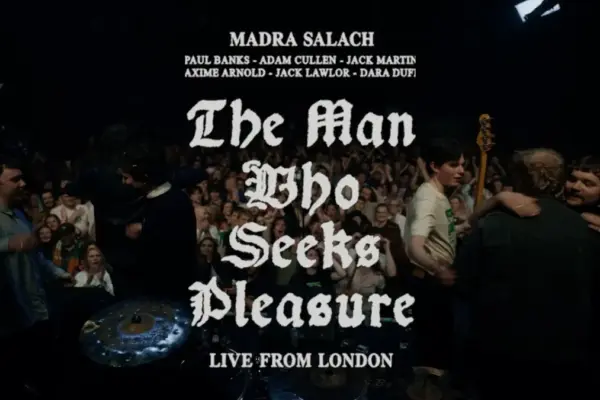
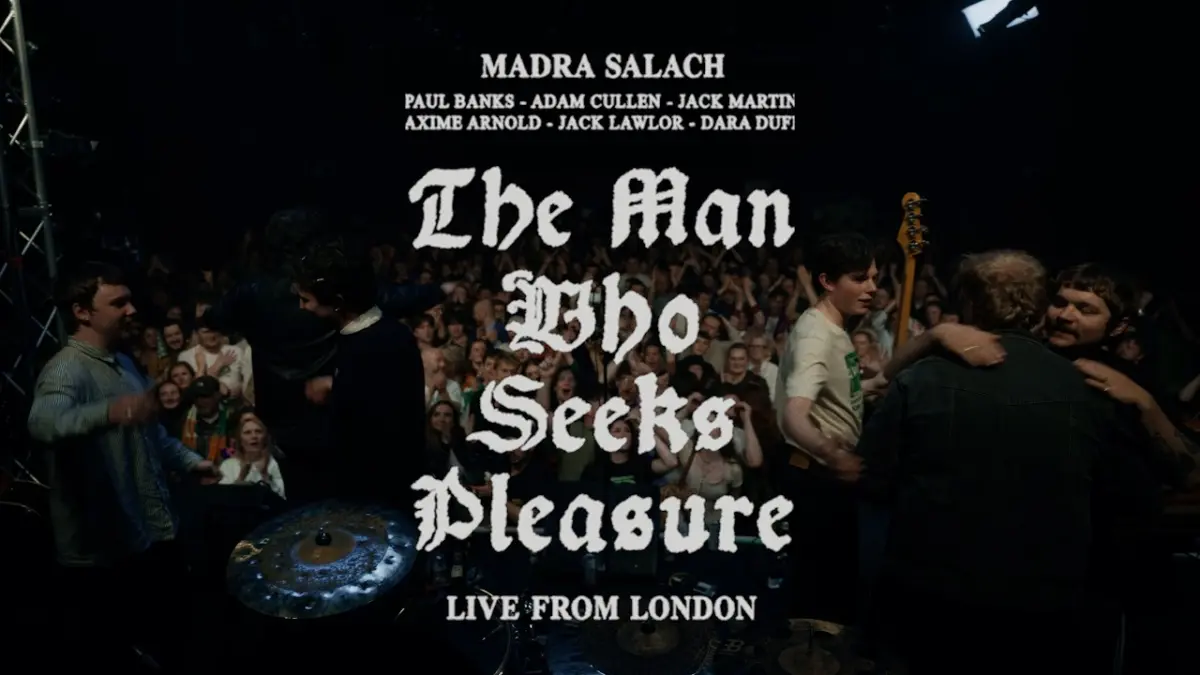
In the fast-moving landscape of contemporary alternative rock, few bands have ascended from nascent regional acclaim to international label backing with the kinetic speed of Dublin’s Madra Salach. Marking a definitive milestone in their young career, the group recently unleashed "The Man Who Seeks Pleasure (Live from London)" via Island Records. Recorded during the closing night of their debut headline tour at The Dome in Tufnell Park, London, this live rendition captures a pivotal moment of artistic crystallization.
Originally featured on their widely celebrated debut EP, It’s a Hell of an Age—which dropped in January and surged to number three on the Irish Albums Chart while cracking the UK’s Official Independent Albums Chart top ten—"The Man Who Seeks Pleasure" is a masterclass in tension, release, and raw instrumentation. Where the studio version offered a stark, piercing glimpse into songwriter Paul Banks’ lyrical exploration of indulgence and consequence, the London recording explodes outward. Bolstered by the intricate interplay of guitarists Jack Martin and Adam Cullen, the textural droning of Maxime Arnold’s harmonium, and the unrelenting rhythmic engine of drummer Dara Duffy and bassist Jack Lawlor, the track transforms into a towering sonic monolith.
This release is far more than a mere stop-gap or a cynical live-album cash-in. It serves as an authoritative statement of intent from a band that has spent the past year capturing the imagination of the British and Irish music press. Following critical darling status, landmark sessions for BBC 6 Music’s Steve Lamacq and Radio 1’s New Music Fix, and a blockbuster summer festival season spanning Electric Picnic and Green Man, Madra Salach are hurtling toward an extensive autumn headline tour across the UK and Ireland. This report delves deep into the anatomy of their breakout year, the literary and sonic underpinnings of their breakout single, the mechanics of their live translation, and what lies ahead for one of alternative music’s most exciting new exports.
Detailed Chronology: From Studio Conception to Triumphant Live Capture
The Genesis of a Modern Anthem
The trajectory of "The Man Who Seeks Pleasure" began long before the bright lights of Tufnell Park’s The Dome illuminated a sold-out London crowd. Conceived by frontman and lyricist Paul Banks, the song was built from the ground up as an interrogation of human appetite. Lyrically, it sets its stall out early, painting a vivid, almost tactile portrait of sensory gratification immediately undercut by the shadow of its own aftermath. The opening line—"lick the sugar off the cane"—acts as a sensory portal, inviting the listener into a world where pleasure and pain are not opposites, but rather two sides of the same psychological coin.
When the band entered the studio to record It’s a Hell of an Age, the production philosophy leaned toward atmospheric restraint. The studio cut of the track favored stark production choices, allowing Banks’ idiosyncratic vocal delivery and the skeletal framework of the instrumentation to breathe. Released in January via Canvas Music, the EP immediately caught the cultural zeitgeist. Propelled by word-of-mouth acclaim and passionate championing by alternative radio programmers, the record outperformed commercial expectations, securing a formidable number three spot on the official Irish charts and punching well above its weight class in the UK.
The Road to The Dome
Buoyed by the unexpected yet thoroughly deserved commercial and critical triumph of their debut EP, Madra Salach embarked on their first-ever headline tour. For an up-and-coming band navigating the post-Brexit touring landscape, the stakes were high. Yet, night after night, venues across the UK and Ireland filled to capacity.
The journey culminated on a brisk March evening at The Dome in Tufnell Park, London. By the final date of a grueling tour, many acts find themselves physically depleted and creatively hollowed out. Madra Salach, however, seemed galvanised by the communal electricity of the room. The band viewed the final show not merely as a tour-closing celebration, but as an opportunity to capture lightning in a bottle. They consciously sought to document a version of "The Man Who Seeks Pleasure" that broke free from the structural constraints of the studio recording—a visceral, full-band arrangement designed to showcase the muscularity they had developed on the road.
Released on June 26 through Island Records, the live single bridges the gap between their independent origins and their major-label future, cementing their reputation as an essential live act whose stagecraft vastly exceeds their years.
Supporting Context & Metrics: Charting the Ascent
To fully grasp the significance of Madra Salach’s recent output, one must examine the quantitative metrics and cultural gravity underpinning their success. In an era where streaming algorithms often dictate the lifecycle of new music, Madra Salach has achieved traction through traditional, arduous means: relentless touring, fiercely loyal localized fanbases, and critical validation from tastemaker institutions.
Chart Performance and Industry Standing
- Irish Albums Chart: Peaked at Number 3, placing the band shoulder-to-shoulder with established international heavyweights and proving their commercial viability on home turf.
- UK Official Independent Albums Chart: Broke into the Top 10, signaling immediate cross-border resonance in one of the world’s most fiercely competitive music markets.
- Radio Support: Secured coveted live session slots with legendary BBC broadcaster Steve Lamacq on BBC 6 Music, as well as essential playlisting and airplay on Radio 1’s New Music Fix.
The Sonic Architecture: Breaking Down the London Arrangement
The sonic evolution between the studio version of "The Man Who Seeks Pleasure" and the live recording at The Dome is a testament to the band’s dynamic range. Music journalist analysis often reduces live tracks to louder, faster reproductions of studio cuts, but Madra Salach’s approach is far more nuanced.
- Paul Banks (Vocals/Songwriting): Banks delivers a vocal performance that balances theatrical vulnerability with simmering menace. His lyrics—exploring the corrosive nature of unchecked desire—are articulated with a precision that cuts cleanly through the heaviest walls of sound.
- Jack Martin & Adam Cullen (Guitars & Mandolin): On the live recording, the interplay between Martin’s electric guitar lines and Cullen’s acoustic mandolin creates a dizzying texture. The mandolin cuts through the mid-range with a folk-inflected urgency, while the electric guitars provide a heavy, post-punk counter-weight.
- Maxime Arnold (Harmonium): Arnold’s deployment of the harmonium is arguably the secret weapon of the band’s live sound. Rather than relying solely on traditional synth pads or ambient backing tracks, the organic drone of the harmonium breathes beneath the mix, lending the song a brooding, almost ecclesiastical weight.
- Dara Duffy & Jack Lawlor (Drums & Bass): The rhythm section drives the live track with a ferocity missing from the more introspective EP cut. Lawlor’s basslines lock in with Duffy’s bruising percussion, transforming the bridge into an unstoppable rhythmic tidal wave that forces the listener to physically engage with the music.
Official Statements & Artistic Vision
Speaking candidly about the decision to immortalize their London headline show, frontman Paul Banks emphasized the desire to present the song in its ultimate, unfettered form.
"This recording comes directly from the last show on our debut headline tour," Banks explains. "When we looked back at how the song had evolved on the road, we realized it had taken on a completely different life. We wanted to release a version built around the full arrangement—the muscle and sweat of the live room—rather than relying solely on the more minimal take we captured in the studio."
This sentiment reflects a broader artistic philosophy held by the collective. While modern pop and indie production often fetishize pristine, sterile perfectionism, Madra Salach embraces the grit, imperfections, and transcendent energy of collective performance. The transition to Island Records has not diluted their raw edge; rather, it has provided them with a broader canvas upon which to project their dark, poetic visions of modern life.
Future Outlook: Festivals, Autumn Tours, and the Road Ahead
As the embers of their summer festival appearances cool, Madra Salach are wasting no time resting on their laurels. Their summer itinerary has been nothing short of punishing, marked by celebrated performances at some of the British Isles’ most prestigious outdoor gatherings, including Electric Picnic and Green Man. These festival sets have served a strategic purpose, exposing their uncompromising brand of guitar music to thousands of new listeners who may have missed out on their spring club dates.
The Autumn 2024 Campaign
Looking forward, the band is set to embark on an extensive headline tour across the UK and Ireland this October. Industry insiders anticipate that these upcoming shows will sell out rapidly, capitalising on the momentum generated by the Island Records single release and their high-profile festival slots.
Key projections for the band’s immediate future include:
- Expanded International Reach: With major label backing from Island Records, European and North American touring cycles are heavily rumored for early next year.
- Sophisticated Songwriting Expansion: Having proven their mastery of the compact, punchy EP format, expectations are reaching fever pitch regarding a full-length sophomore album. Observers expect the band to lean further into the cinematic textures hinted at by Arnold’s harmonium work and the intricate arrangements showcased on the live tour.
- Cultural Stature: Madra Salach are rapidly positioning themselves as standard-bearers for a new wave of Irish alternative music—a scene currently experiencing a historic golden age alongside peers like Fontaines D.C., The Murder Capital, and Lankum.
Final Thoughts
"The Man Who Seeks Pleasure (Live from London)" is much more than a souvenir for the fans who packed into Tufnell Park’s The Dome back in March. It is a vital document of a band in transition, capturing the exact second an underground Dublin sensation crossed the threshold into becoming a major force in modern alternative music. As they prepare to take over venues across the UK and Ireland this October, one thing is abundantly clear: Madra Salach are playing for keeps, and the pleasure—and the consequence—is entirely ours.