As teenagers across the United Kingdom experience the nail-biting anticipation—and inevitable apprehension—of receiving their GCSE results, a sobering new study has laid bare the mounting crisis facing the nation’s cultural future. Fresh research released by the Royal Philharmonic Orchestra (RPO) reveals that an overwhelming 86% of British parents believe significantly more must be done to engage children and teenagers with classical and orchestral music.
While recent statistical upticks in music GCSE entries offer a glimmer of hope, the wider landscape of arts education remains deeply fractured. Decades of systemic underfunding, coupled with shifting educational priorities, have left a gaping chasm between young people and the rich traditions of classical music. As the RPO prepares to mark its milestone 80th anniversary season, industry leaders, educators, and parents are calling for urgent, coordinated intervention from policymakers to safeguard the musicians and audiences of tomorrow.
Executive Overview: A Critical Juncture for British Music Education
The release of the RPO’s findings arrives at a pivotal calendar moment for British education. Across the country, students, families, and schools are bracing for examination outcomes that will shape higher education pathways and career trajectories. Against this backdrop, the question of creative arts provision in secondary schools has once again taken center stage.
According to the RPO’s nationally representative survey of 2,000 UK adults—conducted in June—the public appetite for musical enrichment is robust, yet severely underserved. More than four out of five parents recognize a deficiency in how classical and orchestral genres are introduced to the younger generation. The findings suggest that while grassroots enthusiasm persists, structural barriers within the formal education system are preventing young people from discovering, exploring, and mastering classical music.
The implications of this disconnect extend far beyond the classroom. Orchestras, conservatoires, and cultural institutions face an existential threat if the pipeline of future talent and appreciative audiences dries up. Consequently, the RPO’s research is not merely an academic exercise; it is an urgent diagnostic of a cultural sector fighting to secure its future.
Detailed Chronology: The Trajectory of Music GCSEs and Policy Shifts
To understand the gravity of the current situation, one must examine the turbulent trajectory of music education policy in England over the past decade and a half.
The Decade-Long Decline (2010–2022)
The root of the contemporary crisis can be traced back to educational policies implemented in the early 2010s. Most notably, the introduction of the English Baccalaureate (EBacc) performance measure in English secondary schools inadvertently marginalized creative and expressive arts subjects. Because the EBacc prioritized a rigid suite of academic subjects—English, mathematics, sciences, history or geography, and a language—schools faced intense accountability pressures to steer students away from subjects like music, art, and drama to boost their league table standings.
The consequences were swift and devastating. Between 2010 and the early 2020s, music GCSE entries in England plummeted by an alarming 25.6%. Creative departments were downsized, music teacher recruitment targets were consistently missed, and countless students were denied equitable access to instruments and tuition.
Green Shoots and Cautious Optimism (2023–2024)
Recently, however, the tide has begun to show tentative signs of turning. Last year, music GCSE results published by the Joint Council for Qualifications (JCQ) revealed a heartening 6.1% increase in music entries across the UK. This positive momentum continued into 2024, which recorded an even more robust 8.7% rise in entries.
This resurgence is partially attributed to the gradual phasing out of the EBacc’s chokehold on school timetables, alongside renewed advocacy campaigns by cultural institutions, music hubs, and dedicated educators. Yet, experts warn against premature celebration. While the percentage increases are encouraging, they are occurring against a depleted baseline. Recovering from a quarter-century loss of engagement requires sustained, multi-year policy support rather than isolated annual spikes.
Supporting Context & Metrics: What Parents and Students Want
To bridge the gap between young people and the classical genre, the RPO sought solutions directly from the demographic that knows these students best: their parents. The survey results offer a clear, actionable roadmap for educational reform and cultural outreach.
Classroom Innovations and Practical Engagement
When asked what measures would most effectively encourage young people to embrace classical and orchestral music, parents pointed overwhelmingly to tactile, immersive experiences:
- 31% called for more dedicated music lessons in school centered around active listening and exploration.
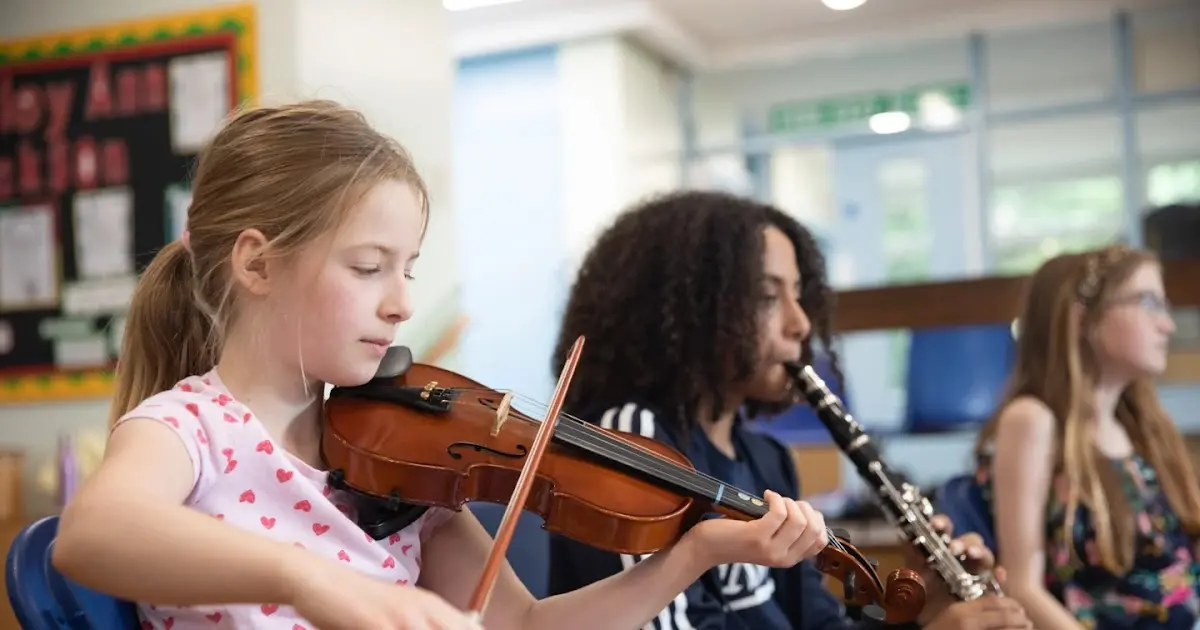
- 30% advocated for expanding school orchestras, emphasizing that hands-on ensemble playing builds peer camaraderie and musical enthusiasm.
- 29% urged an increase in school trips to live classical and orchestral concerts, highlighting the irreplaceable impact of hearing unamplified acoustic music in grand performance halls.
The Modern Cultural Landscape
Interestingly, parents are also looking beyond traditional institutional boundaries. Nearly a quarter (23%) of respondents suggested that teenagers would be far more likely to engage with the classical sector if contemporary classical compositions found their way into mainstream music charts, such as the UK Top 40. This points to a growing recognition that classical music must transcend the ivory tower of elite concert halls and intersect with modern digital streaming habits and popular culture.
The Orchestral Instrument Landscape of Tomorrow
The RPO research also mapped out the current popularity of musical instruments among school-aged children—painting a fascinating portrait of what tomorrow’s orchestra might look like.

Traditional keyboard instruments and modern band staples continue to dominate domestic aspirations:
- Piano: 35% (The undisputed leader in youth interest)
- Guitar: 28%
- Drums: 22%
Simultaneously, traditional orchestral instruments are experiencing shifting fortunes across the UK. The violin (18%), recorder (14%), and trumpet (11%) maintain a steady presence in schools, buoyed by localized music hub initiatives.
However, the survey also exposed a stark "endangered species" list within the orchestral family. Brass instruments historically vital to symphonic power—specifically French horns (3%) and trombones (5%)—risk fading into obscurity among the younger generation due to a lack of accessible teaching infrastructure and specialist instructors in schools. Without targeted intervention, community and professional orchestras may face severe shortages of proficient brass players in the decades to come.
Official Statements: Voices from the Frontline
Sarah Bardwell, Managing Director of the Royal Philharmonic Orchestra, offered a candid assessment of the new data, balancing cautious optimism with an urgent call to action.
"While it is of course heartening to see a rise in music GCSE uptake—something we hope to see continue in the 2026 results—it is clear that more needs to be done to safeguard the musicians and audiences of tomorrow," stated Bardwell.
"The RPO’s engagement work with young people is a vital way of filling the gaps left by underfunding in formal music education, and our players find it hugely fulfilling. However, this latest data shows that we need more action at a government level to build more opportunities for young people to enjoy orchestral music."
Educational theorists and cultural economists echo Bardwell’s sentiments. They argue that music education should not be treated as an optional, disposable luxury reserved for affluent families who can afford private instrumental tuition. Rather, it must be recognized as an essential pillar of holistic cognitive development, fostering teamwork, discipline, spatial reasoning, and emotional intelligence.
Organizations like the Brent Music Academy—of which the RPO is a founding partner—serve as shining examples of grassroots remediation. By embedding professional orchestral musicians directly into communities and schools, such initiatives provide transformative mentorship to young people who might otherwise never touch a violin bow or sit within a brass section. Yet, sector leaders emphasize that philanthropic and institutional partnerships can only achieve so much without systemic government backing.
Future Outlook: Celebrating 80 Years While Building the Next Century
As the Royal Philharmonic Orchestra looks toward its future, it does so by honoring its illustrious past while actively investing in the next generation of listeners and performers.
The RPO’s upcoming 2026 season promises to be a landmark cultural event. Commemorating the orchestra’s 80th anniversary, the new season kicks off on 23 September 2026 at the legendary Royal Albert Hall. Under the baton of Principal Conductor Vasily Petrenko, the opening gala will feature a breathtaking program celebrating monumental works by Beethoven and Richard Strauss, alongside contemporary masterworks by acclaimed composer Errollyn Wallen.
This anniversary season is designed not only to celebrate eight decades of symphonic excellence, but also to serve as a beacon for music education. Through accompanying outreach programs, youth ticket initiatives, and educational workshops running parallel to the mainstage concerts, the RPO continues to break down the barriers that separate world-class classical music from everyday youth culture.
The Road Ahead
Ultimately, the message of the RPO’s latest research is clear. The recent uptick in GCSE entries proves that the appetite for music among young people has not vanished; it has simply been starved of resources. If policymakers, educational authorities, and cultural institutions can heed the advice of the nation’s parents—by expanding school music lessons, funding orchestral ensembles, subsidizing concert trips, and protecting endangered instruments—Britain can secure a vibrant, harmonious future for its world-renowned musical heritage.
For full details regarding the Royal Philharmonic Orchestra’s upcoming 80th-anniversary season, educational outreach programs, and ticket availability, visit the official RPO Website. To learn more about community partnerships like the Brent Music Academy, visit their dedicated project page.