Executive Overview
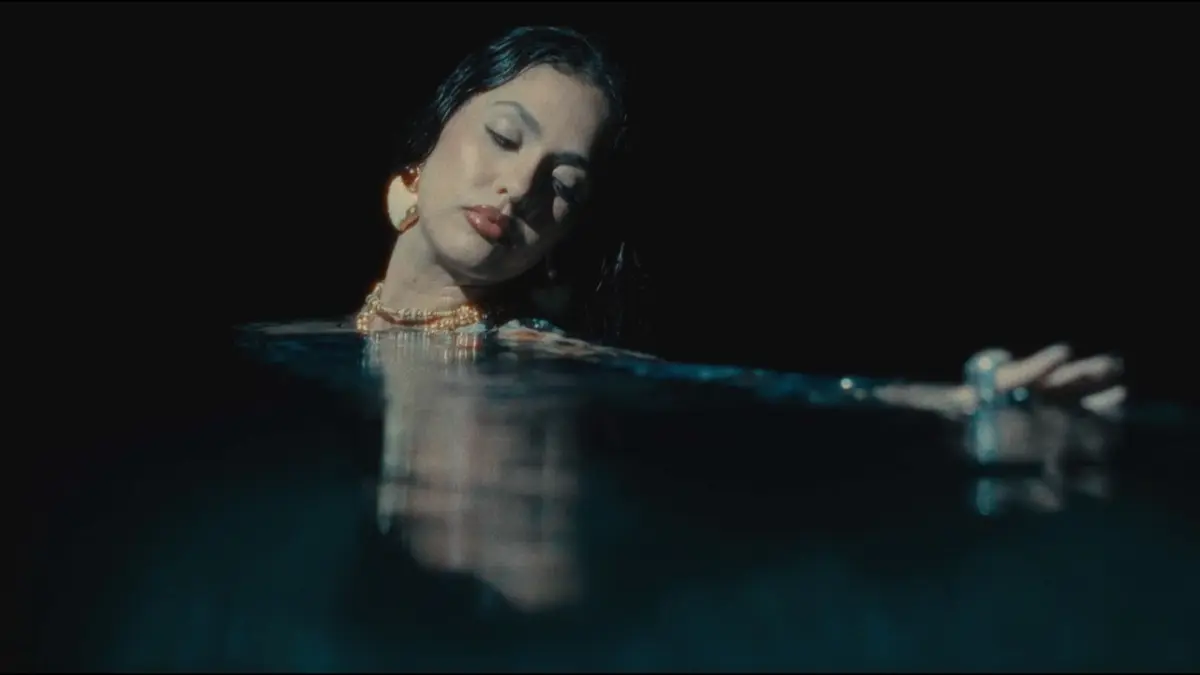
In the fast-evolving landscape of contemporary North African music, few artists command attention quite like Manal Benchlikha. The Casablanca-born singer, songwriter, and former rapper has cemented her status as one of the region’s most formidable cultural forces. Her artistry has consistently challenged societal norms, amplified the lived experiences of women, and pushed the boundaries of genre. With the release of her latest single, “Chouka,” on August 16, Manal once again demonstrates her restless creative ambition.
Bridging linguistic divides and cultural borders, “Chouka” is a masterclass in modern cross-cultural pop production. The track finds Manal effortlessly sliding between Moroccan Darija and French, weaponizing charm, sharp vernacular, and high-end metaphor to captivate her listener. Beyond its lyrical dexterity, “Chouka” serves as a vital artifact in Manal’s ongoing artistic evolution: her deliberate pivot toward raï—the historically rebellious, working-class dance genre born in the borderlands of western Algeria and eastern Morocco.
As part of an aggressive, continuous rollout of singles throughout 2026, “Chouka” is more than a catchy summer anthem; it is a strategic statement of intent. Manal is not merely participating in the contemporary North African music revival—she is actively steering it, pulling deep-rooted traditional styles into high-gloss, global pop spaces. This report explores the anatomy of “Chouka,” the cultural mechanics of Manal’s rise, her deep dive into raï, and the broader implications of her work on the regional and international music markets.
Detailed Chronology: From Casablanca Underground to Global Pop Stardom
The Genesis of a Voice
Manal Benchlikha’s journey to becoming a household name across the Middle East and North Africa (MENA) region and beyond is a narrative of resilience, reinvention, and rigorous self-determination. Born and raised in Casablanca, Morocco’s sprawling economic and cultural capital, Manal was exposed early to a rich tapestry of sounds—from traditional Arabic melodies and French chanson to American hip-hop and R&B.
Initially emerging on the scene as a rapper, Manal quickly separated herself from her contemporaries in a male-dominated Moroccan hip-hop underground. Her early work was characterized by a gritty, unapologetic delivery that tackled the complexities of womanhood in a conservative society. She did not shy away from the societal double standards, patriarchal pressures, and institutional hurdles faced by young Moroccan women. Instead, she turned these themes into raw, visceral art that resonated deeply with a generation of listeners hungry for authentic representation.
Transitioning from Rap to Melodic Pop
As her career progressed, Manal made a calculated artistic pivot, expanding her palette from hard-hitting rap to expansive, melodic pop. This transition allowed her vocal prowess to take center stage, opening doors to broader commercial radio play and international streaming markets. Tracks like “Slay” (featuring ElGrandeToto) became massive cultural touchstones, proving that Moroccan artists could produce world-class urban pop that rivaled Western productions in terms of mixing quality, visual aesthetics, and compositional complexity.
Yet, even as her sound smoothed out into polished pop, her lyrical edge remained razor-sharp. She maintained her signature habit of code-switching between Arabic dialects and European languages, mirroring the cosmopolitan, hybrid reality of modern Moroccan youth culture—where French and Darija bleed seamlessly into one another in everyday conversation.
The 2026 Single Run and the Arrival of “Chouka”
The year 2026 has proven to be Manal’s most prolific and daring period to date. Rather than adhering to the traditional album-release cycle, she adopted a relentless single-release strategy, firing off a succession of tracks designed to dominate digital streaming platforms and social media feeds alike.
On August 16, 2026, she added crown jewel after crown jewel to this run with the release of “Chouka.” The track immediately sparked conversations across music blogs, TikTok, and Instagram, heralded not just for its infectious rhythm, but for its lyrical ingenuity. In “Chouka,” Manal captures the push-and-pull dynamic of modern romance, utilizing unexpected luxury metaphors and rapid-fire linguistic shifts to keep her audience continuously off-balance and utterly enthralled.
Supporting Context & Metrics: The Anatomy of “Chouka” and the Revival of Raï
Lyrical Deconstruction and Linguistic Gymnastics
At its core, “Chouka” is a lyrical sparring match. Over the course of the song, Manal spends every verse attempting to persuade a hesitant romantic interest to surrender to the moment. The linguistic framework of the track is inherently diasporic and transnational: she flows effortlessly half in Moroccan Darija and half in French, capturing the duality of urban Maghrebi identity.
One moment she tosses out a breezy, nonchalant “take it easy” to soothe her subject, and the next, she pivots sharply to a biting, uncompromising “sans politesse” (without politeness), demanding authenticity over social etiquette.
What elevates the track from a standard pop tune to a masterclass in modern songwriting is her choice of flattery. Eschewing tired romantic clichés, Manal deploys brand names and high-octane consumer metaphors to elevate her subject:
- The Tiffany Diamond: Representing rare, enduring value, blinding brilliance, and high-stakes emotional investment.
- A Multivitamin in Her Blood: Signaling an invigorating, life-sustaining energy source that revitalizes her entire system.
- A Car Floored Down an Endless Highway: Painting a vivid portrait of unbridled adrenaline, speed, danger, and forward momentum with no brakes in sight.
The Reimagining of Raï Music
The most significant musicological development in “Chouka” is Manal’s embrace of raï. Originating in the working-class neighborhoods of Oran, Algeria, and spreading eastward into Morocco, raï has historically been the music of the marginalized, the disaffected, and the working class. Characterized by its driving percussion, accordion lines, emotive vocal delivery, and themes of heartbreak, social hardship, and hedonism, raï was once condemned by conservative religious and political authorities.
Today, raï is experiencing a sweeping renaissance, recognized globally as a vital pillar of North African intangible cultural heritage. However, artists like Manal are not merely preserving raï in amber; they are aggressively modernizing it. By injecting raï rhythms into high-gloss, electronic-infused pop frameworks, Manal is updating the genre for digital-native audiences who consume music via TikTok trends, algorithmic playlists, and cross-border collaborations.
Her stated ambition—to take raï somewhere it has never been before—is not hyperbole. By stripping away outdated production constraints and wedding traditional Maghrebi cadence with state-of-the-art pop production, Manal is positioning raï as a formidable global genre capable of competing directly with Latin pop, Afrobeats, and K-pop on the world stage.
Official Statements and Industry Perspectives
While artists often let their work speak for itself, Manal has been vocal about her intentionality regarding her recent musical output. In interviews surrounding her 2026 release schedule, she has emphasized that her exploration of traditional North African genres is a deliberate act of cultural reclamation and forward-thinking innovation.
"We have centuries of musical storytelling in the Maghreb that the world is only just beginning to understand," Manal noted in a recent social media broadcast discussing her creative direction. "Raï is in our blood, but it doesn’t belong in a museum. It breathes, it sweats, it dances, and it evolves. My goal isn’t to replicate what our elders did, but to take that raw energy and build a vehicle that can drive it onto global stages without losing a single drop of its soul."
Industry analysts have taken note of this strategic pivot. Musicologists and MENA pop culture commentators have praised Manal for navigating the delicate tightrope between commercial viability and cultural authenticity.
“Manal represents a new breed of African artists who refuse to be boxed into regional or ‘world music’ categories,” remarks cultural critic and ethnomusicologist Dr. Youssef Al-Amrani. “When she sings ‘Chouka,’ she is operating at the intersection of Casablanca street culture, Parisian fashion sensibilities, and traditional Oranese raï beats. That tripartite identity is what makes modern North African pop so intoxicating right now. It speaks locally and globally at the exact same time.”
Furthermore, digital marketing strategists point to her 2026 single run as a masterclass in modern audience retention. By dropping a rapid sequence of high-concept singles rather than holding back for a traditional album rollout, Manal maintains a continuous presence in algorithmic feeds, maximizing listener engagement across platforms like Spotify, Apple Music, and Instagram.
Future Outlook: Where Does Manal Take North African Pop Next?
As the dust settles on the release of “Chouka,” the trajectory of Manal Benchlikha’s career points toward unprecedented international expansion. The global music market is currently experiencing a historic decentralization. Western markets are increasingly receptive to non-English language repertoire, driven by the massive global explosions of Latin trap, Afrobeats, and K-pop.
In this new globalized ecosystem, the Maghreb is uniquely positioned to break through, and Manal is spearheading that charge. Her ability to seamlessly merge the local vernacular of Darija with universal themes of desire, ambition, and romantic friction makes her music instantly accessible to listeners who may not understand a single word of Arabic or French, yet feel every ounce of the song’s emotional weight.
What to Expect Next:
- Deeper Genre Fusion: Industry insiders hint that Manal’s ongoing 2026 sessions will continue to experiment with traditional regional sounds, potentially bridging raï with electronic dance music (EDM) subgenres and contemporary trap-soul.
- High-Profile International Collaborations: Given her growing footprint in Europe and the broader MENA region, future releases are expected to feature cross-continental collaborations with major artists from France, West Africa, and the Middle East.
- Immersive Live Touring: With a robust catalog of high-energy singles now under her belt, Manal is slated to bring her theatrical, high-fashion stage show to major international festival circuits, putting North African pop production on full display for global audiences.
Conclusion
“Chouka” is far more than a mid-summer streaming success. It is a testament to the artistic maturation of Manal Benchlikha—a creator who honors her cultural foundations while aggressively tearing down musical borders. By dragging the working-class soul of raï into the glittering, hyper-modern world of global pop, Manal is not only redefining her own artistic legacy; she is writing the blueprint for the future of North African music.
For fans looking to dive into the rhythm and experience the cross-cultural brilliance firsthand, “Chouka” is available to stream across all major digital platforms. You can stream and experience “Chouka” directly via official streaming links.