Executive Overview
Campania is a region rarely accused of resting on its laurels. Beyond the shadow of Vesuvius, the ancient ruins of Pompeii, the creamy perfection of Caserta’s buffalo mozzarella, the dizzying switchbacks of the Amalfi Coast, and a freshly baked sfogliatella enjoyed moments after a steaming Neapolitan pizza, lies another cultural titan: the Ariano Folkfestival.
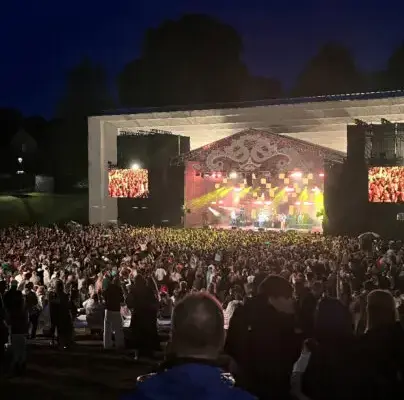
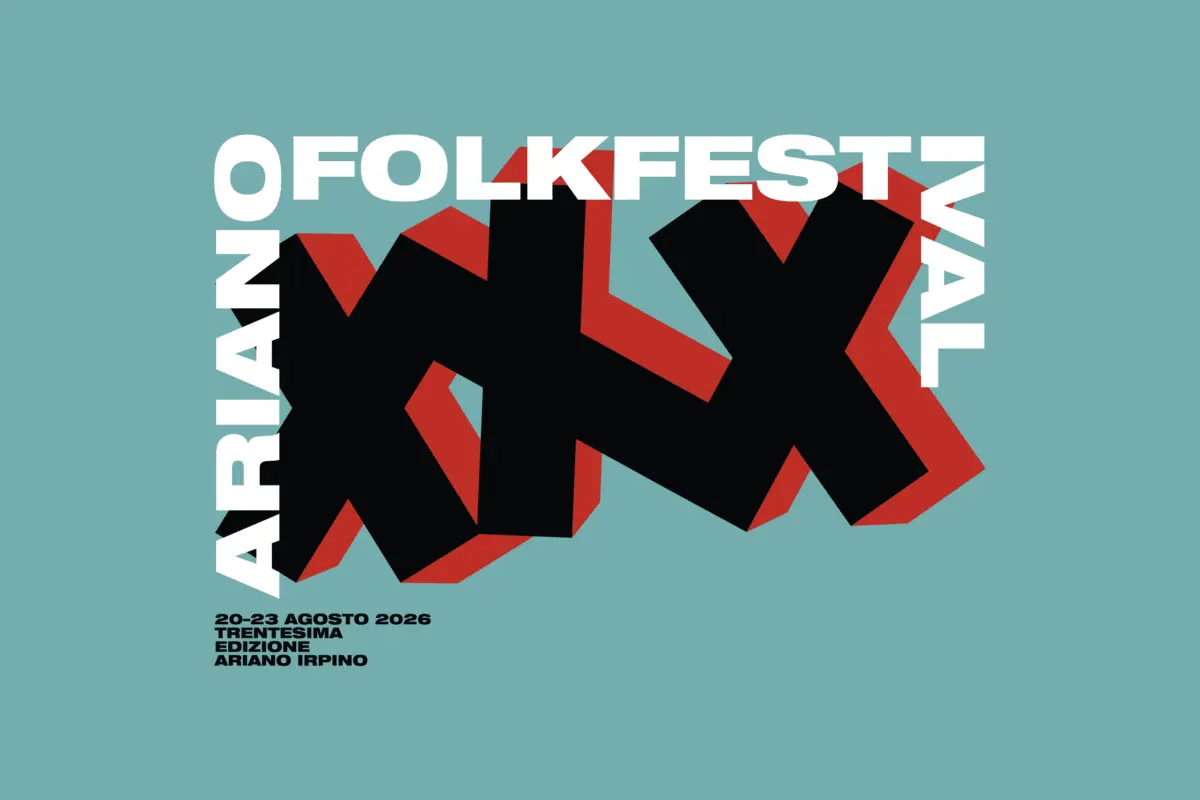
Perched 800 meters up in the windswept Apennine hills of southern Italy, the hilltop town of Ariano Irpino transforms every August into a pulsating, open-air crossroads for global roots, brass traditions, and tropical sound systems. Celebrating its landmark 30th edition under the banner of trent’anni di resistenza culturale (thirty years of cultural resistance), this community-led gathering defies the commercialized grain of modern European summer festivals.
Organized by the tireless Associazione Red Sox—spearheaded by festival director Francesco Fodarella and sustained by a coalition of volunteers, the comune, and the Campania region—the festival opened its main four-day run on Thursday, August 20. Through Sunday, the historic public spaces of Ariano Irpino will blend international heritage with late-night electronic sessions, proving that independent cultural programming can thrive far away from mainstream metropolitan centers.
Detailed Chronology: Day-by-Day Festival Breakdown
Thursday: Caribbean Roots, West African Funk, and North African Tape Excavation
The opening night sets a dizzying international pace, bridging the Caribbean, West Africa, and North Africa in a single stroke.
- Kobo Town: Opening the main stage is Kobo Town, a dynamic ensemble anchored by founder Drew Gonsalves’s evocative vocals and rhythmic cuatro. Driven by trombone-heavy horns, acoustic guitars, and a rock-solid calypso rhythm section, Gonsalves delivers socio-political lyricism propelled by roots-reggae basslines and dub-poetry cadence.
- Flammer Dance Band: Next up are the seven members of the Flammer Dance Band. Locked into interlocking, hypnotic funk grooves, the group features guitars and bass trading razor-sharp rhythm lines beneath soaring synth and saxophone leads, channeling the golden-era 1970s West African records that forged their signature sound.
- Retro Cassetta: Breaking convention, the opening night closes without a live band. Instead, selector Badreddine Haoutar takes his place behind twin decks spinning physical cassette tapes. Haoutar brings years of archival digging across Morocco, Algeria, and Libya, delivering raw recordings of raï, chaâbi, and gnawa music complete with authentic tape hiss, mixed live rather than digitally cleaned.
Friday: From the Alps to the Atlas
Friday’s musical trajectory traverses immense geographical and stylistic distances, moving fluidly from alpine Italy to the Atlas Mountains of Morocco.
- Faccianuvola: Valtellina-born electronic artist Alessandro Feruda (performing as Faccianuvola) takes the stage solo, wielding a laptop and synthesizers to weave atmospheric ambient pads beneath heavily processed, autotuned vocals.
- Tasuta N-Imal: Shifting to traditional North African soundscapes, Tasuta N-Imal appear as a powerful six-piece outfit. Dual lead and rhythm guitars entwine with the hypnotic pulse of derbouka and djembe drums. The lead vocalist keeps time on a large dendoum drum and metallic qraqeb castanets. Clad in the traditional attire of Morocco’s Aït Aata tribe, the group performs entirely in Amazigh, honoring their indigenous heritage.
- Fidju Kitxora: Closing Friday is a masked enigmatic performer working under the moniker Fidju Kitxora. Concealing his face throughout the set, he manipulates live vocal samples and field recordings into infectious funaná and semba rhythms using a sprawling bank of synthesizers—striking a balance between a high-concept DJ set and an avant-garde live performance.
Saturday: A Masterclass in Electronic-Acoustic Fusion
Saturday belongs entirely to the vanguard of electronic experimentation, utilizing three radically different points of acoustic origin.
- Kutu: The night opens with Kutu, a trans-cultural powerhouse featuring French violinist Théo Ceccaldi improvising feverishly alongside Ethiopian vocalists Hewan Gebrewold and Haleluya Tekletsadik. Backed by driving keyboards and drums, they push the traditional Azmari vocal calls of Addis Ababa’s underground scene straight into ecstatic, trance-inducing territory.
- 64 Ksana: This trio features Jundo on synthesizers, alongside Jaeyeon—who sings and plays traditional Korean percussion rooted in the Gyeonggi minyo folk tradition—and Ejo, a percussionist with deep roots in dub music. Together, they forge thumping techno beats anchored by the sacred, ritual rhythms of Korean shamanic ceremonies.
- Gregotechno: Closing Saturday night is the Catalan duo Gregotechno, comprising Marc Vilajuana and Alejandro Narés. While Narés lays down driving, industrial techno production, Vilajuana sings live, hypnotic Gregorian chants. The auditory experience is heightened by mesmerizing video art projected behind them, drawing direct inspiration from Romanesque church architecture.
Sunday: Punkclore and Archival Sound Systems
The fourth and final day represents the largest bill of the festival, culminating in two distinct, high-energy performance formats.
- La Chiva Gantiva: Bringing raw, unadulterated velocity to the stage, La Chiva Gantiva deploy searing horns and overdriven guitars to propel Afro-Colombian percussion through the aggressive lens of punk and rock. Self-described creators of "punkclore," their performance is an explosive physical workout.
- Martin Meissonnier: The festival reaches its grand finale behind the decks rather than on traditional instruments. Famed producer and collector Martin Meissonnier delivers an expansive DJ set curated from decades of musical exploration. Moving seamlessly through Congolese rumba, Nigerian afrobeat, and Caribbean sound systems in one continuous, celebratory mix, Meissonnier provides a fitting capstone to a globally minded weekend.
Supporting Context & Metrics: The Anatomy of La Città Tricolle
Locals fondly refer to Ariano Irpino as la città tricolle—the three-hill town—built along the historic ridge that ancient traders once traversed to move between Naples and the plains of Puglia. For four days every August, the urban fabric of the town morphs into an immersive, living festival site.
+-------------------------------------------------------------------------+
|                        THE ARIANO FOLKFESTIVAL MAP                      |
+--------------------------+----------------------------------------------+
| Location                 | Festival Function                            |
+--------------------------+----------------------------------------------+
| Piazzale Calvario        | Epicenter of main stage performances & crowds|
| Villa Comunale           | Morning workshops & yoga under castle walls  |
| Historic Town Streets    | Home to Tavolata Popolare & craft markets    |
| Boschetto Pasteni        | VolksCamp campsite & afternoon stage         |
+--------------------------+----------------------------------------------+
Wandering away from the main hub at Piazzale Calvario leads visitors directly to a tavolata popolare—sprawling communal tables set up throughout the town. Here, local Irpinian wine, cheese, and cured-meat producers sit and trade alongside the festival crowd rather than selling to them. Artisanal pottery and craft stalls seamlessly fill the architectural gaps between stone buildings.
Mornings belong to the tranquil Villa Comunale, where educational workshops and yoga sessions unfold peacefully under historic castle walls before the afternoon heat sets in. Once the final band on the main stage finishes, Sonazone takes over, keeping resident and guest DJs spinning into the early hours of dawn.
Out at VolksCamp, the dedicated campsite nestled within the Boschetto Pasteni woodland, a parallel micro-festival thrives. Powered by its own independent stage, the woodland hosts a vibrant community drawn from the roughly 20,000 attendees who pass through the festival gates each year.
Official Statements & The Philosophy of Cultural Resistance
To understand the longevity of the Ariano Folkfestival, one must examine its institutional resilience. Across three decades, the festival has missed only a single edition—canceling its 2020 run due to the unprecedented constraints of the COVID-19 pandemic. Every other August since 1996, the Associazione Red Sox has engineered a world-class international music festival out of a relatively isolated Apennine hill town.
Festival Director Francesco Fodarella and his curation team operate on principles starkly different from commercial festival circuits. World-renowned musicians routinely choose to perform in an intimate Irpinian piazza over lucrative, high-paying metropolitan stages, drawn by the festival’s authentic ethos, engaged audiences, and rigorous artistic integrity.
Operating under this year’s rallying cry—trent’anni di resistenza culturale (thirty years of cultural resistance)—Fodarella’s team has earned every syllable of that designation. In an era where independent cultural spaces face mounting economic pressures and state-funded arts are frequently deprioritized, the Ariano Folkfestival stands as a fortress of grassroots pluralism. It demonstrates that geographic isolation is no match for shared passion, community volunteerism, and an uncompromising commitment to global musical discovery.
Future Outlook: Looking Beyond the Thirtieth Milestone
As the 30th edition draws to a close, the Ariano Folkfestival looks toward its fourth decade with quiet confidence and unyielding purpose. The success of this milestone year—spanning everything from cassette-tape Algerian raï to Gregorian-techno fusions—cements the festival’s status as a vital European laboratory for cross-cultural dialogue.
Plans are already underway to expand the festival’s educational outreach programs and residency initiatives through the off-season, ensuring that the economic and social vitality brought by la città tricolle’s August influx benefits the local community year-round. By continuing to champion underrepresented sonic traditions, refusing corporate homogenisation, and keeping ticket access affordable, the Ariano Folkfestival ensures that its unique brand of cultural resistance will echo across the Apennines for generations to come.