Executive Overview
In an era where contemporary Middle Eastern music frequently leans toward Western production paradigms, a profound cultural reclamation is underway. Spearheaded by some of the diaspora’s most visible and compelling artists, modern Arabic pop is increasingly looking backward to move forward. At the forefront of this movement is Saint Levant—the genre-bending artist known for seamlessly blending French, English, and Arabic—who has returned with one of his most ambitious projects to date: his third studio album, AFANDI / الأفندي.
Serving as the lead single for this 12-track opus is "MASKARA / مسكرة," a track that had been meticulously teased across social media platforms for months before its official drop. The song is not merely a catchy Arabic pop tune; it is a masterclass in cross-generational collaboration. On "Maskara," Saint Levant shares the microphone with fellow Palestinian powerhouse Mohammed Assaf, a towering figure in modern Arabic music whose voice has resonated across borders, conflict zones, and global stages for over a decade.
Built upon a foundation of traditional Arabic pop aesthetics, "Maskara" draws inspiration from the golden era of regional icons such as George Wassouf and Kadim Al Saher. Yet, beneath its infectious rhythms and nostalgic instrumentation lies a deeper, resonant narrative of resilience, shared heritage, and historical displacement. Both Saint Levant and Mohammed Assaf carry personal histories intimately tied to the ongoing Palestinian struggle—histories that inform not only their art, but the very cultural fabric of the music they create.
This comprehensive report explores the genesis of "Maskara," the rich personal and political backgrounds of its creators, the structural and thematic ambitions of the AFANDI album, and the broader cultural implications of two Palestinian artists reclaiming the musical language of the Arab world’s golden age.
Detailed Chronology: From Digital Teasers to the AFANDI Era
The Buildup and Anticipation
The rollout for "Maskara" was a masterclass in modern digital marketing paired with artistic mystique. For months prior to its release, Saint Levant—born Marwan Abdelhamid—shared cryptic snippets, studio session teasers, and visual glimpses on platforms like Instagram and TikTok. These teasers immediately captured the attention of his global fanbase, hinting at a sonic departure from the slick, lo-fi R&B and trap-infused rap of his earlier breakout projects.
Instead of the moody, nocturnal soundscapes that characterized tracks like "Very Few Friends," the previews for "Maskara" revealed an upbeat, unapologetically traditional Arabic pop groove. The inclusion of Mohammed Assaf, whose powerhouse vocals are instantly recognizable to millions across the Middle East and North Africa (MENA) region, sent shockwaves through social media. Fans immediately recognized that this collaboration was more than a standard feature—it was a meeting of two distinct eras and philosophies within Palestinian music.
The Release of AFANDI / الأفندي
"Maskara" officially serves as the lead single and gateway into Saint Levant’s third studio album, AFANDI. Spanning 12 meticulously curated tracks, the album functions as a sonic bridge connecting the timeless melodies of the 20th-century Arab world with the hyper-modern sensibilities of the 21st-century diaspora.
Saint Levant has described AFANDI as an ongoing dialogue between the past and the present. Rather than sampling the era of Arab pop royalty—such as Syrian crooner George Wassouf or Iraqi maestro Kadim Al Saher—as a mere nostalgic gimmick, Saint Levant and his production team meticulously deconstruct and rebuild the structural elements of classic Arabic pop. The result is an album that honors the architects of regional music while pushing the boundaries of how contemporary audiences consume Arabic-language art.
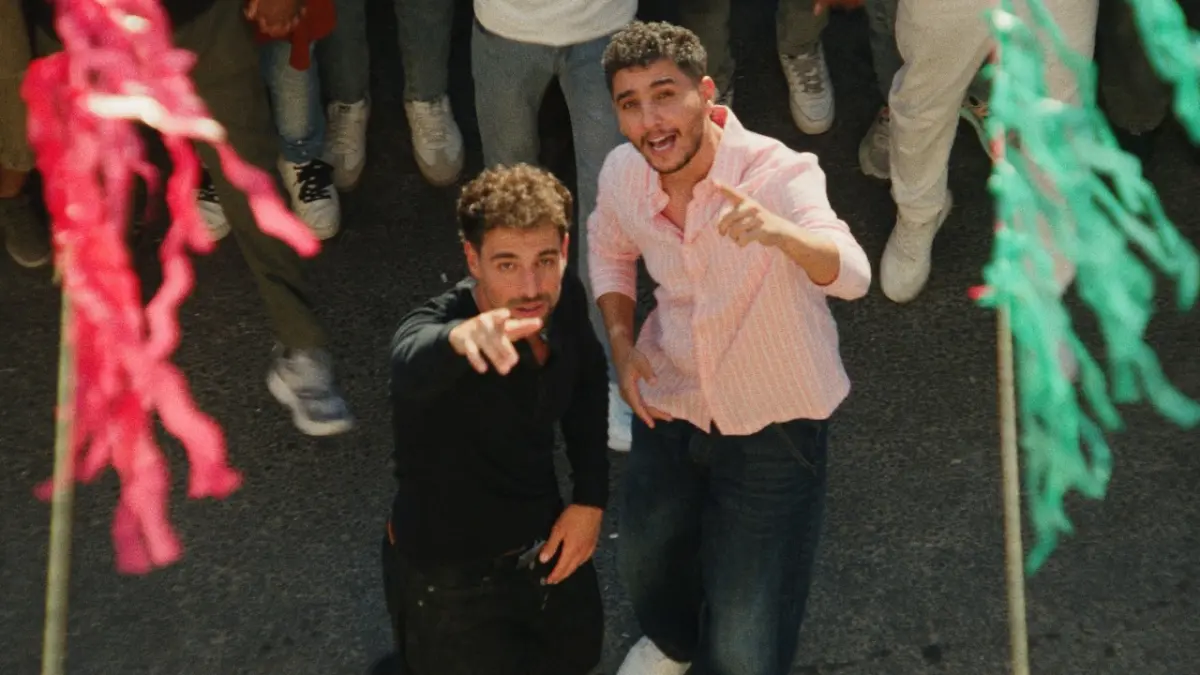
Upon its release, AFANDI was greeted with critical acclaim, praised for its rich instrumentation, live orchestration elements, and the emotional weight carried by its lyrical themes. The album package, complete with cinematic visualizers and high-concept music videos like the one accompanying "Maskara," cements Saint Levant’s status not just as a viral sensation, but as a serious conceptual artist committed to preserving and evolving his cultural roots.
Supporting Context & Metrics: Artists, Ancestry, and the Weight of History
To truly understand the cultural impact of "Maskara," one must examine the lives and lineages of the two artists behind the track. Both Saint Levant and Mohammed Assaf are artists whose biographies are inextricably linked to the geopolitical realities of Palestinian displacement.
+-------------------------------------------------------------------------+
                    THE DIASPORA & THE HOMELAND LINEAGE
+-------------------------------------------------------------------------+
|                                                                         |
|  MOHAMMED ASSAF                              SAINT LEVANT               |
|  • Born: Misrata, Libya                      • Born: Jerusalem          |
|  • Roots: Bayt Daras & Beersheba             • Roots: Gaza (Hotel Deira)|
|  • Defining Moment: Arab Idol 2013           • Defining Moment: Global  |
|    "Ana Dammi Falastini"                       Diaspora Anthem "Deira"  |
|                                                                         |
+-------------------------------------------------------------------------+
Mohammed Assaf: The Voice of Resilience
Mohammed Assaf’s journey to musical icon status is legendary. Born in Misrata, Libya, to Palestinian parents, Assaf grew up in the Khan Younis refugee camp in the Gaza Strip after his family returned to the region. His life changed forever in 2013 when he traveled across immense logistical barriers—reportedly waiting days at the border just to audition—to compete on the pan-regional television phenomenon Arab Idol.
Assaf’s breathtaking vocal control, combined with his charismatic stage presence and deep emotional connection to his homeland, propelled him to a historic victory. During the competition, and cemented in the years that followed, his defining anthem, "Ana Dammi Falastini" ("My Blood Is Palestinian"), transformed him into one of the most recognized and beloved voices in the Arab world.
Assaf’s genealogical roots run deep into the history of the 1948 Nakba: his mother’s family was forcibly displaced from the village of Bayt Daras, while his father’s family hails from Beersheba. Throughout his career, Assaf has used his platform to champion Palestinian rights, earning global acclaim while remaining steadfastly grounded in the traditional vocal traditions of the Levant.
Saint Levant: Navigating Multiple Displacements
Marwan Abdelhamid, known professionally as Saint Levant, carries his own parallel history of displacement. Born in Jerusalem to a French-Algerian mother and a half-Palestinian, half-Serbian father, Saint Levant spent his formative years in the Gaza Strip before his family was forced to relocate due to ongoing conflict and instability.
This complex heritage informs much of his artistic output, which effortlessly shifts between English, French, and Arabic. However, his connection to his homeland is never far from the surface. Perhaps his most poignant and politically resonant track, "Deira," is named directly after his father’s hotel on the Gaza seafront—a beloved cultural and familial landmark that was ultimately destroyed in an Israeli airstrike.
By collaborating on "Maskara," Saint Levant and Mohammed Assaf bridge a geographic and generational divide. Assaf represents the endurance of the generation raised inside the blockaded enclaves and refugee camps of Palestine, while Saint Levant represents the rising tide of the global diaspora—young Arabs born outside or forced to leave, yet fiercely protective of their cultural inheritance.
Official Statements & Artistic Vision
In various interviews and press statements surrounding the rollout of AFANDI and "Maskara," Saint Levant has been vocal about the intentionality behind his music. Rather than chasing fleeting internet trends, the artist views his platform as a vital tool for historical preservation and cultural dialogue.
"AFANDI is an ongoing dialogue between the past and the present," Saint Levant explains. "We wanted to build something that takes listeners back to the golden age of our region’s music—a time when melody, poetry, and orchestration were the absolute center of gravity. Working with a legend like Mohammed Assaf on ‘Maskara’ brings a depth to this project that money simply cannot buy. He carries the history of our people in his vocal cords."
For his part, Mohammed Assaf has consistently emphasized the unifying power of art across the Arab diaspora. In statements regarding his recent collaborations and continuous musical output, Assaf has highlighted the importance of passing down traditional musical forms to younger generations who are redefining what it means to be Arab on the global stage.
The stylistic choice to ground "Maskara" in straightforward Arabic pop—steering clear of overly modernized Western trap beats for this specific track—was a deliberate nod to the legendary composers of the late 20th century. By channeling the vocal stylings and emotional cadence of icons like George Wassouf and Kadim Al Saher, the artists have crafted a sonic experience that feels both comfortingly familiar to older generations and thrillingly fresh to Gen-Z listeners discovering these sonic palettes for the first time.
Future Outlook: The Cultural Renaissance of Arab Pop
The release of AFANDI and the breakout success of tracks like "Maskara" signal a broader, transformative shift in the global music industry. For decades, Middle Eastern artists seeking international acclaim felt compelled to dilute their cultural markers, adopting Western pop structures and English-only lyrics. Today, a new wave of artists—led by figures like Saint Levant, Elyanna, and Saint Levant’s contemporaries—is proving that global audiences are hungry for authentic, multilingual, and culturally rooted artistry.
As AFANDI continues to circulate across streaming platforms worldwide, its impact extends far beyond commercial metrics or chart placements. It represents:
- Intergenerational Synergy: The successful merging of veteran vocal powerhouses (Assaf) with contemporary diaspora tastemakers (Saint Levant) creates a unified front in Arab music, proving that the old guard and the new wave can co-create masterpieces.
- The Archival of Cultural Memory: By invoking the golden age of Arab pop, artists are actively rescuing classic regional composition styles from obscurity, introducing them to millions of young listeners globally.
- Artistic Resilience: In the face of systemic displacement, destruction of cultural landmarks (such as Hotel Deira), and ongoing geopolitical trauma, Palestinian artists are utilizing music as a sovereign territory—a space where borders dissolve, heritage is celebrated, and voices cannot be silenced.
Ultimately, "Maskara" is much more than a catchy lead single. It is a cultural artifact of our time—a vibrant celebration of Palestinian identity, a love letter to the golden era of Arabic pop, and a resounding declaration that the stories, voices, and melodies of the Levant will continue to echo across the globe for generations to come.
Fans and music enthusiasts can stream, listen to, and purchase their copy of AFANDI / الأفندي directly via the official Linktree release page.