Executive Overview
In the contemporary landscape of experimental jazz and global fusion, few acts manage to bridge the gap between biological philosophy and intricate sonic architecture quite like the Belgian quartet Echoes of Zoo. Founded and led by visionary saxophonist and composer Nathan Daems, the band has consistently pushed the boundaries of genre, blending the hypnotic grooves of dub, the microtonal intricacies of Arabic maqam scales, and the fiery ornamentations of Balkan folk music.
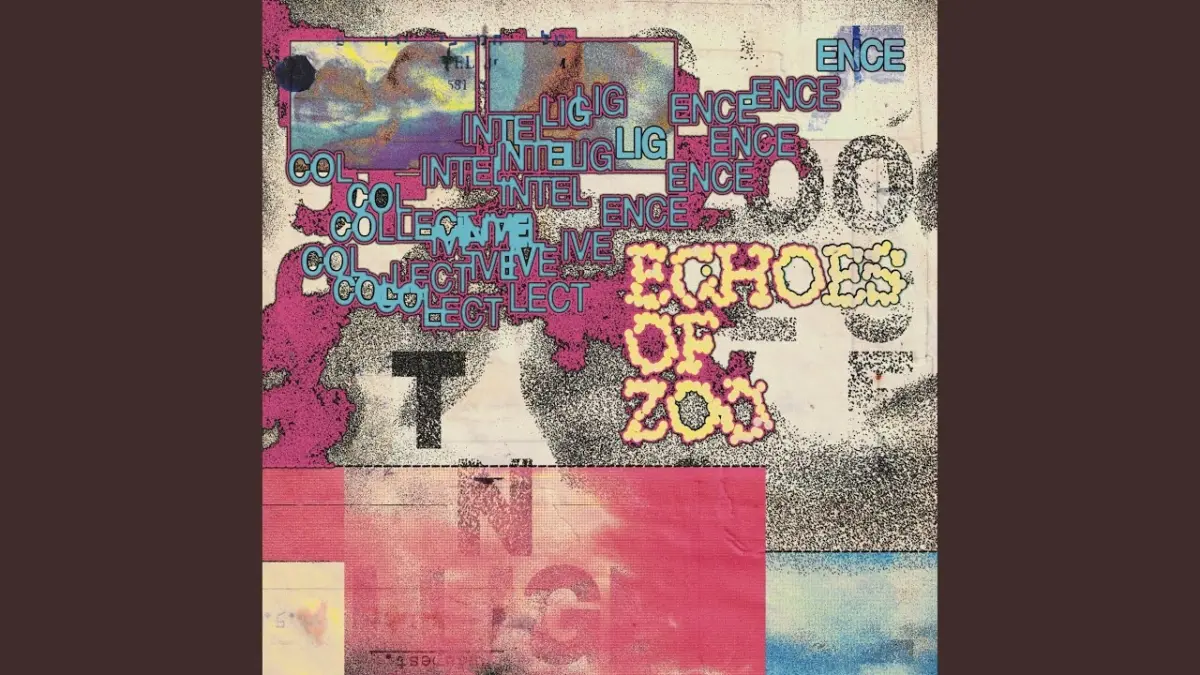
Their latest artistic statement arrives in the form of their fourth single, "Multicellularity," which serves as the thematic and sonic anchor for their ambitious full-length album, Collective Intelligence. Released on October 2 via Zephyrus Records and Rebel Up!, the album and its constituent tracks explore a profound conceptual premise: that living organisms—and, by extension, musical ensembles—are not merely collections of isolated parts, but complex networks of individual systems operating in synchronous harmony.
"Multicellularity" is more than just a track title; it is a sonic blueprint for how disparate elements can merge into a singular, breathing organism. Through the hypnotic interplay of Lieven Van Péée’s anchoring bass, Falk Schrauwen’s textural percussion, and the unified melodic front forged by Daems’ saxophone and Bart Vervaeck’s electric guitar, Echoes of Zoo demonstrates the living reality of musical synergy. This expansive report examines the conceptual origins of the project, analyzes the intricate composition of "Multicellularity," contextualizes the broader Collective Intelligence album within the contemporary European jazz scene, and explores the future trajectory of one of Belgium’s most inventive musical outfits.
Detailed Chronology: The Genesis and Evolution of Collective Intelligence
To fully understand the weight of "Multicellularity," one must trace the evolutionary arc that led Echoes of Zoo to this creative pinnacle. The journey of Collective Intelligence is a masterclass in thematic album conceptualization, rolled out systematically through a series of carefully orchestrated single releases that educated audiences on Daems’ biological and philosophical frameworks.
The Conceptual Seed
The core philosophy of the album was born out of Nathan Daems’ observations of the natural world. Viewing every living cell as an individual system capable of communication, specialization, and cooperation, Daems began drawing parallels to human social structures and, more specifically, to the dynamics of a musical band. In this view, a musical performance is a micro-universe of collective intelligence: a scenario where multiple autonomous agents relinquish absolute ego in favor of a unified, living groove.
Phase One: Establishing the Flock ("Flock Logic")
The campaign for Collective Intelligence began with the release of "Flock Logic." Drawing inspiration from the behavior of murmurations in bird populations—where thousands of individuals move in breathtaking coordination without a central leader—this opening salvo established the band’s penchant for polyrhythmic density and telepathic communication. Critics and listeners alike were introduced to a soundscape where individual instrumental lines dissolved into a breathtaking, shifting aerial display of sound.
Phase Two: Elevation and Instinct ("Higher Levels" and "Wolf Pack Telepathy")
Following the atmospheric introduction of "Flock Logic," Echoes of Zoo escalated the tension with "Higher Levels" and "Wolf Pack Telepathy."
- "Higher Levels" pushed the band’s dynamic range outward, exploring verticality in composition and the sensation of rising through sonic strata.
- "Wolf Pack Telepathy" leaned heavily into the primal, predatory coordination found in nature. By channeling the hunting strategies of wolves, the quartet demonstrated how instrumental improvisation could mimic non-verbal communication, with members instantly reacting to micro-shifts in tempo and timbre.
Phase Three: Cellular Symbiosis ("Multicellularity")
Culminating the rollout, "Multicellularity" dropped as the ultimate realization of the album’s thesis. Serving as the fourth single, the track synthesizes the lessons learned from flocks, packs, and hierarchies, reducing the lens down to the microscopic building blocks of life itself. Released alongside the complete Collective Intelligence LP on October 2, the track immediately caught the attention of global music curators, cementing the album as a landmark release for both Zephyrus Records and Rebel Up!
Supporting Context & Metrics: Anatomy of a Sonic Organism
To appreciate the craftsmanship behind "Multicellularity," one must dissect its component parts—both musically and philosophically. The track is a triumph of production choices, cross-cultural musical pollination, and precise execution.
The Instrumentation and Arrangement
At first listen, "Multicellularity" presents a deceptively spacious soundscape. Beneath the surface, however, lies a complex web of interlocking parts:
- The Low-End Anchor: Bassist Lieven Van Péée lays down a relentless, hypnotic bass figure. Rather than shifting constantly through chord progressions, Van Péée circles a singular modal anchor, creating the steady heartbeat necessary for a multi-celled organism to maintain its structural integrity.
- The Percussive Textures: Drummer Falk Schrauwen avoids standard, metronomic timekeeping. Instead, he clatters drily around the bassline, introducing polyrhythmic counter-accents and organic textures that mimic the erratic yet purposeful movement of cellular cytoplasm.
- The Dub-Leaning Mix: Throughout the track, subtle electronic blips, sub-bass ripples, and expansive delays drift through the mix. This dub influence adds a spatial, psychedelic dimension, allowing acoustic instruments to breathe within a modern, electronic-adjacent production framework.
- The Unison Front: Perhaps the most striking element of "Multicellularity" is the execution of its primary theme. Saxophonist Nathan Daems and electric guitarist Bart Vervaeck do not play counter-melodies or trade solos in the traditional jazz fashion. Instead, they lock together, playing a rapid-fire line note-for-note as if they were a single, two-headed instrument.
Cultural and Scale Influences
The melodic DNA of "Multicellularity" is a testament to Nathan Daems’ deep appreciation for trans-cultural musical traditions. The core melody is anchored in an Arabic maqam scale, bringing a microtonal tension and expressive depth that Western equal temperament often misses.
However, true to the eclectic spirit of Echoes of Zoo, this Middle Eastern framework continuously fractures into the sudden, dizzying ornaments characteristic of Balkan folk music. These hairpin turns require instantaneous consensus among the quartet, proving that their conceptual framework of "collective intelligence" is not merely an intellectual abstraction, but a strict technical requirement for performing their music live.
| Track Release Order | Title | Conceptual Inspiration | Primary Musical Focus |
|---|---|---|---|
| 1 | "Flock Logic" | Bird murmurations; decentralized coordination | Polyrhythmic density and shifting aerial dynamics |
| 2 | "Higher Levels" | Vertical expansion and biological evolution | Dynamic range and ascending modal structures |
| 3 | "Wolf Pack Telepathy" | Predator coordination and non-verbal cues | Instantaneous improvisation and dynamic tension |
| 4 | "Multicellularity" | Cellular cooperation and individual systems | Unison phrasing, maqam/Balkan scales, and dub mixing |
Official Statements and Artistic Philosophy
The philosophical underpinnings of Collective Intelligence have been articulated clearly by its creator. Nathan Daems views the album not merely as a collection of songs, but as an artistic exploration of unity in diversity—a concept deeply relevant to both ecological science and human society.
"Every cell is an individual system," Daems reflects when discussing the inspiration behind the project. To him, a living body is a miracle of organization—countless individual components working in absolute concert toward a shared survival.
This biological metaphor scales up seamlessly into how Daems approaches his bandmates. In an era where modern music is frequently dominated by hyper-individualism, virtuosic soloing, and digital isolation, Echoes of Zoo champions a different ethos:
"When we play together, we act as one."
This declaration is not hyperbolic. Listening to Collective Intelligence, one is struck by the absence of ego. Van Péée, Schrauwen, Vervaeck, and Daems do not compete for sonic supremacy in the mix; rather, they yield to the collective groove. The electric guitar and saxophone merge into a single voice; the drums and bass form a symbiotic rhythm section that feels more like a circulatory system than a backbeat. Through this approach, Echoes of Zoo translates complex scientific observations into a visceral, danceable, and emotionally resonant art form.
Future Outlook: The Horizon for Echoes of Zoo
With the successful rollout of singles like "Flock Logic," "Higher Levels," "Wolf Pack Telepathy," and now "Multicellularity," followed by the full-length release of Collective Intelligence via Zephyrus Records and Rebel Up!, Echoes of Zoo has firmly established themselves as heavyweights of the European experimental and global fusion circuits.
Live Performance and Immersive Experiences
As the band takes Collective Intelligence on the road, the primary challenge—and triumph—will be translating the microscopic precision of the studio recordings into live environments. Audiences can expect performances that blur the line between meditative listening and high-energy dance music. The interplay between Daems’ mercurial saxophone lines and Vervaeck’s searing electric guitar, backed by the rock-solid foundations of Van Péée and Schrauwen, promises to be a standout fixture on the international festival circuit.
Expanding the Sonic Ecosystem
Looking beyond the current album cycle, the philosophical framework established by Daems leaves infinite room for expansion. If biology, zoology, and cellular systems can inspire jazz-dub-Balkan fusion, the natural world offers a nearly inexhaustible library of models for collective behavior. Whether exploring mycology (fungal networks), oceanic ecosystems (coral reef symbiosis), or astronomical formations, Echoes of Zoo has proven that science and avant-garde music make for profound bedfellows.
Conclusion
In Collective Intelligence and its definitive track "Multicellularity," Echoes of Zoo has achieved a rare feat: they have created an album that is intellectually rigorous yet immediately accessible, deeply conceptual yet wildly physical. As the band continues to tour and captivate audiences across borders, they serve as a living reminder of what is possible when individuals choose to stop playing against one another and start acting as one.
For those wishing to dive deeper into this sonic ecosystem, "Multicellularity" is available for streaming across all major platforms, and physical copies of Collective Intelligence can be acquired directly through Bandcamp and partnering labels Zephyrus Records and Rebel Up!.