Executive Overview
In an era defined by hyper-digital connectivity and increasingly fractured global landscapes, the intersection of music and geography continues to yield some of the most compelling artistic experiments of the twenty-first century. Enter the Wau Wau Collectif, a groundbreaking Swedish-Senegalese musical alliance whose very existence challenges traditional notions of how an ensemble is formed, how an album is recorded, and how cross-cultural dialogues are sustained.
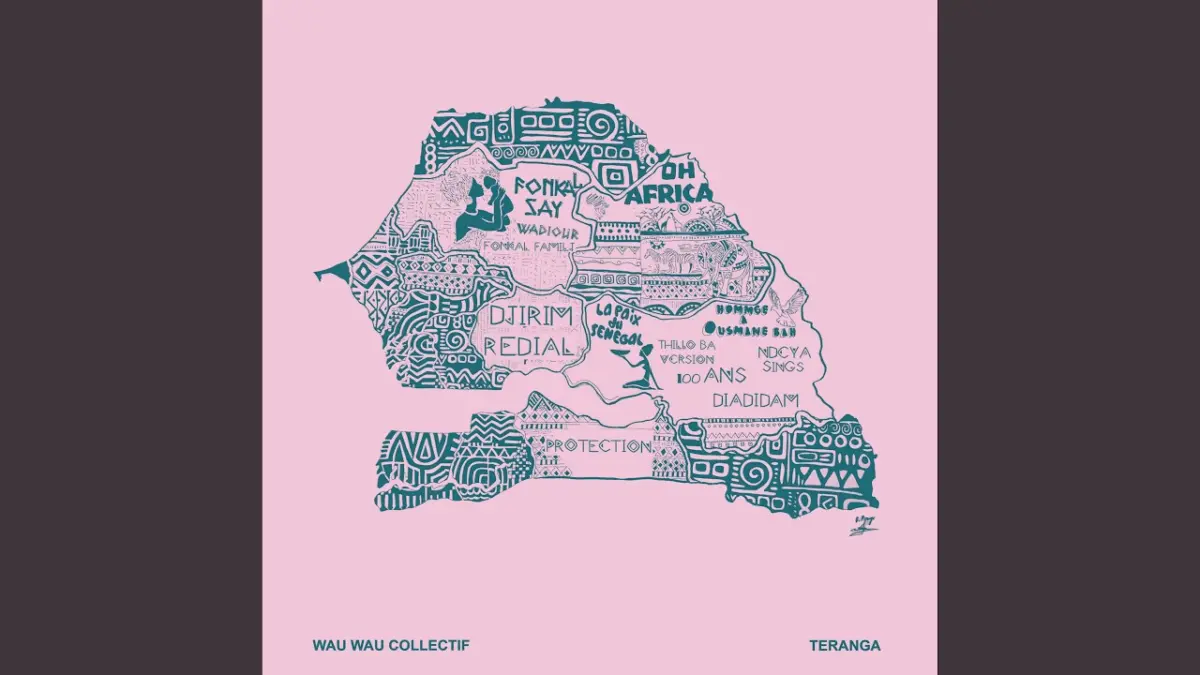
The collective has officially announced the forthcoming release of their third full-length studio album, Teranga, out via the esteemed independent label Sahel Sounds. Alongside this announcement, the ensemble has shared the record’s intoxicating second single, "Oh Africa!", accompanied by a vibrant music video. The album represents a major milestone for the project: the physical convergence of an expansive network of artists who, prior to the grueling yet exhilarating tour that birthed the finishing touches of this record, had collaborated almost entirely across digital divides, trading audio files, voice notes, and musical ideas via WhatsApp.
Rooted in the Wolof concept of teranga—a profound, deeply ingrained philosophy of hospitality and the sacred duty of welcoming a guest—the album serves as the culminating chapter of an ambitious trilogy. This three-part artistic journey began with their critically acclaimed 2021 debut, Yaral Sa Doom, and continued with Mariage. Yet, despite closing this specific conceptual trilogy, co-founder Karl-Jonas Winqvist insists that the collective has "barely started in some ways," teasing an expansive future filled with international touring and further sonic exploration.
This report provides an exhaustive, authoritative examination of Teranga, tracing its origins from the coastal artist enclave of Toubab Dialaw to European stages and recording desks. We will explore the logistics of transnational collaboration, the rich instrumentation bridging West African traditions with European avant-garde and folk sensibilities, and the socio-cultural implications of a 26-member musical ecosystem that defies conventional industry models.
Detailed Chronology: From WhatsApp Files to Transcontinental Touring
The Genesis in Toubab Dialaw (2018)
The story of Wau Wau Collectif began in 2018 in Toubab Dialaw, a picturesque fishing village and renowned haven for dancers, musicians, painters, and sculptors situated on Senegal’s Petite Côte, roughly 60 kilometers south of the capital city of Dakar. It was here that Swedish musician and producer Karl-Jonas Winqvist crossed paths with Senegalese artist and multi-instrumentalist Arouna Kane.
What started as an organic, localized exchange of ideas quickly blossomed into a much larger transnational vision. Toubab Dialaw, with its rich history of artistic cross-pollination and vibrant local culture, provided the ideal incubator for a project that sought to dissolve borders rather than merely cross them. However, as Winqvist returned to Sweden and Kane remained in Senegal, the duo faced the logistical reality of modern international collaboration.
The Digital Pipeline: Building Songs Remotely
Rather than halting the momentum of their nascent partnership, the geographical chasm between Scandinavia and West Africa became the catalyst for a unique recording methodology. The project began to run on files traded over WhatsApp—a ubiquitous messaging platform repurposed here as a high-frequency conduit for cultural exchange.
A traditional rhythm recorded on a calabash in Senegal would be sent across continents, where a synthesized Omnichord drone or a delicate cello line would be layered over it in a Swedish studio. This back-and-forth file trading expanded organically. As Winqvist and Kane brought in more collaborators—friends, local virtuosos, traveling artists, and underground musicians—the roster swelled. Over the course of three albums, the Wau Wau Collectif network grew to encompass an astonishing 26 musicians and songwriters.
The Crucible of the European Tour
Despite the success of their digital workflow, a distinct question lingered: How would this sprawling, decentralized collective function in a physical, face-to-face environment? The answer arrived during the production cycle of Teranga.
The album was ultimately finished and mixed not in a sterile, climate-controlled recording studio, but on the road during the group’s inaugural, grueling five-week tour across Europe. Described memorably by Winqvist as an intimate traveling caravan consisting of "three Swedes, three Senegalese, and a French driver," the tour served as both a performance marathon and a mobile mixing desk.
Living, traveling, and performing together in cramped vans and backstage dressing rooms forced the remote collaborators to forge an authentic, real-time musical synergy. The road acted as the ultimate crucible, melting away the digital latency of WhatsApp file-trading and replacing it with the immediate, visceral feedback loop of live human interaction. Teranga captures the exact sonic snapshot of this metamorphosis—a record conceived in the cloud, nurtured on two continents, and forged in the fire of European highways.
Supporting Context & Metrics: Instrumentation, Influences, and the Anatomy of "Oh Africa!"
The Sound of Teranga: Blending Ancient Traditions with Modern Experimentation
To understand the sonic architecture of Teranga is to witness a masterclass in genre-fluidity. The collective refuses to be neatly pigeonholed into "world music" or "global fusion" clichés. Instead, they construct an idiosyncratic sonic universe where centuries-old West African instruments converse effortlessly with European avant-garde devices.
The instrumentation featured across the album reads like an ethnomusicologist’s dream inventory:
- West African Roots: The rhythmic pulse and harmonic textures are anchored by the balafon (a West African wooden xylophone), the ngoni (a traditional lute), and the calabash (a hollowed-out gourd used as a percussion instrument).
- Western Classical & Contemporary Elements: These acoustic traditions are brilliantly juxtaposed with the melancholic sweep of the violin and cello, the sharp bite of the saxophone, and the retro-futuristic, shimmering tones of the Omnichord.
The Influence of Barney Wilen’s Moshi
Co-founder Karl-Jonas Winqvist has openly cited specific historical touchstones that informed the aesthetic direction of Teranga. Chief among them is Moshi, the legendary 1972 album by French saxophonist Barney Wilen.
Wilen’s Moshi was famously constructed from audio recordings and field captures made during the jazz saxophonist’s travels across Africa, blending modal jazz, free improvisation, and local musical traditions. Wau Wau Collectif channels a similar ethos: they are not tourist-ethnographers appropriating local sounds, but active participants in a horizontal, conversational exchange that honors the lineage of cross-cultural jazz and experimental field recording pioneered by artists like Wilen, yet updated for the hyper-connected twenty-first century.
Anatomy of a Single: "Oh Africa!"
Serving as the second official single from the album, "Oh Africa!" is a stunning showcase of the collective’s collaborative dexterity.
The track turns principally on a winding, hypnotic guitar line characterized by an almost Turkish microtonal bend. It is the kind of intricate, ear-worm riff that feels simultaneously exotic and familiar—the sort of musical artifact that could easily be mistaken for a lost cut unearthed from a decades-old, highly sought-after vinyl reissue.
Positioned third in the tracklist of Teranga, "Oh Africa!" demonstrates how the collective effortlessly layers disparate elements. Beneath the serpentine guitar line, the wooden clatter of the balafon weaves through deep bass grooves, while string arrangements and percussion create a widescreen cinematic atmosphere. The accompanying music video (available to stream via the embedded YouTube link in the primary release) visually mirrors this transnational ethos, offering glimpses of the human connections that power the collective.
Official Statements and Industry Reception
The Philosophy of Teranga
The Wolof word Teranga translates far beyond a simple dictionary definition of "hospitality." In Senegalese culture, it is a foundational moral code—an active, radical generosity that compels a host to share their home, food, and spirit with anyone who crosses their threshold, regardless of background.
By naming their third album Teranga, the Wau Wau Collectif are making a profound thematic statement. The album itself functions as a sonic house built for guests. Every musician invited into the fold—whether contributing a cello solo from a conservatory in Stockholm or a ngoni pattern from a courtyard in Toubab Dialaw—is welcomed into an egalitarian creative space.
Sahel Sounds and the Independent Ecosystem
Released via Sahel Sounds—a visionary independent label renowned for championing the music of the Sahel region, nomadic desert blues, and cutting-edge trans-Saharan electronic and acoustic sounds—Teranga finds a perfect curatorial home. Sahel Sounds has consistently positioned itself at the forefront of ethical, artist-forward global music distribution, ensuring that regional African artists retain agency over their work while gaining access to international markets.
Music critics and independent radio programmers have already begun praising the single "Oh Africa!" for its organic warmth and intricate production values. Early industry consensus suggests that Teranga will cement Wau Wau Collectif’s reputation not merely as a fascinating sociological experiment, but as a genuinely formidable musical force capable of producing deeply moving, timeless art.
Future Outlook: Beyond the Trilogy
With the release of Teranga, Wau Wau Collectif successfully brings its foundational three-album trilogy—which includes Yaral Sa Doom (2021) and Mariage—to a triumphant close. For many bands, completing a trilogy signals a moment of rest, re-evaluation, or even dissolution.
However, according to Karl-Jonas Winqvist, the collective views this milestone not as a conclusion, but as a springboard. In recent statements, Winqvist emphasized that the project has "barely started in some ways."
What Lies Ahead for the Collective?
- Expanded Touring Schedules: Buoyed by the success of their trial-by-fire European run, the collective is actively planning more extensive international touring. The challenge of moving a 26-member global network across international borders is daunting, but the band has proven its resilience, flexibility, and commitment to live performance.
- Evolving Collaborative Models: As digital communication tools continue to evolve, the blueprint established by Winqvist and Kane—leveraging casual messaging apps to bridge the Global North and Global South—offers a viable, decentralized template for future musicians. Expect future iterations of the collective to pull in even more diverse geographic and sonic contributors.
- Deepening Cultural Bridges: Beyond the albums and the tour dates, Wau Wau Collectif represents a living model of intercultural empathy. In a political climate frequently marred by travel restrictions, border fortifications, and cultural isolationism, the ongoing saga of the collective stands as a joyful, defiant testament to the power of shared creativity.
As music lovers await the full release of Teranga via Sahel Sounds, singles like "Oh Africa!" serve as a vibrant reminder that the most exciting art often happens in the spaces between—between nations, between genres, and between human beings willing to open their doors to the stranger at the gate.