EXECUTIVE OVERVIEW
As The Traitors continues its reign as a global television phenomenon, millions of viewers sit comfortably on their living room sofas, utterly bewildered by the catastrophic miscalculations of the contestants inside the castle. To the audience—who enjoy the omniscient privilege of knowing the identities of the hidden saboteurs from the very first episode—the game appears deceptively simple. How, viewers ask, can otherwise intelligent adults fall for obvious lies, banish innocent "Faithfuls" week after week, and completely fail to read the room?
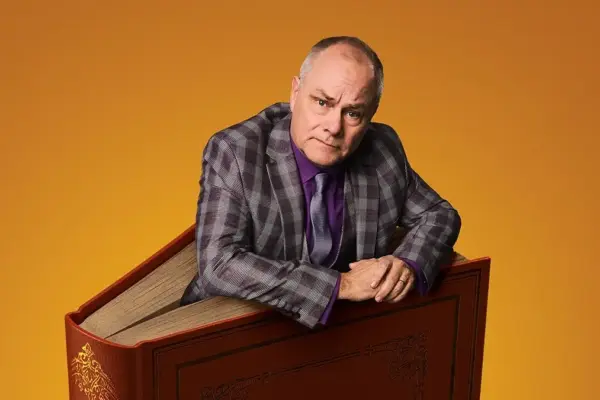
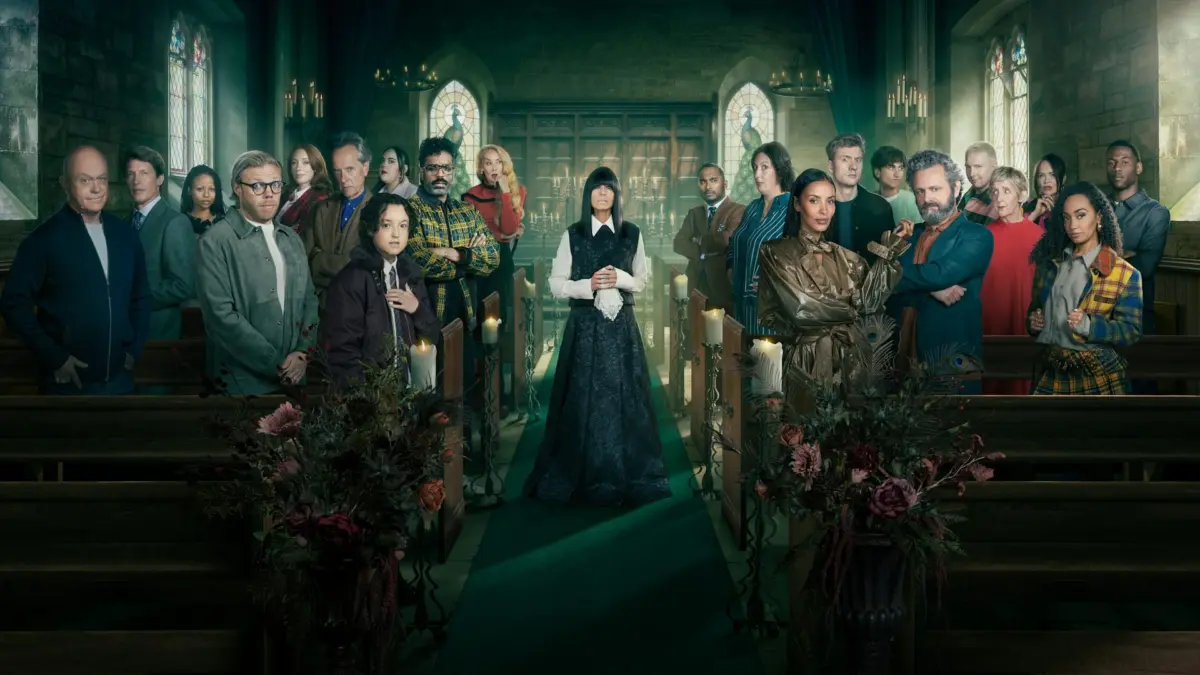
The upcoming 2026 celebrity iteration of the hit game show—boasting an eclectic lineup including chart-topping singer James Blunt, mathematician Dr. Hannah Fry, broadcaster Amol Rajan, and acclaimed actors Bella Ramsey and Richard E. Grant—will undoubtedly feature meticulously crafted game plans. Yet, behavioral science, game theory, and psychological research suggest that these high-profile contestants are walking into an analytical trap.
Far from being a straightforward test of human intuition, The Traitors is structurally designed in a way that renders verbal communication, behavioral analysis, and gut feelings entirely useless. Economic theory dictates that in a game of pure information asymmetry, talk is fundamentally cheap. Furthermore, decades of psychological research reveal that human beings are catastrophically bad at detecting deception, operating barely above random chance. Combined with basic mathematical probability and the human brain’s unfortunate preference for vivid anecdotes over cold, hard statistics, playing The Traitors successfully is less a matter of skill and more a lottery of survival.
The Economic Trap: Why Talk is Cheap and Discussion is Futile
To understand why the roundtable discussions in The Traitors ultimately signify nothing, one must turn to microeconomics and game theory. In any interaction where agents have conflicting incentives, communication models dictate that "talk is cheap" if statements are neither binding nor verifiable.
Inside the castle walls, Traitors and Faithfuls share the same physical space and vocabulary. A Traitor can ask a probing question, construct an elaborate theory, display visible signs of anxiety, or defend themselves with soaring rhetorical passion. Crucially, a genuine Faithful can—and frequently does—do all of these things as well.
Because nothing a contestant says can be independently checked against an objective reality, and because Traitors possess an absolute incentive to lie to protect their status, their words lose all analytical value. Economic theory dictates that when the cost of deception is zero and the reward for successful deceit is high, communication ceases to transmit reliable signals.
Consequently, listening to what anyone says at breakfast or during the fierce debates of the roundtable is mathematically and logically futile. The Traitors are entirely free to mimic the behavioral patterns of the innocent, meaning that verbal output provides zero discriminatory power to those trying to root them out.
The Psychology of Lying: Why We Are No Better Than a Coin Flip
If listening to contestants is useless, surely watching them—analyzing their micro-expressions, vocal inflections, and body language—offers a reliable path to the truth?
Decisive scientific evidence answers with a resounding no. Human beings possess an inflated, almost mythological confidence in their ability to spot a liar, yet empirical psychology proves this confidence is entirely unfounded. Across more than 200 scientific studies investigating human deception-detection capabilities, research consistently demonstrates that people successfully identify a liar only about 54% of the time.
To put that dismal figure into perspective, simply flipping a coin yields a 50% accuracy rate. Centuries of human evolution, millions of dollars spent on specialized body-language training, and an entire industry of televised "lie detection" have collectively elevated our baseline ability to spot deception by a mere four percentage points over random chance.
When contestants clutch their pearls over a shaky voice or a darting eye, they are falling victim to the "Pinocchio effect" fallacy—the false belief that deception reliably manifests through predictable physical tics. In reality, human beings are remarkably poor lie detectors, a cognitive vulnerability that forms the invisible engine driving the dramatic tension of The Traitors.
The Mathematics of Suspicion and the Death of Statistics
Beyond the psychological hurdles lies cold, unfeeling arithmetic. At the commencement of a standard season featuring, for instance, three Traitors embedded among 21 total players, any random name plucked from the ether carries a meager one-in-seven chance of being correct.
While those mathematical odds theoretically improve as players are banished and the total headcount shrinks, the reality of the game is far more punishing. For almost the entirety of the series, any accusation launched without concrete, unchangeable evidence remains statistically more likely to be wrong than right.
In the absence of hard evidence, human psychology defaults to a well-documented cognitive shortcut: we latch onto whatever is vivid, salient, and emotionally striking about a contestant’s behavior. If a player grows uncharacteristically quiet, we deem them suspicious. If they become overly defensive, we read it as guilt. If they agree too quickly with a consensus, we smell a rat.
This behavioral reliance on the anecdotal over the analytical is deeply ingrained in human nature. Classical psychological research has repeatedly shown that when individuals are presented with a colorful, descriptive narrative alongside dry, boring statistical data, the narrative invariably triumphs, and the statistics are entirely ignored.
In a famous foundational experiment, participants were given a pool profile of 100 professionals—either split as 70 engineers and 30 lawyers, or vice versa. They were then given a vivid description of one individual from the group: a man described as cautious, deeply uninterested in politics, and passionately fond of mathematical puzzles.
When asked to guess the man’s profession, the vast majority of participants declared him to be an engineer—and they did so regardless of whether they were told engineers made up 70% of the group or just 30%. Had these participants factored in the base-rate probabilities, their answers would have logically reflected the underlying demographics. Instead, the vivid narrative description completely overpowered the cold numbers.
On The Traitors, this cognitive bias runs rampant. A dramatic gasp or a tearful plea at the roundtable routinely overrides the simple mathematical reality that the person being accused is statistically likely to be innocent.
DETAILED CHRONOLOGY: An Academic Experiment in Treachery
To observe these economic and psychological theories playing out in real-time away from television editing suites, academics have occasionally brought the game into controlled environments.
Recently, a controlled version of The Traitors was conducted within a university setting, utilizing a class of 13 undergraduate economics students. The goal was to strip away the glossy television production and observe pure strategic behavior under laboratory-like conditions.
Phase One: The Setup and the First Round
In this academic simulation, six students sat at the front of the room—two of whom were secretly assigned the role of Traitors. Over four high-pressure rounds lasting approximately five minutes each, the class engaged in heated debates regarding the identities of the saboteurs, culminating in a smartphone-based vote to banish a single player.
Before play commenced, each of the six players was handed a sealed card containing a seemingly profound observation about another participant—for example: "Player F seemed unusually calm before the start of the game." Unknown to the students, these observations were entirely randomized before roles were assigned. They possessed a true value of precisely zero.
True to television form, the first round devolved into emotional signaling. With zero verifiable evidence to anchor their arguments, the student body gravitated toward the most outspoken, confident student in the group. His self-assured demeanor—meant to project leadership—was instantly reinterpreted by the room as unbridled guilt. Every single student in the room voted to banish him, save for the accused himself.
He was a Faithful.
Phase Two: The Backlash and Logical Fallacies
Heading into the second round, suspicion abruptly shifted toward the two students who had spearheaded the first-round witch hunt. The class reasoned that a cunning Traitor would naturally steer the group toward an innocent victim to deflect suspicion.
While this psychological theory was half-correct—one of those two vocal students was indeed a Traitor—the collective intelligence of the class failed them once again. They voted to banish the wrong person of the two, eliminating another innocent Faithful.
Phase Three: The Pivot to Verifiable Evidence
It was only by the third round that the dynamics of the room fundamentally shifted. Abandoning vague behavioral cues, gut feelings, and useless psychological reads, the players began reasoning from hard evidence that could not be faked: voting records.
By meticulously tracking who had voted for whom across previous rounds, the students established an empirical trail of accountability. This rigorous, evidence-based system successfully unmasked the first Traitor, and subsequently the second, ultimately leading the final surviving Faithfuls to a hard-fought victory.
Notably, the observing student audience in the room mirrored the behavior of the active players. When the six players at the front reached a unanimous consensus, the audience voted with them almost to a person. When the active players were internally fractured and divided, the audience split right along with them, proving the contagious nature of collective panic.
OFFICIAL STATEMENTS & POST-GAME DEBRIEFINGS
Following the conclusion of the academic simulation, the student Traitors revealed the tactical blueprints behind their gameplay, shedding light on the mechanics that also govern the celebrity-studded television version.
The first Traitor employed an aggressive, high-visibility strategy. He deliberately went loud, spearheading accusations, dominating airtime, and systematically turning Faithfuls against one another to create internal chaos.
Conversely, the second Traitor adopted a ghost-like approach: she stayed quiet, asked very few probing questions, and simply cast her votes alongside her fellow Traitor when necessary.
Both of these contrasting strategies shared a singular, defining characteristic: they are precisely how a Faithful might play the game.
A nervous or strategic Faithful can easily be loud and defensive, just as an innocent participant can remain quiet and reserved. Because neither strategy inherently violated the behavioral baseline of an innocent person, neither approach gave the Traitors away.
Furthermore, during the post-game debriefing, several players confessed that the entirely meaningless observations printed on their initial cards had covertly shaped their suspicions, even though none of them had dared voice those thoughts aloud during the gameplay. Fascinatingly, all four surviving Faithfuls reported feeling entirely confident in their deductions—even during the specific rounds where they disastrously banished their own allies.
FUTURE OUTLOOK: Why We Will Keep Watching Despite the Odds
When audiences tune into the televised iterations of The Traitors, the dynamic differs fundamentally from both classroom simulations and the contestants’ lived experience. Because viewers enjoy the omniscient perspective of knowing the Traitors from the very opening credits, they view the unfolding drama through a lens of incredulity.
Yet, this very friction—the agonizing gap between what we know and what the contestants experience—is the lifeblood of the format.
As the 2026 celebrity version approaches, featuring high-profile minds like mathematician Hannah Fry alongside cultural icons like James Blunt and Richard E. Grant, viewers should temper their expectations of flawless logic. Dr. Fry, despite her formidable mathematical background, will find that arithmetic offers little comfort when the core mechanics of the game are rooted in cheap talk, undetectable lies, and probabilistic chaos.
Ultimately, The Traitors endures not because it is a solvable puzzle of pure intellect, but precisely because it is an unsolvable theater of human error. The misplaced confidence, the elaborate conspiracy theories, the cascading miscalculations, and the agonizing betrayals are not bugs in the system—they are the core features. As long as human beings confuse vivid storytelling with hard evidence, we will continue shouting at our television screens, blissfully unaware that from inside the castle, the truth is entirely out of reach.