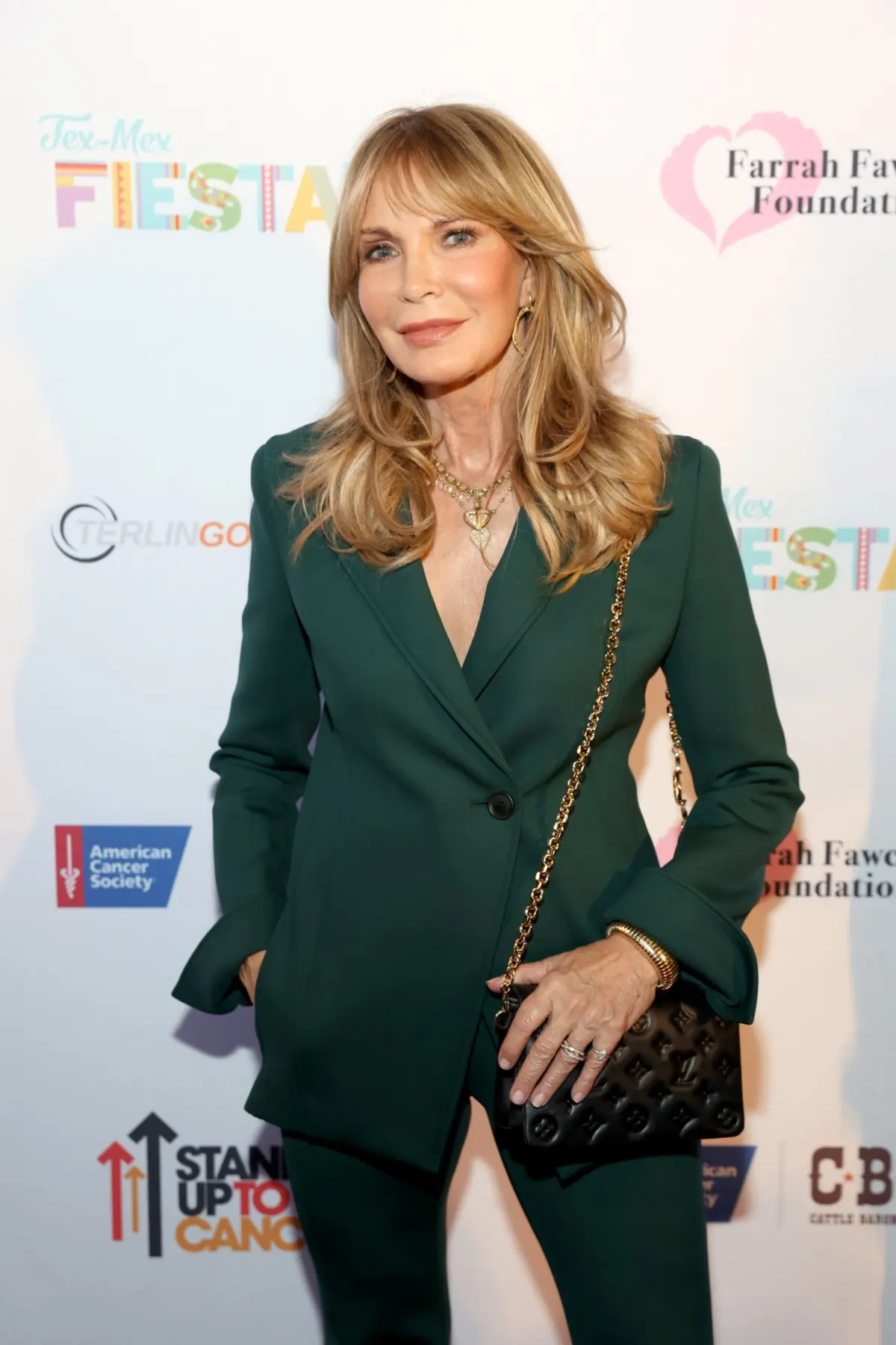
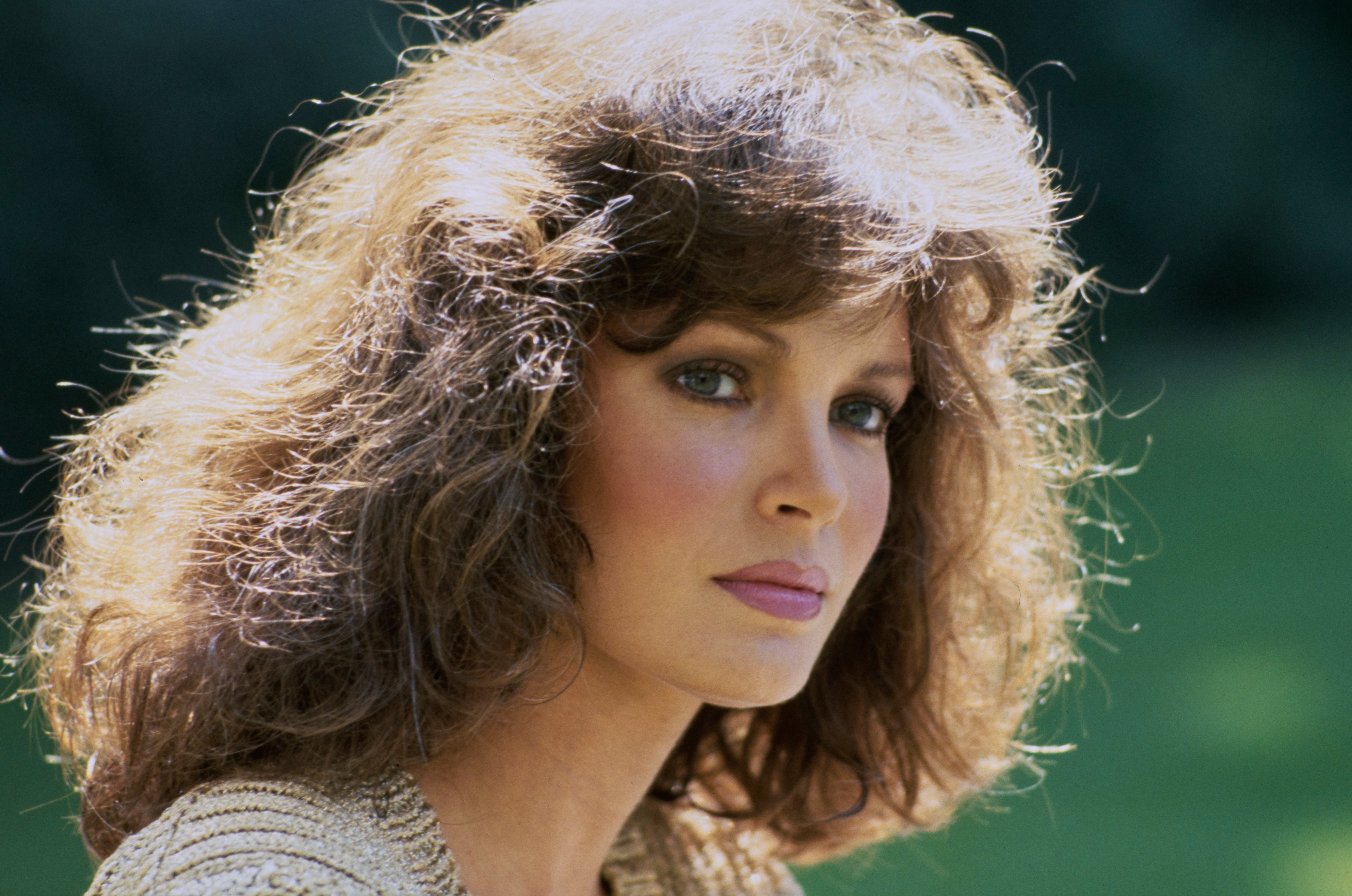
As the cultural touchstone that defined 1970s television marks its golden jubilee, original star Jaclyn Smith has opened the vault of her memories, offering an unvarnished look at the triumphs, temptations, and tribulations behind the cultural phenomenon known as Charlie’s Angels. In her forthcoming memoir, I Once Knew a Guy Named Charlie, the 80-year-old icon delivers a series of startling revelations that pierce the glossy veneer of the hit detective series. Among these disclosures is a candid account of being propositioned for a threesome by late co-star Tanya Roberts and her husband, alongside a sobering look at the pervasive shadow of illicit drug use that marred the later seasons of production.
Now, half a century after the series first electrified television screens in 1976, Smith’s reflections arrive amidst a broader wave of nostalgia—accentuated by a recent high-profile cast reunion at PaleyFest LA 2026. While contemporary audiences continue to celebrate the show’s pioneering depiction of female agency, action, and glamour, Smith’s insider perspective forces a more nuanced re-evaluation of the era. The memoir bridges the gap between the sanitized public image of Hollywood’s golden age of television and the complex, often turbulent reality experienced by the women who commanded its spotlight. This comprehensive report examines Smith’s revelations, contextualizes the series’ enduring cultural footprint, and charts the legacy of a production that fundamentally altered the landscape of modern entertainment.
Detailed Chronology: From 1976 Genesis to the 2026 Golden Jubilee
To understand the weight of Jaclyn Smith’s recent disclosures, it is essential to trace the dramatic trajectory of Charlie’s Angels from its humble, high-stakes beginnings to its status as an immortalized pop culture institution.
Phase I: The Original Trio and Immediate Phenomenon (1976–1979)
When Aaron Spelling and Leonard Goldberg premiered Charlie’s Angels on September 22, 1976, network executives were deeply skeptical about a premise centered on three female private investigators taking orders from an unseen boss. Yet, the original lineup—comprising Jaclyn Smith as Kelly Garrett, Kate Jackson as Sabrina Duncan, and Farrah Fawcett as Jill Munroe—captivated a massive audience almost overnight. The show relied heavily on the palpable chemistry between the three leads. As Jackson recalled during the 50th-anniversary retrospective panels, the bond was instantaneous and unshakeable: "We started shooting the pilot, and I never doubted. I don’t know why, but I never doubted that it was going to be a big hit. It was unique."
However, the meteoric rise of "Angels Mania" created immediate friction behind the scenes. Farrah Fawcett famously departed the series after just one season, triggering a revolving door of co-stars that would come to define the show’s operational instability. Fawcett was replaced by Cheryl Ladd (playing Kris Munroe), which paradoxically boosted ratings even higher, transforming the series into a global merchandising juggernaut.
Phase II: Behind-the-Scenes Fractures and the Rise of Substance Abuse (1979–1981)
As the series progressed into its later seasons, the idyllic camaraderie of the early years began to fray under the relentless pressures of a demanding production schedule. In I Once Knew a Guy Named Charlie, Smith details how the glittering exterior of the show masked a darker backstage reality. As the 1970s bled into the 1980s, the Hollywood nightlife culture bled directly onto the soundstages.
Smith reveals that cocaine became an omnipresent fixture as the series wore on, fundamentally altering the working environment. Choosing self-preservation over participation, Smith retreated inward. "The more drug use I saw, the more time I spent in my motor home," she writes. "I was in there a lot by the end of the series." Having witnessed firsthand how the substance could distort personalities, Smith made a firm vow never to indulge, noting that the drug consistently transformed people into "the worst version of themselves."
Phase III: The Arrival of Tanya Roberts and the Open Marriage Revelation
The fifth and final season of Charlie’s Angels (1980–1981) introduced Tanya Roberts as Julie Rogers, stepping in after Shelley Hack’s brief stint. It was during this turbulent final era that Smith experienced one of her most memorable off-camera encounters.
As detailed in her memoir and corroborated in recent interviews with People magazine, Smith was approached by Roberts and her husband, Barry Roberts (to whom she was married from 1974 until his death in 2006). The couple, known to be living an open lifestyle, propositioned Smith for a threesome while the cast and crew were traveling on a flight to Hawaii for location shoots.
Smith politely declined the offer, yet her retrospective assessment of the interaction is remarkably devoid of judgment. She characterizes Roberts’ unabashed openness regarding her sexuality as both "brave and self-aware"—a notable perspective given the conservative social climate of early-1980s television production.
Phase IV: The 50th Anniversary and PaleyFest LA 2026 Reunion
Decades after the cameras stopped rolling, the cultural footprint of Charlie’s Angels refuses to fade. Earlier this year, surviving cast members Jaclyn Smith, Kate Jackson, and Cheryl Ladd reunited at PaleyFest LA 2026 to celebrate the milestone anniversary. The event served as a poignant reminder of the enduring sisterhood forged under intense public scrutiny.
Reflecting on the enduring legacy of the show, Smith expressed astonishment at its longevity. "People still send Charlie’s Angels pictures for me to sign every day," Smith remarked. "Who would have dreamed the afterlife of Charlie’s Angels would be like this? We were just three girls hoping to find an audience, and boy, did we find an audience."
Supporting Context & Metrics: The Scale of Charlie’s Angels
To fully grasp the magnitude of the revelations in Smith’s memoir, one must measure the monumental scale of the empire against which these private dramas played out.
Ratings Hegemony: At its peak, Charlie’s Angels was a bonafide ratings juggernaut, regularly drawing upwards of 23 to 30 million weekly viewers in the United States alone during its first two seasons, anchoring ABC’s Wednesday night lineup.
Global Syndication Footprint: The series has been broadcast in over 90 countries worldwide, generating billions of dollars in syndication revenue over the past five decades.
The "Jiggle TV" Paradox: Coined by then-ABC executive Fred Silverman, the term "Jiggle TV" was often hurled at the show by critics who reduced its success to sex appeal. However, cultural historians increasingly credit the series with laying the groundwork for modern action heroines, demonstrating that women could simultaneously embody glamour, intelligence, and physical prowess.
The Cinematic Reboot Era: The brand’s vitality was proven anew at the turn of the millennium when McG directed the 2000 feature film adaptation starring Drew Barrymore, Cameron Diaz, and Lucy Liu. Grossing over $264 million worldwide globally, the film spawned a 2003 sequel (Charlie’s Angels: Full Throttle) and a subsequent 2019 reboot directed by Elizabeth Banks, cementing the property’s multi-generational appeal.
The Toll of Time: Of the primary cast members who defined the series, the community has suffered profound losses. Farrah Fawcett passed away in 2009 at the age of 62 following a valiant battle with cancer, while Tanya Roberts passed away in January 2021 at the age of 65. The surviving core trio—Smith, Jackson, and Ladd—remain standard-bearers for a bygone era of network television royalty.
Official Statements and Memoir Excerpts
The release of I Once Knew a Guy Named Charlie has triggered widespread media coverage, prompting reflections from the principals involved and industry observers alike.
Jaclyn Smith on Boundaries and Substance Abuse
Elaborating on her decision to isolate herself within her motor home during the later seasons of production, Smith emphasized the importance of maintaining personal boundaries in a high-pressure environment:
"I’ve watched that drug, in particular, turn people into the worst version of themselves. You protect your peace, your values, and your health. On a set like that, isolation wasn’t just about avoiding drama; it was about survival."
Kate Jackson on Cast Chemistry
During the PaleyFest LA 2026 panel, Kate Jackson underscored that the foundational success of the series stemmed from a genuine, unmanufactured bond that transcended the scripts:
"It was unusual. The three of us had chemistry that was… I mean, we’re still sisters today and you people are all so crazy that you’re still around after 50 years. I can’t believe it."
Industry Reception of Roberts’ Revelation
Media analysts and literary critics reviewing advance copies of Smith’s book have noted that the disclosure regarding Tanya Roberts and Barry Roberts provides a rare, uncensored glimpse into the shifting sexual paradigms of Hollywood’s elite long before open relationships became a frequent topic of mainstream discourse. By framing Roberts’ proposition through a lens of respect rather than scandal, Smith subverts the expected tell-all trope, opting instead for a narrative of psychological introspection and historical accuracy.
Future Outlook: The Enduring Legacy of the Angels
As Charlie’s Angels crosses the historic threshold of its 50th anniversary, the narrative surrounding the show has evolved significantly. What was once dismissed by mid-century critics as transient pop-culture fluff is now studied as a critical stepping stone in the evolution of feminist representation in media.
Jaclyn Smith’s memoir does not tarnish this legacy; rather, it humanizes it. By stripping away the gloss of network PR to reveal the isolation of the motor home, the temptations of the era’s narcotics, and the complex personal lives of performers like Tanya Roberts, Smith offers a masterclass in historical honesty.
Looking forward, the intellectual property remains a prized asset in Hollywood’s ceaseless quest for nostalgic touchstones. Yet, for millions of fans worldwide, the true heart of Charlie’s Angels will forever reside in the pioneering synergy of Smith, Jackson, and Fawcett. As these icons age gracefully into their golden years—reuniting on festival stages and sharing the unvarnished truth of their journeys—they continue to prove that true angels possess a resilience far more powerful than any television script could ever capture.