Executive Overview
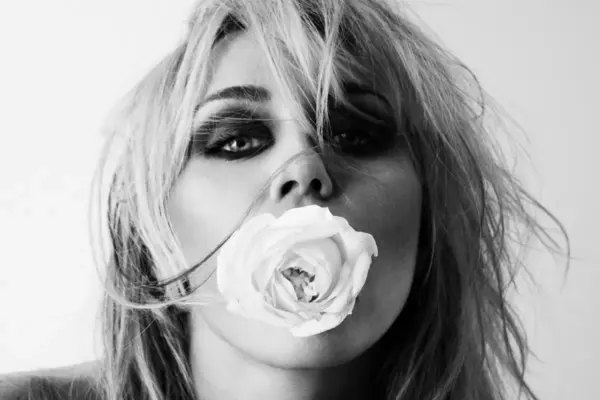
Nearly three decades after capturing global attention with her chart-topping cover of "Torn," Australian singer-songwriter Natalie Imbruglia is once again redefining her career on her own terms. Releasing her seventh studio album, Algorithm, independently through her own label, Landgirl, the 51-year-old artist is confronting the most complex intersections of her personal and professional life.
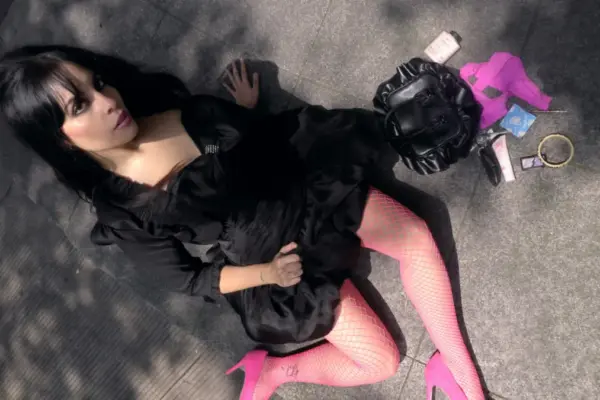
Far from a conventional pop release, Algorithm pairs vibrant, danceable instrumentation inspired by iconic acts like Talking Heads and Grace Jones with searing lyrical vulnerability. Behind the shimmering sonic surfaces lie raw reflections on midlife mental health, the unravelling effects of perimenopause, and managing a late-in-life ADHD diagnosis while maintaining an active international touring schedule. Imbruglia’s journey—from a teenage hopeful on the streets of Sydney to a multi-platinum international pop phenomenon, and now to an independent, self-assured mature artist—underscores a profound evolution in how women in the music industry navigate aging, neurodiversity, and artistic autonomy.
Detailed Chronology
Early Ambitions and Sydney Beginnings
Growing up in Sydney, Australia, Natalie Imbruglia’s fascination with performance manifested early. As a child, she squeezed lemon juice into her hair to lighten it and staged impromptu Whitney Houston cover concerts for her neighbours. By her early teens, her raw enthusiasm had landed her commercial work for brands like Coca-Cola and Twisties, alongside singing Christmas carols in shopping centres.
However, adolescence brought turbulence. As she entered her mid-teens, her social circle shifted, and she grew increasingly rebellious.

"When you turn 15 or 16, and you’re into boys, you’re like, ‘Oh, that’s really naff. I don’t want to be doing that any more,’" Imbruglia recalls with a laugh.
Described by family as nearly unparentable, she frequently snuck out, occasionally sleeping in cars parked along the beach. Her strict parents responded by policing her social life, famously tracking her down at parties with photographs to ask peers if they had seen her. Amidst domestic tension, music remained her primary solace. A pivotal moment occurred in 1992 when, at age 15, she stood pressed against the barriers at an INXS concert, intensely studying frontman Michael Hutchence—a moment captured in a recently rediscovered photograph that charted her early, fierce determination to claim a stage of her own.
The Soap Opera Launchpad and ‘Left of the Middle’
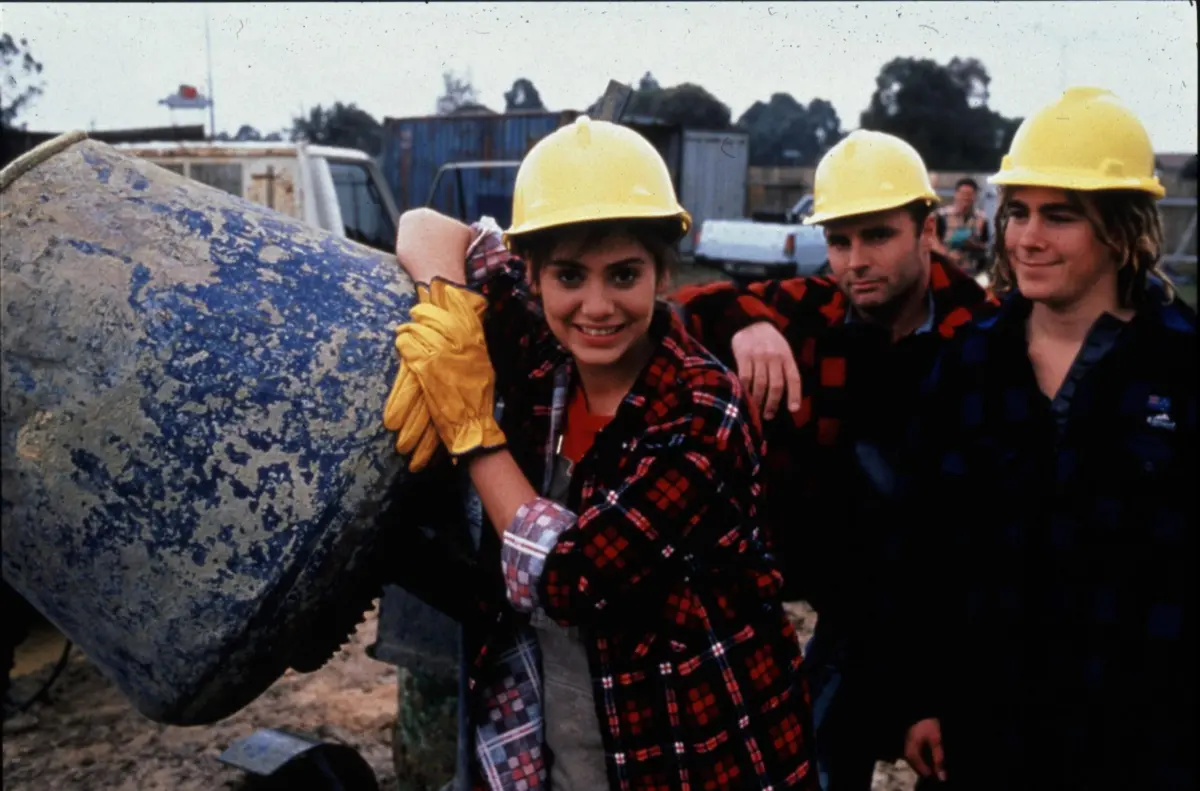
Imbruglia’s breakthrough into professional acting arrived when she secured the role of builder’s apprentice Beth Brennan in the popular Australian soap opera Neighbours. Seeking a wider creative horizon, she left the show in the mid-1990s and relocated to London.
Shortly after arriving in the UK, she signed a recording contract with RCA Records. In 1997, she released her debut single, "Torn"—a cover track that became an instant global phenomenon. Propelled by the track’s massive success, her debut album, Left of the Middle, went on to sell an estimated seven million copies worldwide, establishing her overnight as a major international pop star.

Despite co-writing nearly every other track on the record, the inescapable dominance of "Torn" created a persistent media narrative that overshadowed her songwriting contributions. While Imbruglia acknowledges the song as a "beautiful gift," the intense scrutiny and sudden fame triggered profound insecurities, leading to self-sabotaging career choices. For her second album, she deliberately released "That Day," a free-verse, stream-of-consciousness track devoid of a traditional chorus, as an act of artistic rebellion against her overnight pop stardom.
Navigating Industry Pressures and Creative Wandering
The ensuing years brought both extraordinary highs and jarring challenges. In a bizarre career detour, Imbruglia auditioned for the lead role of Satine in Baz Luhrmann’s cinematic masterwork Moulin Rouge. Reflecting on the unusual casting process, she recalls that the audition essentially required simulating an orgasm—a directive that, while not malicious given the director’s famously gentle nature, left her feeling deeply vulnerable and homesick.
Musically, she returned to commercial territory with mid-2000s hits like "Wrong Impression" (2002) and "Shiver" (2005). However, subsequent commercial dips led her label to shelve her fourth album. Undeterred, Imbruglia diversified her career: she served as a judge on the Australian version of The X Factor, starred in a UK theatrical production of Alan Ayckbourn’s Things We Do for Love, and gradually rediscovered her musical footing through the covers album Male (2015) and the introspective, personal record Firebird (2021).
Supporting Context & Metrics
The Physiology of Midlife: Perimenopause, ADHD, and Mental Health
In her latest work, Imbruglia breaks new ground by addressing topics historically sidelined in pop music: perimenopause and midlife neurodiversity. Diagnosed with ADHD in adulthood, she found that the onset of perimenopause severely exacerbated her symptoms, creating a compounding effect on her cognitive processing, emotional regulation, and baseline anxiety.

"Perimenopause is not just about hormones. It’s to do with your mind. Your brain needs oestrogen to function, so when the levels fluctuate, it affects your spatial awareness," she explains. "I’ve never walked into so many doorways. The brain fog’s quite jarring."
The cognitive disruption translated directly into high-pressure professional environments. Touring heavily exacerbated her lifelong stage fright into acute sensory sensitivity. Normal conversational tones registered as painful shouting, and everyday decisions—such as choosing between still and sparkling water—became cognitively overwhelming.
The psychological toll peaked during a recent tour when Imbruglia reached a breaking point, informing her co-writers David Sneddon and Anu Pillai that she felt compelled to quit music entirely due to her struggles with pre-show anxiety and interpersonal patience. Through supportive dialogue, her collaborators helped her reframe her fight-or-flight responses, transforming an impromptu crisis into the creative foundation for her new track, "Upside Down."
Imbruglia also draws parallels to her mother’s generation, noting a distinct lack of historical discourse around the physiological realities of menopause.

"My mum never talked to me about it, but looking back, I know she had a really bad one. Her anxiety was off the charts, too, and I have a lot more compassion now, because she had four kids. I’ve only got one."
Album Metrics and Production Insights
- Album Algorithm
- Album Number: Seventh studio release
- Record Label: Landgirl (independent label founded by Imbruglia)
- Key Collaborators: David Sneddon, Anu Pillai, Gary Lightbody (Snow Patrol)
- Notable Tracks: "Who Dimmed The Lights" (addressing perimenopausal mental health), "Upside Down" (inspired by pre-show anxiety management), "Beautiful Love" (co-written with Gary Lightbody; video shot on an iPhone featuring her original 1997 Mercedes-Benz).
- Historical Milestone: Her debut album, Left of the Middle (1997), achieved global lifetime sales exceeding 7 million copies.
Official Statements & Industry Reflections
Reflecting on the evolution of her artistic identity, Imbruglia emphasizes that stepping away from the music industry and returning on her own terms fundamentally repaired her relationship with her craft:
"It was quitting music and coming back to it that gave me an appreciation of my abilities. I might not be the best songwriter, even now, but there’s only one me, and when I go inside myself and feel the emotion of what I’m writing about and deliver it, that’s what my fans resonate with, and that’s enough."
Furthermore, the creative process for Algorithm required physical movement as an essential catalyst for her songwriting. Unlike artists who write stationary in professional facilities, Imbruglia relies on kinetic energy to capture melodies:

"I walk around in circles to get the melodies, to catch them. If I’m sat in a chair, I get nothing. So if I go and work with someone new and they have a shoebox-sized studio, I’m like, ‘How am I going to do my circles?’"
Addressing modern digital consumption, the album’s title track also touches upon the psychological traps of internet culture and algorithmic design. Imbruglia cautions against the compulsive urge to engage with distressing online media:
"There’s a voice in my head that says, ‘You don’t want to click on that’, and I’ll click on it. It’s like this compulsion. You have to change the settings. Don’t allow yourself to be in a situation where your stress relief is scrolling on a phone in bed. It’s just not healthy."
Future Outlook
With the independent release of Algorithm via Landgirl, Natalie Imbruglia stands at a triumphant juncture in her multi-decade career. By refusing to shy away from the realities of aging, neurodiversity, and the often-taboo subject of perimenopause, she has cultivated a deeper, more authentic connection with her audience.

Rather than smoothing over the rough edges of her lived experience, Imbruglia embraces the emotional pendulum—from the depths of midlife anxiety to the soaring optimism of tracks like "Beautiful Love." As she continues to tour, write, and produce on her own terms, her trajectory serves as an authoritative blueprint for artistic longevity, proving that true creative power lies in self-acceptance, relentless motion, and uncompromising authenticity.