Executive Overview
The financial architecture of the modern global music economy is once again under intense scrutiny as the United States Copyright Royalty Board (CRB) prepares for its next landmark rate-setting proceeding. Known formally as Phonorecords V, this regulatory review will dictate the statutory mechanical royalty rates that music streaming services must pay to songwriters, composers, and music publishers across the United States for the five-year period spanning 2028 through 2032.
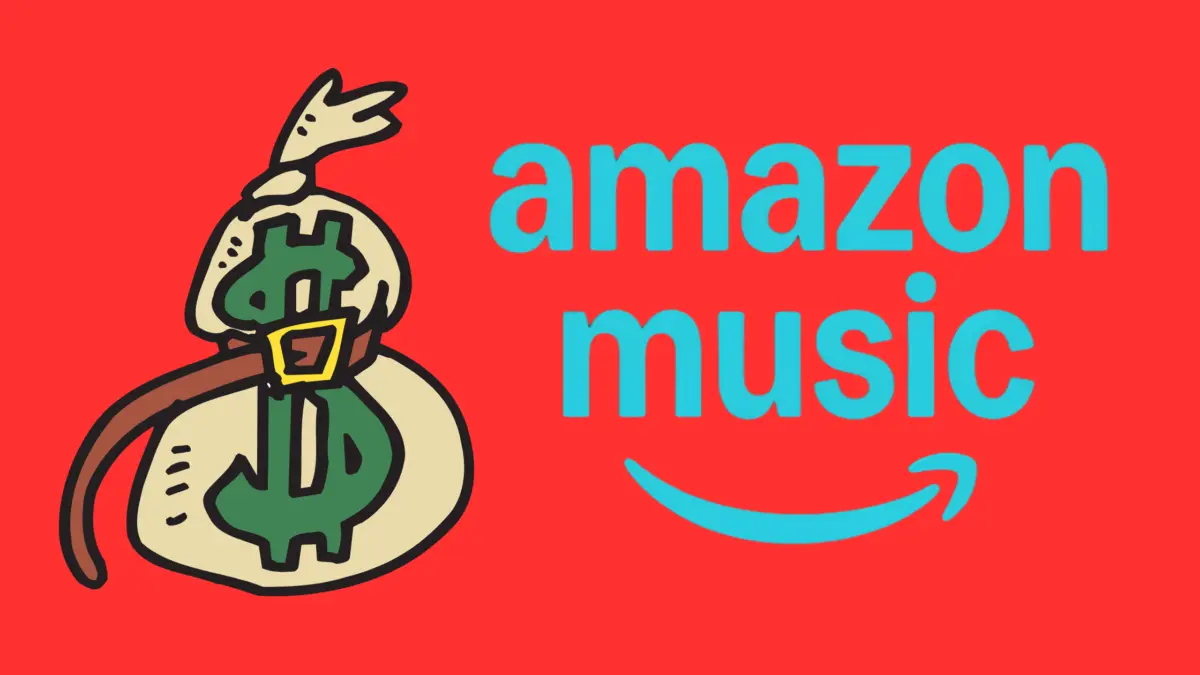
As the opening legal submissions and formal policy proposals land at the CRB, the battle lines have been drawn. While the majority of digital service providers (DSPs) are advocating to preserve the status quo—locking in a peak revenue-share rate of 15.35% that is scheduled to take effect next year—one major technology titan has shocked the creative community. Amazon, a corporate leviathan boasting a market capitalization approaching $2.8 trillion and annual revenues exceeding $717 billion, has bucked the industry trend by proposing a direct rate cut, petitioning the CRB to lower the revenue-share payout to 13.4%.
This aggressive stance has fundamentally shifted the politics of the review. Amazon has decisively dethroned Spotify as the music industry’s public enemy number one, drawing sharp rebukes from high-ranking publishing executives and activist songwriter coalitions. Compounding these tensions are fierce debates over aggressive "bundling" tactics—which have already cost creators an estimated billion dollars—and radical alternative proposals from songwriter guilds calling for the complete dismantling of the legacy revenue-share model in favor of a flat, inflation-adjusted per-stream rate.
As the CRB gears up for public hearings in the spring of next year, the outcome of Phonorecords V will shape the economic viability of the songwriting profession for the next decade, testing the limits of statutory rate regulations in an era of platform dominance.
Detailed Chronology: The Road to Phonorecords V
To understand the gravity of the current proceedings, one must examine the legal and historical framework governing American music copyright. Under US copyright law, digital music streaming relies heavily on a compulsory licensing system for the exploitation of "mechanical rights"—the right to reproduce and distribute musical compositions (songs) as opposed to sound recordings (master rights).
Because of this statutory framework, songwriters and music publishers cannot legally withhold their catalogues from digital platforms that comply with the law. Instead, they are bound by rates meticulously litigated and established by the CRB, a panel of three judges operating under the Library of Congress.
From Phonorecords IV to the Present Day
The current era, known as Phonorecords IV, established the statutory rates for the 2023–2027 cycle. That proceeding concluded following a hard-fought battle that ultimately resulted in a negotiated settlement between major streaming platforms and the National Music Publishers’ Association (NMPA). Phonorecords IV established a series of incremental annual increases to the headline mechanical royalty rate, culminating in a 15.35% revenue-share rate slated to kick in next year (2025/2026, bridging into the final year of the cycle).
However, the regulatory clock never stops. The upcoming Phonorecords V proceeding will review and establish the statutory rates that will govern the US market from 2028 through 2032.
Earlier this month, stakeholders officially submitted their opening arguments, proposals, and economic models to the CRB. The timeline for the remainder of the proceeding is well-defined:
- Late 2024 / Early 2025: Initial discovery and filings of expert economic testimonies.
- Early 2027: A potential window for private settlements, should the streaming giants and publisher lobbies opt to bypass a grueling trial—mirroring the expedited settlement seen in Phonorecords IV.
- March and April 2027: Formal CRB evidentiary hearings and oral arguments, where judges will evaluate competing economic models.
- Late 2027 / 2028: Final CRB ruling and implementation of the Phonorecords V rate structure, taking effect on January 1, 2028.
Supporting Context & Metrics: The Financial Battlefield
The submissions filed with the CRB reveal a fractured digital music marketplace where streaming services, publishers, and independent creators harbor fundamentally irreconcilable visions for how revenue should be distributed.
The DSP Stance: Preserving the Status Quo
Aside from Amazon, the major streaming platforms—led by Spotify—are urging the CRB to maintain the status quo. Spotify’s legal and economic submissions heavily emphasize legal precedent and commercial stability. The company argues that the best indicator of what a "willing buyer" and a "willing seller" would agree to in a free market is what they actually agreed to during the Phonorecords IV negotiations just four years ago.
Spotify’s submission explicitly notes:
"The bundle terms and economics in particular were a known, core term of the Phonorecords IV settlement… in publicly celebrating the settlement, both sides recognised the bundle terms and economics as a central component of the deal."
Amazon’s Controversial Rate-Cut Proposal
Amazon’s submission stands in stark contrast to its industry peers. By proposing to slash the headline mechanical rate from the upcoming 15.35% down to 13.4%, Amazon has invited immediate antitrust and ethical scrutiny.
The disparity in scale between Amazon and the creators whose works power Amazon Music is staggering. With a market cap of $2.8 trillion and annual revenues of $717 billion, Amazon is roughly 100 times the size of the entire US publishing and songwriting industry combined. For a company of this magnitude to petition a federal regulatory body for a rate reduction—at a time when inflation continues to squeeze independent creators—has sparked widespread outrage.
The Bundling Loophole
At the heart of the current friction lies the explosive issue of bundling discounts. Under modern platform strategies, streaming services frequently bundle music subscriptions with other digital goods, such as audiobooks, video streaming, or Prime shipping benefits.
Under current CRB rules, these bundled offerings allow platforms to artificially allocate a smaller portion of subscriber fees toward the musical composition royalty pool, drastically reducing payouts to writers and publishers. While Spotify’s utilization of bundling has drawn heavy flak over the last two years, Amazon has aggressively adopted identical mechanics.
Publishers note that these "forced bundling schemes"—modeled after Spotify’s playbook—have collectively siphoned more than one billion dollars away from songwriters and publishers over recent years. In Phonorecords V, publishers are fiercely pushing to close these loopholes, while DSPs maintain that bundling flexibility is non-negotiable.
The Songwriter Coalition Alternative: Flat Per-Stream Rates
While publishers and DSPs fight over adjustments to the existing revenue-share architecture, a coalition representing grassroots music creators has introduced a radical alternative.
A joint submission by the Songwriters Guild of America (SGA), the Society of Composers & Lyricists (SCL), Music Creators North America, and the Music Artists Coalition proposes abandoning the multi-step, revenue-share formula entirely. Instead, they are advocating for a direct, flat pay-per-stream model.
Their headline proposal calls for:
- A fixed rate of $0.0030 per play for interactive streams.
- Universal application across all service tiers, including free, ad-supported tiers.
- Automatic annual adjustments for inflation running through 2032.
Streaming services have historically shown immense hostility toward flat per-play models, particularly for ad-supported tiers where per-user revenue is notoriously low. Guaranteeing a fixed per-play payout on free tiers exponentially increases financial risk for platforms, making this songwriter proposal an uphill battle before the CRB judges.
Official Statements & Industry Reactions
The public release of the CRB filings has triggered an extraordinary war of words across media platforms and industry circles.
David Israelite, President and CEO of the National Music Publishers’ Association (NMPA), did not mince words when addressing Amazon’s rate-cut proposal. Taking to Instagram, Israelite officially crowned Amazon as the music industry’s new "worst offender," writing:
"It is the ultimate irony that a company with a market cap of $2.8 trillion and annual revenues of $717 billion—which makes Amazon 100 times the size of the total US publishing and songwriting industry—is the one that wants to squeeze songwriters the most."
Israelite further condemned Amazon for compounding this proposed rate cut with predatory bundling mechanics: "Amazon is looking to lower the top line rate it pays writers and publishers while also continuing its forced bundling scheme, which it modeled on Spotify’s sneaky bundling strategy, even though those bundling tricks have cost writers and publishers more than a billion dollars."
Meanwhile, the artist and songwriter coalition issued a joint manifesto explaining the existential motivation behind their revolutionary per-stream pricing model. In an official statement accompanying their filing, the groups emphasized:
"At the heart of our submission is a proposal to replace the industry’s existing, multi-step royalty formula with a direct, flat pay-per-stream model that ensures transparency, fairness, and true compensation for the creators who build the foundation of the entire music economy."
Conversely, the digital service providers have defended their positions through the lens of legal consistency. Spotify’s regulatory filings reiterate that the framework negotiated during Phonorecords IV was designed to provide long-term predictability for all market participants, warning that radical structural overhauls or aggressive rate hikes would destabilize the digital audio ecosystem.
Future Outlook: What Lies Ahead for Phonorecords V?
As the Phonorecords V proceeding advances toward its evidentiary hearings in early 2027, the stakes could not be higher. The structural outcome of this review will determine the economic baseline for American songwriting well into the next decade.
Several critical questions remain unresolved as stakeholders prepare for trial:
- Will Amazon Hold the Line? Facing intense public pressure and reputational damage from the NMPA and creator lobbies, will Amazon soften its stance or double down on its demand for a 13.4% rate cut?
- Can Publishers Reform Bundling? The ability of publishers to successfully lobby the CRB to restrict bundling discounts will dictate whether hundreds of millions of dollars flow back into the songwriting economy or remain locked in platform ecosystem subsidies.
- Is a Settlement Possible? Given the immense legal expenditures required for a protracted CRB trial, industry insiders are already speculating whether DSPs and publishers will pursue a private settlement before the spring 2027 hearings—much like the rapid resolution that characterized Phonorecords IV.
Ultimately, the CRB judges are mandated by law to evaluate what a "willing buyer" and "willing seller" would agree to in a functioning open market. However, because the compulsory license inherently distorts natural market negotiations, songwriters and publishers continue to operate at a structural disadvantage. Whether the regulatory board will heed the calls of trillion-dollar tech giants to lower compensation, or pivot toward empowering the creators behind the music, remains the definitive question facing the American music industry today.