Executive Overview
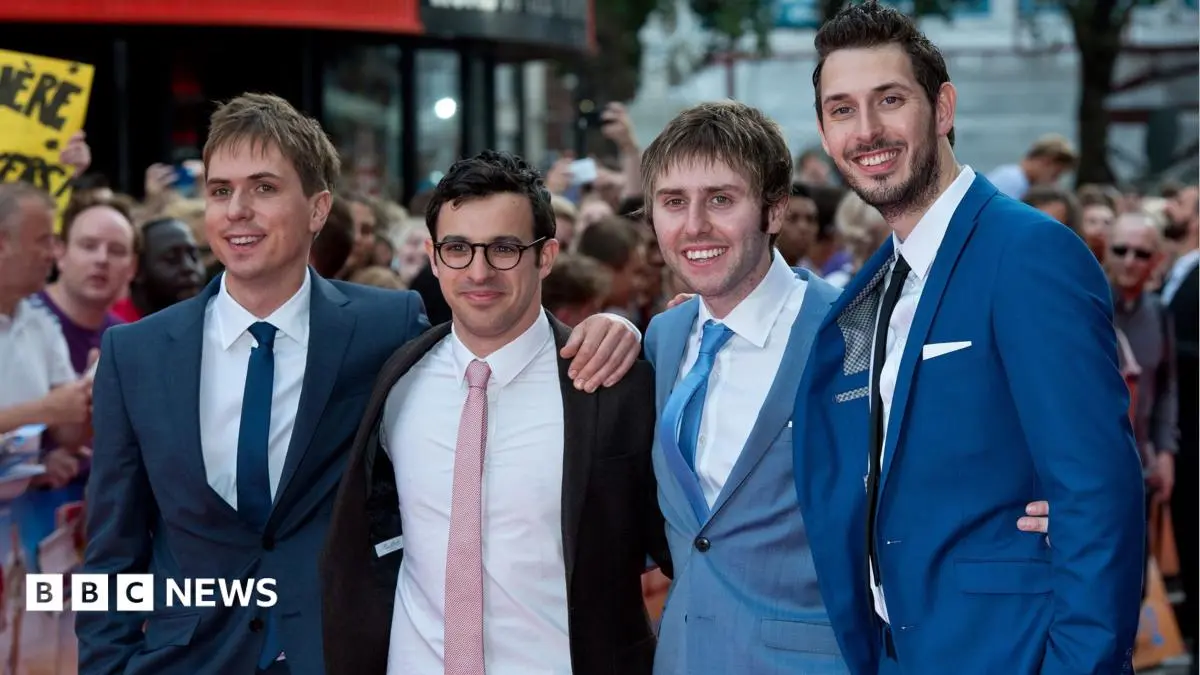
In a development that has sent shockwaves through the landscape of British television comedy, streaming giant Netflix has officially confirmed that a third feature-film installment of the critically acclaimed and culturally seismic sitcom The Inbetweeners is actively in production. Principal photography is slated to commence on Monday, reuniting the original core quartet of Simon Bird, James Buckley, Blake Harrison, and Joe Thomas. The actors will reprise their career-defining roles as Will McKenzie, Jay Cartwright, Neil Sutherland, and Simon Cooper, respectively.
This announcement marks a major resurrection for a franchise that has remained largely dormant since the theatrical release of The Inbetweeners 2 in August 2014. Created originally by Damon Beesley and Iain Morris, The Inbetweeners began as a modest E4 television experiment in 2008, following the excruciatingly awkward, socially inept, and profoundly comedic lives of four suburban teenagers navigating the fictional Rudge Park Comprehensive. Over three celebrated television seasons and two massively successful cinematic outings, the property cemented its status as a defining touchstone of 21st-century British pop culture.
Netflix’s involvement signifies a strategic pivot for the franchise, transitioning from its traditional television and theatrical roots on Channel 4 and Film4 into the global streaming ecosystem. Alongside the greenlight confirmation, the platform released a tantalizing teaser trailer. The brief clip captures the central foursome sliding back into their battered, iconic yellow Fiat Seicento—complete with its mismatched black door—before sputtering out of a storage unit and into what promises to be a fresh chapter of chaotic misadventures.
As cultural nostalgia for the late 2000s and early 2010s reaches a fever pitch, driven largely by viral social media algorithms and endless quote-sharing among younger demographics, The Inbetweeners 3 arrives with immense anticipation and high expectations. This report offers an exhaustive examination of the production’s announcement, a detailed chronology of the franchise, supporting metrics regarding its enduring commercial impact, analysis of official statements, and an authoritative outlook on what this revival means for the future of British comedy.
Detailed Chronology: From Rudge Park Comprehensive to Global Streaming
To fully comprehend the significance of a third Inbetweeners film, one must retrace the remarkable trajectory of a property that defied early skepticism to become a generational phenomenon.
1. The Genesis: E4 and the Birth of a Cult Hit (2008)
When The Inbetweeners premiered on E4—Channel 4’s digital youth-focused sister channel—on May 1, 2008, the television landscape was saturated with glossy, idealized American teen dramas like The O.C. and sanitized British coming-of-age series like Skins. Creators Damon Beesley and Iain Morris aimed to puncture this romanticism by introducing a brutally honest, cringe-inducing, and deeply authentic portrayal of average British adolescence.
Centering on Will McKenzie (Bird), a pompous, middle-class newcomer trying desperately to fit in; Simon Cooper (Thomas), a nervous romantic hopelessly in love with his best friend’s sister; Jay Cartwright (Buckley), a pathological liar prone to wildly embellished sexual exploits; and Neil Sutherland (Harrison), a sweet-natured, profoundly dim-witted foil to his peers; the show struck an immediate chord. Though viewing figures were initially modest, word-of-mouth spread rapidly. The show tapped into a universal vernacular of teenage humiliation, schoolyard banter, and unrequited infatuation that resonated deeply with audiences who saw reflections of their own youth—or their own friendship groups—in the four hapless protagonists.
2. Peak Television and Critical Acclaim (2009–2010)
Over its subsequent second and third seasons, which aired in 2009 and 2010 respectively, The Inbetweeners transformed from a cult favorite into a mainstream juggernaut. It became appointment viewing for British youth and a critical darling, earning multiple British Academy Television Awards (BAFTA) nominations and winning the Audience Award at the 2010 TV Choice Awards.
The series finale, which aired in October 2010, drew an audience of nearly 4 million viewers—an astronomical figure for a digital-first channel like E4. The episode, which saw the boys graduate from Rudge Park Comprehensive and bid farewell to their formative years of suburban purgatory, felt definitive. Yet, the public appetite for more stories featuring Will, Simon, Jay, and Neil was insatiable.
3. The Cinematic Transition: Conquering the Box Office (2011 & 2014)
Recognizing the commercial viability of the brand, Film4 and Entertainment Film Distributors greenlit a feature-film adaptation. Released in August 2011, The Inbetweeners Movie followed the boys on an ill-fated post-A-Level lads’ holiday to Malia. The film was a historic box-office triumph. It broke records for the highest-ever opening weekend for a comedy film in the UK, ultimately grossing over £68 million worldwide against a negligible production budget. It proved that British television comedies could successfully translate their appeal to the theatrical big screen without losing their gritty, irreverent edge.
Buoyed by this unprecedented success, a sequel was inevitable. The Inbetweeners 2 arrived in August 2014, shifting the setting to backpacker culture in Australia. While critical reception was more polarized than its predecessor, the box office numbers remained staggering, outperforming major Hollywood blockbusters during its theatrical run. Following the release of the second film, creators Beesley and Morris emphatically stated that the characters had reached the end of the road, ruling out any immediate prospect of a third film. For a decade, that stance appeared unshakeable.
4. The Digital Renaissance and the Netflix Revival (Present Day)
Despite official declarations that the franchise had concluded, The Inbetweeners never truly left the cultural conversation. In the years following its cinematic send-off, the show underwent a digital renaissance. Short clips, memorable quotes, and iconic scenes circulated relentlessly across TikTok, Instagram, and X (formerly Twitter). This viral exposure introduced the series to an entirely new demographic of Gen Z viewers who had been too young to watch the show during its original broadcast.
This grassroots digital revival did not go unnoticed by major entertainment conglomerates. Negotiations behind the scenes ultimately led to Netflix stepping in to finance and distribute a third film. By bridging the gap between nostalgic original fans and a newly minted digital audience, The Inbetweeners 3 represents a calculated, high-profile gamble on the enduring power of classic British character comedy within the modern streaming architecture.
Supporting Context & Metrics: The Financial and Cultural Footprint
The decision by Netflix to invest in The Inbetweeners 3 is backed by a formidable track record of commercial success and an enduring cultural footprint that few modern British comedies can rival.
Box Office Supremacy
To understand the economic weight of the franchise, one must examine the box office data of the previous two theatrical releases:
- The Inbetweeners Movie (2011): Produced on an estimated budget of just £3.5 million, the film grossed a staggering £45 million in the UK alone, and over £68 million globally. It held the record for the highest-grossing opening weekend for a comedy film in the UK for years, outperforming numerous Hollywood studio tentpoles released during the same window.
- The Inbetweeners 2 (2014): Surpassing its predecessor’s opening weekend records, the sequel grossed over £33 million in the UK within its first two weeks of release, ultimately finishing its theatrical run with a worldwide gross exceeding £40 million.
These figures demonstrate that The Inbetweeners is not merely a nostalgic television relic, but a proven, high-yield commercial asset capable of generating substantial returns on investment.
Streaming and Social Media Longevity
In the era of on-demand entertainment, content shelf-life is paramount. The Inbetweeners has proven uniquely resilient against media obsolescence:
- Algorithmic Longevity: On platforms like TikTok, the hashtag
#theinbetweenershas accumulated billions of views, driven by fan-edited compilations of classic moments—ranging from Jay’s tall tales about "completed it, mate" to Simon’s disastrous impromptu car repairs. - Merchandising and Quotability: Decades after scripts were written, catchphrases from the show remain embedded in everyday British lexicon. The show’s dialogue has crossed over into football chants, university socials, and colloquial speech, proving that its humor has achieved generational permanence.
Official Statements and Production Insights
The announcement of The Inbetweeners 3 was accompanied by a meticulously coordinated marketing push from Netflix, designed to maximize fan engagement and signal creative authenticity.
The Teaser Trailer Breakdown
The primary asset released alongside the confirmation is a brief, highly evocative teaser video. Set in what appears to be a dimly lit suburban storage unit, the camera tracks toward the unmistakable silhouette of a yellow Fiat Seicento with a mismatched black driver’s side door—a visual symbol of teenage embarrassment and vehicular inadequacy.
As the doors open, Simon Bird (Will), Joe Thomas (Simon), Blake Harrison (Neil), and James Buckley (Jay) emerge, older yet visibly trapped in the same dynamic that defined their youth. The scene culminates in a humorous nod to the past: Simon struggles to coax the unreliable engine to life, mirroring countless automotive mishaps from the television series and films. After a collective murmur of encouragement from the backseat, the engine sputters, catches, and the vehicle rolls out of the facility.
Cast and Creative Collaboration
While specific plot details remain closely guarded by Netflix and the production team, industry insiders have confirmed that creators Damon Beesley and Iain Morris have been closely consulted regarding the narrative direction. The decision to bring back all four core actors was considered non-negotiable by both the creators and Netflix executives.
In a joint statement released through Netflix’s corporate communications channel, representatives for the production noted:
"The journey of Will, Simon, Jay, and Neil has been one of the most remarkable phenomena in modern British comedy. Bringing these characters back together has been a labor of love. We are thrilled to partner with Netflix to give fans what they have been asking for—one last, deeply unfortunate look into the lives of Rudge Park’s most infamous alumni."
The return of the original cast addresses a central anxiety among fandoms regarding legacy sequels: the fear of recast roles or truncated ensembles. By securing Bird, Buckley, Harrison, and Thomas, Netflix has ensured continuity of character chemistry, which has always been the beating heart of the franchise.
Future Outlook: What The Inbetweeners 3 Means for British Comedy
As production gets underway this week, the announcement of The Inbetweeners 3 raises broader questions about the trajectory of British comedy, the role of nostalgia in streaming strategies, and the creative challenges of aging up beloved comic archetypes.
Navigating the Passage of Time
The central creative challenge facing The Inbetweeners 3 lies in age and evolution. When audiences last saw the characters in 2014, they were fresh-faced twenty-somethings stumbling through post-university life and gap years. Today, the core actors are in their late thirties and early forties.
How will the narrative bridge this chronological gap? Will Will, Simon, Jay, and Neil be depicted as middle-aged men dealing with mortgages, divorces, and mid-life crises while retaining their inherent social ineptitude, or will the film employ narrative framing devices to explore an intervening chapter of their lives? Comedy historians note that aging up coming-of-age characters is fraught with peril; however, if handled with the sharp, unsparing observational wit that characterized the original series, the aging demographic could provide a fresh, fertile ground for discomfort and satire.
The Netflix Factor and Global Distribution
Traditionally, The Inbetweeners was a distinctly British cultural product—steeped in regional slang, British secondary school tropes, and a uniquely British flavor of self-deprecating humiliation. By partnering with Netflix, the third installment will immediately enjoy a truly global distribution platform spanning over 190 countries.
This raises intriguing questions about international reception. While previous films achieved limited international theatrical distribution, Netflix’s global reach will expose the characters to millions of viewers who discovered the show retrospectively via streaming algorithms. Whether the distinctly British idiom of cringe comedy will continue to scale globally remains one of the most compelling aspects of this upcoming release.
Conclusion
The confirmation of The Inbetweeners 3 is more than just a routine Hollywood-style reboot; it is the reactivation of a cultural touchstone that defined an era of television comedy. With principal photography commencing under the watchful eye of its original stars and creative forces, the project balances the high expectations of nostalgic purists with the commercial ambitions of a global streamer.
As the yellow Fiat rolls out of storage and onto the production lot, one thing is certain: the world is ready to cringe all over again.