Executive Overview
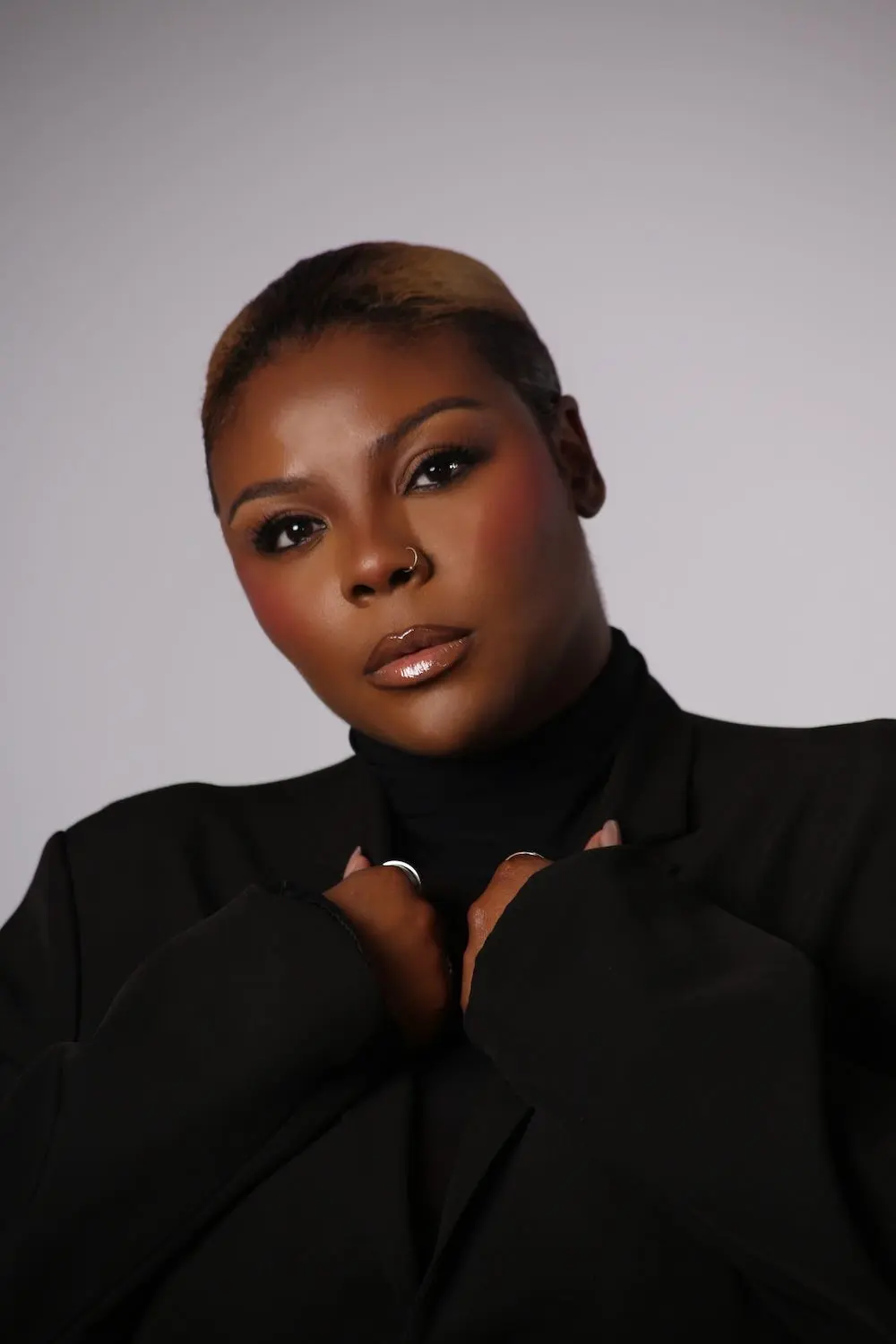
Seventeen years after infiltrating the sonic architecture of British underground club culture with her seminal anthem “Go,” vocalist, songwriter, and executive Malika is experiencing a profound professional renaissance. Originally released in 2007 during the meteoric peak of the UK Funky movement, “Go” has transcended its era. It has captured the imaginations of an entirely new generation through viral digital rediscovery—hitting number one on TikTok and pulling in over 120,000 daily streams—alongside a grand, newly minted live orchestral reimagining.
Yet, the true narrative of “Go” extends far beyond streaming metrics or nostalgic novelty. Behind the iconic vocal is an artist whose lineage is inextricably woven into the fabric of British Black music. From growing up in a musical dynasty of pirate radio operators and Lovers Rock icons to navigating contract law as a teenager and retaining 100% ownership of her master recordings, Malika—formerly known as Meleka—represents a masterclass in creative patience, industry literacy, and artistic evolution.
In an exclusive interview with VIPER Magazine, conducted by Dejee Baptiste, Malika reflects on inheriting a cultural language, the realities of ownership in a shifting technological landscape, and why, despite a career spanning nearly two decades, she believes she is only just getting started.
Detailed Chronology: From Pirate Waves to the Pinnacle of UK Funky
A Musical Inheritance
Malika’s relationship with music predates her own recording career. Born into a culturally rich family in North West London—encompassing areas like Harlesden, Wembley, and Kensal Green—her introduction to the sonic arts was not a choice, but an inevitability.
Her father operated Time Radio, a pivotal pirate radio station in North West London, immersing her in the inner workings of independent broadcasting long before she ever stepped foot in a professional recording booth. Simultaneously, her aunt, Sonia Ferguson, was recording as part of the legendary Lovers Rock movement. Furthermore, Malika draws deep inspiration from her multicultural upbringing, shaped profoundly by her two grandmothers—one a Black Jamaican woman, the other a white English woman from Yorkshire—whose equal parts of love and heritage forged her expansive artistic worldview.
+-------------------------------------------------------------------------+
|                        THE MALIKA FAMILY LINEAGE                        |
+--------------------------+----------------------------------------------+
| Paternal Influence       | Time Radio (North West London Pirate Radio)  |
| Maternal/Aunt Influence  | Sonia Ferguson (Lovers Rock Icon)            |
| Cultural Heritage        | Jamaican & Yorkshire Roots                   |
+--------------------------+----------------------------------------------+
Rather than experiencing music as an external industry, Malika absorbed it as a primary language. By the time she was 13 years old, her father was taking her to professional studios, teaching her the fundamentals of songwriting and vocal arrangement, and ensuring she was properly registered with industry collection societies like the PRS for Music (Performing Right Society) and PPL (Phonographic Performance Limited). This early education laid a bedrock of industry literacy that would protect her through decades of commercial volatility.
The Rise, Fall, and Misunderstood Legacy of UK Funky
When UK Funky emerged in the mid-2000s, it developed organically through a tight-knit ecosystem of underground clubs, pirate radio frequencies, specialist DJs, and localized community spaces. Unlike Grime or UK Garage, which ultimately carved distinct highways into the mainstream British music complex, UK Funky occupied a more elusive space.
Reflecting on the movement’s historical positioning, Malika notes a persistent misconception:
"The misconception is partly in the idea of it being ‘mainstream.’ Funky has always lived in a space of penetrating the masses without ever fully crossing the line into a mainstream ecosystem the way Grime or Garage did. There are maybe five core Funky songs that everybody knows, but even within this resurgence, there are so many tracks. The misconception is that Funky ‘made it,’ but it really hasn’t had its full moment yet."
In 2007, Malika dropped “Go.” At the time, the record’s promotion relied entirely on physical legwork. It demanded that artists and their teams travel across the United Kingdom, pound the pavement, hand out physical CDs, and personally lobby pirate radio selectors, club DJs, and regional tastemakers to build momentum. It was a grassroots infrastructure built on sweat equity and interpersonal networking.
The Digital Resurgence: Bridging Physical and Algorithmic Eras
Fast-forward seventeen years, and the cultural landscape has undergone a seismic technological shift. “Go” has experienced a powerful second life, propelled by viral discovery on platforms like TikTok and Instagram, surging to the top of digital charts and consistently pulling in upwards of 120,000 streams every day.
When asked to compare the physical promotion of the late 2000s with today’s algorithm-driven ecosystem, Malika offers a grounded perspective:
"In my opinion, it’s all the same. The way people discover music now is the same way they discovered it back in the day. You might get hot on pirate radio or in your local area, and then that filters through to other areas. Now, you might get hot on TikTok or Instagram, and it filters through. One is digital and one is physical, but both require you to put boots on the ground and do the work repeatedly—whether handing out CDs back then or posting online now."
Rather than viewing the streaming era as a displacement of true artist development, Malika views it as a modern translation of the same relentless promotional grind. Whether distributing white-label vinyl to local record shops or optimizing audio snippets for vertical video algorithms, the fundamental law of music promotion remains unchanged: attention must be earned through persistent execution.
Supporting Context & Metrics: The Business of Independent Ownership
One of the defining triumphs of Malika’s career is not merely that she recorded a classic track, but that she retained 100% ownership of her master recordings. In an industry historically notorious for exploiting young, impressionable talent through predatory 360 deals and opaque publishing agreements, Malika’s structural autonomy is a masterclass in modern business acumen.
Industry Literacy as Self-Defense
This institutional savvy was not acquired by accident. While building her career as a vocalist and behind-the-scenes songwriter—initially operating under the pseudonym Meleka (spelled with an ‘e’ and an ‘i’)—she simultaneously pursued a formal education, earning a degree in Music and Media Management.
Her academic curriculum covered contract law, ensuring she understood legal terminology long before negotiating commercial recording agreements. Combined with her father’s early insistence on registration and publishing management, Malika approached the creative arts with the analytical rigor of an enterprise executive.
The Paradox of Community Ownership
Owning a master recording legally and letting a community own it emotionally create an interesting paradox for an artist. Reflecting on her relationship with “Go” over the past 17 years, Malika articulates her role not as an exclusive gatekeeper, but as a cultural custodian:
"What I’ve learned is that my personal experience of ‘Go’ and Funky House isn’t the important part. The only thing that really matters is that because I own it 100%, I have 100% of the responsibility to honour how important it is to everybody else. The journey of ‘Go’ hasn’t been simple, but it taught me that I’m just a conduit for the song for everybody else."
+--------------------------------------------------------------------------+
|                       THE DUALITY OF MASTER OWNERSHIP                    |
+-------------------------+------------------------------------------------+
| Legal Reality           | 100% Master Ownership & Publishing Rights      |
| Emotional Reality       | The track belongs to the culture and community |
| Executive Responsibility| Honoring the public's deep attachment to the art|
+-------------------------+------------------------------------------------+
Metrics of a Modern Renaissance
- Release Year: 2007 (Peak UK Funky Era)
- Daily Streaming Volume: 120,000+ daily streams (during current resurgence)
- Digital Milestones: #1 on TikTok viral discovery charts
- Ownership Stake: 100% independent master and publishing retention
Official Statements & Artistic Philosophy
Throughout her conversation with VIPER, Malika unpacked several foundational pillars that continue to guide her life, business decisions, and creative output.
On the Evolution of Identity and Patience
Addressing her transition from Meleka (the behind-the-scenes writer and early underground vocalist) to Malika (the fully realized solo artist and executive), she notes the necessity of patience:
"When I first came out, I was doing more writing and behind-the-scenes work, so I used a pseudonym… When I became more of a solo artist, I wanted to return to the real spelling of my name, which confused people! But younger Meleka had to learn patience in a way I didn’t have back then. There are things I navigate now that I couldn’t have done at 20 when ‘Go’ first came out. Patience is understanding that everything happens in its own time."
On the Definition of Success and Legacy
When asked what advice she would offer her younger self, Malika draws a sharp line between short-term metrics of achievement and long-term cultural capital:
"Success means different things to different people and changes over time. For a long time, I felt like a failure, and only recently have I acknowledged that I’ve done successful things. Legacy is a currency you can always trade on; maintaining your reputation and legacy is deeply important."
Addressing the financial and structural realities of the music business, she adds:
"As for ownership, 100% of nothing is still nothing. It’s about knowing when to hold space and when to share space. In business, you have to understand that you sometimes give up a piece of your personal time, image, or creativity to reach the next level. An open hand receives more blessings than a closed one."
The Sonic Blueprint: Formative Influences
Malika cites three core albums that fundamentally shaped her mindset, emotional intelligence, and approach to storytelling:
- No More Drama by Mary J. Blige – Representing pain, resilience, and the primal fight-or-flight instinct.
- Voyage to India by Floetry / India.Arie (Editor’s Note: referring to Arie’s acclaimed sophomore release) – Representing peace, spiritual alignment, and trust.
- Stripped by Christina Aguilera – Representing raw female empowerment, vulnerability, and total self-ownership.
Future Outlook: "I Haven’t Even Fully Started Yet"
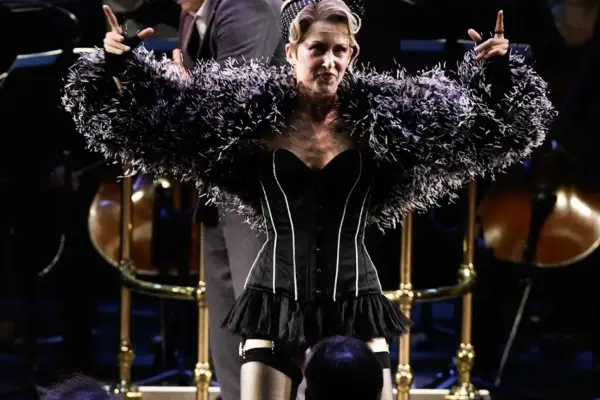
With a newly unveiled live orchestral reimagining of “Go”—bridging the worlds of UK Funky, Afrobeats, and grand live instrumentation alongside a house gospel choir—Malika is looking forward rather than resting on her laurels.
Refusing to become creatively imprisoned by nostalgia, she views her past catalog not as a monument to be worshipped, but as the foundational bedrock for her current artistic evolution. Far from winding down a legacy career, Malika’s mindset is defined by forward momentum and expansion.
When asked if she feels she is still transcending the boundaries of her career, her response is unequivocal:
"For sure, I haven’t even fully started yet! I’m only just getting off the ground."
As she continues to balance her craft as a vocalist, her acumen as an independent businesswoman, and her role as a vital custodian of British club history, Malika stands as proof that true artistic longevity belongs to those who master both the magic of the studio and the mechanics of the boardroom.
For more exclusive artist interviews, definitive cultural deep dives, and behind-the-scenes access to the future of the scene, explore the Viper+ Vault at vipermag.com and follow @vipermAGAZINE.