Executive Overview
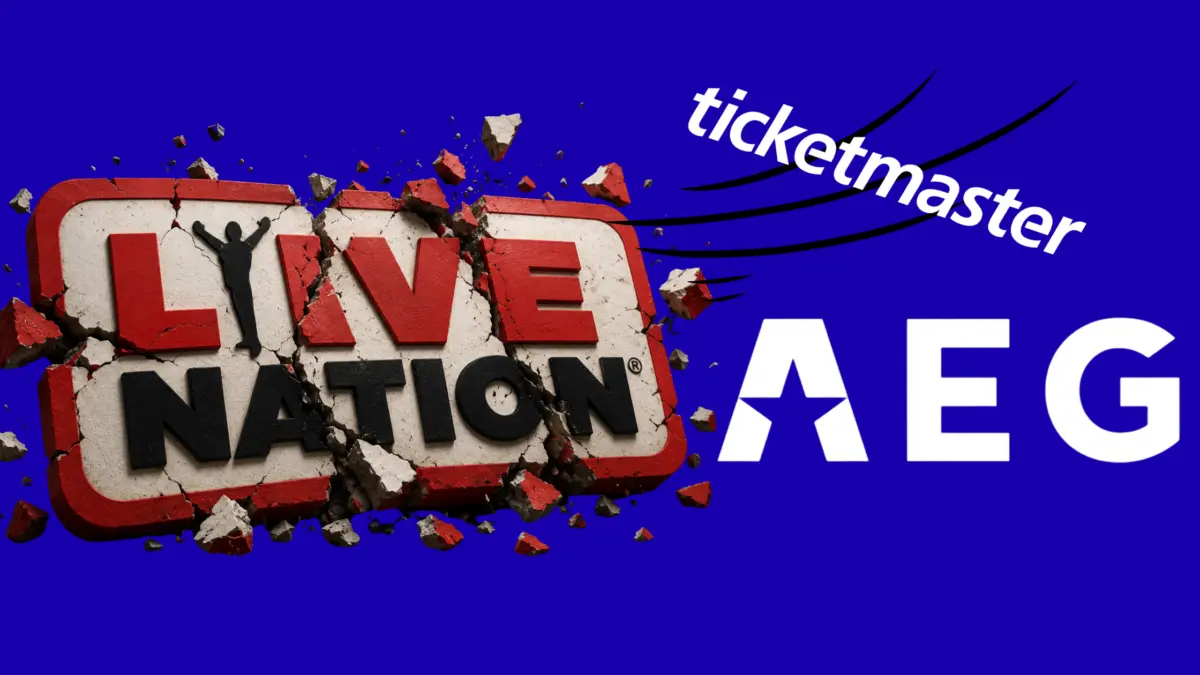
The global live entertainment landscape is experiencing a profound structural and regulatory reckoning. At the epicenter of this transformation is the long-standing, high-stakes antitrust scrutiny facing Live Nation Entertainment and its subsidiary, Ticketmaster. As the deadline for public and corporate commentary closes, Live Nation’s fiercest rival, AEG, has escalated its legal offensive, formally petitioning US District Judge Arun Subramanian to throw out a controversial settlement brokered by the Department of Justice (DoJ) earlier this year. AEG’s message to the court is unequivocal: nothing short of a complete structural divestiture—undoing the landmark 2010 merger that fused Live Nation with Ticketmaster—will restore healthy competition to the live music ecosystem.
Simultaneously, the live entertainment sector is grappling with a sweeping wave of legislative interventions designed to curb predatory ticket touting and consumer exploitation. From the halls of the US Congress, where major bipartisan bills like the MAIN Event Ticketing Act and the GHOST Act are gaining legislative momentum, to newly minted laws in Brazil—famously dubbed the "Taylor Swift Law"—and stringent anti-resale criminal penalties taking effect in South Korea, governments worldwide are drawing a hard line against algorithmic scalping, speculative ticketing, and anti-consumer practices.
This comprehensive report examines the multifaceted crisis confronting the live music industry, analyzing the legal crossfire between Live Nation and AEG, the implications of the DoJ’s disputed settlement, a parallel state-led antitrust victory, and the international legislative push to protect fans, independent venues, and artists.
Detailed Chronology of the Antitrust Showdown
The 2010 Merger and the Origins of Vertical Integration
To understand the gravity of the current legal battles, one must trace the institutional architecture of modern live music back to 2010. That year, the US Department of Justice approved a merger between Live Nation, the world’s leading concert promoter, and Ticketmaster, the dominant primary ticketing monopoly. The merger created an unprecedented vertically integrated powerhouse capable of controlling every tier of the live performance pipeline: artist representation, tour promotion, venue operations, and primary ticketing infrastructure.
To secure regulatory approval at the time, Live Nation entered into a consent decree designed to prevent it from coercing venues into using Ticketmaster by leveraging its immense control over touring content. However, critics, independent promoters, and rival entertainment conglomerates argued almost immediately that the decree possessed structural weaknesses and lacked rigorous enforcement mechanisms.
The 2020 Revision and Continued Violations
By 2020, mounting evidence of compliance failures forced the DoJ to revisit the consent decree. The federal government extended and modified the agreement, tightening restrictions and appointing an independent monitor to oversee Live Nation’s business practices. Yet, according to industry competitors and independent regulatory watchdogs, these behavioral remedies proved entirely toothless. Live Nation continued to capture market share, utilizing its dual leverage as a tour promoter and ticketing agent to lock venues into long-term exclusive contracts.
The 2024 Federal Lawsuit and the March DoJ Settlement
The pressure cooker finally blew in 2024 when the DoJ, alongside a coalition of state attorneys general, filed a sprawling federal antitrust lawsuit against Live Nation-Ticketmaster. The federal complaint echoed what independent promoters had argued for over a decade: that the company operated an unlawful monopoly that stifled competition, penalized venues that dared to work with rival ticketing platforms, and inflated ticket prices for everyday consumers. The DoJ’s original filing explicitly called for a structural remedy—namely, the forced corporate breakup of Ticketmaster from Live Nation.
However, in March, the legal landscape shifted dramatically. The DoJ and Live Nation reached a surprise settlement that dropped the demand for a corporate breakup in favor of a new set of behavioral commitments and regulatory concessions.
While Live Nation and federal officials defended the deal as a pragmatic victory that delivers meaningful relief to consumers, critics were quick to condemn it. Independent watchdogs and political commentators pointed out that the settlement materialized following an aggressive lobbying campaign by Live Nation, which had retained legal counsel and political strategists with close personal and professional ties to President Donald Trump.
The Current Legal Standoff and AEG’s Intervention
Under American competition law, interested third parties and industry stakeholders were granted a formal window to submit public comments on the proposed DoJ settlement before Judge Arun Subramanian decides whether to grant final approval.
AEG, Live Nation’s principal competitor in global tour promotion, venue management, and primary ticketing (through its AXS platform), seized the opportunity to file a scathing formal objection. Aligning itself with the core arguments of the original 2024 lawsuit, AEG told Judge Subramanian that the DoJ settlement is fundamentally flawed because it leaves the root cause of the monopoly intact.
"The bottom line is simple," AEG wrote in its formal submission to the court, as reported by Billboard. "As long as Ticketmaster remains vertically integrated with Live Nation, venues will continue to face pressure to choose Ticketmaster because of Live Nation’s control over content. The proposed deal does not address that fundamental incentive structure. Divestiture is needed to restore competition."
Furthermore, AEG highlighted the historical precedent of failed behavioral remedies, reminding the court that both the 2010 consent decree and the 2020 modification failed to modify corporate behavior or open up the market to fair competition.
Supporting Context & Metrics: The State-Led Legal Front
While the federal DoJ settlement hangs in the balance, Live Nation is far from out of the woods. A coalition of 33 US states chose not to sign onto the federal DoJ settlement, opting instead to press forward with their own parallel antitrust litigation.
In a major blow to Live Nation, a state-led antitrust trial resulted in a jury verdict finding that Live Nation and Ticketmaster do indeed operate an unlawful monopoly that harms both competition and consumers. Unlike the federal settlement, these 33 states are aggressively pursuing structural sanctions, maintaining their demand that the court order a forced corporate divestiture.
The Market Dynamics: AXS vs. Ticketmaster
To contextualize AEG’s aggressive stance, one must examine the stark asymmetry of the ticketing market. While AEG is a titan in the live entertainment space—owning and operating major venues, promoting global arena and stadium tours through AEG Presents, and operating the AXS ticketing platform—AXS remains significantly smaller than Ticketmaster in terms of primary market share.
Ticketmaster controls an estimated 70% to 80% of primary ticketing for major US concert venues. This massive database and market penetration give Live Nation an unfair compounding advantage. When artists book tours through Live Nation, venues are under intense, often implicit pressure to adopt Ticketmaster to secure the lucrative routing. This creates what industry experts call a "closed loop," starving independent ticketing services like AXS, SeatGeek, and Vivid Seats of a fair chance to compete on merit, technology, or pricing.
Official Statements and Corporate Posturing
The war of words between Live Nation and AEG has intensified as legal deadlines approach, revealing deep animosity between the two live entertainment giants.
Live Nation Fights Back
Responding to AEG’s court filing, Live Nation’s Executive Vice President Of Corporate And Regulatory Affairs, Dan Wall, issued a blistering statement accusing AEG of acting out of pure self-interest rather than genuine concern for the live music community.
"AEG’s filing is designed to advance its own commercial interests rather than those of artists, venues, or fans, and it deliberately misrepresents the settlement’s terms," Wall stated. "The Department Of Justice negotiated this settlement and has said it delivers meaningful relief for consumers. Nothing in AEG’s filing changes our confidence that the court will approve it."
AEG’s Historical Critique
AEG executives have long maintained that Ticketmaster’s market dominance acts as an unfair cross-subsidizer for Live Nation’s other business segments. When the DoJ first launched its antitrust lawsuit in 2024, AEG Presents CEO Jay Marciano circulated a memo to staff emphasizing this exact point:
"AEG has long maintained that Ticketmaster has a monopoly in the US ticketing marketplace and uses that monopoly power to subsidise Live Nation’s content businesses, preventing other businesses from competing in those areas and leaving consumers to suffer the consequences."
International Legislative Crackdowns on Ticket Touting
While US courts deliberate the structural future of live music conglomerates, legislators around the globe are taking decisive action against another major plague on the industry: predatory ticket touting and secondary market abuse.
United States: Progress on the MAIN Event Ticketing Act and GHOST Act
In Washington D.C., the National Independent Venue Association (NIVA) has praised significant legislative progress in Congress aimed at cleaning up the ticketing ecosystem.
The MAIN Event Ticketing Act—which seeks to strengthen existing federal prohibitions against automated software bots used by scalpers to harvest primary inventory—successfully advanced out of the relevant subcommittee in the House of Representatives. Companion legislation in the Senate has already cleared its committee hurdles and now sits on the active legislative calendar.
"Congress now has an opportunity to deliver meaningful resale reform that has strong bipartisan support and the backing of countless independent stages, nonprofits, and fans," said NIVA Executive Director Stephen Parker. "The MAIN Event Ticketing Act has momentum in both chambers, and Congress should pass it."
In tandem with the MAIN Event Act, NIVA has thrown its weight behind the Guaranteeing Honest Ownership In Secondary Ticketing (GHOST) Act. This proposed legislation specifically targets speculative ticketing—a deceptive practice where predatory touts list and sell tickets for exorbitant prices on secondary markets before they have even secured or purchased the actual tickets.
Brazil: The "Taylor Swift Law" and Venue Safety
South America has also witnessed landmark legislative reform. In Brazil, new anti-touting and consumer protection regulations—widely referred to by the public as the "Taylor Swift Law"—were officially signed into law.
The legislative push was catalyzed by two distinct events during Taylor Swift’s blockbuster Eras Tour in Brazil:
- Rampant Secondary Price Gouging: Fans expressed outrage as ticket touts utilized automated bots to hoard stadium seats, immediately flipping them on secondary marketplaces at astronomical markups.
- Tragic Venue Conditions: The legislation was deeply intertwined with concert safety following the tragic death of Ana Clara Benevides, a fan who succumbed to heat exhaustion during an extreme heatwave at a Rio de Janeiro concert in November 2023. Fans at the show had reported being aggressively prohibited from bringing personal water bottles into the stadium.
Under the new Brazilian legislation, secondary ticketing platforms are legally required to:
- Clearly disclose to consumers that they are operating as a resale marketplace rather than a primary box office.
- Display the full, transparent total price of every ticket upfront.
- Implement robust anti-speculation measures to prevent fraudulent and abusive resale listings.
- Mandate that large-scale live entertainment events provide free drinking water to concertgoers and permit fans to bring their own hydration containers into venues.
South Korea: Strict Commercial Resale Bans and Fines
In East Asia, South Korea enacted sweeping anti-touting laws that went into effect at the end of last week. The legislation outright bans the commercial resale of tickets for profit. Individuals caught violating the law face severe financial penalties, including fines of up to 50 times the total illicit profit generated from their touting activities.
Despite the strict legal framework, enforcement challenges remain evident. According to local investigative media reports from outlets such as SBS News, scalpers are already engineering creative loopholes to evade detection. In one notable instance, a tout attempted to sell a mobile Americano coffee coupon for 660,000 won (approximately $480 USD), which conveniently came bundled with a "free ticket" to a high-demand baseball game normally valued at 100,000 won. Regulators are now under pressure to close these inventive legal loopholes.
Future Outlook: What Lies Ahead for the Live Music Ecosystem
As the industry navigates the remainder of the year, several pivotal milestones will determine the trajectory of live entertainment governance, corporate power, and consumer rights:
- Judge Subramanian’s Ruling on the DoJ Settlement: All eyes remain fixed on the federal courthouse in New York. If Judge Subramanian approves the DoJ’s behavioral settlement, Live Nation will dodge the existential threat of a forced corporate breakup, cementing its vertically integrated business model for the foreseeable future. Conversely, if he rejects the deal, the DoJ may be forced back to the drawing board—or compelled to align with the aggressive breakup strategies demanded by the 33 state attorneys general.
- The Fate of State-Led Antitrust Sanctions: Even if the federal settlement stands, Live Nation faces ongoing legal exposure from the state-led antitrust verdict. The remedies imposed by state courts could independently force major operational or structural concessions.
- Global Legislative Momentum: The synchronized passage of anti-touting and consumer-first laws in the US, Brazil, and South Korea signals a broader international shift. Governments are no longer willing to view ticketing as a "buyer-beware" free-for-all. As transparency mandates, bot bans, and speculative selling prohibitions take root, primary platforms, secondary brokers, and independent venues will be forced to adapt their operational models.
Ultimately, the live music industry stands at a historic crossroads. Whether through judicial mandates in American courtrooms or legislative crackdowns across global parliaments, the unchecked dominance of traditional ticketing monopolies and predatory scalping networks is facing its most formidable challenge to date. The outcomes of these legal and legislative battles will redefine the economic realities of live performance for artists, promoters, venues, and—most importantly—the fans who sustain the culture.