Executive Overview
From the windswept expanse of the Brontës’ Haworth to the Regency elegance of Jane Austen’s Bath, William Wordsworth’s reflective Lake District, and Thomas Hardy’s melancholic Dorset, literary geographies continue to exert an irresistible gravitational pull over readers worldwide. In an era dominated by digital acceleration, literary tourism is experiencing a major renaissance. Fueled by classic book preservation societies and modern cultural phenomena—such as the viral "BookTok" trend of transforming beloved novels into holiday itineraries—travelers are packing their bags in search of the physical manifestations of their favorite stories.
Yet, beneath this romantic surface lies a complex psychological and geographical phenomenon. What are literary tourists actually hoping to find when they arrive at these destinations?
While places like Haworth, Bath, and Dorset undoubtedly exist on contemporary maps, their literary counterparts—the Brontë moors, Austen’s Bath, Wordsworth’s Lakes, and Hardy’s Wessex—are fundamentally imaginative reimaginings. They never existed, and perhaps never could exist, in the exact form readers picture in their minds. This article explores the rich history, psychological drivers, and blurred boundaries between fact and fiction that define the enduring phenomenon of literary tourism.
Detailed Chronology: Mapping the Mind of the Reader
The human fascination with mapping physical spaces onto fictional landscapes is not a product of the social media age; it has a deep and structured history rooted in the late 19th century. As the novel exploded in popularity and cultural dominance during the Victorian era, literary geography emerged as an academic and cartographic discipline, developing in tandem with the nascent industry of literary tourism.
1899: The Birth of Literary Cartography
The formal merging of cartography and literature crystallized in 1899, when scholar William Lyon Phelps published his Literary Map of England. Phelps systematically marked geographical locations directly associated with canonical authors and their respective works, providing readers with the first visual blueprint to bridge the gap between their bookshelves and the British countryside.
1904: Codifying "Dickens Land" and "Brontë Country"
Building on Phelps’ foundational work, William Sharp published Literary Geography in 1904. Sharp’s work went a step further by officially naming and mapping distinct regional identities rooted entirely in fiction, introducing concepts such as "Dickens land," "the Brontë country," and the specific literary topography of the English lakes. These early maps invited readers to actively visualize the exact points where the real world and the fictional realm intersected—an impulse that remains entirely unchanged more than a century later.
The Hardy Dilemma: When Readers Take Fiction Too Literally
No author wrestled more explicitly with this cartographic zeal than Thomas Hardy. Hardy deliberately borrowed, warped, and entirely invented place names to construct a sprawling fictional territory—Wessex—which he mapped meticulously over the actual geography of southern England.
So compelling was this construction that readers swiftly came to regard Hardy’s invented landscape as tangible reality. Guidebooks detailing Wessex’s "literary landmarks" began to circulate while Hardy was still alive. This literal-mindedness alarmed the author, who clarified that Wessex was a "partly real, partly dream" country: an intricate amalgamation of empirical geography and unbridled imagination.
Despite Hardy’s warnings, the dream country refuses to fade. Decades later, travelers still retrace his steps; for instance, a widely publicized 2025 Guardian feature detailed a walking pilgrimage across Dorset specifically designed to unearth the landscapes immortalized in Hardy’s fiction.
Supporting Context & Metrics: Real Versus Imagined Geographies
To understand the mechanics of literary tourism, one must examine the cognitive mechanics of reading itself. In his reflections on growing up in Trinidad, celebrated novelist V.S. Naipaul offered profound insight into how literary places gain such immense psychological power.
Recalling his childhood consumption of Charles Dickens, Naipaul wrote of how Dickens successfully constructed "a city of fantasy." This was not achieved merely through exhaustive, journalistic description, but by providing a linguistic framework open enough to allow young readers in the Caribbean to reconstruct a world using their own immediate surroundings to imagine what they had never seen.
Consequently, the London residing within a reader’s head can easily become just as vivid, if not more so, than the official capital charted on a municipal map.
The Psychology of "Anemoia"
When contemporary visitors finally arrive in physical locations like Haworth, Grasmere, or rural Dorset, they are fundamentally incapable of encountering those spaces with fresh eyes. They have already thoroughly toured them within their imaginations. Their personal mental map of the landscape has been assembled through a lifetime of consuming books, cinematic adaptations, photographs, and secondary cultural references.
Upon arrival, the primary psychological act is one of comparison: measuring the physical reality against the idealized, internalized blueprint.
This sensation closely mirrors "anemoia"—a term coined by lexicographer John Koenig to describe a profound "nostalgia for a time you’ve never known." In the context of literature, this manifests as a spatial equivalent: an aching, romantic longing for a physical place that, in its pristine literary form, was never personally experienced. Literary tourism is simply the physical enactment of this deep-seated psychological yearning.
Official Perspectives: Do Museums Blur Fact and Fiction?
The epicenters of literary tourism are frequently writers’ houses and literary museums. These cultural institutions promise visitors a rare, unfiltered form of access to authors and the raw genesis of their creative works: the exact writing desk, the domestic hearth, or the sweeping window view that inspired a masterpiece.
In theory, these sites attempt to anchor abstract literature into hard, immutable geography. In practice, however, literary museums rarely draw a rigid line separating an author’s biography from their fiction. Instead, they purposefully weave the two together.
Haworth and Chawton: Merging Life and Art
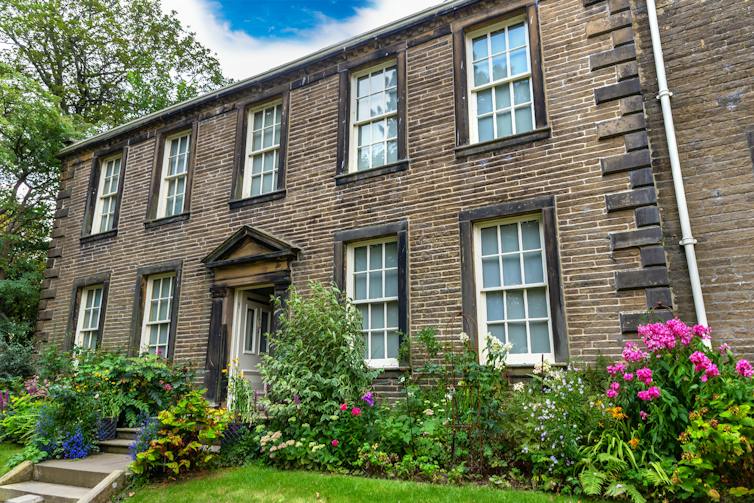
At the Brontë Parsonage Museum in Haworth, visitors navigate domestic rooms intimately tied to the tragic real-life biographies of the Brontë sisters, while simultaneously stepping directly into the gothic, psychological landscapes of Jane Eyre and Wuthering Heights. The museum derives its profound emotional power precisely from this alchemy—fusing biography, landscape, family tragedy, and fiction into a single, cohesive spatial experience.
A parallel dynamic plays out at Jane Austen’s House in Chawton. Leadership at the museum has frequently noted that visitors arrive seeking an almost intimate communion with Austen herself, driven by the desire to physically cross the threshold into the polite, sparkling world of her novels.
The Paradox of Baker Street
Some literary destinations take this conceptual blurring to its logical extreme, dedicating physical space to geographical locations that never existed at all in the real world.
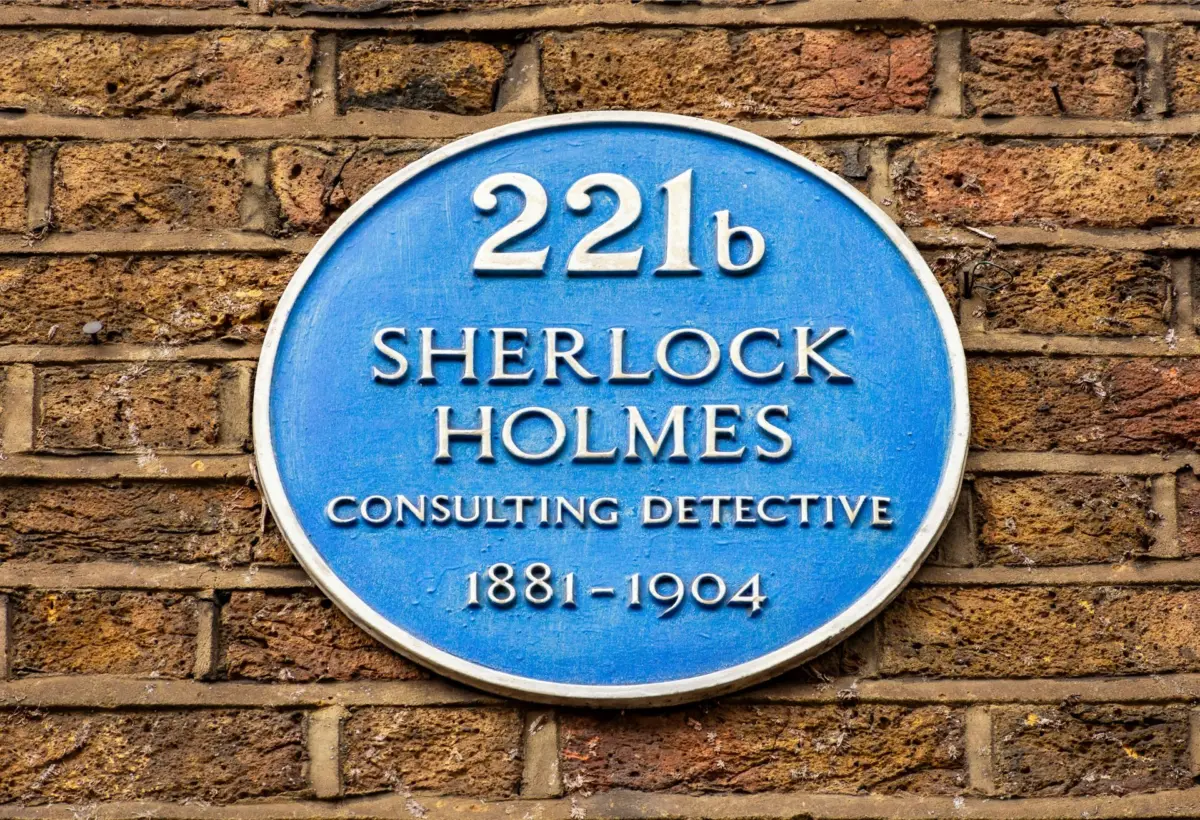
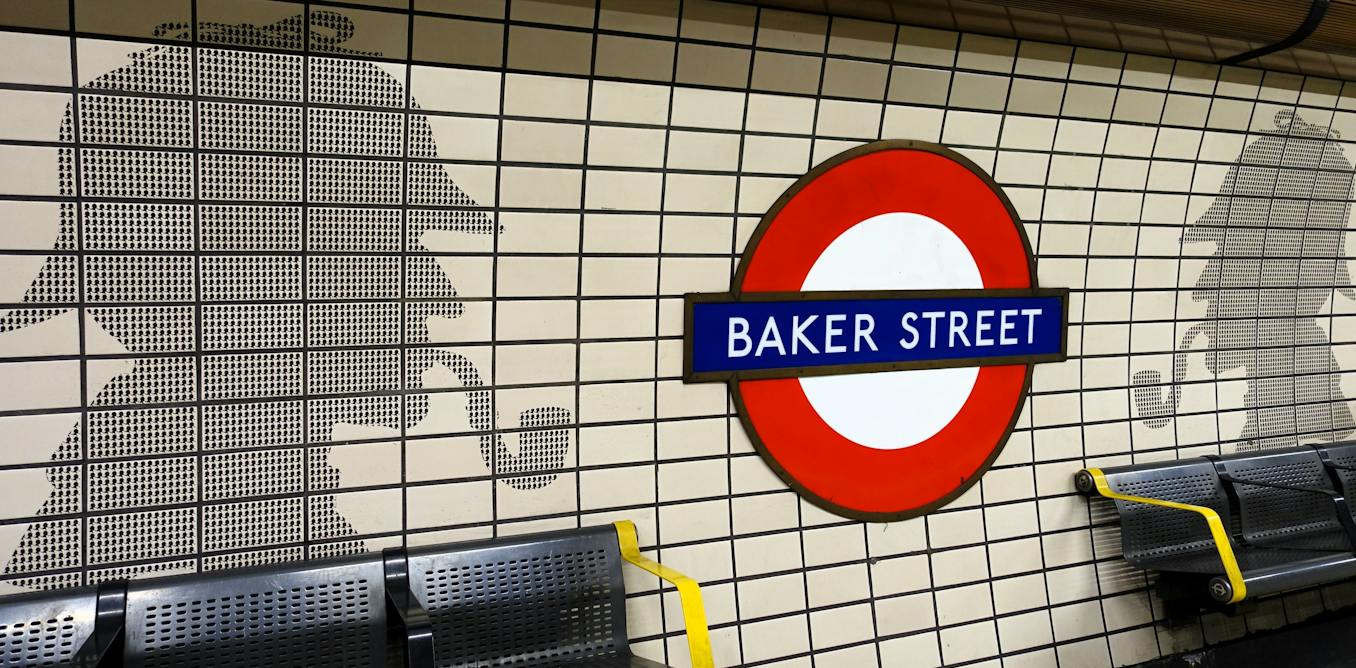
Consider Sherlock Holmes’ legendary address: 221B Baker Street. When Sir Arthur Conan Doyle first introduced the detective in the late 19th century, the address did not correspond to any actual residential building, nor did it even fit within the architectural street-numbering system utilized in London at the time.
Yet, cultural demand ultimately superseded municipal reality. Today, tourists from across the globe routinely visit the Sherlock Holmes Museum, established at a now very real 221B Baker Street, moving through the recreated Victorian study as though Holmes were a flesh-and-blood historical figure. Through sheer collective imagination, a phantom address was successfully willed into physical existence.
Future Outlook: The Endless Pursuit of the Unreachable Horizon
From the pioneering, hand-drawn cartography of "Dickens land" to modern TikTok travel itineraries mapping out contemporary fiction, the underlying objective of the literary tourist has remained remarkably consistent across generations: to find the exact point where real and fictional worlds collide.
As literary geography demonstrates, that precise intersection point may remain forever out of reach, an elusive horizon that shifts the closer one approaches it. Yet, as long as readers continue to lose themselves in the pages of great novels, they will keep packing their bags, chasing the phantom geographies of their favorite authors. Perhaps it is precisely because this convergence can never be fully mapped that readers keep looking for it.