Executive Overview
In the rapidly evolving landscape of contemporary television, few creators possess the uncanny ability to diagnose the cultural zeitgeist quite like Sharon Horgan. With her latest creation, Youth—streaming globally on HBO Max and NOW TV—the acclaimed writer, producer, and actor turns her razor-sharp wit and empathetic lens toward a demographic frequently underserved or lazily stereotyped in mainstream media: women navigating the turbulent, liberating waters of their sixth decade.
The series opens with an arresting, genre-defining montage. Featuring cultural heavyweights such as Ruth Bader Ginsburg, Jane Goodall, and Arundhati Roy, the visual preamble culminates with author Margaret Atwood looking directly into the camera to deliver a disarming truth: “When you’re a teenager, you’re acutely worried of what people think of you, but I think now you can just have more fun.”
This thesis statement anchors Youth, immediately propelling viewers into the "no-fucks era" of its protagonist, Alex (played by Horgan herself). A literary agent grappling with post-divorce reality, mid-career pressures, and the bittersweet precipice of empty nesting, Alex is far more than a stock TV trope. Youth weaves her deeply personal, often chaotic journey alongside that of her teenage son, Ruarí (Aran Murphy), as he stumbles toward early adulthood under a cloud of university-related controversy.
Far from being a straightforward narrative about perimenopause or the indignities of middle age, Youth expands Horgan’s thematic portfolio—building upon the foundations laid by Pulling, Catastrophe, Motherland, and Divorce. It offers an incisive, tender, and laugh-out-loud funny look at single parenting, evolving masculinities, the contours of female friendship, and the radical art of finding genuine contentment in one’s own company.
Detailed Chronology: Unpacking the Narrative Arc of Youth
Episode 1: "Lockjaw" and the Cumulative Weight of Modern Life
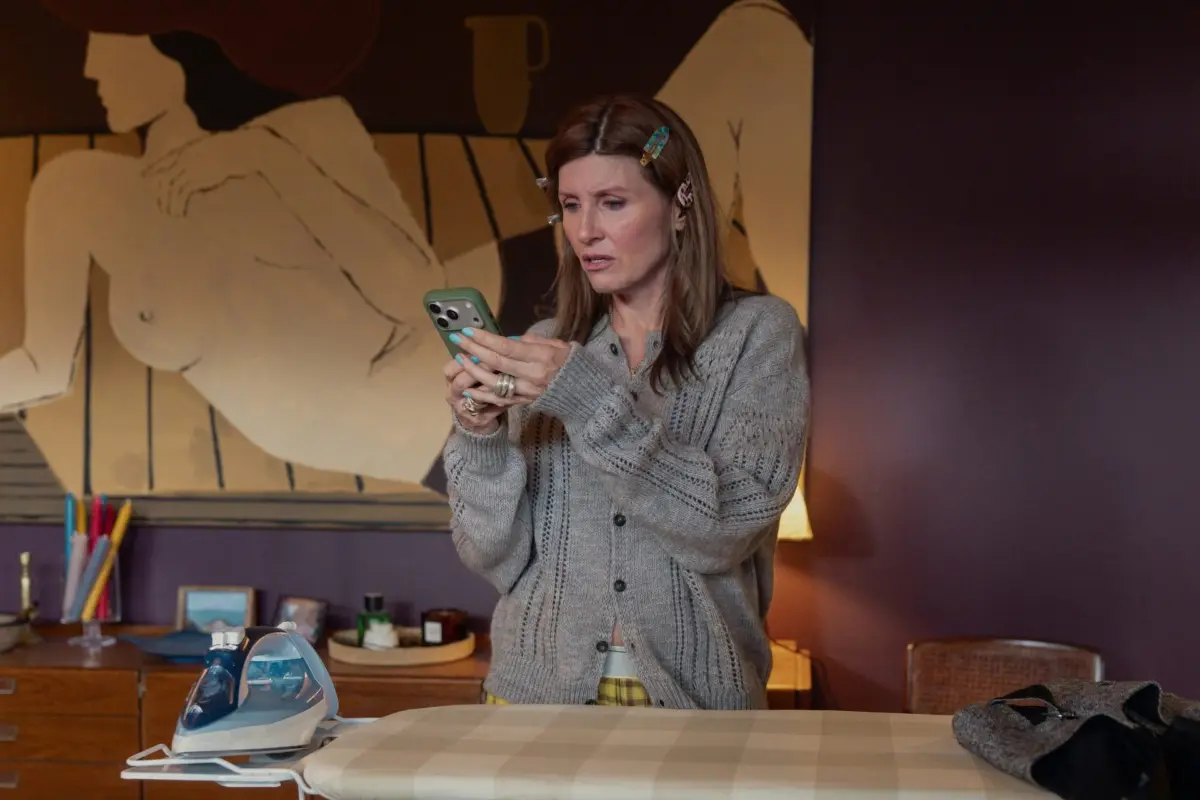
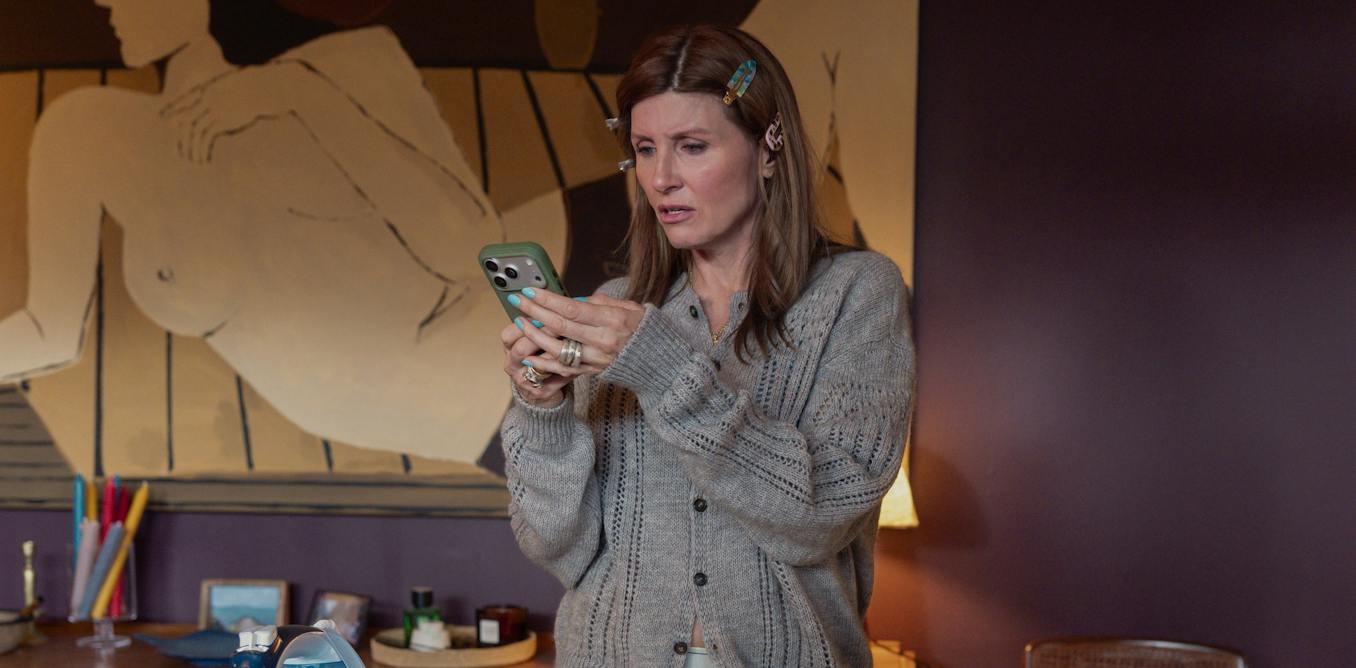
The series plunges audiences directly into the sensory overload of contemporary existence. We meet Alex—played with frazzled, relatable precision by Horgan—flat out on the sofa, deep in the hypnotic, anxiety-inducing rabbit hole of doom-scrolling. She is simultaneously running late for a high-stakes meeting with an elusive new writer and steeling herself for the emotional milestone of her son’s secondary school graduation.
The physical toll of this modern multitasking manifests brilliantly in the series premiere, titled appropriately "Lockjaw." Faced with the cascading pressures of professional ambition and solo motherhood, Alex’s jaw literally seizes up. When she visits her general practitioner, she is met with a gratingly patronizing dismissal: it’s simply "an age thing," requiring her to cut back on late-night kebabs—a directive Alex hilariously mishears as a sweeping medical restriction on oral sex.
This sequence establishes the comedic and emotional tone of the series. Horgan refuses to sanitize the physical realities of aging, yet she weaponizes humor to strip away the clinical sterility often associated with women’s midlife health narratives.
The Dynamics of the Empty Nest and Single Parenting
As the narrative unfurls, the core relationship between Alex and Ruarí—played with brooding authenticity by Aran Murphy (son of acclaimed actor Cillian Murphy)—takes center stage. Ruarí has recently exited university under a cloud of suspicion, adding an extra layer of domestic tension to an already fragile household.
Horgan excels at mapping out the unique micro-climate of single-parent households with teenage children. Rather than portraying an adversarial parent-child dynamic, Youth highlights the profound, almost symbiotic intimacy that can develop when two people weather domestic storms alone. This dynamic is showcased in a standout sequence where Alex and Ruarí systematically dominate a room full of smug couples during a local trivia and relationship-guessing game. Their uncanny, granular knowledge of each other’s domestic habits proves that their bond runs deeper than traditional family structures.
Through this interaction, the series flips traditional parental hierarchies on their head. It is not just Alex guiding Ruarí through the turbulent waters of young adulthood; it is Ruarí who ultimately nudges his mother toward a breakthrough—reminding her that finding peace in solitude is not a failure, but an emancipation from the exhausting tyranny of seeking external validation.
Supporting Context & Metrics: Where Youth Fits in Television History
The Evolution of the "Single Woman in the City" Trope
To fully appreciate the cultural intervention Youth represents, it must be contextualized within the lineage of HBO’s prestige programming concerning single women navigating urban environments. For over two decades, networks have mined the trials of urban singledom for dramatic and comedic gold:
- Sex and the City (1998–2004): Defined the paradigm of female friendship, fashion, and romance in New York City, though primarily anchored in the romantic aspirations of women in their 30s.
- Girls (2012–2017): Dismantled the glossy perfection of its predecessor, presenting a messy, self-absorbed, and financially precarious portrait of millennial womanhood.
- Insecure (2016–2021): Explored career navigation, systemic intersectionality, and evolving friendships among Black women in Los Angeles with sharp cultural commentary.
- Enlightened (2011–2013): Offered a tragicomic look at a corporate whistleblower’s awkward, deeply flawed crusade for personal awakening and corporate redemption.
While these foundational texts focused predominantly on women in their twenties and thirties—where the central narrative engine was almost always the pursuit of romance or professional establishment—Youth bridges a vital gap. It shifts the gaze to the "sixth decade," altering the fundamental question from "How do I find my place in the world?" to "Now that I know who I am, how do I learn to enjoy my own company while making space for others?"
+-----------------------------------------------------------------------------------+
|                        THE EVOLUTION OF HBO'S FEMALE CENTRIC DRAMA                 |
+-------------------+-----------------------------+---------------------------------+
| Era               | Primary Focus               | Defining Question               |
+-------------------+-----------------------------+---------------------------------+
| Late 90s / 2000s  | Romance, Status, Friendship | "Can you have it all?"          |
| 2010s             | Messy Identity, Precarity   | "Who am I outside of expectations?"|
| 2020s (*Youth*)   | Post-Midlife Liberation     | "How do I find peace in solitude?"|
+-------------------+-----------------------------+---------------------------------+
Interrogating Masculinity and Feminism in Tandem
One of Youth’s most critically acclaimed achievements is its sophisticated engagement with modern gender politics. While romance subplots—specifically Alex’s hesitant entanglement with Patrick, played by Rupert Friend—provide narrative propulsion, the show’s intellectual weight lies in its parallel exploration of contemporary feminism and shifting masculinities.
In recent cultural discourse, television has frequently struggled to address the generational anxieties facing young men without sliding into reactionary politics or superficial hand-wringing. Horgan sidesteps this trap by treating Ruarí’s confusion and professional setbacks with the same empathetic nuance she applies to Alex’s menopausal transition and career stagnation.
By placing the struggles of a young man setting out in a complex Western society directly alongside the reinvention of an older woman, Youth creates a productive, friction-filled space. It demonstrates that the anxieties of modern gender roles are not isolated silos; rather, mothers and sons, older women and young men, are navigating the very same cultural earthquakes from opposite sides of the generational divide.
Official Statements & Creative Vision
Speaking on the genesis of the series, creator and star Sharon Horgan noted that the project was born from an urgent desire to see characters on screen who mirror the actual complexity of aging women—women who are neither saintly matriarchs nor invisible background furniture.
"We spent decades watching television about women trying to secure a partner, trying to climb the corporate ladder, or trying to survive their babies’ teething phases," Horgan shared in a recent press roundtable. "There is a massive, incredibly vibrant chapter of life that happens next—one where the stakes change entirely. You stop worrying about what everyone thinks, your body betrays you in weird and wonderful ways, your children look at you like you’re an alien, and yet, paradoxically, you’ve never felt more capable of having actual fun. I wanted to write about that sweet spot of chaos."
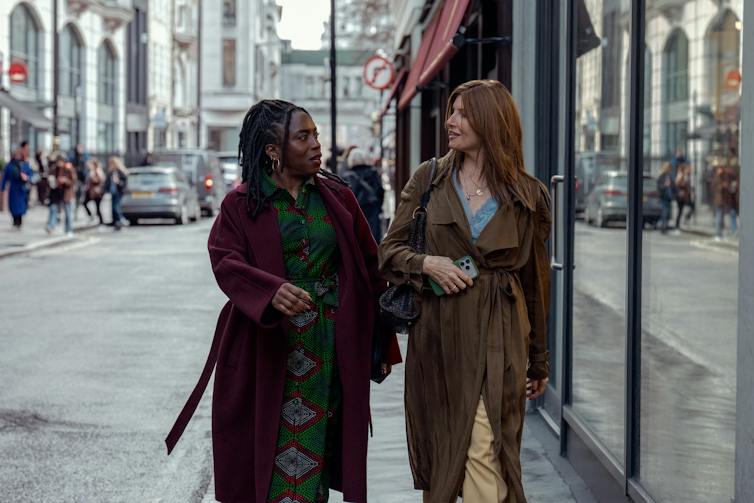
Co-star Sharlene Whyte, who portrays Alex’s fiercely loyal friend and boss, Sam, emphasized the show’s uncompromising stance on female solidarity:
"The friendship between Alex and Sam isn’t built on brunch clichés or glossy superficialities. It’s built on shared history, professional friction, and the kind of deep-seated shorthand that only women who have survived multiple eras together can possess. They hold each other accountable while laughing at the absurdity of it all."
Future Outlook: The Cultural Legacy of Youth
As Youth continues to pull in strong streaming metrics and critical acclaim across HBO Max and NOW TV platforms, its cultural impact is already being felt across the industry. Television critics have begun pointing to the series as a watershed moment for content centered on mature women—proving conclusively that audiences are hungry for narratives that refuse to equate aging with irrelevance.
Looking ahead, industry analysts predict that Youth will pave the way for a wave of greenlights focusing on the "post-milestone" demographic. As the Baby Boomer and Gen X generations age into their fifties, sixties, and seventies with purchasing power and sophisticated viewing habits, creators are taking note: the appetite for messy, complex, unvarnished stories about life’s second half is virtually limitless.
Furthermore, the stylistic blueprint established by Horgan—seamlessly blending razor-sharp comedic timing with profound emotional vulnerability—sets a high watermark for future dramedies. By treating her characters with dignity, humor, and unflinching honesty, Sharon Horgan has not only delivered another classic addition to her television oeuvre; she has given a generation of viewers a mirror that reflects their full, messy, glorious humanity.