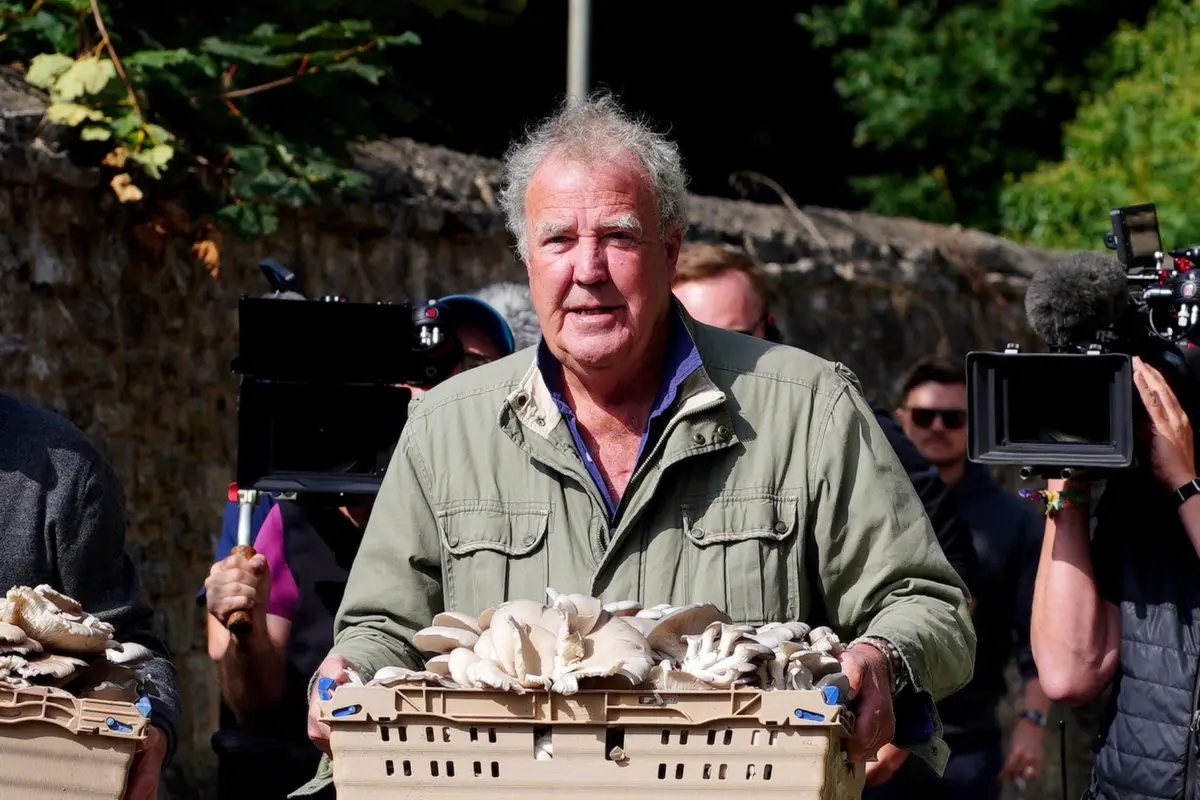
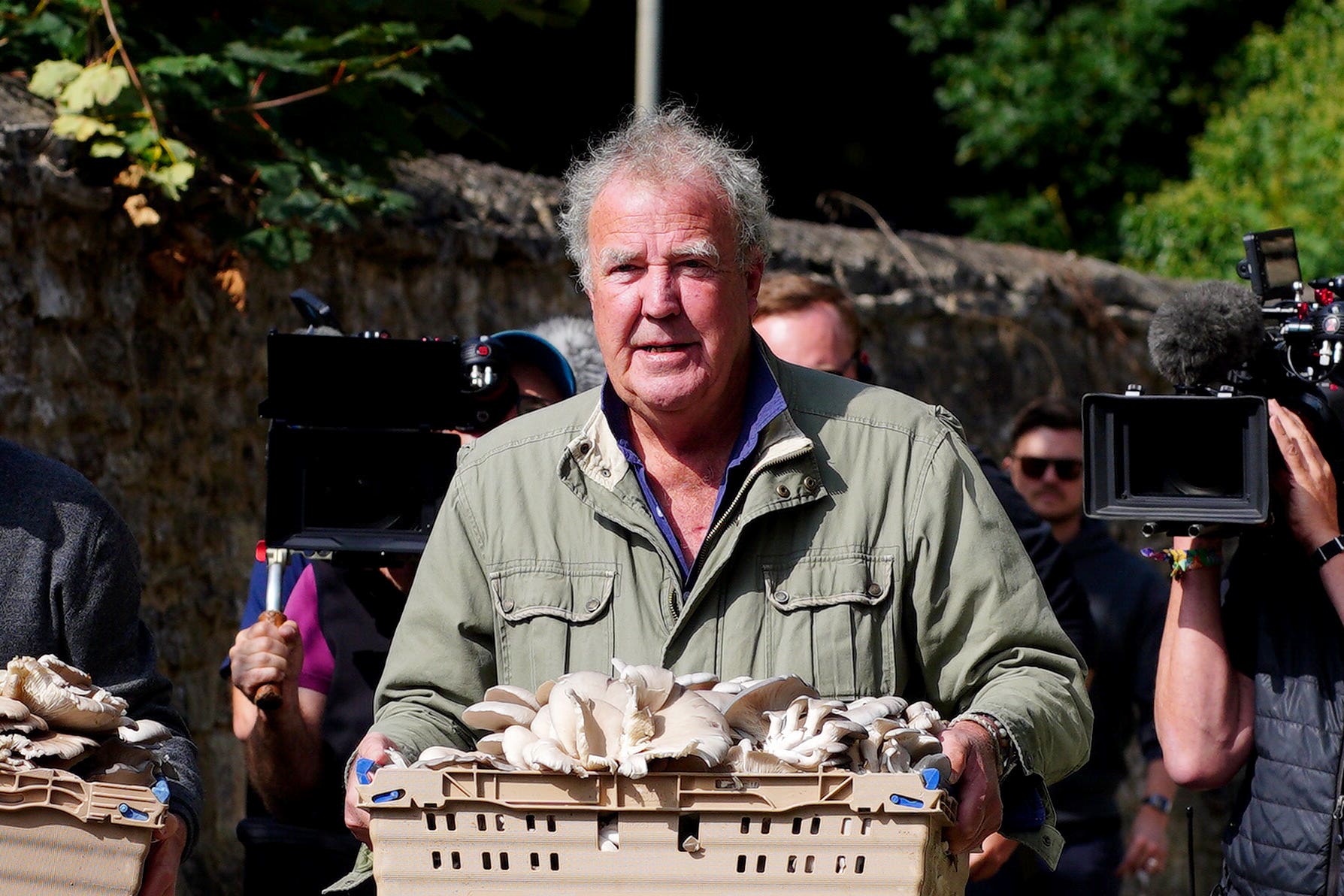
In the high-stakes, unpredictable world of modern British agriculture, few ventures command as much public fascination—or carry as much microscopic scrutiny—as Jeremy Clarkson’s Diddly Squat Farm. Since taking over the operational reins of the Oxfordshire estate in 2019, the former Top Gear presenter has traded supercars for tractors, transforming a personal lifestyle experiment into a runaway cultural phenomenon via the smash-hit Amazon Prime Video docuseries Clarkson’s Farm. Yet, for all the lighthearted bickering and rustic charm that captivates millions of global viewers, the realities of farming remain punishingly unforgiving.
Speaking publicly last week at his Cotswolds watering hole, The Farmer’s Dog, Clarkson confessed to a catastrophic agronomic blunder committed during the filming of the upcoming sixth season. In front of an audience and alongside his long-suffering farm manager and co-star Kaleb Cooper, Clarkson admitted to botching the planting of a barley crop right in the direct path of 30,000 visiting agricultural professionals attending the prestigious "Cereals" event hosted at Diddly Squat.
The botched drilling—characterized by crooked lines, uneven calibration, and forgotten fan systems—unleashed more than just a poor harvest; it provoked an intensely emotional reaction from Cooper. According to Clarkson, the mistake struck at the heart of Cooper’s professional insecurities, reducing the young farm manager to tears during a heartfelt speech captured on camera. This upcoming storyline, slated to air when season six premieres in 2027, promises to offer viewers a rare, unvarnished look at the emotional toll that public humiliation and professional failure can exact on individuals whose livelihoods depend on the land.
The revelation arrives on the heels of a massive career milestone for the production. Fresh off a prestigious National Television Award (NTA) win in the newly established reality docuseries category, Clarkson and his team are riding a wave of unprecedented cultural relevance—even as they navigate personal health battles, professional tensions, and the relentless demands of the British agricultural sector.
Detailed Chronology: From Oxfordshire Acreage to National Television Triumph
1. The Genesis of Diddly Squat (2019)
The narrative of Diddly Squat Farm began in 2019 when Jeremy Clarkson assumed direct management of his 1,000-acre Oxfordshire property, originally named for its perceived lack of agricultural productivity. Initially viewing the venture through the lens of a curious amateur, Clarkson quickly realized that traditional farming was vastly more complex, bureaucratic, and physically demanding than anticipated. Recognizing his own profound ignorance of arable and livestock management, he brought on local young farmer Kaleb Cooper to serve as farm manager. Cooper’s encyclopedic knowledge of local soil conditions, machinery operation, and rural economics immediately transformed the dynamic of the farm, grounding Clarkson’s wild ambitions in hard-nosed agricultural reality.
2. The Rise of a Cultural Phenomenon
Documenting these early trials and tribulations, Amazon Prime Video launched Clarkson’s Farm. The series became an instant critical and commercial sensation, praised by both urban viewers and rural communities for its unfiltered portrayal of the modern British farming crisis. By blending humor with genuine advocacy for agricultural workers, the show elevated issues such as supply chain pressures, local council red tape, and unpredictable weather patterns into the national conversation. Over five seasons, audiences watched Clarkson transition from a bumbling television host into a passionate, albeit perpetually error-prone, custodian of the countryside.
3. The Cereals Exhibition Catastrophe (Filming for Season Six)
The turning point for the latest chapter of Clarkson’s Farm occurred when Diddly Squat Farm was selected to host "Cereals," the UK’s premier arable farming event. The exhibition drew an estimated 30,000 farmers, agronomists, and industry experts to the Oxfordshire estate—turning the farm into a fishbowl of elite agricultural scrutiny.
Tasked with establishing a high-profile crop that would serve as a welcoming showcase to thousands of industry peers, Clarkson took it upon himself to operate the machinery. However, the attempt ended in disaster. As Clarkson recounted to host George Lamb during his appearance at The Farmer’s Dog:
"It might be this year when we had Cereals, a huge farming exhibition… at Diddly Squat. 30,000 farmers came, and I decided to go and drill the barley in the field that they’d all have to drive by. Every single farmer in the country would drive past it, and I did the drilling, and I didn’t level the drill. On a couple of occasions, I forgot to turn the fan on and apparently didn’t drive in a straight line either."
The resulting field—marred by missed sections, uneven seed distribution, and glaringly erratic tramlines—became an immediate embarrassment. For an industry that prides itself on precision agriculture and visual craftsmanship, Clarkson’s field was the agricultural equivalent of hanging a poorly painted canvas in the Louvre.
4. The Emotional Fallout and Kaleb Cooper’s Tears
The botched drilling job was not merely an aesthetic failure; it was a deeply personal blow to Kaleb Cooper. Cooper, who has built his reputation entirely on professional excellence, meticulous field management, and a fierce devotion to his craft, found himself devastated by the public nature of the blunder.
When George Lamb broached the subject of Clarkson’s biggest farming mistakes during their live interview, Cooper—seated in the audience—burst into laughter, prompting Clarkson to jokingly retort, *"F** off Kaleb." Beneath the banter, however, lay genuine heartache. Clarkson revealed that the incident would feature prominently in season six of the show, scheduled for release in 2027:
"You’ll see this in season six, but Kaleb did a speech when he’s almost in tears saying, ‘I’m not from a farming background, lots of farmers don’t think that I’m a proper farmer. You’ve completely messed this up, they’re all going to think that I can’t farm,’ and it’s one of the most heartfelt, tragic things you’ve ever seen."
Clarkson confessed that the weight of his incompetence had left him feeling "so genuinely ashamed" that he had sought solace in a pint of his own Hawkstone beer, conceding that it was definitively his worst mistake to date.
5. NTA Victory and Personal Resilience
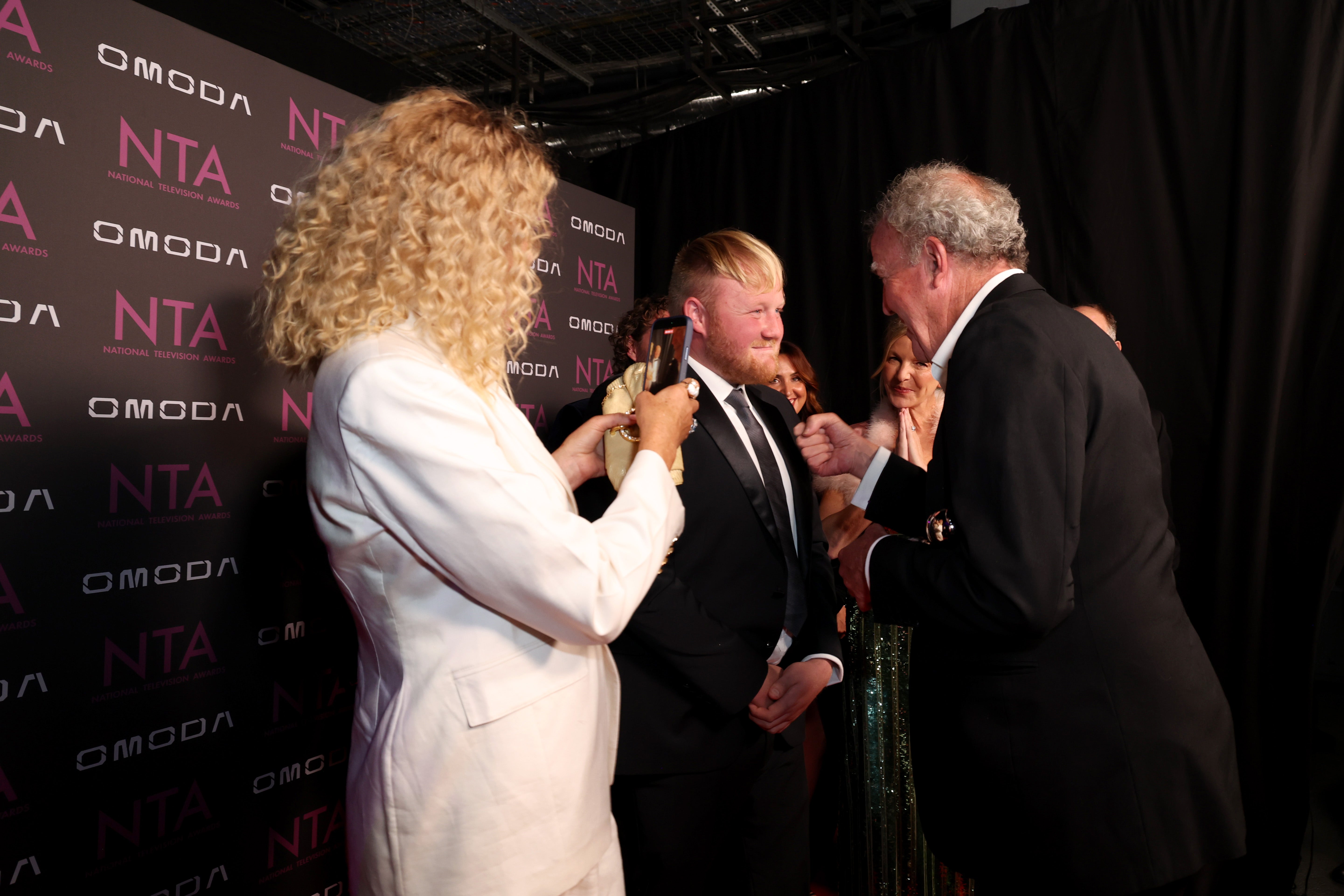
The public confession comes at a time of significant personal and professional triumph for Clarkson. Earlier in the week, Clarkson’s Farm triumphed at the National Television Awards (NTAs), capturing the trophy in the highly competitive, newly introduced reality docuseries category.
The victory arrives on the heels of a harrowing personal chapter revealed in season five, wherein Clarkson shared his diagnosis with "aggressive" prostate cancer. Following successful medical intervention, the presenter is now happily in remission, bringing a renewed sense of gratitude and perspective to his work on and off the screen.
Supporting Context & Metrics: The Economics and Realities of Modern Farming
To fully appreciate why a poorly drilled field of barley could reduce a professional farmer to tears, one must examine the precarious economic and social landscape of British agriculture.
Metric / Indicator
Context & Significance
Exhibition Scale
Approximately 30,000 professional farmers attended the Cereals event at Diddly Squat, making it the most heavily scrutinized farming exposition in the UK.
Operational Timeline
Clarkson took over the 1,000-acre Oxfordshire property in 2019, launching a multi-year media journey documenting the realities of post-Brexit farming.
Television Reach
Clarkson’s Farm spans five aired seasons, with production already well underway for season six, expected to premiere in 2027.
Award Recognition
The series secured a major victory at the National Television Awards (NTAs) in the newly minted reality docuseries category.
The Stigma of Amateurism
For Kaleb Cooper, the fear expressed during his emotional speech stems from a very real cultural prejudice within traditional rural communities. Cooper, who comes from a working-class background without generational land ownership, has had to fight tooth and nail to earn the respect of established farming dynasties. By attaching his professional reputation to a high-profile celebrity project like Diddly Squat, Cooper constantly navigates the risk that critics will dismiss him as a television personality rather than an authentic, skilled agronomist. When Clarkson haphazardly butchered the barley drilling in plain sight of the nation’s agricultural elite, it threatened to undermine the hard-earned credibility Cooper had spent his entire life building.
The Business of Arable Farming
Arable farming is an exercise in mathematical and mechanical precision. Seed depth, soil compaction, fertilizer application, and drill calibration dictate yield margins that are already squeezed thin by soaring fertilizer costs, volatile global grain prices, and unpredictable weather linked to climate change. A poorly drilled field does not simply look unsightly; it results in patchy germination, weed infestation, and a direct loss of revenue at harvest time—a luxury that working farms cannot afford.
Official Statements & Industry Reactions
Backstage at the National Television Awards, Jeremy Clarkson reflected on the deeper significance of his show’s victory, arguing that the public’s embrace of Clarkson’s Farm is ultimately a validation of the agricultural profession as a whole:
"The people who voted for us… I also think they kind of voted for farmers. I think they are going, ‘Oh, that is a difficult job.’"
Industry bodies have frequently praised the programme for shedding light on the immense mental health pressures faced by rural workers. Farming consistently ranks among professions with the highest rates of psychological distress, driven by isolation, financial uncertainty, and bureaucratic burdens. By exposing his own failures—and capturing the genuine emotional vulnerability of his team—Clarkson inadvertently highlights the profound psychological investment that farmers pour into their land.
Commentators from The Oxford Mail and other regional publications have noted that while Clarkson’s television persona relies heavily on self-deprecation and chaotic execution, episodes like the Cereals exhibition blunder serve to humanize an industry too often misunderstood by urban policymakers.
Future Outlook
As production on season six of Clarkson’s Farm continues toward its anticipated 2027 release, the fallout from the Diddly Squat drilling disaster will undoubtedly serve as one of the narrative centerpieces of the upcoming episodes. Viewers can expect a nuanced exploration of the friction between entertainment-driven experimentation and professional agricultural standards.
For Clarkson, the incident reinforces a lesson he has had to learn repeatedly over the past seven years: farming is not a game, and the soil does not forgive a lack of discipline. Yet, it is precisely this willingness to expose his own incompetence, absorb public humiliation, and lean on the expertise of younger professionals like Kaleb Cooper that has made the show an enduring triumph.
As Diddly Squat Farm looks toward future harvests, the partnership between the seasoned broadcaster and the meticulous young farmer remains the beating heart of an enterprise that has captured the nation’s conscience—proving that even the most catastrophic mistakes can ultimately cultivate profound bonds of mutual respect.