To casual filmgoers and television enthusiasts, the name Dave Lawson may ring few bells. Yet, his sonic footprint is woven inextricably into the cultural fabric of the late 20th century. Lawson provided the ethereal pads, futuristic basslines, and immersive synth textures for an astonishing roster of cinematic masterpieces and cult classics. From the haunting atmospheres of The Man Who Fell to Earth and The Dark Crystal to the blockbuster wonder of Star Wars, Superman, and Groundhog Day, Lawson operated at the epicenter of modern sound design.
Beyond his monumental contributions to film and television scoring, Lawson’s career spans the golden eras of British jazz-rock, progressive rock, and elite session musicianship. His path intersects with jazz royalty like Ronnie Scott and Stan Tracey, foundational prog groups like Web and Greenslade, and songwriting icons such as Roy Harper and Bill Wyman.
This retrospective examines Lawson’s rich history—from a reluctant clarinetist in the Royal Air Force to an avant-garde bandleader, a trailblazing synthesizer pioneer, and an understated giant of modern orchestration.
Detailed Chronology
1. Formative Years: From Uxbridge to Ronnie Scott’s (1963–1970)
Dave Lawson’s professional trajectory began in earnest in 1963 when he enlisted in the RAF School of Music in Uxbridge. Intent on building upon the classical piano studies he undertook during his school days, Lawson faced the bureaucratic realities of military instrumentation. When asked what instrument he would prefer to play while marching, Lawson humbly suggested the flute or the trumpet. The RAF responded by handing him a broken-down, battered clarinet.
Despite this inauspicious start, Lawson’s military posting catalyzed a life-changing mentorship. Through his interactions within the RAF musical circles, he crossed paths with session trumpeter Freddie Staff, who was in the process of assembling his own big band. Recognizing Lawson’s hunger to master jazz harmony and orchestration, Staff connected him with London jazz titan Ronnie Scott. Scott, in turn, passed along the phone number of his legendary house pianist, Stan Tracey.
"I arranged to visit Stan for an hour’s lesson on chords, progressions and voicings," Lawson recalls. "I then stayed for some tea and accompanied Stan to Ronnie’s, where I sat enthralled for the first set before finding my way back to RAF Uxbridge. This exercise was repeated as long as the wages permitted. The lessons then progressed to Stan writing out one of his compositions, and it was then down to me to play it back to him. My regular visits continued until I was posted to Singapore."
2. The Prog-Rock Frontier: Web and I Spider (1970)
Following his tenure in the RAF and sporting longer hair that reflected the shifting countercultural tides of the late 1960s, Lawson joined Web (formerly The Web), a boundary-pushing jazz-rock outfit.
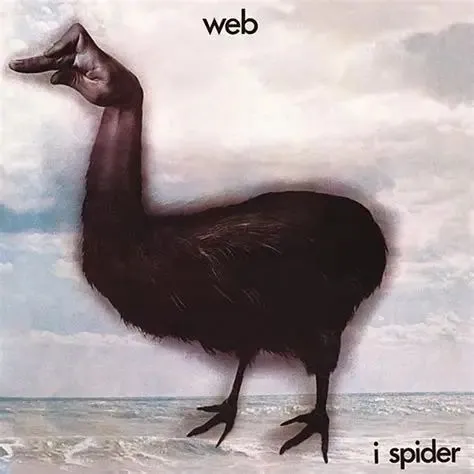
The group possessed an unconventional instrumentation that set them apart from standard rock configurations. "It had an unusual line-up for a jazz-rock outfit—two drummers, one doubling on vibes and percussion," Lawson explains. "We also had a tenor saxophonist. I wrote our album I Spider [1970] and arranged the compositions; the band members were all ‘readers’."
Released in 1970, I Spider stands as a masterclass in early progressive experimentation. Traces of Terry Riley’s cyclical minimalism and the playful, complex arrangements of Soft Machine are detectable, yet the album remains uniquely original, rewarding listeners with compulsive, intricate listening experiences.
3. The Greenslade Era and Progressive Peak (1972–1975)
In late 1972, Lawson was approached by keyboardist Dave Greenslade, fresh off his stint with Colosseum. Greenslade had a singular vision for a new musical collective.
"It was Dave’s idea to form a band with two keyboard players but without a guitar," Lawson notes. "Our different styles were complementary, the vast array of tonal colours expressive enough, and with Tony Reeves [formerly Colosseum] on bass and Andrew McCulloch [formerly King Crimson] on drums, it was to prove a fruitful union."
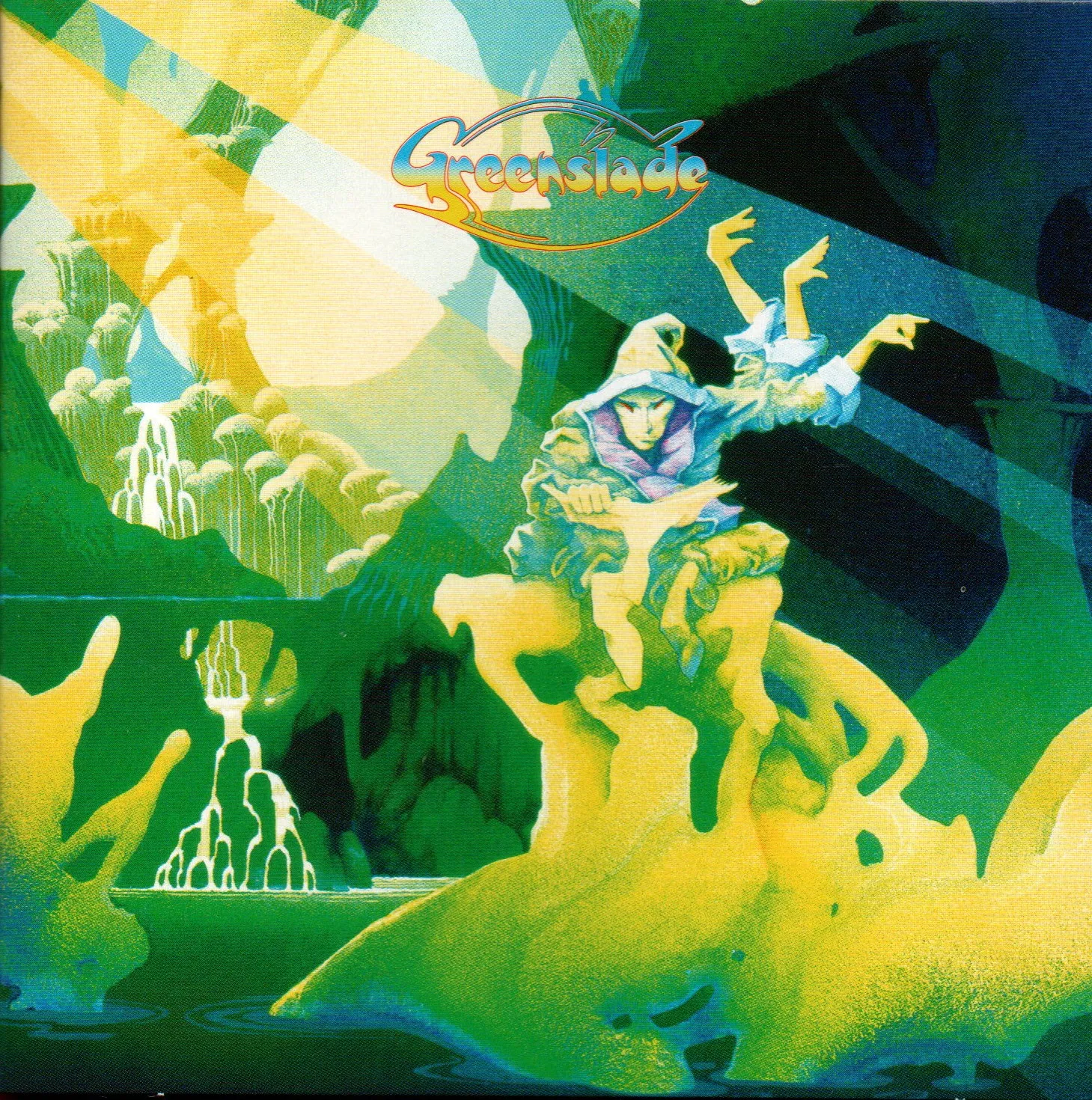
Operating simply as Greenslade, the quartet carved out a distinct niche in the burgeoning British progressive rock scene. Their sound leveraged dual keyboards to weave symphonic textures without relying on traditional electric guitars. The lineup recorded four critically praised albums:
Greenslade (1973)
Bedside Manners Are Extra (1973)
Spyglass Guest (1974)
Time And Tide (1975)
Despite a devoted following and critical acclaim, internal frustrations and unsympathetic management eventually prompted the band to split.
4. Session Work, Roy Harper, and Stackridge (1976–1977)
Adrift after the dissolution of Greenslade, Lawson briefly navigated several short-lived projects before committing to a full-time career as a freelance session musician. Through guitarist Andy Roberts (formerly of Liverpool Scene), Lawson connected with maverick singer-songwriter Roy Harper.
Harper’s management offered a fair fee for Lawson’s services, which included joining Harper on a promotional tour for the 1977 album Bullinamingvase. To capture the album’s eccentric soundscapes, Lawson deployed an impressive arsenal of period-accurate synthesizers: a Moog Polymoog, a Sequential Circuits Prophet 5, a Micromoog, and auxiliary Roland gear.
Sharing the stage and studio with Roberts, guitarist Henry McCulloch, drummer John Halsey, and bassist Dave Cochran, Lawson found the environment exhilarating. "There was hardly ever a dull moment, the humour was explosive, but the energy levels were at full throttle," he recalls.
Lawson remembers Harper as a deeply passionate, uncompromising artist: "Roy is a one-off, yes, he is controversial. I remember a gig where he stopped playing to argue a point with a member of the audience. He’s a passionate guy, 100 per cent in what he does and what he believes in. He has a caustic wit but a massive heart."
Following his time with Harper, Lawson was invited to lend his talents to the quirky art-rock group Stackridge for their conceptual album Mr Mick (1976). Lawson remembers the sessions fondly: "This I did with great pleasure; they were an excellent bunch of guys. There was a great atmosphere on the sessions I attended, and I still have great memories of working with them."
5. Near-Miss Supergroups and Bill Wyman (1981–1982)
As the 1980s dawned, Lawson found himself on the fringes of several high-profile collaborations. He was recruited into XYZ, a prospective supergroup formed by Yes bassist Chris Squire and drummer Alan White. The trio recorded an evocative Christmas single, Run With The Fox (1981). At one stage, leveraging Lawson’s growing film industry connections, the band nearly persuaded legendary Led Zeppelin guitarist Jimmy Page to join the fold.
"XYZ – the supergroup that never saw the light of day, I’m sorry to say," Lawson reflects wistfully.
A pivotal turning point arrived when Lawson crossed paths with Rolling Stones bassist Bill Wyman while scoring the soundtrack for the 1981 feature film Green Ice.
"It was very enjoyable working with Bill; we shared the same sense of dry humour and got on well," Lawson says. Their creative chemistry ran deep enough that Wyman invited Lawson to contribute to his eponymous solo studio album. The collaboration yielded commercial success, charting and spawning two hit singles, notably the quirky 1982 radio staple "(Si Si) Je Suis Un Rock Star."
6. Commercial Jingles, Soundtrack Mastery, and the Synthesizer Vanguard
While maintaining a vigorous schedule of artist collaborations, Lawson became a titan of commercial production. He composed and arranged advertising jingles for major household brands, including Coco Pops, British Gas, Foster Grant, Texaco, and Lee Cooper.
Simultaneously, his reputation as a synthesizer virtuoso made him a first-call asset for Hollywood and British film composers. His synth programming and performances enriched soundtracks for major motion pictures, including:
The Man Who Fell to Earth
Star Wars
Superman
The Dark Crystal
Angel Heart
Mississippi Burning
Clockwise
Groundhog Day
Multiplicity
Living Out Loud
You’ve Got Mail
Anna and the King
Grey Owl
Mrs Henderson Presents
Having amassed one of the world’s most extensive collections of state-of-the-art Synclaviers and analog synthesizers, Lawson became a sought-after consultant. He directly advised and influenced luminary musicians and producers such as Alan Hawkshaw, Mike Oldfield, Andy Summers, and Sting.
7. The Blue Planet Epic (2001)
In 2001, Lawson undertook what would become one of the defining sonic achievements of his later career: scoring the BBC landmark natural history series The Blue Planet.
"This was a massive undertaking," Lawson admits. "The footage was, at the time, cutting edge; we tried and succeeded as far as I’m concerned with a sympathetic, tailored score married to the superb camera work and sublime narration from the master, Sir David Attenborough."
The resulting score balanced ambient electronic soundscapes with orchestral depth, setting a new benchmark for documentary scoring.
Supporting Context & Metrics
To fully appreciate Dave Lawson’s impact on modern music, consider the scale of his creative output across various mediums:
Domain
Key Highlights & Collaborations
Progressive Rock & Jazz-Rock
Web (I Spider), Greenslade (4 studio albums, 1973–1975)
Major Film Soundtracks
Star Wars, Superman, The Dark Crystal, Groundhog Day, The Blue Planet
Pop & Rock Collaborations
Roy Harper, Bill Wyman, Stackridge, XYZ (Chris Squire & Alan White)
Industry Influence
Consulted on synth technology for Mike Oldfield, Sting, and Andy Summers
Commercial Advertising
Scores for Coco Pops, British Gas, Texaco, and Lee Cooper
Future Outlook and Legacy
Now well into his eighties, Dave Lawson faces the realities of declining health, which have naturally constrained his ability to take on rigorous, day-to-day composition work. Though he occasionally accepts selective musical commissions, his active day-to-day presence in the studio has slowed.
Yet, his legacy experiences periodic renaissances. Reissue campaigns—such as Esoteric Recordings’ comprehensive box set Greenslade – Temple Songs – The Albums 1973-1975—introduce his pioneering keyboard arrangements to new generations of progressive rock enthusiasts and vinyl collectors.
Despite the notoriously precarious nature of the music industry—where the economic hardships of session work and shifting commercial trends can easily overshadow past glories—Lawson maintains the resilient optimism that carried him from Uxbridge military barracks to Hollywood soundstages.
"If I didn’t see the lighter side of our situation, I would be a nervous wreck," Lawson reflects with a characteristic chuckle. "Everything will pan out, fingers crossed."