Executive Overview
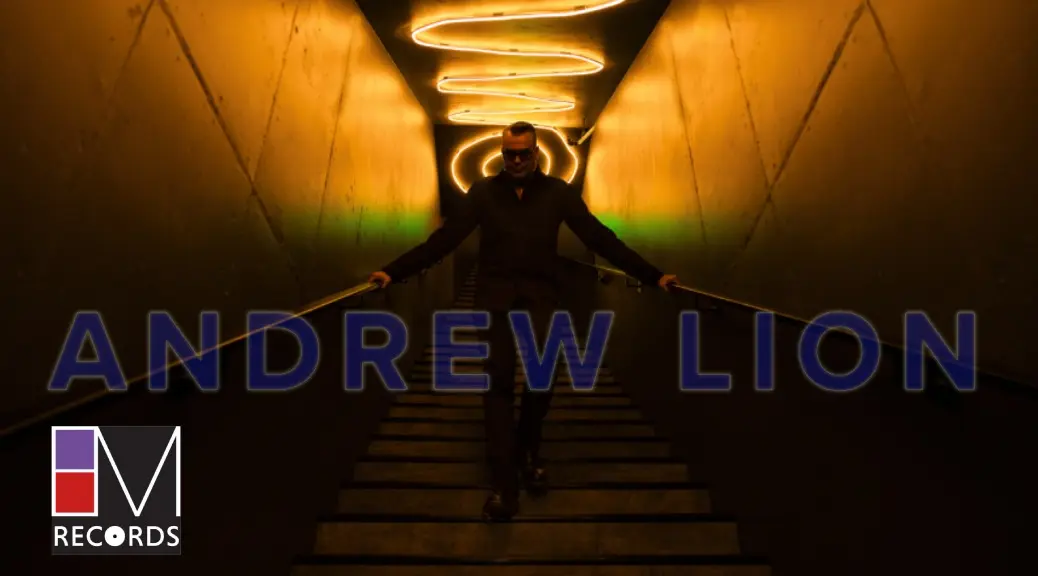
In the contemporary landscape of improvised music, genre boundaries are routinely challenged, yet few artists navigate the treacherous waters between progressive rock and modern jazz with the nuanced perspective of bassist Andrew Lion. Best known in jazz circles as the co-leader of the Oakland-based ensemble Negative Press Project alongside pianist Ruthie Dineen, Lion has stepped into the spotlight with his debut full-length solo album, Läuder|Läder.
Featuring a sprawling cast of fifteen musicians across seven meticulously crafted tracks, the album is a testament to a career forged in the crucible of San Francisco’s diverse music scene. Recorded across Seattle, Oakland, and Bend, Oregon—where Lion has resided since 2021—the project refuses to neatly align with traditional jazz expectations. As Lion himself candidly remarked to The Bulletin ahead of the project’s showcase in Bend, “I’m not necessarily a jazz musician.” Instead, he offers the designation of "journeyman": a jazz-trained bassist who spent his formative years playing in rock outfits, most notably the touring quartet SPOKE.
This deep-rooted affinity for rock architecture informs every facet of Läuder|Läder. Released via Envelopmental Music—the indie label co-founded by Lion—the record is a masterclass in dynamic restraint, complex metric modulation, and collective bandleadership. Rather than prioritizing virtuosic flash, Lion has orchestrated a sophisticated dialogue between two distinct regional casts of players, weaving together avant-garde sensibilities, prog-rock muscle, and contemporary jazz warmth. As anticipation builds for his upcoming album release show in Bend on November 6 alongside SUNDIVE, Läuder|Läder stands as a defining artistic statement for an uncompromising composer and bandleader.
Detailed Chronology and Structural Anatomy of Läuder|Läder
The architecture of Läuder|Läder is physical as well as conceptual, with the vinyl format neatly delineating the project’s two distinct recording environments and casts of characters. Across its seven tracks, the album functions less as a collection of disparate songs and more as a multi-movement suite, drawing on a timeline that stretches from Lion’s earliest compositional sketches to contemporary studio sessions.
Side A: The Seattle Suite and the Genesis of "Lines"
Side A operates as a unified suite, with every piece descending from a single compositional seed planted by guitarist Luis Salcedo.
- "Lines I": Composed by Salcedo, this track serves as the ignition point for the entire project. From its opening moments, the group sounds vast and commanding, fulfilling the progressive-rock ambitions that underpin much of Lion’s aesthetic. A heavy electric intro driven by bass, synth, and drums establishes immense pressure, while the surrounding ensemble expertly balances aggressive dynamics with intricate arrangements.
- "Ascendance (Lines II)": Acting as a necessary breath of air following the opener’s visceral impact, this track shifts the sonic terrain into contemporary jazz. Ruthie Dineen steers the melodic material toward brighter horizons, complemented by warm textures and tight syncopation. Featuring stellar rhythmic anchoring by drummer Jacob Richards and soaring synthesizer work, the track highlights Lion’s electric bass beneath the mix. Vocalist Liv Sindler provides subtle, atmospheric color, establishing this movement as a standout centerpiece of the record.
- "Obsidian Field (Lines III)": Penned solely by Lion, the track takes its name from the volcanic glass characteristic of the high desert surrounding Bend. Here, odd time signatures collide with elements of dub, rock, and 1970s fusion, showcasing the bassist’s ability to merge disparate rhythmic traditions into a cohesive whole.
- "Lines Reprise": Closing Side A with a clever chronological twist, this piece is constructed largely from Lion’s earliest sketches of Salcedo’s original ideas—captured before "Lines I" solidified into its final recorded form. The side thus concludes with its oldest compositional material, driven by Salcedo’s searing lead guitar until Eric Vanderbilt-Mathews’ tenor saxophone enters midway, pulling the energy firmly back into the jazz idiom.
Side B: Transatlantic Dialogue and Rhythmic Wryness
Side B shifts the personnel to a second primary cast while maintaining the cohesive energy established on the first half of the album.
- "Rioga I Mbeirteanna": Translating from Irish as "royal in pairs," this track is unique for featuring both guitarists, Luis Salcedo and Hristo Vitchev, on the same recording. An earlier single version featured guest trumpeter Cuong Vu; however, the album version highlights Joel Behrman, one of Lion’s earliest Bay Area collaborators. Behrman’s commanding trumpet cuts through the mix, while Vitchev’s guitar solo—the very first take he recorded for the tune—remains unedited as the master.
- "Felid Wrick": A heartfelt tribute to drummer Rick Muñoz, Lion’s rhythm-section partner from their San Francisco days, the title functions on multiple levels. "Felid" nods to the cat family (and the bassist’s own surname), while "wrick" is an old British dialect term for a crick in the neck—a fitting description of the physical toll exacted by bars of 13/8 and 7/16 time. Co-written by Dineen and Salcedo (though Salcedo does not perform on it), the track is the album’s most joyful offering, propelled by Vitchev’s electric guitar and structured like an unscripted jam navigated deftly by Dineen.
- "Pique-Nique": The album’s poignant closer reaches furthest back into the past, carrying composer credits for Robert Sherman, Anthony Marchesi, Rick Muñoz, and Andrew Lion—the complete lineup of their former touring outfit, SPOKE. Rearranged for the expanded ensemble with Micah Hummel added on percussion, the piece reflects on interpersonal conflict and reconciliation. Vocalist Jeff Denson, a bassist and former conservatory teacher of Lion’s, delivers the vocal performance. The track cleverly features two bassists, though only one is playing the instrument. Tenor saxophonist Eli Maliwan contributes a swirling, synth-infused solo that brings the ambitious project to a triumphant close.
Supporting Context, Metrics, and Production Ecosystem
The realization of Läuder|Läder is the culmination of years of collaborative infrastructure within the West Coast independent music community. Lion’s trajectory from San Francisco rock bands to the California Jazz Conservatory in Berkeley established a unique dual identity that permeates his professional network.
[San Francisco Rock Scene (SPOKE.)]
       │
       ▼
[California Jazz Conservatory (Berkeley)]
       │
       ▼
[Negative Press Project (w/ Ruthie Dineen)]
       │
       ▼
[Envelopmental Music (Co-founded Label)]
       │
       ▼
[Debut Solo Album: Läuder|Läder (15 Musicians, 3 Cities)]
The Personnel Ecosystem
The album’s fifteen-musician roster represents a cross-section of Pacific Northwest and Bay Area creative talent:

- Rhythm Section Anchors: Ruthie Dineen (piano, Rhodes) appears on every track, serving as the musical anchor alongside Lion. Drummers Evan Woodle and Jacob Richards split duties on Side A, bringing backgrounds rooted in Seattle’s creative improvisation scenes, notably through Woodle’s involvement with the Racer Sessions.
- Frontline Horns and Guitars: Saxophonists Eric Vanderbilt-Mathews and Eli Maliwan, alongside trumpeters Rafa Postel and Joel Behrman, provide dynamic horn arrangements that bridge the gap between hard-bop complexity and electric-era experimentation. Guitarists Luis Salcedo and Hristo Vitchev supply the textural grit and melodic clarity essential to the album’s rock-jazz hybrid identity.
Production and Geographical Footprint
The recording process reflects Lion’s nomadic creative life, spanning sessions in Seattle, Oakland, and his current home base of Bend, Oregon. This geographic dispersion allowed Lion to curate regional ensembles that could capture distinct emotional and sonic palettes. By releasing the project through Envelopmental Music—the independent label he co-founded—Lion maintains total artistic autonomy, ensuring that commercial pressures never compromise the intricate arrangements or the disciplined restraint practiced by every participant.
Official Statements and Artist Philosophy
The underlying ethos of Läuder|Läder is defined by an absence of ego and a commitment to collective discipline. In an industry where bandleaders often utilize large ensembles to showcase individual virtuosity, Lion’s approach in the studio is characterized by deliberate restraint.
Reflecting on his transition from the rock circuits of San Francisco to the rigorous academic environment of the California Jazz Conservatory, Lion has consistently resisted being typecast. His candid admission to The Bulletin—"I’m not necessarily a jazz musician"—is not an abdication of his craft, but rather a framing device for his eclectic influences. Having spent years inside the touring rock quartet SPOKE., Lion understands the visceral power of amplification, song form, and collective energy, which he now marries to the harmonic sophistication of contemporary jazz.
This philosophy of humility is mirrored by his collaborators. As noted in critical evaluations of the sessions, "Nobody plays safe. Nobody has anything to prove." The decision to retain foundational ensemble takes—such as Hristo Vitchev’s first-pass guitar solo on "Rioga I Mbeirteanna"—over polished or star-studded alternatives (such as the single’s feature with Cuong Vu) demonstrates a curatorial vision focused on organic group chemistry rather than superficial marquee value. Getting fifteen seasoned improvisers to prioritize group sound over individual spotlight moments stands as Andrew Lion’s greatest achievement as a bandleader.
Future Outlook and Upcoming Releases
As Läuder|Läder finds its audience among progressive jazz and rock enthusiasts alike, Andrew Lion is preparing to bring the expansive project to the live stage.
The official album release show is scheduled for November 6 in Bend, Oregon, where Lion will share the bill with SUNDIVE. Translating music recorded across three different cities and featuring shifting casts of elite instrumentalists will present a formidable logistical challenge, yet it is one that Lion is well-equipped to handle given his extensive touring background with SPOKE. and the Negative Press Project.
Looking ahead, the momentum generated by Läuder|Läder and the continued output of Envelopmental Music signal a fertile period for Lion’s creative endeavors. Whether through future iterations of his solo work, ongoing collaborations with Ruthie Dineen and the Negative Press Project, or further explorations of the high desert landscape that inspired Obsidian Field, Andrew Lion has cemented his reputation as an essential architect of modern genre-agnostic music.