In an era dominated by hyper-compressed digital streaming, the boutique vinyl label Artwork Records operates as an intentional anachronism. Founded in 2023 by legendary French producer Jean-Philippe Allard—the architect behind PolyGram’s iconic Paris jazz department in 1987—Artwork maintains a strict ceiling of roughly five releases a year. The label’s packaging is sober and confident, utilizing heavy cardstock and mastering processes explicitly engineered to "let a room breathe." There is little digital footprint, but the uncompromising physical catalogue does the talking.
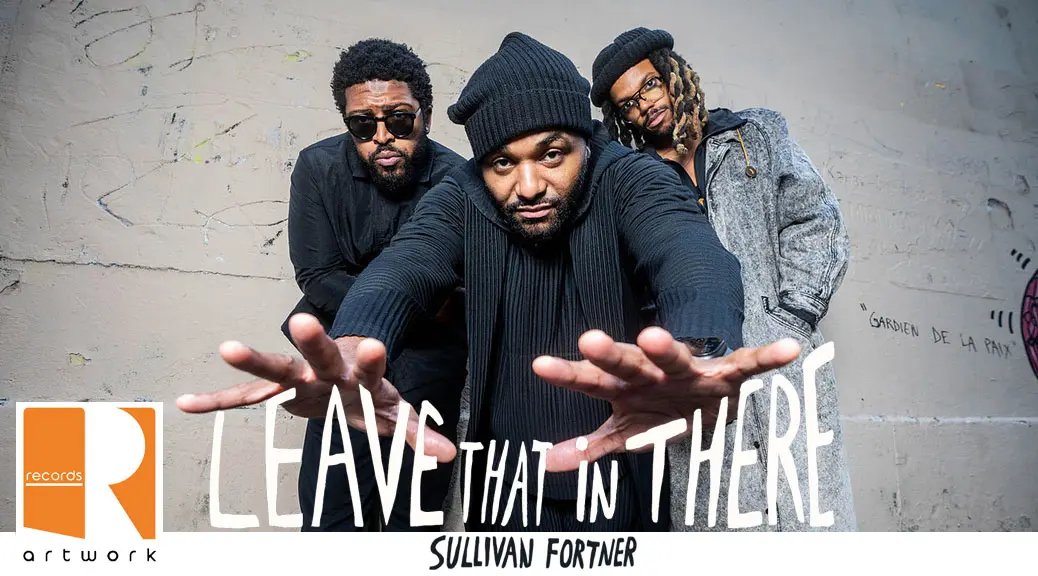
When Allard launched the label, his first call went to Kenny Barron; his second went to visionary pianist Sullivan Fortner. The resulting collaboration, Leave That In There, represents a fascinating turning point in contemporary improvised music.
The album serves as the companion piece to Fortner’s critically acclaimed Southern Nights, which captured the Best Jazz Instrumental Album trophy at the 68th Grammy Awards in February 2026. While Southern Nights delivered a pure, acoustic post-bop masterclass cut live at the Village Vanguard, Leave That In There takes a radical detour. Recorded alongside bassist Tyrone Allen II and drummer Kayvon Gordon, the album is a maximalist laboratory of overdubbed keyboards, vintage synthesizers, marimbas, and rhythmic electronics.
Across two distinct sides of vinyl, Fortner confronts memory, ancestry, grief, and unbridled experimentation. It is a portrait of a working trio capturing the exact genesis of their sound on tape, pushing the outer boundaries of jazz into bold, uncharted territory.
Detailed Chronology
The Genesis and Dual-Project Origin
The timeline of Leave That In There stretches back to a decade-long partnership between Fortner and Allard. Allard originally signed the pianist to Impulse! for 2015’s Aria and 2018’s Moments Preserved. Following those releases, Fortner maintained an uncharacteristic five-year hiatus from recording under his own name, breaking the silence with the expansive double-release strategy behind Solo Game.
When Fortner brought his accumulated material to Allard, he sat on two completed, polarized projects: a traditional acoustic piano date produced by Fred Hersch, and a separate, highly experimental venture utilizing overdubbed keyboards, organs, and electronic textures. Allard convinced Fortner to channel this diverse energy into a cohesive artistic statement. Leave That In There is the direct result of handing that experimental impulse over to a locked-in, telepathic band.
From the Village Vanguard to the Studio
Six months prior to tracking Leave That In There, Fortner, bassist Tyrone Allen II, and drummer Kayvon Gordon had been sharpening their live interplay on the road for roughly a year. In December 2023, the trio entered the studio to lay down the foundational acoustic tracks live in a single room, completely unisolated and devoid of digital safety nets.
Six or seven months later, the trio reconvened at Electric Garden Studios for an intensive phase of sonic expansion. Drummer Kayvon Gordon introduced traditional Bátá instruments and intricate rhythm loops, while Tyrone Allen II overdubbed his bass lines. Fortner himself layered Hammond B3 organ, synthesizers, and marimba across the soundscape. Although initial sessions also featured group clapping and vocal chanting, the chants were ultimately edited out, reined in by bandmates who checked Fortner’s self-described "maximalist" tendencies.
Dissecting the Vinyl: Side A
Side A immediately establishes the album’s boundary-pushing ethos. Opening track "Sugarcane" introduces tribal marimba flavors interwoven with slippery synthesizer lines. Driven by Gordon’s authentic Bátá drumming, the piece carries profound historical weight. As liner-note essayist Courtney-Savali L. Andrews observes, the track evokes both Fortner’s grandmother arriving with freshly cut stalks to chew and the historic 1811 German Coast uprising near LaPlace—the largest revolt of enslaved Africans in American history.
The momentum pivots swiftly with "Que Diablos," which dives headfirst into warm Latin rhythms and acoustic piano phrasing. It is followed by "A Poignant Time," a brief, hypnotic theme born out of a spontaneous five-minute improvisation that has since become the trio’s live signature piece.
At the emotional and stylistic center of Side A sits "Aerobatics," a two-part tour de force originating from a casual, ten-minute reharmonization of two bars of Charlie Parker’s "Yardbird Suite." Part One functions as a psychedelic interlude, while Part Two channels the luminous, funky aura of George Duke, crystallizing Fortner’s unique vision of contemporary jazz-fusion.
"Sorcerer’s Stick" cleverly splices a section of Herbie Hancock’s "The Sorcerer" with Donald Brown’s "The Early Bird Gets the Short End of the Stick," resulting in a hyper-focused modern jazz sprint that ends almost too soon. Side A closes with "Swirl," featuring a returning Hammond B3 organ stretching out into uninhibited, exploratory improvisations explicitly penned with Thelonious Monk’s fearless spirit in mind.
Dissecting the Vinyl: Side B
Side B pivots toward historical reflection and retro-futuristic soundscapes. "T295" introduces a bowed-bass foundation propelled by vintage electronic textures reminiscent of Alphonse Mouzon’s classic fusion explorations.
This leads into the album’s sole cover track: "Number 3," the longest and most traditional jazz piece on the record. Written by Detroit drummer-composer Lawrence Williams—a key fixture in trumpet legend Marcus Belgrave’s quintet—the fast waltz pays direct homage to Fortner’s academic roots at Oberlin, where Belgrave served as a foundational mentor.

"12 Gallons" plays like a sci-fi combo driven by an infectious drum-pattern shuffle. It is followed by "Aria II," a meticulous reconstruction of material Fortner originally recorded in 2014. Guided by his mentor John Clayton’s maxim that "a good tune is never written, only rewritten," Fortner trims, re-cuts, and supercharges the groove with a dominant Hammond B3 presence.
The emotional zenith arrives with "A Hymn for Linda," an angelic, soulful composition written against a kitchen egg timer in just five minutes. The track features an impromptu vocal arrangement of Fortner singing tightly stacked harmonies over himself—the sole human voice captured on the record. Side B concludes with "Another Poignant Time," gracefully looping back to the thematic anchor established on Side A.
Supporting Context & Metrics
The Artwork Records Philosophy
Jean-Philippe Allard’s boutique imprint operates on a curated model that prioritizes physical craftsmanship over streaming algorithms. Pressing roughly five records a year allows Artwork to maintain rigorous quality control. The label’s recent vinyl release schedule highlights this commitment: Southern Nights was pressed to vinyl in July 2026, arriving just weeks before the physical rollout of Leave That In There.
Comparative Metrics: Two Trios, Two Visions
To fully appreciate Leave That In There, it must be contrasted with its Grammy-winning predecessor, Southern Nights:
- Southern Nights (Recorded July 2023 / Released on Vinyl July 2026):
- Personnel: Sullivan Fortner (piano), Peter Washington (bass), Marcus Gilmore (drums).
- Methodology: Captured live during a week-long residency at the Village Vanguard with zero isolation, minimal editing, and virtually no retakes.
- Aesthetic: Pure acoustic post-bop; traditional piano trio instrumentation.
- Accolades: Won Best Jazz Instrumental Album at the 68th Grammy Awards (February 2026).
- Leave That In There (Recorded December 2023 / Released Autumn 2026):
- Personnel: Sullivan Fortner (piano, keyboards, synth, marimba), Tyrone Allen II (bass), Kayvon Gordon (drums, percussion).
- Methodology: Basic tracks laid down live, followed by extensive overdubbing of synthesizers, electronics, and percussion six months later.
- Aesthetic: Maximalist, genre-fluid fusion bridging acoustic jazz, electronic textures, and global percussion.
The Influence of Past Collaborations
Fortner’s fearless approach to studio layering and textural counter-lines traces back significantly to his work with guitarist Lage Lund on 2019’s Terrible Animals (Criss Cross). On that project, Lund overdubbed intricate counter-lines and atmospheric textures onto a live quartet session after the initial performance—a methodology that planted the structural seeds for Fortner’s contemporary explorations.
Official Statements
Reflecting on the evolution of the trio and the organic nature of the studio sessions, Sullivan Fortner has spoken candidly about the time capsule-like quality of the recording:
"This album is the absolute genesis of the group. We were three musicians still actively learning how to listen to and inhabit each other’s musical spaces. Listening back to it now, we are so far past this point in our live development that it almost feels awkward to hear, but that is precisely what makes it so interesting. It is a band literally forming right there on tape."
Discussing his tendency toward sonic abundance and the collaborative checks and balances within the group, Fortner identifies openly as a stylistic maximalist:
"I lean toward adding layers, textures, and sonic colors, but Tyrone [Allen II] and Kayvon [Gordon] served as my vital anchors. They constantly pulled me back, stopping me from going too far down the rabbit hole and keeping the core groove locked in."
Jean-Philippe Allard, reflecting on the foundational ethos of Artwork Records, emphasizes the importance of tactile listening objects:
"We don’t need a massive web presence when the physical catalogue speaks for itself. When you hand someone a heavy-card sleeve with mastering that lets a room breathe, and you limit production to a handful of deeply considered albums a year, the object in the listener’s hands communicates all the value they need to know."
Future Outlook
As the autumn leaves begin to fall, Sullivan Fortner is stepping into one of the busiest and most prestigious stretches of his touring career. The release of Leave That In There coincides with a high-profile series of international live dates that will showcase both his acoustic mastery and his exploratory electronic range.
Confirmed UK Live Dates & Residency Schedule
- Wednesday, September 16, 2026: Ronnie Scott’s, London — Appearing with the Peter Bernstein Quartet
- Wednesday, October 28, 2026: Ronnie Scott’s, London — Official Album Launch: Sullivan Fortner Trio performing ‘Leave That In There’
- Sunday, November 22, 2026: EFG London Jazz Festival — Cécile McLorin Salvant with her band (Industry insiders anticipate a surprise guest appearance by Fortner).
Critical Takeaways and Industry Trajectory
The release of Leave That In There leaves critics and fans grappling with a minor structural critique—specifically, how a tight thirteen-track single LP layout occasionally forces short interludes to crowd out longer, fully developed melodic statements that beg for extended improvisation. Yet, this minor constraint is a minor blemish on an otherwise triumphant artistic statement.
By running two parallel vinyl releases—the swinging, purist acoustic grace of Southern Nights and the kaleidoscopic, studio-sculpted maximalism of Leave That In There—Fortner has proven himself to be one of the most versatile, intellectually curious bandleaders working in modern improvised music. Backed by Artwork Records’ uncompromising physical standard, Fortner’s catalogue stands as a masterclass in how to honor jazz lineage while aggressively expanding its structural borders.