Executive Overview
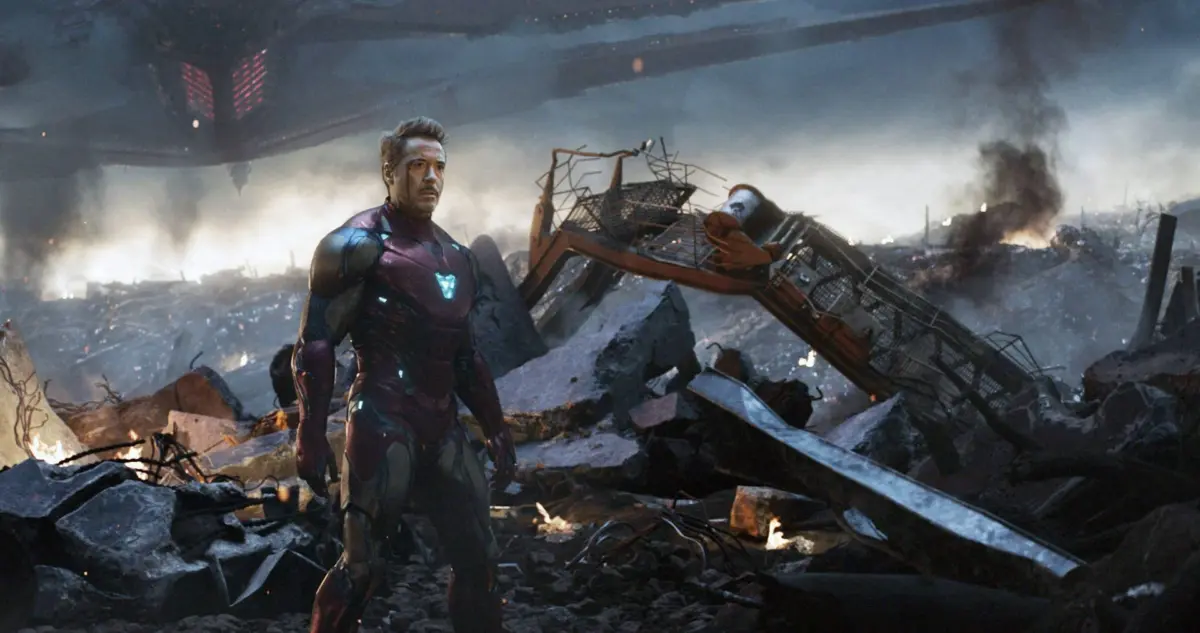
For months, whispered rumors have rippled through fan forums, industry trades, and social media channels. Now, the speculation has been definitively put to rest with the drop of a high-gloss, newly retooled promotional trailer: Marvel Studios is officially bringing Avengers: Endgame back to the big screen. Scheduled for a nationwide theatrical re-release on September 25, 2026—just three months before the highly anticipated Christmas blockbuster Avengers: Doomsday hits theaters—this strategic maneuver is far more than a simple trip down memory lane.
On the surface, an Endgame encore run makes undeniable commercial sense. Released in 2019, the film served as the monumental, emotional climax of the first major era of the Marvel Cinematic Universe (MCU), known retroactively as the "Infinity Saga." This pioneering, interconnected experiment linked 23 distinct feature films together into a continuous narrative tapestry that began with 2008’s Iron Man. Yet, when viewed through the analytical lens of modern pop-culture history and superhero fandom research, this tactical re-release reads like a profound corporate admission.
It speaks volumes about how Marvel Studios views the trajectory, missteps, and audience attrition of its post-2019 output. As the studio prepares to steer the franchise toward its next major milestone, the decision to resurrect the crown jewel of the Infinity Saga points to an unmistakable pivot: when an expansive, multi-media universe becomes too bloated to navigate, the most reliable escape hatch is to retreat to the golden era, lean heavily into nostalgia, and sidestep the narrative baggage that has accumulated over the years.
Detailed Chronology: From the Peak of the Infinity Saga to the Multiverse Fatigue
To understand the weight of the upcoming Endgame re-release, one must first trace the chronological evolution of the MCU and the distinct structural shifts that define its two primary chapters.
The Infinity Saga (2008–2019): A Masterclass in Serial Building
When Jon Favreau’s Iron Man hit cinemas in the summer of 2008, few industry analysts predicted that a minor comic book property anchored by a then-controversial Robert Downey Jr. would spark a global cinematic revolution. Not only did Iron Man rescue Marvel from the precipice of bankruptcy, but it also laid the foundation for an unprecedented shared universe.
Over the next eleven years, Marvel cultivated a masterclass in serial storytelling. Films like The Avengers (2012), Captain America: Civil War (2016), and Black Panther (2018) steadily built an interconnected mythology. This meticulous planning culminated in Avengers: Infinity War and Avengers: Endgame, the latter of which shattered global box-office records to briefly become the highest-grossing film of all time. More importantly, it earned an exceptional 94% "Fresh" rating on Rotten Tomatoes, solidifying a rare consensus of critical acclaim and populist adoration. For millions of viewers, following the MCU felt like an exciting, rewarding, and accessible communal journey.
The Multiverse Saga (2021–Present): The Burden of Infinite Choices
Following the emotional closure of Endgame, Marvel launched its second major era: the "Multiverse Saga." On paper, the blueprint was ambitious and thrilling. The surviving architects of the Infinity Saga—such as Loki and Doctor Strange—would continue their personal evolutions across alternate realities, while a wave of fresh faces, including Moon Knight, Echo, and Iron Heart, would expand the cosmic canvas.
Crucially, the Multiverse Saga sought to deepen fan immersion by breaking past the traditional cinematic barrier. Marvel expanded its output to include a slate of high-budget streaming series on Disney+. These shows promised granular character studies and expansive world-building that fed directly into the overarching theatrical continuity.
However, this structural expansion proved to be the franchise’s Achilles’ heel. By multiplying the number of required viewing hours across both silver screens and television monitors, Marvel inadvertently transformed a beloved hobby into an exhausting logistical assignment.
Supporting Context & Metrics: Decoding Fan Burnout and Box-Office Realities
While the expansion of the MCU was designed to captivate audiences on multiple fronts, empirical data and qualitative research reveal a profound shift in consumer behavior over the last five years.
The "Homework" Phenomenon in Modern Fandom
Ongoing sociological and media-consumption research into superhero fandom paints a revealing portrait of audience fatigue. As the first wave of Disney+ series began rolling out in 2021, keeping pace with an ever-expanding roster of intersecting plotlines became an insurmountable hurdle for casual and core fans alike.
In qualitative interviews, viewers frequently characterize keeping up with the Multiverse Saga not as a leisure activity, but as "doing chores" or "doing homework." This sentiment marks a sharp departure from the frictionless engagement of the Infinity Saga. Consequently, fan strategies underwent a radical transformation. Audiences abandoned the philosophy of gradual, comprehensive immersion in favor of hyper-focused curation. Today, many viewers closely follow one or two preferred legacy characters while outright ignoring the rest—or, at best, catching up via Wikipedia summaries and online Reddit threads.
Box Office Bifurcation and Critical Reception
This shifting consumption dynamic is mirrored across both media commentary and financial performance. Critical headlines from outlets like The Aftermath (“There is no getting back on this ride”) and TIME (“How Marvel lost its way”) capture a growing weariness among long-term commentators.
The box-office tide began turning noticeably with the underperformance of The Marvels in late 2023. Since then, the trend has reverberated through several flagship releases:
- The Eternals (2021) and *Thunderbolts (2025)** struggled to secure a robust profit margin.
- Captain America: Brave New World (2025) encountered a lukewarm reception that fell short of historical franchise benchmarks.
- Fantastic Four (2025) underperformed relative to the immense expectations placed upon Marvel’s premier family of heroes.
Crucially, industry experts emphasize that this downturn cannot be hand-waved away as generalized "superhero fatigue." Evidence proves that the genre remains profoundly lucrative when executed with clarity and focus. Marvel continues to thrive in comic books and video games, while independent cinematic ventures like Spider-Man: Brand New Day continue to smash box-office records. The issue is not that audiences hate superheroes; the issue is that the MCU’s sprawling architectural complexity has fractured its audience base.
Official Statements and Industry Insights: The Strategic Pivot
Against this backdrop of recalibration, the decision to orchestrate a theatrical re-release for Avengers: Endgame reads as a calculated, quiet admission of strategic miscalculation. Marvel is purposefully directing public attention backward toward a time when the cinematic universe operated with seamless narrative efficiency.
Nostalgia as a Corrective Tool
A closer examination of Marvel’s immediate pipeline reveals an aggressive leaning into pure nostalgia:
- The Avengers: Doomsday Lineup: Infinity Saga fan favorites such as Thor and Steve Rogers are slated for high-profile returns, signaling a deliberate retreat to legacy emotional touchstones.
- Specialized Endgame Footages: The newly retooled trailer and the inclusion of extra framing footage in the upcoming Endgame re-release are specifically designed to bridge past continuity directly into Doomsday, allowing audiences to bypass some of the more divisive narrative detours of the past few years.
- The Robert Downey Jr. Factor: In one of the most shocking casting maneuvers in franchise history, Robert Downey Jr.—the undisputed anchor of the Infinity Saga as Tony Stark/Iron Man—is returning to the MCU not as a hero, but as the primary antagonist, Doctor Doom.
- Omission of the New Guard: Notably, several breakout characters introduced during the Multiverse Saga (such as Moon Knight, Echo, and Iron Heart) are conspicuously absent from the primary promotional rosters for the upcoming Avengers event.
Future Outlook: Parallels in Comic History and the Road to Secret Wars
For veterans of comic book culture, sudden continuity resets, heavy-handed nostalgia drives, and the pruning of bloated narrative trees are familiar strategies. For decades, both Marvel and its rival DC Comics have utilized these exact tools to inject fresh life into faltering franchises.
The most prominent historical precedent is DC’s monumental 1985–1986 crossover event, Crisis on Infinite Earths. Faced with decades of tangled, contradictory continuity that alienated new readers, DC wiped the slate clean, discarding defunct storylines while streamlining surviving characters into a singular, cohesive baseline.
Whether Avengers: Doomsday and its subsequent chapter, Avengers: Secret Wars, will culminate in a total hard reset of the Marvel Cinematic Universe remains to be seen. However, the Avengers: Endgame encore presentation demonstrates that Kevin Feige and his creative team are reaching for a time-tested playbook: when a shared universe becomes too heavy to carry, you return to the foundational relationships, iconic moments, and narrative clarity that made it compelling in the first place, leaving the narrative debris behind.
The Ultimate Challenge Ahead
As Marvel looks toward its post-Doomsday horizon, the studio faces a uniquely complex challenge. The hurdle is no longer simply about producing high-quality individual films—a feat Marvel routinely accomplishes. Rather, the definitive task is to make its sprawling media empire feel like a unified, coherent universe again.
For the MCU to regain its undisputed cultural dominance, audiences must once more feel confident in how the pieces fit together, why those connections matter, and, most importantly, why the journey is worth continuing. By anchoring themselves to the glory days of Endgame, Marvel has made its first major step toward reclaiming that narrative magic.