Executive Overview
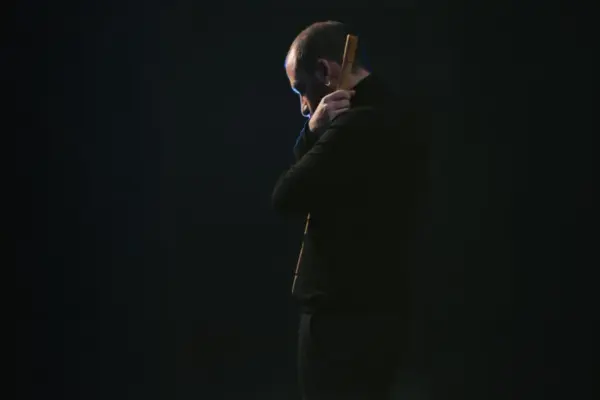
In the mid-1980s, the flickering, monochrome screen of Niger’s nascent public television broadcast a vision that would permanently alter a young nomadic boy’s trajectory. On that screen danced Sam Fan Thomas, the Cameroonian maestro whose infectious 1984 global anthem, "African Typic Collection," had transformed dance floors from Douala to Paris. Decades later, that young boy—Alhousseini Mohamed Anivolla, known professionally as ANEWAL—has closed a remarkable generational and geographical loop.
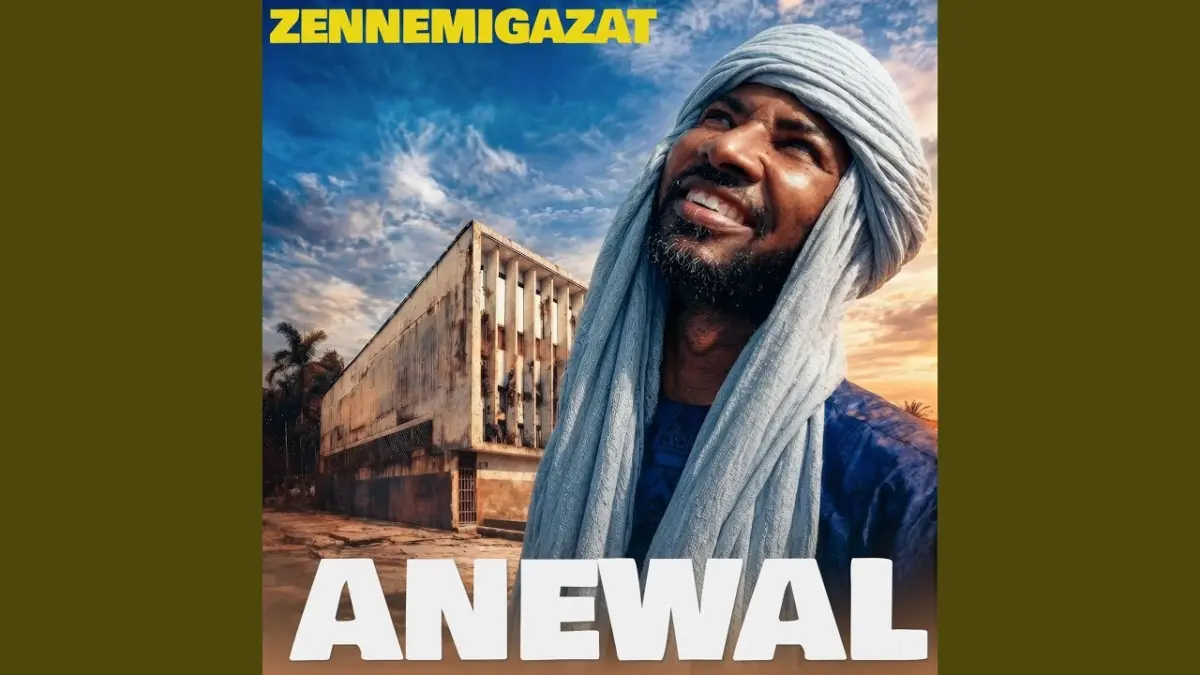
Released via the prestigious World Music Network, ANEWAL’s latest studio album, Timchar (meaning "Things That Have Gone"), is more than a standard release; it is a cross-continental sonic expedition. The album’s lead single, "Zennemigazat," dropped in August, features a production and vocal collaboration with none other than Sam Fan Thomas himself. Recorded directly in Thomas’s studio in Douala, Cameroon, the track marries the hypnotic, cyclical electric guitar phrasing of the Tuareg desert blues with the high-energy pulse of makassi—Thomas’s accelerated, modernized iteration of Cameroon’s classic makossa dance genre.
This feature-length investigative profile examines the genesis of Timchar, tracing ANEWAL’s journey from the remote expanses of the Sahara Desert to global stages, his pioneering work with the trans-community ensemble Etran Finatawa, and the historic intersection of West African high-energy rhythms and Northern nomadic blues.
Detailed Chronology: From Sahara Sands to Douala Studios
The Monochrome Awakening (1984)
Long before he was an internationally touring ambassador of Tuareg guitar music, Alhousseini Mohamed Anivolla was growing up nomadically in the arid expanses of Niger. In an era when television signals were scarce and broadcast technology was rudimentary, the state-run public television network offered fleeting windows into the wider cultural world of Africa.
It was during one of these broadcasts that Anivolla first encountered Sam Fan Thomas. The impact was instantaneous. As the young Anivolla watched Thomas effortlessly command the stage—embodying the carefree, celebratory spirit of Central African pop—a seed was planted. "We all wanted to dance like him," Anivolla recalls. It was an early lesson in the universal language of rhythm, proving that the borders dividing North and West Africa were entirely porous when matched with a compelling groove.
The Nomadic Heritage and the Birth of Etran Finatawa (2004)
To understand ANEWAL’s musical identity is to understand the legacy of the Tuareg people—an Amazigh (Berber) pastoralist and nomadic group traditionally inhabiting the Saharan interior. The moniker "ANEWAL" translates directly to "Walking Man," a proud ancestral title inherited from his grandfather that encapsulates a life spent traversing vast distances.
In 2004, Anivolla’s pioneering spirit led him to co-found Etran Finatawa, a groundbreaking musical collective. In a region historically plagued by resource scarcity and nomadic rivalries over pasturelands and water, Etran Finatawa achieved the nearly impossible: they united Tuareg musicians and their traditional rivals, the Wodaabe, under a single banner.
The band’s mesmerizing polyphonic vocals, hand-clapping percussion, and driving electric guitars propelled them onto the world stage, touring across five continents and releasing critically acclaimed records. The global reach of their sound was further underscored in 2020, when British electronic music duo Disclosure sampled the group’s distinct sonic textures for their track "Etran," introducing the traditional cadence of Saharan music to millions of contemporary club-goers worldwide.
The Convergence in Cameroon (2024)
Despite his international success with Etran Finatawa, Anivolla maintained a deep-seated ambition to honor the musical heroes of his childhood. This ambition catalyzed a journey south to Douala, the vibrant port city of Cameroon, where he sought out Sam Fan Thomas.
Instead of a standard remote collaboration, the two artists met face-to-face in Thomas’s studio. The recording sessions for "Zennemigazat" became an exercise in cultural translation and mutual respect. Anivolla brought the meditative, circular motifs of desert blues—characterized by hypnotic guitar lines that wind back on themselves, underscored by a weathered, emotive vocal delivery. In response, Thomas applied his legendary production touch, weaving in the breathless, driving tempo of makassi.
The resulting single—and the subsequent full-length album Timchar, released on October 10—stands as a masterclass in trans-Saharan and Central African synthesis.
Supporting Context & Metrics: The Anatomy of Timchar
Linguistic and Cultural Architecture
Timchar is deeply reflective of personal and collective loss. Translated from Tamasheq, the title means "things that have gone" or "memories of what has passed." In interviews surrounding the album’s release, ANEWAL has dedicated the body of work to his late mother, weaving personal grief into the broader socio-cultural transitions facing modern nomadic communities.
| Album Metric / Detail | Description |
|---|---|
| Album Title | Timchar ("Things That Have Gone") |
| Lead Single | "Zennemigazat" |
| Release Dates | Single: August 2024 | Full Album: October 10, 2024 |
| Label | World Music Network |
| Key Collaborator | Sam Fan Thomas (Producer, Vocalist) |
| Primary Instruments | Electric Guitar, Traditional Percussion, Synths |
| Geographic Hubs | Agadez/Niamey (Niger) & Douala (Cameroon) |
The Evolution of the Genres
To appreciate the sonic architecture of Timchar, one must examine the two primary musical pillars supporting the record:
- Desert Blues (Ishumar Music): Emerging from the geopolitical struggles, displacement, and droughts experienced by the Tuareg people in Mali and Niger during the 1970s and 1980s, ishumar (derived from the French word chômeur, or unemployed) uses electric guitars to channel the melancholy, vastness, and resilience of nomadic life. Practitioners like Mdou Moctar, Tinariwen, and ANEWAL have taken this regional protest-and-reflection music and turned it into a global phenomenon.
- Makassi and Makossa: Hailing from urban Cameroon, makossa dominated Central African nightlife through the 1970s and 1980s, driven by heavy basslines, brass sections, and syncopated rhythms. Sam Fan Thomas revolutionized this by inventing makassi, speeding up the tempo and incorporating infectious guitar hooks that captured the pan-African zeitgeist.
By merging the sprawling, meditative scales of the Sahara with the breathless, high-tempo cadence of the Gulf of Guinea, ANEWAL and Thomas have created a bridge across the African continent that few producers have dared to cross.
Official Statements and Artistic Vision
Reflecting on the realization of a lifelong dream, ANEWAL emphasizes the spiritual continuity of his work. The journey from watching a black-and-white television set in Niger to standing side-by-side with Sam Fan Thomas in a professional Cameroonian recording booth represents the realization of a pan-African creative dream.
"When I was a child watching television in Niger, the world felt simultaneously massive and completely out of reach. Sam Fan Thomas was larger than life. To travel to Douala decades later, to stand in his studio, and to hear his voice and production breathe new life into my own desert blues—it is a testament to the fact that music does not recognize political borders or desert sands," ANEWAL noted during the rollout of Timchar.
Industry analysts at the World Music Network have lauded the album as a landmark release for contemporary African roots music. In a promotional statement accompanying the release, the label noted:
"Timchar breaks open the rigid genre boxes that often constrain African artists in Western markets. ANEWAL is not merely preserving nomadic traditions; he is actively expanding them, dragging the desert blues into urban recording studios and proving that musical dialogue across vast geographic divides yields breathtaking results."
Future Outlook: The Global Trajectory of Saharan Fusion
As Timchar continues to find critical acclaim and commercial traction across global streaming platforms and international radio stations, ANEWAL’s artistic footprint is expanding exponentially. The success of "Zennemigazat" has demonstrated that audiences are increasingly hungry for sophisticated, cross-pollinated African music that defies easy categorization.
What Lies Ahead:
- Global Touring Initiatives: ANEWAL and his touring ensemble are slated to bring the complex polyrhythms and high-energy guitar work of Timchar to international festival circuits, bridging European, North American, and African venues.
- Expanding Collaborative Horizons: Following the success of his work with Sam Fan Thomas and his historical tenure with Etran Finatawa, ANEWAL is positioned as a central hub for future inter-regional musical collaborations, potentially bringing Saharan artists into closer contact with Central and East African instrumentalists.
- Digital Preservation and Modernization: Through platforms like World Music Network and high-profile digital sampling (such as Disclosure’s previous nod to his work), ANEWAL ensures that Tamasheq poetry and Tuareg musical heritage remain vibrant, evolving forces in the twenty-first-century global soundscape.
Ultimately, Timchar and its flagship single "Zennemigazat" stand as a triumphant monument to artistic persistence. From the monochrome television screens of 1980s Niger to the bustling port studios of modern Cameroon, ANEWAL has proven that the "walking man" never stops moving—and the music never stops evolving.