Executive Overview
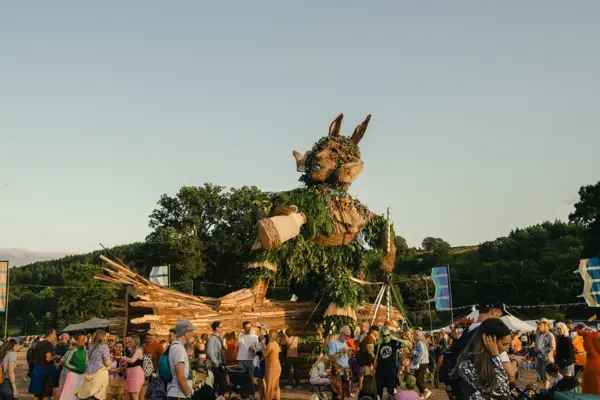
In the heart of the Swiss Jura Mountains, a quiet revolution in live music programming is taking shape. Following a celebrated, highly successful inaugural edition, the Between Mountains Festival has announced its formal return for a three-day weekend from September 4 to 6, 2026. Set against the rolling, picturesque hills of Basel-Landschaft at Holdenweid in Hölstein, Switzerland, the festival is making a massive structural leap from its original one-day premiere into an immersive, multi-day cultural destination.
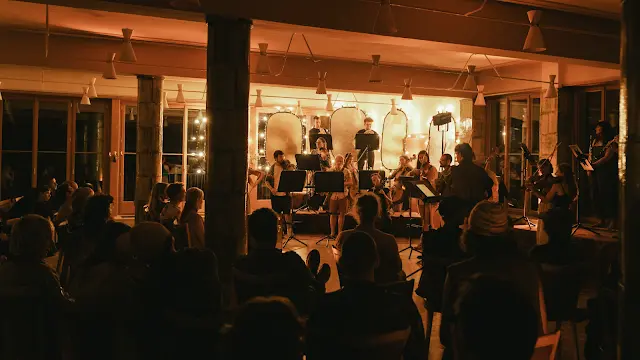
At its core, Between Mountains operates on a deceptively simple yet profoundly ambitious premise: to dissolve the rigid boundaries that have historically separated classical music from electronic soundscapes and avant-garde experimentation. By placing chamber masterpieces beside boundary-pushing electronic live acts in an organic, open-air environment, the festival creates an egalitarian ecosystem for sound.
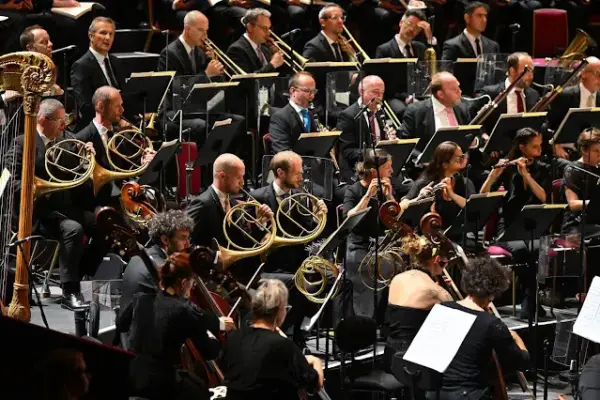
The 2026 iteration boasts an extraordinary, cross-pollinated lineup featuring classical powerhouses such as Dobrawa Czocher, Beatrice Berrut, and the Junges Kammerorchester Baselland, alongside visionary electronic artists like Acid Pauli, Sebastian Mullaert, and Stimming. Crucially, the introduction of on-site camping and accommodation transforms the event from a sequence of disparate performances into a cohesive weekend community.
To unpack this rapid expansion, its philosophical underpinnings, and what it signals for the future of classical performance, this article examines the festival’s structural growth, curatorial methodology, and an exclusive interview with co-founder and esteemed conductor Baldur Brönnimann.
Detailed Chronology and Evolution: From One-Day Premiere to Immersive Weekend
The 2025 Genesis: Testing the Waters
When the inaugural edition of Between Mountains launched, it did so as a calculated experiment. In an era where festival landscapes are heavily saturated with hyper-niche genre events, the organizers sought to test an alternative thesis: that modern audiences—conditioned by algorithm-free streaming habits and diverse playlists—are hungrier for eclectic curation than traditional industry gatekeepers realize.
Staged as a single-day event at Holdenweid, the premiere served as a proving ground. The objective was not merely to pack a schedule with diverse acts, but to observe how listeners transitioned physically and psychologically from acoustic chamber music to experimental electronic performances within a natural setting. The response from visiting music lovers, international press, and local stakeholders was overwhelmingly positive. It proved that audiences did not require academic pre-requisites or formal concert-hall etiquette to engage deeply with complex musical compositions.
The 2026 Expansion: Building a Destination
Buoyed by the success of the premiere, the curatorial team made the strategic decision to expand the event into a full three-day festival for 2026. This growth is more than just an extension of the timetable; it represents a fundamental shift in how the audience interacts with the space and the art.
By introducing on-site camping and localized accommodation partnerships, Holdenweid becomes a temporary micro-community. Festival-goers are no longer transient concert attendees rushing back to urban centers; instead, they are encouraged to immerse themselves fully in the rhythm of the Jura landscape. Mornings can begin with ambient soundscapes or intimate acoustic rehearsals, afternoons can unfold across interdisciplinary workshops and chamber recitals, and nights can culminate in immersive electronic explorations under the Swiss stars. This evolutionary leap positions Between Mountains not merely as a regional concert series, but as a premier European destination festival for adventurous ears.
Supporting Context & Metrics: The Philosophy of Genre-Free Listening
The Death of the Ivory Tower
The contemporary classical music world has long wrestled with an existential crisis: how to remain culturally relevant to younger demographics without diluting artistic integrity. Traditional concert halls, with their strict dress codes, unwritten behavioral rules, and formal applause structures, often function as exclusionary ivory towers.
Between Mountains addresses this systemic issue by subverting the traditional performance architecture. By embedding classical music in nature—where environmental audio, such as rustling leaves, birdsong, and flowing water, bleeds into the performance—the music is democratized. Listeners are free to move around, converse quietly, interact directly with performers, and enjoy a beverage without breaking social taboos.
Curating Beyond Algorithms
In the digital age, human listening habits are increasingly hijacked by recommendation algorithms. Streaming platforms silo users into predictable echo chambers, continuously serving up variations of what they already know and like. This algorithmic homogenization narrows not only our musical palates but our cognitive flexibility.
The artistic curation at Between Mountains serves as an antidote to this digital sorting. By presenting a bill where a visitor might encounter a Renaissance vocal ensemble (maTrigal) in the afternoon and a hypnotic techno-acoustic hybrid set (Sebastian Mullaert or Acid Pauli) at night, the festival actively retrains the brain to follow curiosity rather than categorization. It suggests that Bach and modern electronic composition share a kindred spirit of structural exploration and emotional resonance.
Sustainability and Regional Integration
A core pillar of the festival’s operational model is its commitment to the local artistic ecosystem. Rather than operating as a transient cultural pop-up that imports all its talent from international capitals, Between Mountains deliberately weaves regional institutions—such as the Junges Kammerorchester Baselland—into its core programming.
This localized approach ensures that public funding and ticket revenues directly nourish the surrounding community, creating a sustainable loop of cultural production. The festival aims to leave behind a lasting cultural legacy, ensuring that the local artistic landscape is enriched long after the stages are dismantled and the campers pack their tents.
Official Statements and Insights: An Exclusive Interview with Co-Founder Baldur Brönnimann
To gain deeper insight into the inner workings and philosophical foundations of the festival, we spoke extensively with co-founder, visionary, and renowned conductor Baldur Brönnimann.
Between Mountains has grown from a one-day event into a three-day festival in just its second year. What inspired this expansion?
"The long-term vision was always to create a three-day festival," Brönnimann explains. "The first edition allowed us to test the concept and see how audiences would respond. The reaction from visitors, artists, and the press was overwhelmingly positive, so we decided to take the next step. Expanding the festival also allows us to create a more complete experience. This year, visitors can camp on-site and stay throughout the weekend, making Between Mountains feel like a true destination rather than simply a series of concerts."
Classical music sits alongside electronic and experimental performances throughout the programme. How did this concept emerge?
"Listening habits have changed dramatically," says Brönnimann. "Today, people discover music through playlists that naturally combine different genres. We wanted the festival experience to reflect that reality. We deeply believe in the power of classical music, but we don’t believe it should exist in an ivory tower. Bach, Debussy, or Lachenmann deserve to be experienced alongside other ambitious music, without audiences feeling they need specialist knowledge before attending. Ultimately, we hope people stop thinking about genres altogether and simply enjoy great music."
This year’s programme features internationally recognised soloists alongside emerging musicians. How do you curate the classical programme?
"Our programming follows three principles," Brönnimann outlines. "First, we want to give young artists opportunities to present their work and reach new audiences. Second, supporting local musicians is essential because sustainability is one of the festival’s core values. Finally, we are drawn to artists with broad musical curiosity—musicians who perform across different styles and periods, compose, arrange, improvise, and collaborate across disciplines."
Throughout your career, you’ve championed contemporary repertoire and new concert formats. How has that influenced Between Mountains?
"I actually think there are more people interested in classical music today than ever before—but many of them simply don’t attend traditional concerts," Brönnimann notes. "If classical music wants to remain relevant, we need to reconnect with today’s composers and today’s aesthetics, while also creating formats that feel natural, welcoming, and engaging, without unnecessary formality. That’s really the central idea behind Between Mountains."
How does the Holdenweid setting change the experience of listening to classical music?
"Nature becomes part of the performance," he observes. "Whether you’re hearing birds outside, water flowing nearby, or looking through the trees while listening to music, the surroundings add another dimension to the experience. People can move freely, meet the artists, have a drink, and continue listening throughout the day. That creates a much more democratic way of experiencing classical music than the traditional concert hall."
Many organisations are trying to attract younger audiences to classical music. How does Between Mountains approach this challenge?
"We’re certainly part of that conversation, and many organisations are curious about the format," Brönnimann says. "More importantly, though, we simply want to create unforgettable musical experiences. If people discover classical music because they came for the atmosphere—or because they were also interested in electronic music—that’s exactly what we hope for."
Someone might hear a chamber concert in the afternoon and an electronic live set at night. What do you hope audiences take away from those encounters?
"We want people to follow their ears rather than categories," Brönnimann stresses. "Algorithms increasingly recommend only what we already know and like. That shapes not only how we listen but also how we think. Music should do the opposite—it should introduce us to unexpected ideas and experiences. The mix of genres at Between Mountains is our way of encouraging curiosity and openness."
Supporting young and regional artists is another important part of the festival. Why is that so central?
"We don’t want the festival to arrive once a year like a meteorite and disappear again," Brönnimann states firmly. "Supporting local musicians creates a lasting connection with the region, while also ensuring public funding directly benefits the artistic community that surrounds us. We hope Between Mountains leaves a legacy beyond the festival weekend itself."
As the festival grows, what role do you hope it will play within the classical music landscape?
"Hopefully, Between Mountains can demonstrate that classical music can be presented in ways that are both informal and artistically ambitious," Brönnimann concludes. "There are many wonderful festivals working towards similar goals, and we’d like to contribute by showing that classical music doesn’t lose its depth when presented differently. If anything, it becomes more accessible, more democratic, and more surprising."
Future Outlook: The 2026 Lineup and Horizon
As preparation for September 2026 accelerates, the artistic roster for the upcoming edition underscores the festival’s commitment to uncompromising quality and stylistic breadth.
The 2026 Artist Roster
- Classical & Contemporary Soloists / Ensembles: Dobrawa Czocher, Beatrice Berrut, Alexandra Maria Seywald, Simon Höfele, Kai Schumacher, Detect Ensemble, Junges Kammerorchester Baselland, Kebyart, Los Sara Fontan, duo equinox, maTrigal, and Maximilian Wolfgang Schwarz.
- Electronic & Experimental Innovators: Acid Pauli, Sebastian Mullaert, Stimming, Robot Koch, Earth Trax, and AFAR.
Looking Ahead
The transition of Between Mountains into a three-day residential festival serves as a case study for the modernization of classical music presentation in Europe. By refusing to treat classical repertoire as a museum artifact and instead treating it as a living, breathing component of a diverse sonic diet, the festival is carving out a vital space in the cultural calendar.
For music enthusiasts weary of sterile concert halls and algorithmically predictable festival lineups, the Jura foothills of Holdenweid offer a refreshing sanctuary. From September 4–6, 2026, Between Mountains will not merely stage concerts; it will construct an alternate reality where curiosity reigns supreme, genres dissolve into the landscape, and sound is experienced in its purest, most uninhibited form.