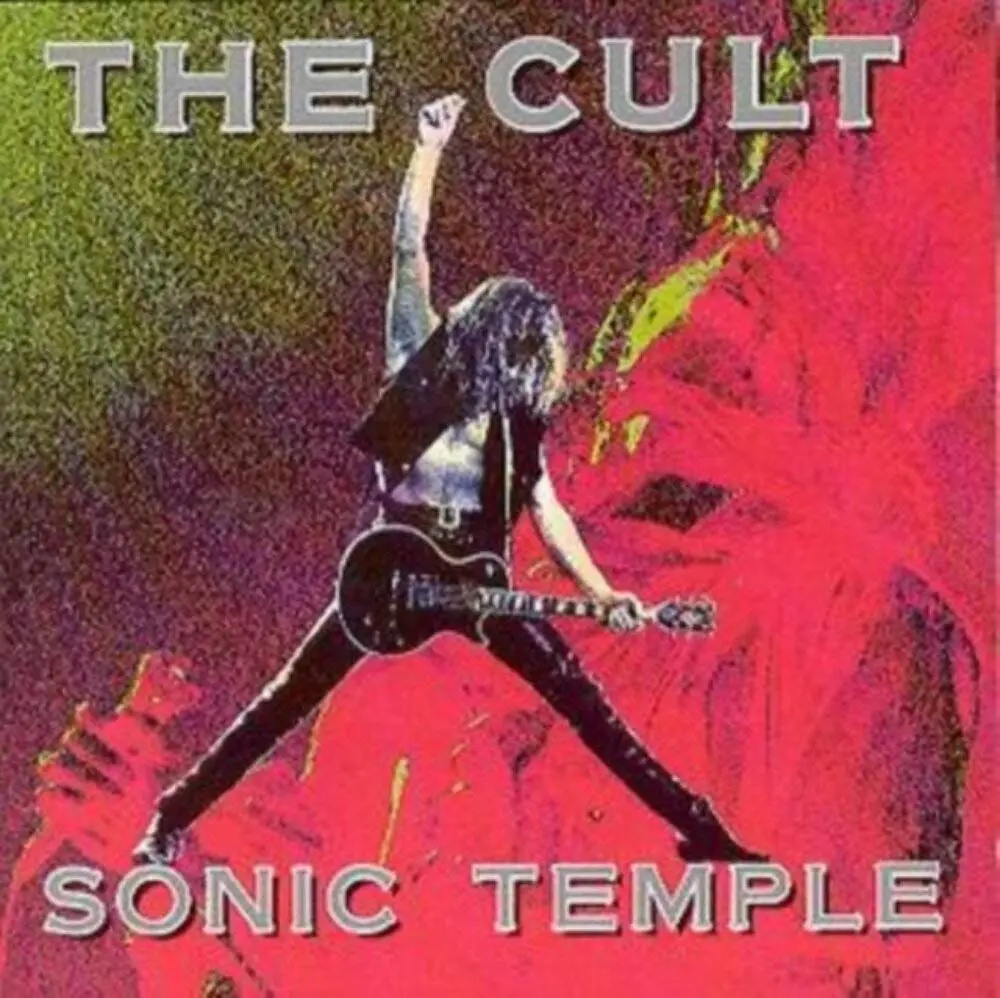
By the spring of 1989, the global hard rock landscape was undergoing a dramatic transformation. Arena rock was reaching its commercial zenith, dominated by high-gloss production values, soaring guitar solos, and larger-than-life frontmen. Amid this backdrop, British rock outfit The Cult delivered Sonic Temple—a release that represented the pinnacle of their sonic evolution and their most aggressive bid for global rock stardom.
Produced by Canadian maestro Bob Rock, Sonic Temple was an unapologetic monument to lyrical hubris, soaring guitar heroics, and acoustic density. Coming off the back of 1985’s psychedelic-goth breakthrough Love and 1987’s stripped-down, AC/DC-inspired Electric, Sonic Temple saw vocalist Ian Astbury and guitarist Billy Duffy merge their diverse musical instincts into a single, polished, stadium-ready package. The album delivered high-charting singles like "Fire Woman," "Edie (Ciao Baby)," and "Sweet Soul Sister," catapulting the band into the Billboard Top 10 and securing their place in the pantheon of late-1980s rock giants.
While the record did not ultimately transform The Cult into the single largest band on the planet, it left behind a monumental legacy. Decades after its release, Sonic Temple remains a masterclass in production, guitar artistry, and stylistic synthesis—standing as a bridge between the post-punk movements of the early 1980s and the explosive arena rock that defined the end of the decade.
Detailed Chronology: The Evolution of The Cult
The journey toward Sonic Temple was defined by continuous reinvention. Few bands from the UK post-punk era underwent as radical or successful a transformation as The Cult, evolving through distinct creative eras across a short five-year span.
       1983-1984               1985                    1987                    1989
  [Southern Death Cult]    ===> [Love]             ===> [Electric]          ===> [Sonic Temple]
   Post-Punk / Goth Roots        Psychedelic Goth        Stripped Hard Rock       Arena Rock Benchmark
                                 ("Sanctuary")            (Prod. Rick Rubin)       (Prod. Bob Rock)
1. The Post-Punk and Goth Origins (1983–1984)
The band’s genesis traces back to the early 1980s with Southern Death Cult, later shortened to Death Cult, before simply becoming The Cult. Fronted by Ian Astbury and propelled by Billy Duffy’s distinct, echo-laden guitar work, the group emerged from the UK post-punk scene. Their 1984 debut album, Dreamtime, introduced listeners to their unique blend of gothic gloom, tribal rhythms, and Astbury’s fascination with Native American spirituality and Western mythology.
2. The Psychedelic Breakthrough: Love (1985)
With their second studio album, Love, The Cult shifted away from stark post-punk toward rich, sixties-infused psychedelic rock and gothic alt-rock. Powered by anthemic singles such as "She Sells Sanctuary" and "Rain," the album showcased Duffy’s chiming Gretsch White Falcon guitar tones and Astbury’s dramatic vocal delivery. Love established the band as an international proposition, gaining widespread critical praise and a dedicated fan base.
3. The Hard Rock Pivot: Electric (1987)
Rather than repeating the successful formula of Love, the band made a sharp stylistic pivot. Teaming up with producer Rick Rubin, they scrapped an initial recording session (originally titled Peace) and re-recorded the material with a stripped-back, bone-dry hard rock approach. Influenced heavily by AC/DC, Led Zeppelin, and classic blues rock, 1987’s Electric was raw, direct, and visceral, proving that The Cult could command the hard rock market without losing their core identity.
4. The Arena Apex: Sonic Temple (1989)
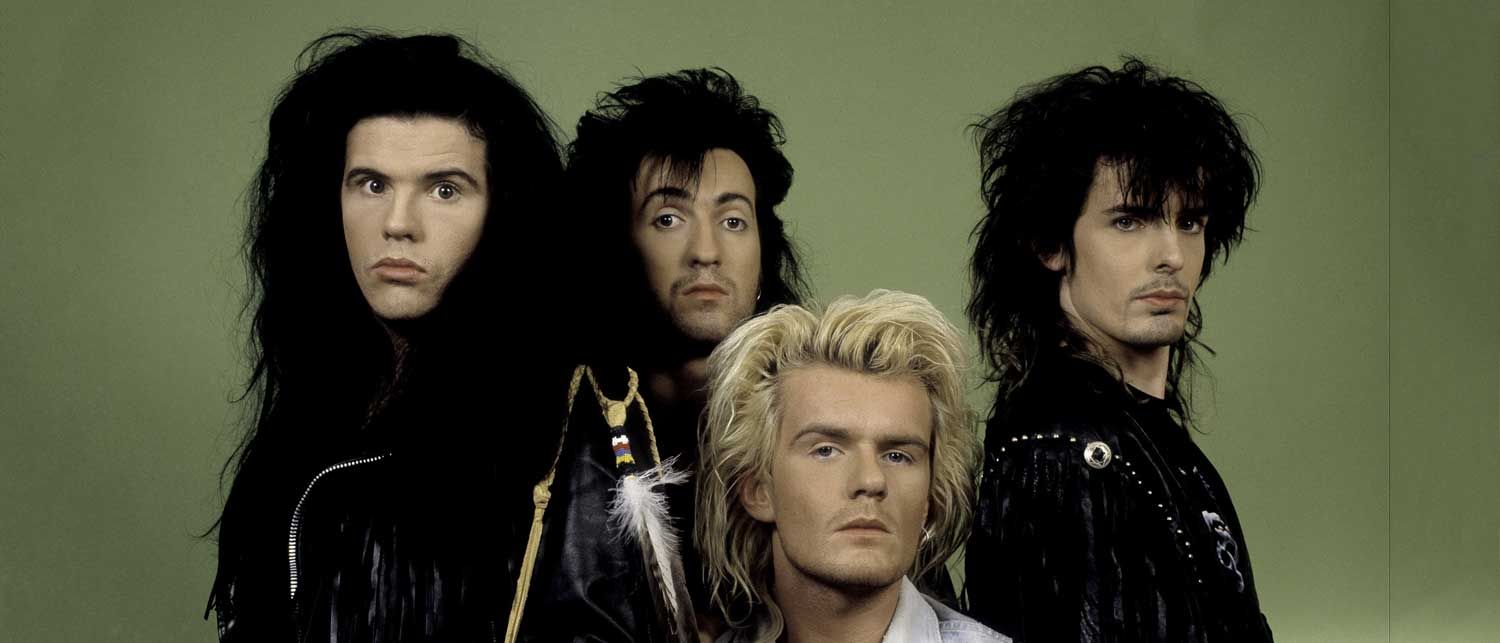
To capitalize on their growing momentum, The Cult hired producer Bob Rock for their fourth album. Recorded at Little Mountain Sound Studios in Vancouver, Canada, Sonic Temple sought to meld the atmospheric shimmer of Love with the raw heavy-metal power of Electric. Enlisting session drummer Mickey Curry to back the trio of Astbury, Duffy, and bassist Jamie Stewart, the team produced an album characterized by massive drum sounds, layered guitars, and expansive arrangements. Released in April 1989, it became the band’s most commercially successful record.
5. Subsequent Eras and Modern Legacy (1991–Present)
Following the world tour for Sonic Temple—which saw drummer Matt Sorum join the live lineup before departing for Guns N’ Roses—founding bassist Jamie Stewart left the band. Subsequent releases, including 1991’s Ceremony and 1994’s self-titled album, experimented with alternative rock and metallic textures amidst changing industry trends. Despite line-up shifts and hiatuses, the nucleus of Astbury and Duffy has sustained The Cult into the 21st century, with Sonic Temple remaining the definitive benchmark of their commercial power.
Supporting Context & Metrics: Technical Breakdown & Community Consensus
Track Breakdown & Architectural Highlights
Sonic Temple operates as a sonic tapestry, carefully balanced between high-octane hard rock drives and expansive, cinematic ballads.
Track #
Song Title
Primary Style / Key Influence
Key Features & Themes
1
Sun King
High-Tempo Hard Rock
Blistering guitar opening, motif of ambition and resolution ("This is where it all ends").
2
Fire Woman
Anthemic Arena Rock
Driving basslines, infectious hooks, wailing vocal dynamics; major MTV hit.
3
American Horse
Mid-Tempo Heavy Blues
Deep rhythm section, themes focused on Indigenous history and cultural suffering.
4
Edie (Ciao Baby)
Orchestral Rock Ballad
Acoustic lead, string arrangements, tribute to Andy Warhol muse Edie Sedgwick.
5
Sweet Soul Sister
Organs & Stadium Rock
Church organ intro, gospel-style backing vocals, classic Duffy guitar solos.
Relentless beat, street-level narrative, raw energetic delivery.
8
Automatic Blues
Blues-Metal Fusion
Heavy riffing, grooving bassline, swaggering vocal performance.
9
Soldier Blue
Pounding Classic Rock
Galloping rhythms, commentary on historical conflict and societal tension.
10
Wake Up Time for Freedom
Funk-Rock Closer
Slap-bass touches, call-and-response dynamics, political undertones.
Quantitative Assessment: The Album of the Week Club Metrics
In a broad retrospective evaluation conducted by the Album of the Week Club community, rock enthusiasts and critics analyzed Sonic Temple to assess its enduring impact and song-by-song consistency.
ALBUM OF THE WEEK CLUB COMMUNITY RATING
==================================================
Overall Score:    8.45 / 10
Total Votes Cast: 101 Votes
Cumulative Score: 854 Points
Status:           Consensus Classic
==================================================
Key Community Perspectives:
Production & Tone Quality: Listeners frequently highlighted Bob Rock’s production work, noting how the record bridged the gap between raw rock energy and radio-friendly gloss. The guitar tones crafted by Billy Duffy were widely praised as a high point of late-80s guitar recording.
Side A vs. Side B Dynamics: A recurring observation among reviewers was the structural imbalance between the two halves of the record. Tracks 1 through 5 ("Sun King" through "Sweet Soul Sister") are almost universally regarded as a flawless run of classic rock singles, whereas tracks on the album’s back half received mixed reviews, with some critics viewing them as high-grade B-sides.
Vocal Delivery: Ian Astbury’s vocal performance drew comparisons to legendary rock vocalists, balancing bluesy swagger, dramatic range, and stylized phrasing that drew parallels to Jim Morrison and Andrew Wood.
Official Statements and Historical Reception
The creation of Sonic Temple was marked by a dynamic friction between the creative priorities of frontman Ian Astbury and guitarist Billy Duffy—a creative push-and-pull that shaped the record’s sonic profile.
Band Perspective: The Creative Tension
Reflecting on the album’s production, guitarist Billy Duffy noted the clear ambition driving the project:
"It was a little careerist, for sure. I don’t think Ian resisted that, but I don’t think he viewed it from the same perspective, either. I think he saw it as being more psychedelic—having more of a Cream, ‘Disraeli Gears’ kinda vibe, more than my sort of ultimate schoolboy rock album idea.
You know, no-holds-barred, punk is finally over; I just want to have a full-fledged rock album while I’m at the prime of my powers kinda thing. So maybe I took the lead on this one."
Contemporary Critical Verdicts (1989)
Upon its release in April 1989, Sonic Temple generated significant discourse among music journalists, dividing those who embraced its big-budget rock bravado from those attached to the band’s earlier post-punk sound.
AllMusic:
"Sonic Temple finds the Cult trying several different metal styles, from crunchy Electric-era ’70s grooves and the fuzzy, noisy psychedelia of Love, to mellow ballads and commercial ’80s hard rock… enough of them do [work] to send Sonic Temple into the Billboard Top Ten, due to the exposure provided by the hit single Fire Woman."
Record Mirror:
"This is the past recycled. Which is quite different from revamping it. It’s the definitive Cult LP, Astbury tells us, and Sonic Temple, what with its supposed references to their drippy spirituality and granite hard rockisms, is the definitive title."
Los Angeles Times:
"Though they’ve run a bit short on good riffs this time, it’s possible to put Sonic Temple on and have a perfectly fine time with the big beat, big guitar noise and Ian Astbury’s ragged, not-too-high-pitched vocal histrionics…"
Future Outlook: The Enduring Legacy of a Hard Rock Landmark
More than three decades after its release, Sonic Temple stands as a pivotal record in hard rock history. Beyond its immediate commercial success, the album served as a technical proof-of-concept for producer Bob Rock. The pristine sonic architecture, wall-of-sound guitars, and massive drum tones he pioneered on Sonic Temple directly caught the ear of Metallica, leading them to hire Rock to produce their self-titled 1991 "Black Album"—a release that utilized a similar production template to achieve global rock dominance.
For The Cult, Sonic Temple remains the definitive document of their stadium-era prowess. Songs like "Fire Woman," "Sweet Soul Sister," and "Edie (Ciao Baby)" remain staples of rock radio and central pillars of the band’s live setlists worldwide.
While music trends inevitably shifted toward grunge and alternative rock in the early 1990s, Sonic Temple has aged remarkably well. It captures a rare moment when a band at the peak of their physical and songwriting powers took an uninhibited swing at world-conquering rock glory—leaving behind a record that continues to serve as a benchmark for arena rock production and performance.