Executive Overview
When musicologists and heavy metal historians construct the genealogy of black metal, the narrative almost universally anchors itself in Western and Northern Europe. The foundational "First Wave"—a loose collective of mid-1980s iconoclasts including Newcastle’s Venom, Sweden’s Bathory, and Switzerland’s Celtic Frost and Hellhammer—is routinely credited with laying the aesthetic and thematic groundwork for the notorious Norwegian "Second Wave" that erupted in the early 1990s.
However, thousands of miles across the Atlantic, an elusive power trio in North America was independently forging an ultra-minimalist, savagely raw strain of dark music that would fundamentally reshape the global extreme metal landscape. That band was Von.
Formed in the late 1980s, Von holds a unique, almost paradoxical position in music history. Despite failing to release a proper debut full-length album until 2012—more than two decades after their formation—and operating far outside the traditional music industry infrastructure, Von effectively birthed American black metal (USBBM). Their primitive, hypnotic sound and visual iconography directly influenced iconic European acts: Swedish black metallers Watain derived their band name from a Von track, Dark Funeral covered their music, and Darkthrone drum pioneer Fenriz formally acknowledged them as key architects of the subgenre. Most infamously, Varg Vikernes (Burzum) wore a handmade Von shirt during his 1994 trial for the murder of Mayhem guitarist Øystein "Euronymous" Aarseth, instantly etching the obscure American group into black metal lore.
The history of Von is not a clean, linear archive; it is a complex, disputed narrative defined by lo-fi demo tapes, prolonged hiatuses, military service, pop-culture pivots, and contentious late-career reformations. Yet, the group’s foundational impact on extreme music remains absolute.
Detailed Chronology: From Garage Jamming to Global Cult Status
[1987] Band formed in Honolulu, Hawaii by Venien & Goat
  │
[1989] Relocation to San Francisco; release of 'Satanic' demo
  │
[1990–1992] Recording of 'Satanic Blood' & 'Blood Angel' demos; disbandment
  │
[1993–2009] Underground tape-trading era; covers by Dark Funeral; Watain formed
  │
[2010] Reunion at Armageddon Festival (London) driven by Erik Danielsson
  │
[2012] Lineup split; Venien continues Von; release of debut album 'Satanic Blood'
  │
[2013–2017] Release of 'Dark Gods' series; subsequent hiatus
1987–1989: Genesis in Hawaii and the San Francisco Migration
The origins of Von begin far from the freezing fjords of Scandinavia or the industrial gloom of the UK. According to accounts documented by founding bassist/vocalist Jason "Venien" Ventura, the project was conceived in Honolulu, Hawaii, in 1987. Ventura met vocalist/guitarist Shawn "Goat" Calizo while working a job during his high school freshman year. Bonding over a shared desire to push music past its current extremes, the duo began jamming in a local garage.
To complete the power trio, they recruited a drummer known simply as Brent (or "Snake"), whom Venien encountered while working a summer factory job. Lacking standard equipment or classical ambition, Snake was tasked with pounding on improvised percussion—including literal buckets—to establish a hypnotic, unrefined rhythm section.
Recognizing the geographic limitations of Hawaii for an extreme music act, the trio relocated to San Francisco, California, in late 1988. At the time, the San Francisco Bay Area was the uncontested global capital of thrash metal, fueled by the success of Metallica, Slayer, Exodus, and Testament. However, Von’s radically stripped-down sound put them completely at odds with the technical, high-speed riffing favored by the Bay Area thrash scene. Venien frequently noted that local venues routinely refused to book the group because their music was too abrasive, slow, and structurally repetitive compared to the reigning thrash style.
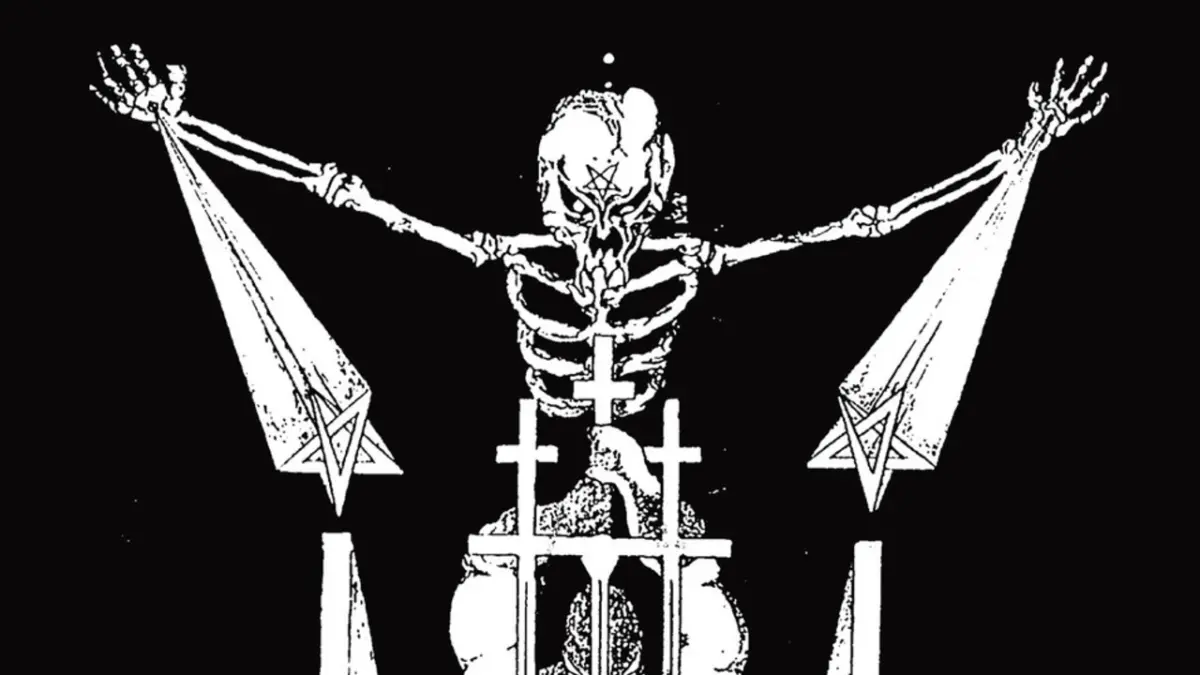
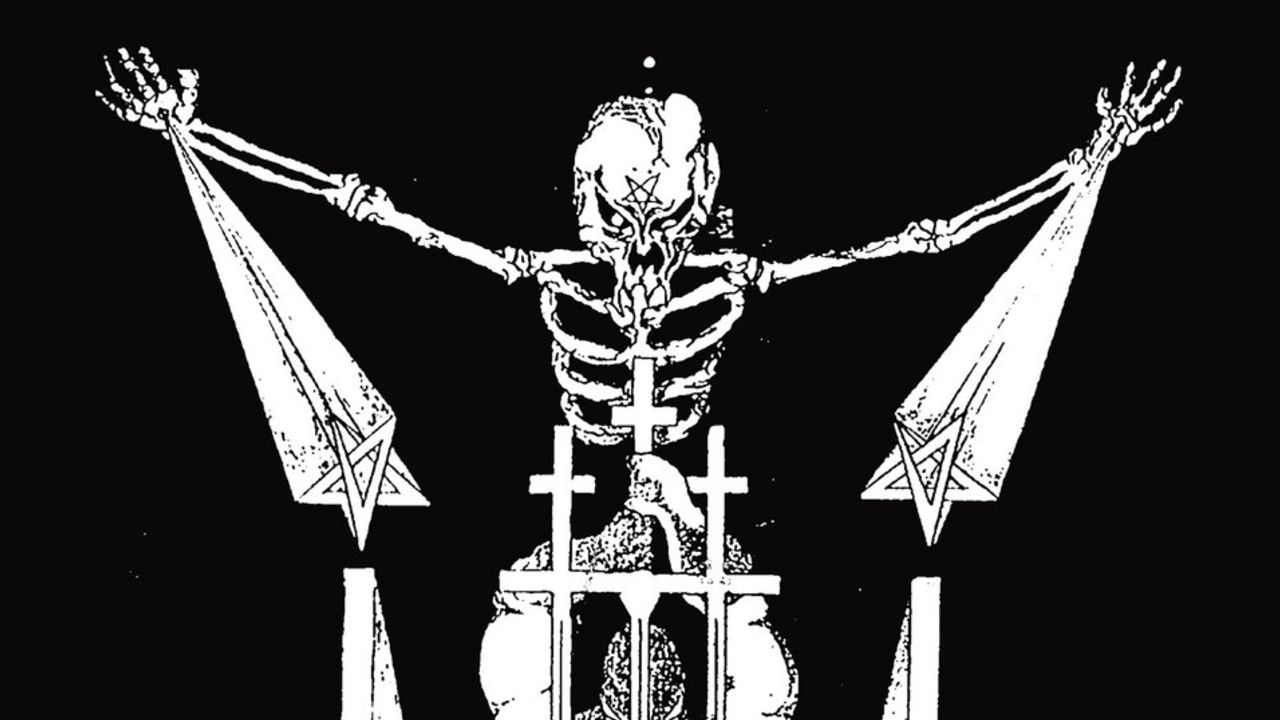
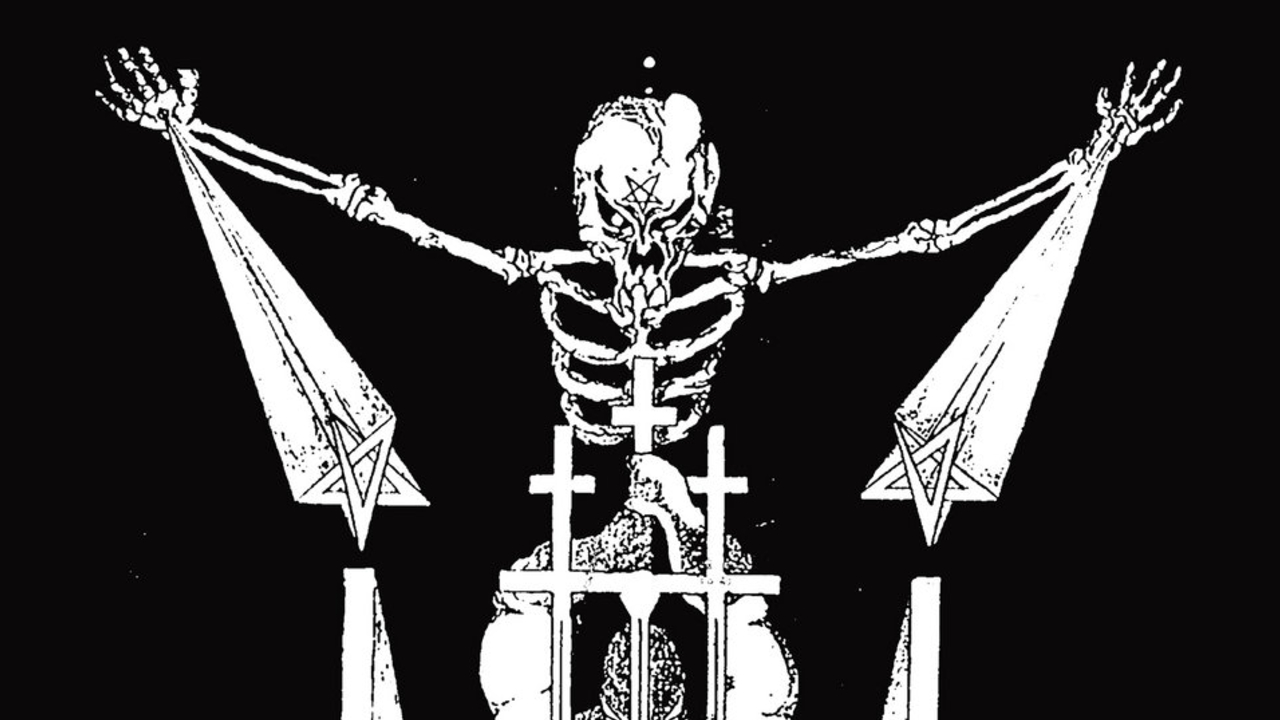
Undeterred, the band recorded their debut demo tape, Satanic, in 1989. Characterized by severe low-fidelity production, monochrome artwork featuring hand-drawn pentagrams, and total sonic reductionism, Satanic stood in stark contrast to every commercial extreme metal release of its era.
1990–1992: The Demo Era and Initial Dissolution
Between 1990 and 1992, Von refined their ultra-primitive sound. They recorded two subsequent cassette demos: Satanic Blood (1992) and Blood Angel. The recording sessions were stark, capturing brief, explosive bursts of music that rarely exceeded two minutes per track. Songs were built around two-chord arrangements, relentless blast beats, and guttural, barking vocalisations that functioned more like rhythmic percussion than conventional singing.
Despite capturing a sound that would later define a global movement, internal and external pressures dismantled the group before they could record a full album. Venien was forced to return to Hawaii temporarily due to a family emergency. Upon his return, personal priorities shifted dramatically. By 1992, Venien and Goat mutually agreed to disband Von.
The paths chosen by the members post-dissolution could not have diverged more sharply:
- Shawn "Goat" Calizo moved into classical drama, acting, and eventually fronted various alternative and pop-oriented musical projects.
- Jason "Venien" Ventura enlisted in the United States military, stepping entirely out of the music industry.
- Brent "Snake" disappeared from the public eye altogether.
For all practical purposes, Von was dead after a brief five-year existence, leaving behind only a handful of obscure cassette tapes.
1993–2009: Tape-Trading Culture and the European Underground
While the members of Von moved on with their private lives, their recordings quietly spread through the global extreme metal tape-trading network—an informal underground postal ecosystem of zines, musicians, and fans who duplicated and swapped cassettes across international borders.
By the mid-1990s, Von’s demos had reached the key figures of the European black metal explosion:
- 1994: During his murder trial in Oslo, Norway, Varg Vikernes brought international publicity to Von by appearing in court wearing a custom-made Von shirt.
- 1996: Swedish black metal band Dark Funeral recorded a cover of Von’s "Satanic Blood" as track 10 on their influential debut album, The Secrets Of The Black Arts.
- 1996–1998: A teenage Swedish musician named Erik Danielsson acquired a bootleg tape of Satanic Blood. The raw energy profoundly affected him; when he formed his own black metal band in 1998, he named it Watain, directly taken from the track "Watain" on Von’s 1992 demo.
Concurrently, Norwegian bands like Darkthrone were abandoning technical musicality to pursue a stripped-down, lo-fi aesthetic. Albums such as A Blaze in the Northern Sky (1992) and Transilvanian Hunger (1994) mirrored the uncompromising, black-and-white minimalist philosophy that Von had put on tape years prior in California.
2010–2012: The Armageddon Reunion, Fractures, and Debut Album
In 2010, after nearly two decades of silence, Erik Danielsson leveraged his profile with Watain to persuade Venien and Goat to resurrect Von. The duo agreed to reunite for a single headlining performance at the Armageddon Festival in London, marking their first live appearance together in 20 years.
The reunion performance sparked intense interest in the metal community, but it also reopened old ideological and personal rifts between the primary members. Goat favored preserving the band’s historic legacy as a finite, archival art project. Venien, conversely, envisioned transforming Von into a modern, active touring band with an expansive discography.
By 2012, Goat permanently departed the project. Venien retained the rights to the name, took over lead vocal duties in addition to bass, recruited a rotating cast of backing musicians, and entered the studio to record Von’s long-overdue debut full-length album.
Titled Satanic Blood (2012), the 17-track record largely comprised professionally re-recorded versions of the band’s original late-80s and early-90s demo material. The release divided the black metal community. While newer fans welcomed the accessibility of official recordings, purists and music critics criticized the modernized production and the absence of Goat, arguing that the release compromised the primitive essence of the original tapes.
Key Historical Milestones
┌──────┬──────────────────────────────────────────────────────────────────┐
│ Year │ Event                                                            │
├──────┼──────────────────────────────────────────────────────────────────┤
│ 1987 │ Von formed in Honolulu, Hawaii by Venien and Goat.              │
│ 1989 │ Relocated to San Francisco; recorded 'Satanic' demo.             │
│ 1992 │ Recorded 'Satanic Blood' demo; band officially disbanded.       │
│ 1994 │ Varg Vikernes wears Von shirt during Norwegian murder trial.     │
│ 1996 │ Dark Funeral covers "Satanic Blood"; Erik Danielsson hears demo. │
│ 1998 │ Watain formed in Sweden, named directly after a Von song.        │
│ 2010 │ First reunion gig in 20 years at Armageddon Festival (London).   │
│ 2012 │ Goat exits; Venien releases official 'Satanic Blood' LP.         │
│ 2013 │ 'Dark Gods: Seven Billion Slaves' released.                      │
│ 2017 │ 'Dark Gods: Birth Of The Architects' released.                   │
└──────┴──────────────────────────────────────────────────────────────────┘
2013–Present: The Dark Gods Era and Quietude
Ignoring critical pushback, Venien expanded Von’s mythology, launching a narrative-driven conceptual era centered around cosmic horrors and apocalyptic themes known as the Dark Gods series. Under this umbrella, Venien’s version of Von released two additional studio albums:
- Dark Gods: Seven Billion Slaves (2013)
- Dark Gods: Birth Of The Architects (2017)
Venien originally announced that the Dark Gods arc was designed as a trilogy. However, following the 2017 release, the band once again ceased active touring and studio output. As of the mid-2020s, the final installment of the trilogy remains unreleased, leaving Von in a state of indefinite hiatus.
Supporting Context & Structural Analysis
The Sonic Architecture of Minimalist Black Metal
To understand why Von exerted such a profound influence on global heavy metal despite their sparse discography, one must examine their distinct musical style. In the late 1980s, extreme metal was increasingly defined by technical proficiency—fast tempo changes, complex guitar solos, and sophisticated rhythmic structures (as seen in early death metal and thrash).
Von took the exact opposite approach, pioneering what musicologists describe as ritualistic hyper-minimalism:
Traditional Thrash / Death Metal (Late 80s)        Von's Structural Approach (1989–1992)
───────────────────────────────────────────        ───────────────────────────────────────
• Technical, multi-tempo arrangements              • Ultra-repetitive 2-chord loops
• Elaborate guitar solos & scale runs             • Total absence of guitar solos
• Dynamic, shifting drum patterns                  • Continuous, unvarying blast beat / d-beat
• Polished or high-end studio mixing               • Ultra-lo-fi cassette room recordings
• Lyricism: Social commentary, gore, horror        • Mantra-like, single-word vocal chants
By stripping the music of all technical ornamentation, Von created a hypnotic, trance-like atmosphere. Songs like "Satanic Blood," "Devil Pig," and "Watain" rarely contained more than two distinct riffs, repeated continuously beneath barking, rhythmic vocals. This ultra-primitive framework directly laid the groundwork for Scandinavian "transcendental" black metal, drone metal, and modern depressive black metal (DSBM).
The Underground Tape-Trading Web
The global rise of Von stands as a classic case study in the power of subcultural networks prior to the digital internet era. In the late 1980s and early 1990s, the extreme metal underground functioned without mainstream radio, television, or major record label backing. Instead, it relied on tape trading.
Fanzine editors and fans used international postal service networks to swap home-duplicated cassette tapes. A single physical demo tape recorded in a San Francisco garage could be copied dozens of times, eventually landing in the hands of key figures in Stockholm, Oslo, or Zurich within weeks. This grassroots network allowed Von’s music to achieve cult status across Europe despite the band having rarely performed live and possessing no official distribution contract.
Official Statements and Critical Perspectives
The narrative surrounding Von is captured through first-hand testimonies, legacy endorsements, and critical retrospectives across several decades.
Venien on the Band’s Raw Origins
In a rare 2012 interview with extreme metal publication Abysmal Hymns, Jason "Venien" Ventura reflected on the non-conformist, punk-infused mindset that led to the creation of Von in Hawaii and California:
"In high school, I was into punk rock, and when I moved with my dad for his work to Honolulu in freshman year, I got a job where I met Shawn [Goat]. We hooked up and were jamming in the garage. At the time, he was more into classic rock like Led Zeppelin. Working in a factory one summer, I met Brent, and we got him to come in and just smash on buckets to create this really raw brutal sound."
Speaking on their move to California and their reception in the San Francisco Bay Area thrash scene, Venien added:
"We were the band nobody wanted to book, because everyone was into thrash."
Scandinavian Pioneers on Von’s Impact
The enduring reverence for Von among European black metal icons is well-documented. In 2010, Watain frontman Erik Danielsson reflected on his first encounter with Von’s demo tapes in 1996:
"In 1996 I was deep into my [musical] explorations and thought I had experienced everything. [Von] took it to an even more primal state of expression. That’s as far as human music can go."
Similarly, in 2019, Gylve "Fenriz" Nagell, the legendary drummer and co-founder of Darkthrone, officially categorized Von among the elite "pioneers" of the first black metal wave, placing their historical importance alongside European titans like Celtic Frost, Mercyful Fate, and early Morbid Angel.
Critical Backlash Over the 2012 Era
The continuation of Von without founding member Shawn "Goat" Calizo drew significant scrutiny from music critics who felt the band’s mystique was tied to its original, unpolished incarnation.
In their review of the 2012 studio version of Satanic Blood, prominent music publication Pitchfork delivered a harsh assessment of the re-recorded material, writing that the modern iteration of the project felt "bastardised", arguing that attempting to re-record raw, cassette-era audio artifacts with modern studio technology fundamentally misunderstood what made the original demos legendary in the first place.
Future Outlook & Legacy
As the heavy metal landscape continues to evolve, Von’s position as the foundational catalyst of American Black Metal (USBBM) remains firm. While groups such as Leviathan, Xasthur, Judas Iscariot, and Deafheaven later popularized distinct branches of American black metal internationally, all share a lineage that traces back to the raw tape recordings made by Venien, Goat, and Snake in the late 1980s.
    [First-Wave European Black Metal]        [1980s Bay Area Thrash]
  (Venom, Bathory, Celtic Frost)              (Metallica, Slayer)
                │                                     │
                └───────────────┬─────────────────────┘
                                │
                         [ VON (1987) ]
                (Pioneered Ultra-Minimalist Raw Sound)
                                │
        ┌───────────────────────┴───────────────────────┐
        ▼                                               ▼
[Norwegian / Swedish Second Wave]            [Modern USBBM Lineage]
• Darkthrone (Lo-fi aesthetic)               • Judas Iscariot
• Watain (Named after Von track)             • Xasthur / Leviathan
• Dark Funeral (Covered Von)                 • Deafheaven / Liturgy
Unresolved Trilogy and Current Status
The long-term future of Von as an active musical project remains uncertain:
- The Dark Gods Trilogy: The promised third chapter following 2013’s Seven Billion Slaves and 2017’s Birth Of The Architects has not materialized. No studio updates, release schedules, or promotional teasers have been issued by Venien or his associated label imprints in recent years.
- Archival Preservation: The primary legacy of Von continues to be preserved through historical reissues of their original 1989–1992 demos via underground labels such as Nuclear War Now! Productions. These archival releases ensure that new generations of extreme music listeners can access the original, uncleaned audio artifacts.
Final Retrospective
Ultimately, Von’s historical journey stands as one of the most unusual trajectories in modern music. They were an unbooked local act that dissolved before releasing a formal record, yet their influence crossed oceans, dictated the aesthetics of an entire European subculture, inspired band names, and helped define a subgenre. Whether or not Venien ever completes the Dark Gods trilogy, Von’s place in extreme metal history as the raw, unholy origin point of American black metal is permanently secured.