Executive Overview
When cultural historians chart the topographic map of Italy’s artistic and culinary heavyweights, Campania usually commands the narrative. It is a region defined by absolute titans: the haunting, ash-choked ruins of Pompeii, the rich and creamy perfection of Caserta’s buffalo mozzarella, the heart-stopping, switchback descents of the Amalfi Coast, and the delicate, shattering crunch of a sfogliatella still warm from the oven, consumed moments after a world-class Neapolitan pizza. Yet, for the past three decades, this southern Italian heartland has laid claim to another, less commercialized cultural anchor—one that transforms a historic hilltop town into an epicenter of international roots music, tropical sound systems, and boundary-pushing global fusion.
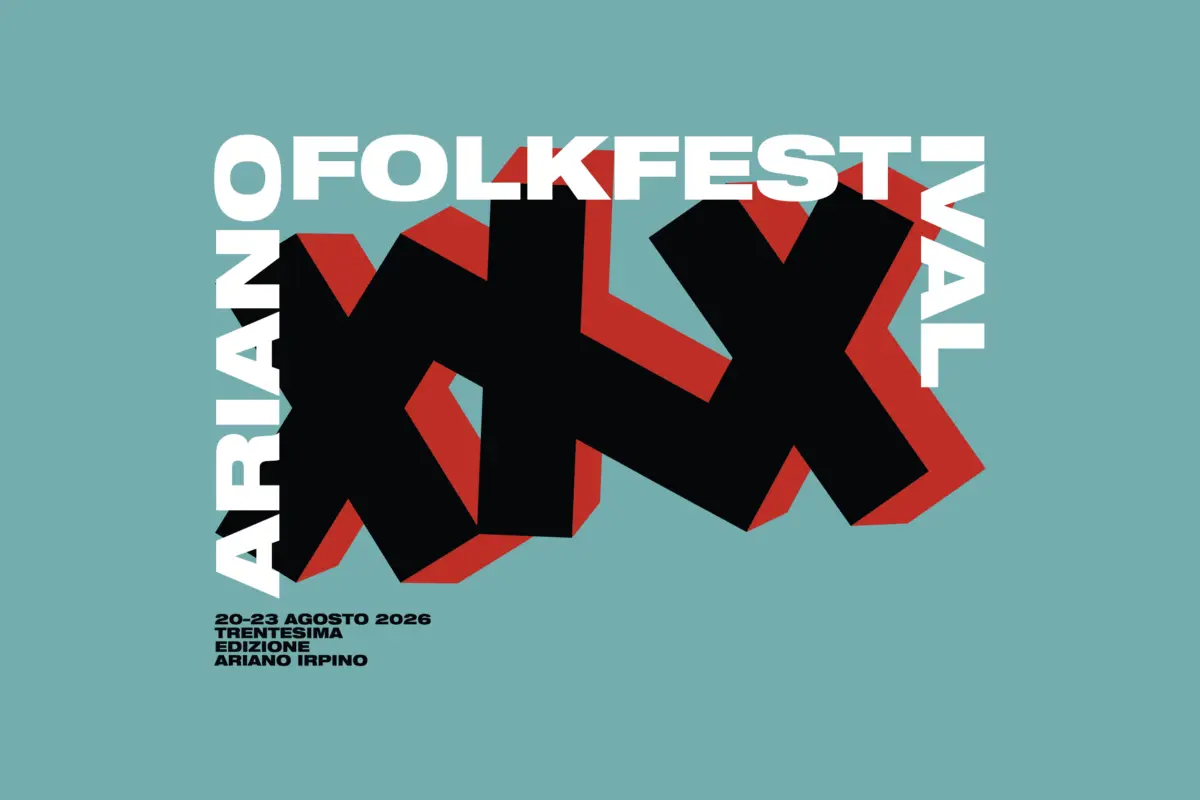
Nestled 800 meters up in the rugged Apennine hills, the town of Ariano Irpino prepares to welcome thousands of music lovers from across Europe for the milestone 30th edition of the Ariano Folkfestival. Operating under the defiant banner of trent’anni di resistenza culturale (thirty years of cultural resistance), this community-led gathering kicks off its main run, bringing a rich blend of global heritage, acoustic traditions, and late-night electronic sessions to historic public spaces through Sunday.
With only a single cancellation in its history—owing to the global pandemic in 2020—the festival has spent the last thirty years proving that world-class artistic vision does not require a metropolitan stadium. Organised by the Associazione Red Sox under the stewardship of Francesco Fodarella and his dedicated team, the event thrives on a rare ethos: international musicians routinely choose the intimate, fiercely authentic piazzas of Irpinia over higher-paying corporate stages. As the festival opens its gates for this landmark anniversary, it stands as a testament to grassroots organization, regional resilience, and the unifying power of global roots music.
Detailed Chronology: A Four-Day Sonic Journey
The Ariano Irpino landscape—affectionately dubbed la città tricolle (the three-hill town) by locals—carries historical weight as a crucial transit point where ancient traders moved between Naples and Puglia. For four days every August, this geography of passage is revitalized as streets, squares, and wooded campgrounds become immersive performance spaces. The daily progression of the festival is a masterclass in temporal programming, seamlessly shifting from serene morning wellness to explosive, genre-defying late-night sets.
Thursday: From Caribbean Calypso to North African Tape-Deck Archaeology
The opening night sets an immediate tone of transnational dialogue, bridging the Caribbean, West Africa, and North Africa.
- Kobo Town: Opening the main stage is Kobo Town, a full band anchored by the evocative voice and cuatro playing of founder Drew Gonsalves. Their sound is a rich tapestry of trombone-heavy horns, acoustic guitars, and infectious calypso rhythm sections, underpinned by roots-reggae basslines that give weight to Gonsalves’ sharp, dub-poetry lyrical delivery.
- Flammer Dance Band: Following the Caribbean warmth, this seven-piece ensemble locks into intricate, interlocking funk grooves. Guitars and bass trade hypnotic rhythm lines beneath soaring synth and saxophone leads, drawing heavy inspiration from the 1970s West African vinyl records that shaped their collective sonic identity.
- Retro Cassetta: Eschewing a traditional live band setup, the opening night closes with Badreddine Haoutar operating entirely behind a dual-deck system using physical cassette tapes. Haoutar has spent years unearthing rare raï, chaâbi, and gnawa recordings across Morocco, Algeria, and Libya. Delivering these tracks with genuine tape hiss and analog warmth, he mixes them live rather than relying on clean digital samples, offering a masterclass in sonic archaeology.
Friday: Bridging the Alps and the Atlas
Friday’s itinerary maps a fascinating geographical and stylistic arc, moving from the mountainous north of Italy to the Atlas Mountains of North Africa before diving into deep electronic experimentation.
- Faccianuvola: Project of Valtellina-born Alessandro Feruda, this solo act utilizes a laptop and synthesizers to layer lush, atmospheric electronic pads beneath heavily processed, autotuned vocals, creating an otherworldly, modern folk-electronic hybrid.
- Tasuta N-Imal: Stepping onto the stage as a vibrant six-piece ensemble, this group features lead and rhythm guitars weaving through the traditional percussion of derbouka and djembe drums. The lead singer commands attention while keeping time on a large dendoum drum and metal qraqeb castanets. Dressed in the traditional attire of Morocco’s Aït Aata tribe and singing exclusively in Amazigh, they bridge ancestral heritage with contemporary indie-folk sensibilities.
- Fidju Kitxora: The Friday night closer operates as a singular, masked enigmatic figure. Remaining anonymous throughout the set, the artist loops live vocal samples and field recordings into pulsating funaná and semba rhythms via a dense bank of synthesizers, blurring the lines between a traditional DJ set and an avant-garde live performance.
Saturday: The Electronic and Trance Metamorphosis
Saturday’s lineup pivots heavily toward electronics, exploring three entirely different entry points into modern synthesized sound and global trance traditions.
- Kutu: Opening the night as a dynamic ensemble, French violinist Théo Ceccaldi improvises searing melodies over the mesmerizing vocal interplay of Ethiopian singers Hewan Gebrewold and Haleluya Tekletsadik. Backed by keyboards and driving drums, they push the traditional Azmari vocal calls of Addis Ababa’s underground scene straight into hypnotic, trance-like territories.
- 64 Ksana: This trio features Jundo on synthesizers, Jaeyeon on vocals and traditional Korean percussion (honing her craft through the Gyeonggi minyo folk tradition), and Ejo on percussion with deep roots in dub music. Together, they construct heavy techno beats around the ancient, ritual rhythms of Korean shamanic ceremonies.
- Gregotechno: Closing Saturday night, the Spanish duo of Marc Vilajuana and Alejandro Narés present a striking juxtaposition: Vilajuana sings live, soaring Gregorian chants while Narés commands a live techno production suite, all set against breathtaking video art projections drawn from Romanesque church architecture.
Sunday: Afro-Colombian Punk and Continuous Global Mixes
The final day of the festival delivers its largest collective energy, culminating in two distinct, high-impact performance formats.
- La Chiva Gantiva: Playing as a full, high-octane band, they fuse blazing horn sections and driving guitars with heavy Afro-Colombian percussion. Infusing these traditional rhythms with the speed and aggression of punk and rock, they have rightfully coined their own genre label: punkclore.
- Martin Meissonnier: The festival concludes not with a traditional band, but with legendary producer and DJ Martin Meissonnier behind the decks. Drawing from decades of musical curation, field recording, and production work, his closing set is a continuous, seamless mix traversing Congolese rumba, Nigerian afrobeat, and massive Caribbean sound system anthems.
Supporting Context & Metrics: The Anatomy of a Grassroots Phenomenon
To truly understand the Ariano Folkfestival, one must look beyond the headliners and examine the socio-economic and logistical framework that sustains it. Set 800 meters above sea level, the festival’s location shapes its intimate, community-centric atmosphere.
- The Tavolata Popolare and Local Commerce: When attendees wander away from Piazzale Calvario, they encounter the tavolata popolare—long, communal tables set up throughout the town. Crucially, Irpinia’s local wine, cheese, and cured-meat producers sell their goods alongside the crowd rather than to it. This deliberate commercial model integrates visitors directly into the local economy, complemented by craft stalls showcasing traditional regional pottery.
- Daytime Wellness and Late-Night Hubs: Mornings at the festival belong to the Villa Comunale, where workshops and yoga sessions unfold under historic castle walls. Once the main stage acts conclude, the energy shifts to Sonazone, where DJs keep the crowd dancing into the early morning hours.
- VolksCamp: Situated out in the Boschetto Pasteni woodland, the official festival campsite hosts its own dedicated stage. Operating on a smaller scale during the afternoons, it caters to the community of roughly 20,000 attendees who pitch their tents beneath the trees each year.
Official Statements & Cultural Significance
The milestone 30th edition has prompted deep reflection from the organizers and regional stakeholders who have nurtured the event since its inception in 1996. Operating under the guiding principle of trent’anni di resistenza culturale (thirty years of cultural resistance), the festival’s leadership has cemented its reputation as a sanctuary for uncompromising artistic expression.
Festival director Francesco Fodarella and the Associazione Red Sox have long championed a model of cultural sustainability. In an era dominated by hyper-commercialized, corporate-sponsored mega-festivals that prioritize algorithmic pop acts, Ariano Folkfestival relies on a tripartite funding model involving dedicated volunteers, the comune of Ariano Irpino, and regional Campania grants.
Cultural critics and attending artists frequently note that the festival’s psychological weight far exceeds its geographic footprint. Musicians regularly bypass high-paying festival circuits across Europe to perform in the breezy, panoramic piazzas of Irpinia, drawn by the intellectual curiosity of an audience that listens with rapt attention to everything from Moroccan tape-deck archaeology to Korean shamanic techno. By resisting the homogenization of modern touring circuits, Ariano Irpino has carved out a unique space where global roots music is not merely consumed, but actively preserved, interrogated, and remixed.
Future Outlook: Looking Beyond the 30th Milestone
As the Ariano Folkfestival closes the curtain on its landmark 30th edition, the conversation naturally turns to the next chapter of its storied existence. Having survived economic fluctuations, regional shifts, and the unprecedented disruption of the 2020 pandemic pause, the festival has proven its institutional resilience.
The success of the 2026 edition—spanning Caribbean dub, Valtellinian electronics, Amazigh tribal dress, and Gregorian-techno fusions—demonstrates that the event’s curatorial appetite remains as sharp and fearless as it was in its infancy. Moving forward, the challenge for the Associazione Red Sox will be maintaining this delicate equilibrium: preserving the intimate, village-scale charm of la città tricolle while continuing to attract a digitally native generation of music seekers.
With day tickets and full-run passes remaining in high demand via the official festival platforms, the message sent from the Apennine hills is unequivocal. Campania’s cultural output extends far beyond antiquity and gastronomy; it includes a living, breathing laboratory of global human expression that has burned brightly in the mountains for three decades—and shows no signs of stopping.