Executive Overview
The contemporary global music landscape is increasingly defined by cross-cultural dialogue, sonic experimentation, and the seamless fusion of traditional heritage with cutting-edge electronic production. Standing at the vanguard of this movement is EYAA, an innovative French-Ghanaian trio that has captured the attention of world music aficionados and electronic enthusiasts alike. Taking their moniker from an impassioned cry of encouragement deeply tied to spiritual and rhythmic trance, the ensemble bridges the vibrant musical traditions of West Africa with the kinetic energy of European club culture.
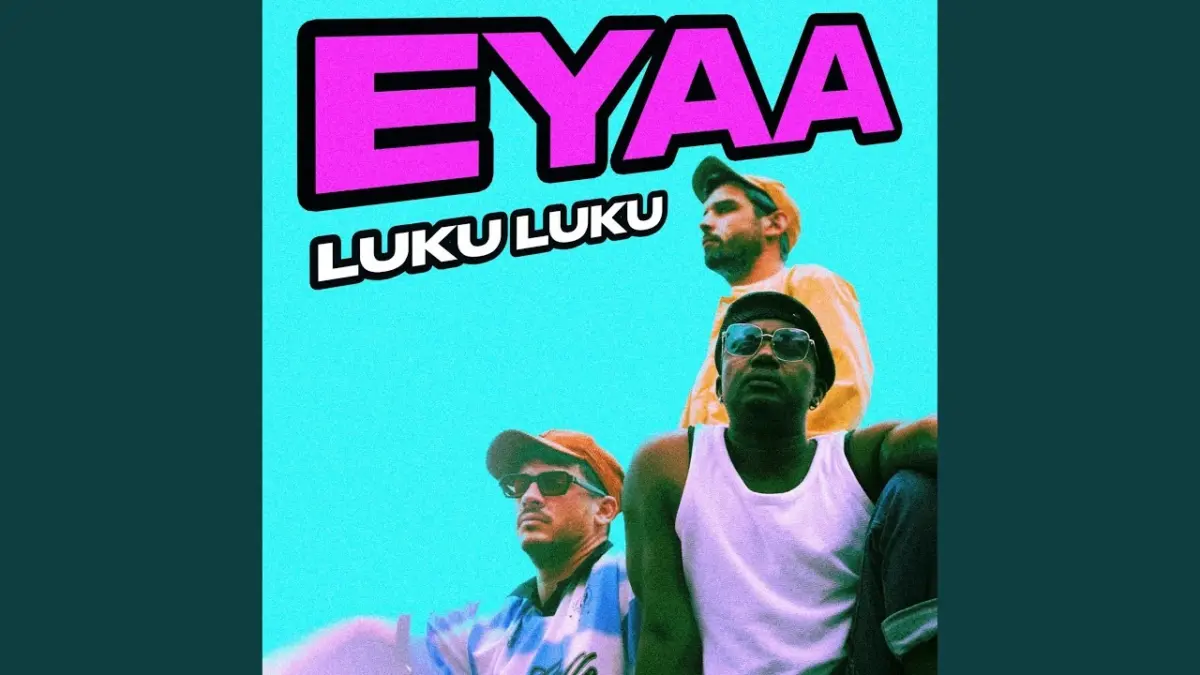
On October 2, the trio officially released their debut single, "Luku Luku," via Sharma Records. The track serves as the explosive opening salvo in a calculated campaign of five consecutive single releases leading up to the highly anticipated drop of their maiden extended play (EP). Merging the organic warmth of highlife, afrobeat, and afro-funk with the precise, pulsating architecture of modern electronics, "Luku Luku" is more than just a dancefloor catalyst—it is a masterclass in transnational collaboration.
Comprising the seasoned Accra-born vocalist and guitarist Kyekyeku, alongside French instrumentalist and producer Kevin Bucquet and dynamic percussionist Fred Faure—both alumni of the acclaimed seven-piece Afro-fusion ensemble Ah! Kwantou—EYAA represents a natural evolution of contemporary groove-based music. Rooted in the rich musical lineage of Ghanaian highlife icons like Pat Thomas and Ebo Taylor, yet fiercely contemporary in its use of synthesizers, drum machines, and heavy bass design, the trio has quickly established a reputation as a formidable live act. Having graced international stages throughout France, Ghana, and Portugal over the past year, EYAA is poised to redefine the parameters of afro-electro. This comprehensive report explores the origins, collaborative dynamics, sonic architecture, and future trajectory of one of the most exciting new acts on the global music scene.
Detailed Chronology: The Genesis and Evolution of EYAA
Roots in Accra and Bayonne
The story of EYAA is one of geography bridged by artistic affinity. At the heart of the project is Kyekyeku, a revered singer, songwriter, and virtuoso guitarist hailing from the bustling metropolis of Accra, Ghana. Long before the inception of EYAA, Kyekyeku had established himself as a vital torchbearer of West African musical heritage, cutting his teeth alongside highlife luminaries such as Pat Thomas and Ebo Taylor. His artistry reflects a deep reverence for the golden age of Ghanaian highlife, infused with the contemporary realities of urban African life.
Seeking new creative horizons, Kyekyeku eventually relocated to Bayonne, a picturesque city in the south-west of France. It was here that the fertile grounds for a transcontinental collaboration were laid. In 2019, Kyekyeku founded Ah! Kwantou, a dynamic seven-piece collective designed to explore the intersections of traditional African rhythms and modern European arrangements. Within this expansive ensemble, Kyekyeku crossed paths with two exceptional French musicians: bassist Kevin Bucquet and drummer Fred Faure.
The Forging of a Trio
While Ah! Kwantou showcased the power of a large horn-and-percussion setup, a distinct creative chemistry began to simmer between Kyekyeku, Bucquet, and Faure. Recognizing a shared vision for a more streamlined, rhythm-driven, and electronically infused sound, the three musicians decided to carve out a new collaborative space. Thus, EYAA was born.
The name "EYAA" is derived from an exclamation of encouragement traditionally associated with inducing trance-like states during communal gatherings and rhythmic performances. This nomenclature serves as both a mission statement and a sonic blueprint: the trio aims to hypnotize listeners through relentless, infectious grooves.
The collaborative songwriting process for their debut material was organic yet meticulously structured. Kyekyeku assumed responsibility for crafting the evocative lyrical narratives—delivered in a deft mix of Twi, Pidgin, and English—while the musical composition was a true democratic effort shared equally among the three members. In the studio, Bucquet expanded his instrumental duties far beyond the traditional bass guitar, taking charge of synthesizers and electronic sound design, while Faure anchored the rhythmic foundation with his intricate, driving percussion.
The Rollout of "Luku Luku"
The culmination of these studio sessions is "Luku Luku," released on October 2 through Sharma Records. Chosen as the lead single, the track sets the tone for the five-part release strategy leading to the trio’s debut EP. By pacing their releases, EYAA intends to systematically introduce listeners to the diverse facets of their sonic palette, building sustained momentum across digital streaming platforms and international press outlets.
Concurrently, the band has translated their studio wizardry into an electrifying live show, taking their transcontinental groove on the road. The past year has seen EYAA perform extensively across France, captivate audiences in Accra at the prestigious Les Francophonies Festival, and hypnotize European world music crowds at Portugal’s Tom de Festa Festival in Tondela.
Supporting Context & Metrics: The Afro-Electro Movement and Musical Anatomy
The Sonic Architecture of "Luku Luku"
To understand the cultural and artistic weight of "Luku Luku," one must examine its intricate musical anatomy. The track operates at the intersection of several distinct genres, refusing to be pigeonholed into a single category. At its foundational core lie the syncopated basslines of afro-funk and the polyrhythmic swing of afrobeat, filtered through the melodic sensibilities of Ghanaian highlife.
However, EYAA purposefully avoids mere replication of vintage sounds. Instead, they thrust these traditional elements into the digital age. Fred Faure’s acoustic and hybrid drum configurations provide an earthy, organic pulse, which is immediately counterbalanced by Kevin Bucquet’s subterranean bass work and sharp, shimmering synthesizer arpeggios. These electronic machines do not overpower the organic elements; rather, they wrap around them like neon scaffolding, creating a futuristic soundscape that feels both ancient and aggressively modern.
Over this rhythm-heavy foundation floats Kyekyeku’s distinctive vocal delivery. Switching fluidly between Twi (a principal language of Ghana), Nigerian/West African Pidgin English, and standard English, Kyekyeku uses his voice as an additional percussive and melodic instrument. His lyrics serve as a call to movement, perfectly matching the hypnotic trance-inducing ethos encoded in the band’s name.
+-----------------------------------------------------------------+
|                       EYAA's Sonic Blueprint                    |
+--------------------------+--------------------------------------+
| Traditional West African | Highlife, Afrobeat, Afro-Funk        |
| Modern European Elements | Analog Synths, Drum Machines, Bass   |
| Linguistic Expression    | Twi, Pidgin English, Standard English|
| Primary Objective        | Hypnotic, Dancefloor-Ready Trance    |
+--------------------------+--------------------------------------+
The Rise of Afro-Electronic Fusion in Global Markets
EYAA’s emergence is emblematic of a broader, highly accelerated shift in the global music economy. Over the past decade, genres originating from the African continent—most notably Afrobeats, Amapiano, and Gqom—have transitioned from regional phenomena to dominant forces on the international charts. Concurrently, European electronic music producers have increasingly looked to African rhythms to inject vitality into standard club frameworks.
What sets EYAA apart in this crowded landscape is the authenticity and structural integrity of their cross-pollination. This is not a case of Western producers sampling African records without context; it is a genuine peer-to-peer collaboration between an established Ghanaian artist deeply rooted in highlife history and skilled European instrumentalists who respect and understand the architecture of groove.
Industry metrics highlight the viability of this approach. Streaming data across platforms like Spotify and Apple Music consistently show double-digit year-over-year growth for global groove, world fusion, and afro-electronic playlists. By positioning "Luku Luku" as the vanguard of an upcoming EP, EYAA is capitalizing on this algorithmic and cultural appetite for hybrid sounds that satisfy both the intellectual music enthusiast and the late-night clubgoer.
Official Statements and Artistic Philosophy
While formal press releases and promotional materials provide the skeletal facts of EYAA’s formation, the artistic philosophy of the trio is best understood through the lens of cultural exchange and sonic liberation.
Speaking on the formation of the group and the conceptual weight behind their moniker, the members have frequently emphasized the unifying power of rhythm. In interviews surrounding their festival appearances at Les Francophonies and Tom de Festa, the trio noted that "EYAA" is designed to strip away linguistic and geographical barriers.
"Music operates in a frequency that bypasses intellectual translation," notes Kyekyeku regarding his multilingual vocal approach in the trio. "Whether you understand Twi, Pidgin, or English, the groove demands a physical response. The machine and the drum speak the same language when the intention is pure movement."
Kevin Bucquet and Fred Faure have similarly underscored the symbiotic nature of the collaboration. Integrating electronic sequencers with traditional West African polyrhythms required a delicate balancing act during their studio sessions in France.
"We didn’t want to create a synthetic version of highlife, nor did we want to make standard European house music," Bucquet explains. "The goal was to build a bridge where the warmth of Accra’s highlife heritage meets the raw, industrial pulse of European sound design. ‘Luku Luku’ is the clearest realization of that dialogue so far."
Furthermore, management and label representatives at Sharma Records have framed the release of the five upcoming singles as a strategic masterclass in audience acquisition. By steadily dripping new material into the ecosystem rather than overwhelming the market, EYAA aims to cultivate a dedicated, global community of listeners who appreciate the depth, history, and technical craftsmanship behind afro-electro.
Future Outlook: The Road to the Debut EP and Beyond
As the dust settles on the initial release of "Luku Luku," EYAA is showing no signs of slowing down. The immediate horizon is defined by an aggressive release schedule designed to maintain maximum visibility in the competitive global music market.
The Five-Single Campaign
"Luku Luku" is merely the first piece of a five-part puzzle. Over the coming months, Sharma Records will roll out the remaining four singles leading up to the release of the trio’s debut EP. Each subsequent track is expected to further explore the boundaries between acoustic West African instrumentation and cutting-edge European electronic production. Industry insiders anticipate that these forthcoming releases will feature varying tempos, mood shifts, and lyrical themes, showcasing the full breadth of the trio’s compositional range.
Expanding the Live Circuit
On the live performance front, EYAA is currently mapping out an extensive touring schedule for the upcoming concert seasons. Building upon the success of their 2023 and 2024 appearances in France, Ghana, and Portugal, the trio is actively booking spring and summer festival slots across Europe and Africa. Their ability to seamlessly transition from intimate jazz and world music clubs to large-scale festival stages makes them a highly versatile booking for promoters seeking fresh, high-energy acts.
Cultural Impact and Legacy
Looking further into the future, EYAA’s trajectory suggests a lasting impact on the evolution of world-fusion music. By honoring the lineage of highlife icons like Pat Thomas and Ebo Taylor while fearlessly embracing the synthetic possibilities of modern club culture, Kyekyeku, Bucquet, and Faure are carving out a unique sonic niche.
They are proving that geographical distance is no match for shared rhythmic intuition. As the global village continues to shrink and musical genres become increasingly porous, EYAA stands ready to lead the charge—transforming a simple cry of encouragement into a global movement that will keep dancefloors moving from Accra to Paris and beyond.