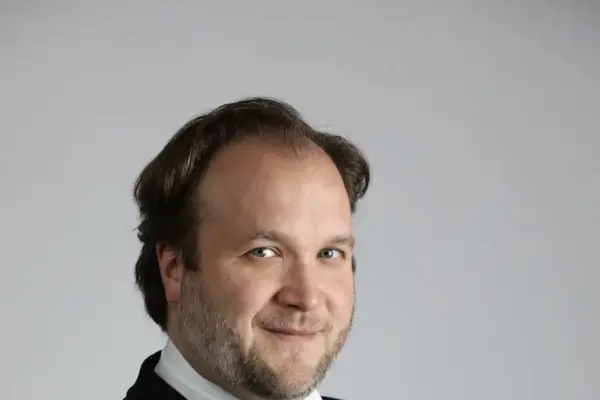
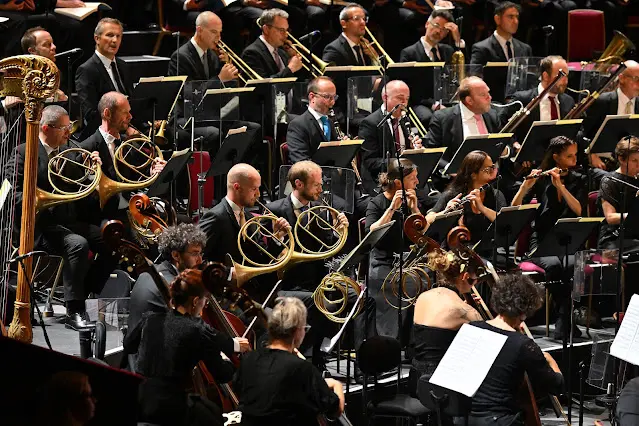
On August 30, 2026, the venerable Royal Albert Hall hosted a landmark event of the classical music calendar: a rare, period-instrument realization of Hector Berlioz’s idiosyncratic dramatic legend, La Damnation de Faust. Performed by the acclaimed French period-instrument ensemble Les Siècles, under the baton of guest conductor Jakob Lehmann, the concert brought a distinctive, timbrally rich sonic profile to the BBC Proms. Featuring a stellar cast of soloists—including tenor John Osborn as Faust, soprano Véronique Gens as Marguerite, and baritone Gerald Finley as Méphistophélès—alongside the combined forces of the Chœur de Radio France and the Maîtrise de Radio France, the evening was a masterclass in orchestral coloration.
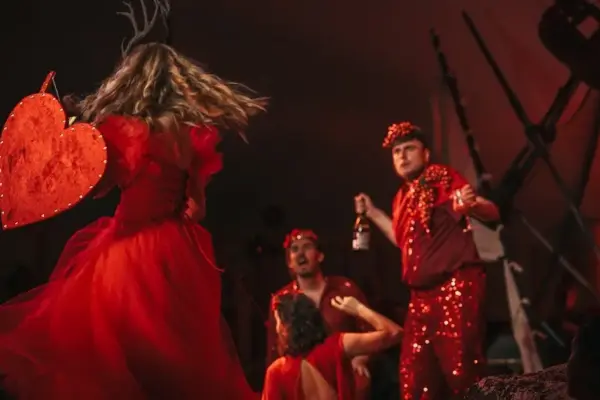
This performance marked a significant chapter in the recent trajectory of Les Siècles. Following a tumultuous transitional period that saw the departure of its founder, François-Xavier Roth, and the subsequent appointment of Italian conductor Antonello Manacorda as artistic director, the orchestra has maintained its peerless reputation for stylistic agility through dynamic guest leadership. Lehmann’s stewardship of La Damnation de Faust—building upon a staged iteration presented at the Théâtre des Champs-Élysées in Paris the previous autumn—offered Proms audiences a rare luxury: the chance to experience Berlioz’s revolutionary orchestration executed on the exact historical instruments for which it was conceived.
While the orchestral playing and choral contributions achieved breathtaking heights of atmospheric detail, the performance also invited critical nuance regarding dramatic execution within the cavernous expanses of the Royal Albert Hall. This review provides a thorough examination of the event, analyzing its historical context, musical triumphs, and interpretive challenges.
Detailed Chronology & Performance Analysis
Setting the Stage: Orchestral Mastery and Period Timbres
From the opening bars, it was evident that Les Siècles and Jakob Lehmann intended to place Berlioz’s radical orchestrational palette at the forefront of the experience. Berlioz’s La Damnation de Faust—initially conceived in 1829 as Eight Scenes from Faust before being expanded into a full légende dramatique in 1845—defies standard theatrical categorization. Designed primarily for the concert hall rather than the opera house, the score relies on an expansive canvas of unusual instrumental combinations.
At the Royal Albert Hall, the orchestra deployed four period Erard harps (falling short of Berlioz’s idealized demand for eight to ten, yet still producing a luminous, ethereal resonance) and fielded woodwinds and brasses that offered biting, gut-punching clarity without modern homogenization. Lehmann demonstrated a profound understanding of the score’s dynamic extremes. The loud, martial outbursts—most notably the explosive Hungarian March and the spine-chilling, apocalyptic evocation of Hell in Part Four—were delivered with blistering, unbridled energy.
Equally striking, however, was Lehmann’s mastery of quietude. In movements such as the Dance of the Sylphs, the period instruments spun an impossibly delicate web of sound. The rich, woody timbre of the period violas and the poignant, reedy intonation of the cor anglais (particularly notable in Marguerite’s aria "D’amour l’ardente flamme") captured the listener’s imagination, rendering the underlying dramatic redundancy of certain interludes entirely irrelevant through sheer sonic beauty.
Vocal Interpretations: Triumphs and Dramatic Nuances
While the orchestral and choral forces performed with near-faultless brilliance, the vocal soloists navigated a more uneven terrain, occasionally wrestling with the vast acoustic footprint of the Royal Albert Hall.
John Osborn (Faust)
As the titular scholar, American tenor John Osborn brought tireless stamina and heroic tone to the stage, shaping long, admirably sustained phrases. However, in the opening scenes—prior to the entrance of Méphistophélès—Osborn occasionally struggled to project the intense philosophical angst and internal isolation (mal d’isolement) central to Faust’s character. Allied with Lehmann’s laser-focus on localized orchestral detail, the macro-structural and philosophical underpinnings of Faust’s journey felt momentarily muted. Osborn found firmer footing in the more conventionally operatic episodes, developing a crackling rapport with Gerald Finley’s devil. In Part Four, his delivery of "Nature immense, impénétrable et fière" felt overly cautious, though he redeemed himself with a visceral, white-hot response to his ultimate damnation.
Gerald Finley (Méphistophélès)
Baritone Gerald Finley gave a masterclass in vocal characterization, clearly relishing the theatricality of Méphistophélès without ever descending into pantomime or caricature. From his initial entrance, Finley’s immaculate diction and acute sensitivity to the text commanded the hall. His execution of set pieces walked a tightrope between sardonic wit and genuine menace; the "Song of the Flea" was delivered with a roguish twinkle in the eye, while his summoning of the will-o’-the-wisps and his Part Three serenade crackled with razor-sharp sarcasm. By Part Four, Finley shifted gears into a chilling, authoritative presence that anchored the unfolding tragedy, effortlessly projecting across the massive open spaces of the venue.
Véronique Gens (Marguerite)
The casting of Véronique Gens as Marguerite was an act of profound artistic inspiration. Famed for her mastery of 17th- and 18th-century French repertoire, Gens brought a velvety, burnished tone and a subtly flexible rubato to her music. This approach brilliantly illuminated Marguerite’s youthful naivety and fragile psychology. Rather than treating "D’amour l’ardente flamme" as an oversized romantic operatic hymn, Gens rendered it with a haunting, melancholic intimacy. While a touch more acoustic edge and vocal fire might have cut through the Albert Hall’s upper galleries during her second aria, the tremulous, vulnerable beauty she infused into the role left an indelible mark.
Supporting Roles and Choral Excellence
Thomas Dolié delivered a memorable, robust cameo as Brander, dispatching the rat song with undeniable relish. Meanwhile, the combined forces of the Chœur de Radio France and the Maîtrise de Radio France were nothing short of stellar. Singing with authentic French linguistic precision, the choruses navigated Berlioz’s notoriously tricky, rhythmically awkward choral writing with absolute élan. The male voices possessed a terrifying, resonant gravity during the infernal scenes in Hell, while the children’s choir injected an ethereal, otherworldly purity into the transcendent final apotheosis.
Supporting Context & Metrics
To fully appreciate the significance of this 2026 BBC Proms performance, it is helpful to examine the historical reception of Berlioz’s work and the performance metrics associated with Les Siècles.
Historical Performance Metrics of La Damnation de Faust at the Proms
First Complete Proms Performance: 1962, conducted by Colin Davis leading the London Symphony Orchestra. Prior to this, programming was largely restricted to orchestral excerpts (Hungarian March, Dance of the Sylphs).
Total Complete Proms Performances (as of August 30, 2026): Exactly 8 complete performances in the history of the festival.
Notable Historical Milestones: The 1985 Proms performance led by Mark Elder (which notably featured the reviewer, David Karlin, singing within the chorus).
Orchestral Scale: Berlioz’s original scoring calls for an expansive ensemble, including up to 8–10 harps. Les Siècles deployed 4 period Erard harps, successfully capturing the desired historical timbre within logistical boundaries.
Organizational Context: Les Siècles
Founded in 2003 by François-Xavier Roth, Les Siècles occupies a unique space in the modern classical music landscape by performing each repertoire on the specific historical instruments appropriate to the era of the composition’s creation.
Leadership Transition: Following governance and management restructuring sparked by Roth’s departure in 2025 amid allegations of inappropriate behavior, the orchestra adopted a modernized democratic management framework.
Artistic Direction: In June 2026, Italian maestro Antonello Manacorda was officially announced as the new Artistic Director and Principal Conductor.
Interim Leadership: While Manacorda assumes full duties later in the year (December 2026), guest conductors such as Jakob Lehmann have maintained the orchestra’s rigorous artistic standards, steering major international projects including Beethoven, Dvořák, and this critically acclaimed Berlioz residency.
Official Statements & Industry Reactions
The reception of the performance reverberated across European cultural press, drawing praise for the boldness of bringing a specialized, period-instrument European theater production directly into the massive acoustic arena of the BBC Proms.
"A welcome visit from Les Siècles allows us the luxury of a period instrument performance of Berlioz’s quirky masterpiece, with Jakob Lehmann and his players holding us spellbound with the orchestral detail."
— Concert Review Excerpt
Musicologists and critics alike praised the administrative agility of Les Siècles in maintaining its touring schedule and artistic integrity during a period of profound institutional transition. The collaboration with Radio France’s resident vocal ensembles further underscored the cross-channel cultural partnerships sustaining high-level historically informed performance practice in the mid-2020s.
Furthermore, program annotators—drawing upon foundational scholarship by the late David Cairns—highlighted how Berlioz’s score challenges conventional listener expectations. The inclusion of Cairns’ essay in the official Proms programme book provided audiences with an essential intellectual framework, elucidating why a piece that failed at its 1846 Opéra-Comique premiere eventually secured its status as a towering monument of 19th-century romanticism.
Future Outlook
The success of La Damnation de Faust at the BBC Proms signals a resilient and forward-looking chapter for Les Siècles. Having weathered significant organizational turbulence over the past two years, the ensemble has proven that its foundational ethos—the rigorous exploration of historical instrumental timbres—remains entirely independent of any single personality.
Upcoming Milestones: With Antonello Manacorda officially taking up the mantle as artistic director in December 2026, the orchestra is poised to enter a new era of stable leadership and expanded international programming.
Broadcast Availability: For listeners unable to attend the live performance at the Royal Albert Hall on August 30, 2026, the complete concert recording remains accessible via BBC Sounds for a limited broadcast window of 42 days.
Theatrical vs. Concert Iterations: As Les Siècles continues to balance fully staged theatrical co-productions (such as their Paris collaboration with director Silvia Costa) with large-scale symphonic concert versions, the ensemble demonstrates an invaluable versatility that guarantees its place at the vanguard of modern period-instrument performance.

.jpg)
.jpg)
.jpg)
.jpg)
.jpg)