Executive Overview
In contemporary popular culture, the archetype of the witch has undergone a profound metamorphosis. Once a symbol of terror, religious persecution, and societal paranoia, the label has been enthusiastically resurrected as an emblem of feminist solidarity. Today’s cultural landscape—fueled by the rise of "WitchTok," blockbuster cinematic revivals like Practical Magic 2, and best-selling historical fiction such as Philippa Gregory’s autumn release, Royal Witch—embraces the witch as the ultimate icon of female independence, esoteric knowledge, and resistance to patriarchal authority.
Yet, this cultural reclamation invites a critical historical question: Are we genuinely recovering the lived experiences of marginalized women, or are we merely romanticizing a posthumous identity originally forged from political accusation rather than historical fact?
This investigative analysis explores the mechanics of how complex, high-stakes medieval politics flattened into simplified fairy tales of magic and malevolence. By examining the downfalls of prominent 15th-century figures such as Eleanor Cobham, Duchess of Gloucester, and Joan of Navarre, this article interrogates the tension between historical reality and the modern urge to romanticize the persecuted female mystic. While cultural retellings keep public interest in history alive, historians argue that collapsing the boundary between myth and reality risks perpetuating a misogynistic weaponization of identity—simply swapping horror for celebration without confronting the underlying mechanisms of political suppression.
Detailed Chronology: The Fall of Eleanor Cobham and the "Witch of Eye"
To understand how the label of "witch" was deployed in medieval England, one must look past the folklore and examine the political machinery of the 15th century. The historical framework of Philippa Gregory’s Royal Witch centers on the dramatic rise and catastrophic fall of Eleanor Cobham, whose life exposes the thin veneer separating high-court politics from treasonous sorcery.
From Ladies-in-Waiting to the Royal Inner Circle
Eleanor Cobham’s trajectory was nothing short of extraordinary for a 15th-century woman of relatively modest beginnings. She initially entered the royal orbit as a lady-in-waiting to Jacqueline of Hainault, the first wife of Humphrey, Duke of Gloucester. Duke Humphrey was a powerful royal figure, serving as the uncle and Lord Protector to the young King Henry VI, and standing briefly as the heir presumptive to the English throne.
Following a scandalous affair, Eleanor transitioned from mistress to second wife after Humphrey’s marriage to Jacqueline was annulled. As Duchess of Gloucester, Eleanor wielded immense social and political influence, positioning herself at the very pinnacle of the English court.
The 1441 Inquiry: Astrology as Treason
By 1441, however, the political winds shifted dramatically. Duke Humphrey’s aggressive war policies against France had created bitter factions within the English nobility, pitting his peace-leaning rivals against his war-mongering camp. To dismantle Humphrey’s formidable political influence, his adversaries targeted his most vulnerable asset: his ambitious wife.
A formal inquiry revealed that Eleanor had commissioned scholars—including her chaplain, Thomas Southwell, and the astronomer Roger Bolingbroke—to cast an astrological chart for King Henry VI. In medieval law, attempting to divine the sovereign’s lifespan was not merely a quirky occult hobby; it was treated as a direct threat to the monarch’s life and classified as high treason.
The Implication of Margery Jourdemayne
Crucially, the state’s case expanded to include Eleanor’s association with Margery Jourdemayne, a woman who would posthumously enter the lexicon as the "Witch of Eye." Jourdemayne was a well-known purveyor of herbal remedies, traditional medicine, and fertility treatments, catering extensively to the elite clientele of the English court.
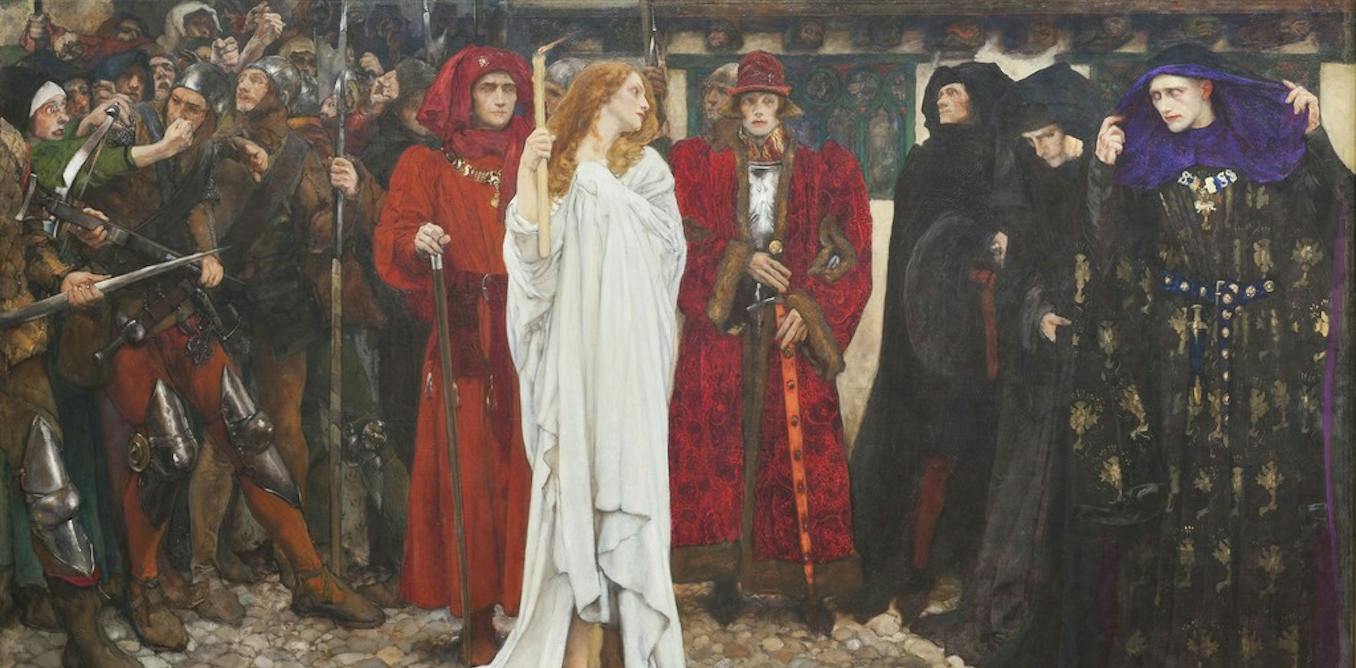
When Eleanor’s household became politically radioactive, Jourdemayne’s profession made her an easy target. While Eleanor—protected by her aristocratic lineage and ecclesiastical jurisdiction—escaped execution through life imprisonment, annulment, and public humiliation, Jourdemayne was granted no such clemency. On October 27, 1441, following a swift secular trial, Jourdemayne was found guilty and burned at the stake at Smithfield.
[1441: Political Power Struggle]
       │
       ├──> Duke Humphrey (War Faction) vs. Peace-Leaning Rivals
       │
       └──> Target: Eleanor Cobham (Wife of Humphrey)
              │
              ├──> Astrological Chart Commissioned (Tread on Royal Sovereignty)
              │
              └──> Association with Margery Jourdemayne ("Witch of Eye")
                     │
                     ├──> Eleanor: Imprisoned for life / Ecclesiastical judgment
                     └──> Margery Jourdemayne: Burned at Smithfield (Oct 27, 1441)
Supporting Context & Metrics: The Anatomy of a Smear Campaign
The case of Eleanor Cobham is not an isolated historical anomaly. It represents a recurring pattern in medieval and early modern statecraft, where politically inconvenient women were neutralized through associations with the occult, heresy, or sexual deviance.
The Case of Joan of Navarre
A generation prior to Eleanor’s downfall, Joan of Navarre—the widow of Henry IV, stepmother to Henry V, and stepmother-in-law to Humphrey of Gloucester—faced a remarkably similar smear campaign.
As the daughter of a French princess and the former Regent of Brittany, Joan labored under persistent xenophobic suspicion throughout her later life in England. When her political loyalties were questioned, her dower lands were seized, and chroniclers began weaving subtle insinuations of witchcraft into her narrative. Although Joan was an astute political operator who was never formally charged with or tried for witchcraft, the label attached itself to her reputation through repeated chronicler embellishment.
Modern historians, such as Elena Woodacre in her authoritative biography Joan of Navarre: Infanta, Duchess, Queen, Witch?, deliberately employ a question mark to highlight the disjunction between the historical reality of an astute stateswoman and the fictionalized trope constructed by her political enemies.
The Mechanics of Flattening Historical Memory
Cultural memory rarely preserves the dry, complex bureaucratic realities of power struggles. Instead, history is subjected to a process of narrative "flattening."
As stories travel across centuries—passing from medieval chroniclers to early modern dramatists, Victorian artists, and contemporary novelists—nuance is systematically stripped away. The political expediency that motivated the prosecution of Eleanor Cobham or the financial motivations behind the targeting of Joan of Navarre are replaced by a simpler, more sensational explanation: she was a witch.
Literary scholar Misty Urban, analyzing adaptations of historical fiction like Philippa Gregory’s Cousins’ War series (adapted into television as The White Queen), noted that modern retellings frequently "attribute the same weapons to women that medieval authors did; they simply imagine a reception by the audience that is delighted rather than horrified."
| Historical Figure | Primary Political Vulnerability | Nature of Accusation | Ultimate Outcome |
|---|---|---|---|
| Eleanor Cobham | Aggressive war policies of Duke Humphrey; royal succession proximity | Casting the King’s horoscope; consorting with folk practitioners | Life imprisonment, annulment, public humiliation |
| Margery Jourdemayne | Elite connections to the royal court; provision of herbal/fertility remedies | Witchcraft, treasonous sorcery, supplying spells | Burned at the stake at Smithfield (1441) |
| Joan of Navarre | French heritage; vast dower lands and independent income | Suspected treason, xenophobic mistrust, occult association | Seizure of lands, temporary confinement, political sidelining |
Official Statements and Historiographical Perspectives
The tension between creative license in historical fiction and rigorous academic historiography has sparked significant debate among modern scholars and authors alike.
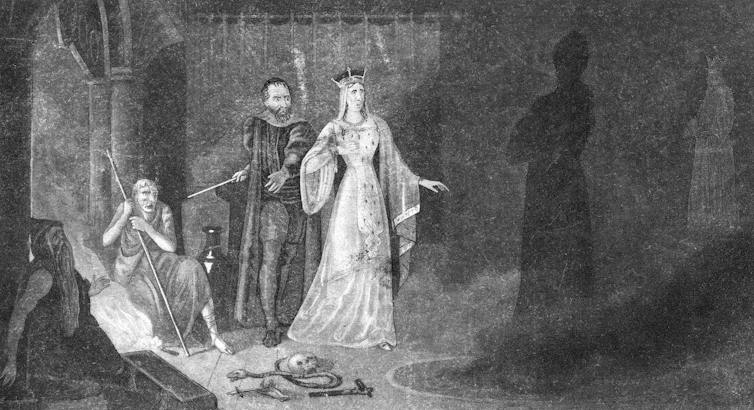
Dr. Eleanor Woodacre, speaking on the responsibilities of biographers dealing with medieval royal figures, emphasizes the danger of uncritical acceptance of medieval propaganda:
"When we strip away the political maneuvering of rival factions and replace it with supernatural explanations, we do a profound disservice to the intelligence and agency of these historical women. They were active political players navigating a hyper-patriarchal system. Reducing them to witches—whether villainous or empowered—ignores the very real secular threats they faced and engineered."
Conversely, defenders of historical fiction argue that creative reinterpretation serves an invaluable public service. Philippa Gregory and fellow authors operating within the historical fiction genre contend that dramatization acts as an essential gateway, keeping public interest in medieval history alive in an era where traditional academic texts struggle to reach mass audiences.
As noted by public historians examining the phenomenon of "WitchTok" and modern occult revivals, the contemporary urge to reclaim the witch is largely driven by a psychological desire for empowerment. By taking the worst insult hurled at historical women by patriarchal authorities and flipping it into a badge of honor, modern feminists feel a sense of transgenerational solidarity.
However, cultural historians issue a vital caveat: solidarity built upon a foundation of historical misrepresentation risks erasing the actual suffering of victims like Margery Jourdemayne—marginalized working women who possessed no aristocratic protection and paid for elite political games with their lives.
Future Outlook: Navigating the Intersection of Myth and History
As we look toward the future of public engagement with history, the challenge lies in balancing creative expression with historical integrity.
- The Evolution of Historical Fiction: Authors writing in the subgenre of royal and historical drama face an ethical imperative to distinguish between narrative entertainment and historical fact. While novels like Royal Witch and films like Practical Magic 2 provide compelling cultural spaces for exploring themes of female power, readers and viewers must be encouraged to look beyond the trope.
- Academic Outreach: Historians must continue to leverage digital platforms to debunk simplified historical myths without stifling creative storytelling. The academic community must ensure that the nuanced realities of medieval politics remain accessible to the public, countering the gravitational pull of sensationalized historical narratives.
- Critical Feminist Historiography: True feminist solidarity with historical women requires honoring them for who they actually were—brilliant, flawed political strategists, scientists, diplomats, and survivors—rather than retrofitting them into a romanticized supernatural mold that they never chose.
Ultimately, the question mark attached to the legacy of historical women matters. Every generation inherits stories, and every generation rewrites them. By approaching our cultural fascination with witches with a critical eye, we can celebrate the empowering aspects of modern identity reclamation without erasing the complex, hard-fought truths of the women who came before us.