Executive Overview
The intersection of contemporary electronic music, cutting-edge audiovisual production, and socio-political conservatism reached a tense flashpoint in Istanbul recently, culminating in the abrupt and controversial cancellation of a high-profile concert by the Italian artist and producer Anyma. Scheduled for September 12 at the sprawling Ataköy Marina Arena, the performance was intended to be a crown jewel of Anyma’s expansive GENESYS and GENESYS II touring cycle—known widely as ‘The End of Genesys’ and associated global chapters. Promising an immersive, futuristic world-building experience that melds high-concept digital art with melodic techno, the show was abruptly pulled from the calendar when the Istanbul Governor’s Office revoked its permits.
The decision followed a coordinated digital pressure campaign launched by local conservative factions and online commentators. These critics weaponized isolated visual fragments of Anyma’s intricate live show, alleging that the performance incorporated "satanic" and blasphemous imagery. While official channels were initially slow to issue a written decree, confirmation of the cancellation was secured by Turkish independent fact-checking organization Teyit through high-ranking provincial officials.
In the wake of the prohibition, Anyma—the musical moniker of Matteo Milleri, co-founder of Afterlife and one-half of Tale of Us—released a scathing and comprehensive rebuttal via social media. The artist vehemently denied the allegations, revealing a darker layer to the controversy: that the viral imagery driving the ban had been deliberately manipulated using Artificial Intelligence (AI) to manufacture a false, sinister narrative. Furthermore, the cancellation highlights a troubling, recurring trend within Turkey’s cultural landscape, echoing similar abrupt bans faced by international touring acts like Irish post-rock group God Is An Astronaut earlier in the year.
This report provides an exhaustive investigation into the events leading up to the cancellation, examines the mechanics of the online disinformation campaign, contextualizes the broader crackdown on live entertainment in Turkey, and evaluates the long-term implications for global touring artists navigating politically sensitive regions.
Detailed Chronology: From Anticipation to Abrupt Cancellation
The Buildup to the Ataköy Marina Arena Spectacle
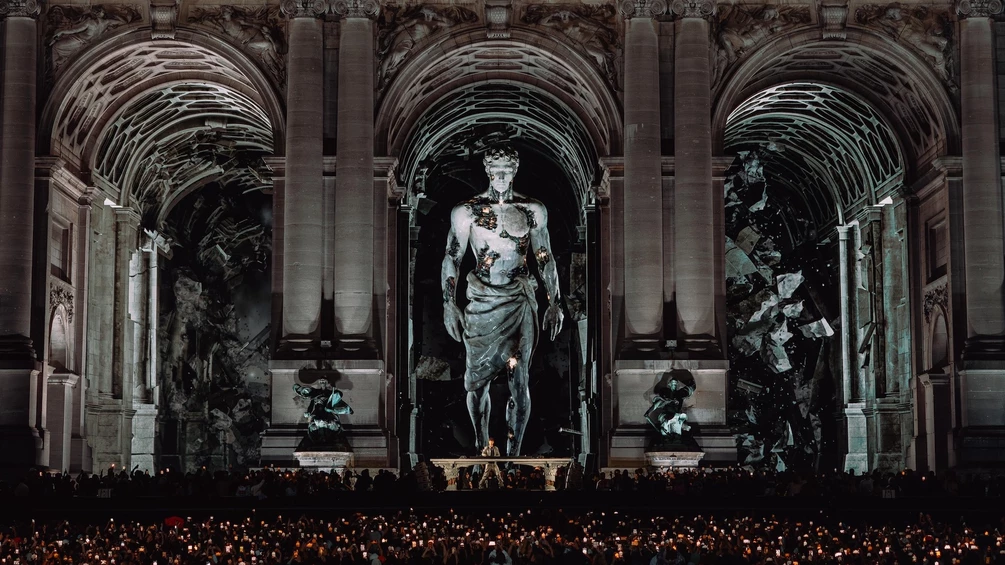
For months, anticipation for Anyma’s Istanbul debut had been building steadily among Turkey’s passionate electronic music community. The Ataköy Marina Arena, a premier open-air venue situated along the Marmara Sea, was outfitted to host what local promoters billed as a paradigm-shifting audiovisual experience. The performance was slated as a key European stop, merging massive LED screen architectures, real-time 3D rendering, and forward-thinking melodic techno designed to envelop the audience in a narrative of digital evolution.
As the September 12 date approached, ticket sales soared, reflecting Anyma’s meteoric rise as a solo electronic music titan. Following the widespread success of his The End of Genesys LP—which featured collaborations with artists like Grimes and an expansive deluxe edition—Anyma’s brand had transcended standard club music, positioning him as a 21st-century futurist artist operating at the bleeding edge of technology and performance art.
The Digital Campaign and the Catalyst
The momentum abruptly halted in the days preceding the event. A coalition of local conservative groups, moral watchdogs, and hyper-vigilant social media accounts began circulating curated images and video snippets purportedly pulled from Anyma’s prior performances. These clips focused on dystopian, industrial, and cybernetic themes inherent to the Genesys lore—such as towering humanoid figures, crumbling digital architectures, and stark chiaroscuro lighting aesthetics.
Campaigners framed these artistic motifs as occult, anti-religious, and inherently "satanic." Utilizing hyper-targeted hashtags, these factions launched an aggressive digital mobilization on platforms like X (formerly Twitter) and Instagram, directly tagging the Istanbul Governor’s Office, municipal bodies, and conservative political figures. The goal was unambiguous: to frame the upcoming concert not as a cultural event, but as an ideological threat to public morality, thereby forcing the hand of local authorities.
The Intervention of the Governor’s Office
Under immense public pressure driven by the viral campaign, the Istanbul Governor’s Office quietly rescinded the necessary event permits. Despite the gravity of the decision, standard bureaucratic transparency was initially absent; no formal, detailed press release was published explaining the legal or administrative grounds for the revocation.
Seeking clarity, Turkey-based independent fact-checking and investigative organization Teyit initiated inquiries with municipal and provincial authorities. Their persistence bore fruit when Emin Gökçegözoğlu, the Provincial Press and Public Relations Director for the Istanbul Governor’s Office, officially confirmed that the event’s cancellation was indeed predicated on concerns regarding alleged "satanic elements" present in the artist’s production design. The confirmation removed any lingering doubt that the show had fallen victim to ideological censorship rather than logistical or safety concerns.
Supporting Context & Metrics: The Anatomy of Modern Censorship
A Disturbing Precedent in Turkish Live Entertainment
The silencing of Anyma’s Istanbul show is far from an isolated incident; rather, it represents a deepening pattern of administrative caution and religious-political censorship within Turkey’s live entertainment sector.
Earlier in the year, the Irish post-rock veterans God Is An Astronaut suffered a strikingly similar fate at the exact same venue—the Ataköy Marina Arena. Their long-awaited Istanbul gig was cancelled with mere hours notice before doors were scheduled to open. Much like Anyma, the band was subjected to unfounded social media accusations alleging the promotion of Satanism, forcing local promoters to scramble while ticket holders were left stranded outside the venue gates.
Music industry insiders note that post-pandemic Turkey has become an increasingly volatile landscape for international touring acts, particularly those whose aesthetic relies on dark, gothic, industrial, or surrealist imagery. Local authorities, sensitive to public pressure campaigns orchestrated by religious and nationalist pressure groups, frequently opt for preemptive cancellations to avoid political friction, bypassing due process and leaving promoters and artists without legal recourse.
The Rise of AI-Assisted Disinformation
One of the most alarming revelations surrounding the Ataköy cancellation is the alleged deployment of Artificial Intelligence to fabricate the controversy. In his official statement, Anyma asserted that the visuals circulating online were not merely taken out of context, but actively altered using generative AI tools.
This case marks a grim milestone in the intersection of culture wars and synthetic media. In the modern era, bad-faith actors no longer rely solely on selective framing or deceptive editing; they possess the technological capacity to synthesize, enhance, or entirely fabricate visual evidence to corroborate pre-existing ideological grievances. By feeding darker narrative chapters of Anyma’s science-fiction visual universe into AI algorithms—and pairing them with dissonant, ominous audio—campaigners successfully manufactured a synthetic reality that bore little resemblance to the actual artistic performance.
This sophisticated manipulation turned high-art digital renderings into viral political propaganda, demonstrating how vulnerable modern cultural expressions are to state-level and grassroots digital sabotage.
Official Statements and Responses
Anyma’s Rebuttal: Art, Science Fiction, and Deception
Faced with career-damaging accusations and the sudden collapse of his tour date, Matteo Milleri (Anyma) issued a comprehensive, impassioned statement via his Instagram stories, which was subsequently amplified across global electronic music channels, including @edmmusic.
The statement serves as both a defense of his creative vision and a stern critique of the bad-faith actors who weaponized his work:
"The A/V show is a science-fiction story about darkness and light, destruction and creation, fear and hope… Like many stories, it weaves through darker chapters before reaching resolution.
Selected darker moments from our story and show were taken out of context, manipulated with AI, paired with other music and circulated online to manufacture a false sinister narrative that simply does not exist and does not reflect the show’s essence or intention.
Let me be clear. None of my visuals are AI-generated and the greatest irony is that AI was used to alter my work by those who condemn it and they ultimately turned it into something to fit their own narrative. My art was turned into social media and political propaganda. What happened next is unacceptable…
Neither I, nor the promoter, nor my team received any meaningful warning or opportunity for dialogue before the show was cancelled. Nobody asked us to explain the work, provide context or discuss possible adaptations. We were and are ready to do so.
We strongly reject the false religious and political meaning being attributed to this work."
The Silence of the Authorities
While provincial press director Emin Gökçegözoğlu privately and informally confirmed to Teyit that the cancellation stemmed from "satanic elements," the Istanbul Governor’s Office has refrained from issuing a formal, comprehensive public white paper detailing the decision. This lack of administrative accountability has drawn sharp criticism from freedom of expression advocates, who argue that opaque bureaucratic bans deny foreign artists and local promoters the fundamental right to due process, defense, and dialogue.
Future Outlook: Navigating the New Geopolitical Reality for Touring Artists
Implications for the Global Electronic Music Circuit
The cancellation of Anyma’s Istanbul show sends a chilling ripple effect through the international touring ecosystem. As electronic music producers increasingly rely on high-budget, narrative-driven audiovisual spectacles—spanning cyberpunk aesthetics, dystopian futures, and metaphysical themes—they run the risk of colliding with conservative cultural sensitivities in various global markets.
Promoters and artist management teams are now forced to re-evaluate routing strategies through regions where religious or political conservatism intersects with digital populism. When viral social media campaigns can unilaterally override legally secured permits without administrative dialogue, the financial and reputational risks of touring in such jurisdictions skyrocket.
The Imperative for Cultural Diplomacy and Dialogue
Anyma’s statement emphasized a crucial willingness that went ignored by local officials: the readiness to engage in dialogue, provide artistic context, and discuss potential adaptations. In an increasingly polarized world, the reflex to cancel rather than communicate threatens to wall off nations from the global cultural dialogue.
Moving forward, international artist collectives, booking agencies, and human rights watchdogs must advocate for transparent regulatory frameworks that protect artistic expression from the whims of coordinated digital lynch mobs. Until such protections are established, artists entering politically sensitive territories will continue to operate under the shadow of arbitrary censorship, where a manipulated image on a smartphone screen can dismantle months of meticulous creative labor overnight.
For further coverage on Anyma’s ongoing global endeavors, including his milestone [UNVRS] Ibiza residency and his continuous evolution as a 21st-century futurist, stay tuned to industry-leading publications.