Executive Overview
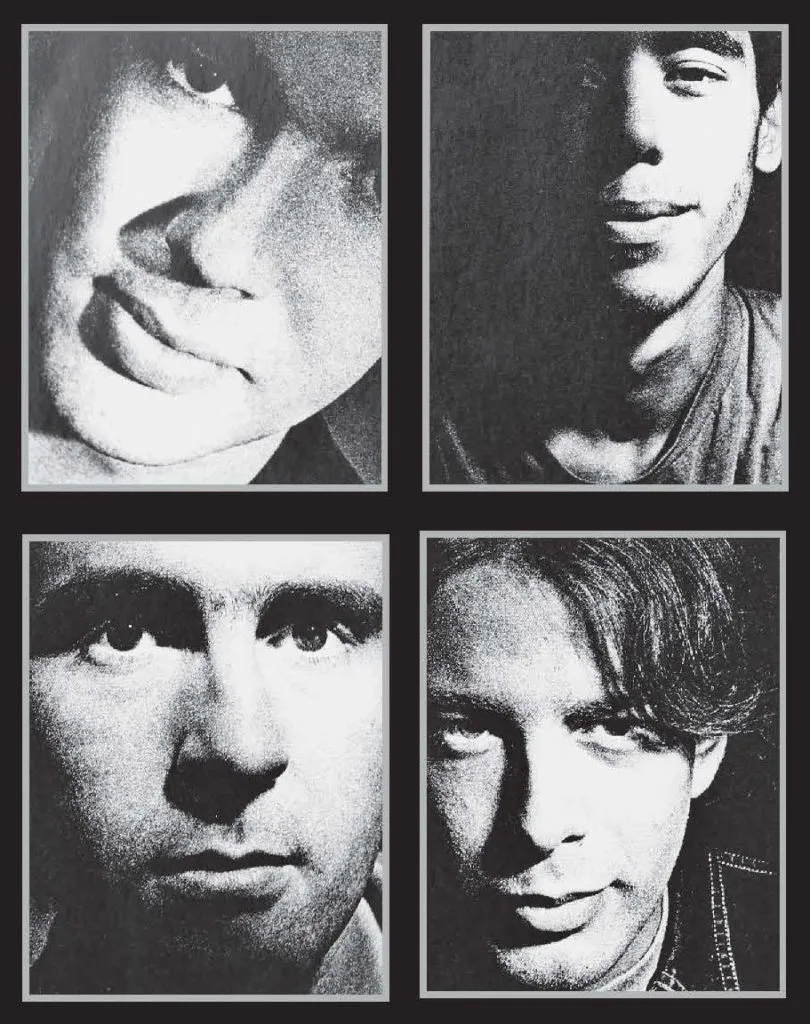
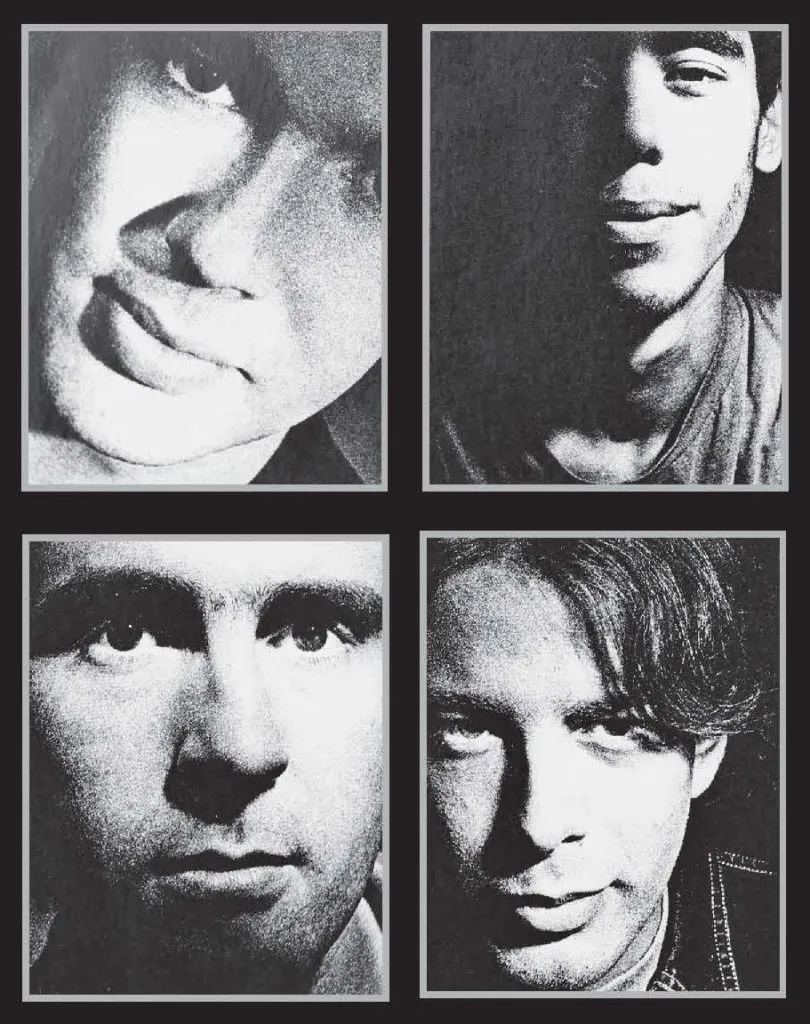
Formed in London in 1986, Bark Psychosis emerged as one of the founding architects of the post-rock movement, charting a visionary path that blurred the lines between ambient introspection, jazz-inflected soundscapes, and intricately detailed power. Their 1994 debut LP, Hex, remains a landmark achievement of the genre—a gloomy yet glimmering masterwork that cast a spell over critics and initiated an enduring, if elusive, musical legacy.
Yet, the trajectory of Bark Psychosis is defined as much by its protracted absences, internal fractures, and radical reinventions as it is by its recorded output. It would take a staggering 20 years for a true follow-up, ///CODENAME: dustsucker, to materialize in 2004, with founding member, primary songwriter, and creative anchor Graham Sutton serving as the sole constant throughout the project’s erratic lifecycle.
Forty years after the band’s genesis, Sutton reflects candidly on a career guided not by commercial ambition or careerist strategy, but by a simple, fundamental compulsion: music as an absolute life-raft. From squatting in Leyton and recording ephemeral church sessions to pioneering early drum ’n’ bass under the moniker Boymerang and carving out a celebrated career as a producer for acts like These New Puritans and British Sea Power, Sutton’s journey offers a masterclass in artistic uncompromisingness. This is the definitive retrospective of a band that tore themselves apart in pursuit of perfection, leaving an indelible imprint on modern alternative music.
Detailed Chronology: From Schoolyard Mania to the Birth of Post-Rock
The Genesis and the Squats (1986–1989)
The story of Bark Psychosis begins long before the term "post-rock" was coined by music critics in the mid-1990s. It started in the mid-1980s when a 14-year-old Graham Sutton teamed up with school friend John Ling. For Sutton, music was an omnipresent force from early childhood.
"There was always music in my house," Sutton recalls. "My mum had a copy of Rubber Soul, which I played to death. I used to fall asleep listening to Sgt. Pepper’s… Music has been this thread that’s pulled me through life."
What began as teenage curiosity quickly mutated into an all-consuming vocation. Armed with basic tape recorders and primitive drum machines, Sutton and Ling felt an urgent, almost manic calling. "It was like this mania," Sutton says. "I thought: this is what I’m here to do."
The duo played their maiden live performance at a CND benefit at the Sir George Robey pub in Finsbury Park. Galvanized by the experience, Sutton made a life-altering decision immediately after completing his GCSEs. "I made the decision I was going to leave school… and I persuaded John that we were going to do this band."
Relocating from East London to Edgware in North London, Sutton commuted back and forth to plot the band’s next moves. Their primary objective was finding a dedicated drummer. An advertisement placed in a local music shop brought Mark Simnett into the fold. Realizing that the daily commute was untenable, Sutton and Ling plunged headfirst into London’s countercultural underbelly, eventually settling in a notorious squat on Claremont Road in Leyton. It was within this bohemian, volatile environment that the band crossed paths with singer Sue Page, whose ethereal vocals would grace their earliest recorded output.
The Cheree Years and the Rise of Atmospheric Rock (1990–1992)
Bark Psychosis’s entry into the physical recorded medium was the result of a serendipitous encounter on a public transit platform.
"I met this couple, Nick [Allport] and Vinita [Joshi]," Sutton recounts. "They ran a fanzine and a small record label called Cheree. I’d met them on the platform of South Woodford station. They seemed like interesting people. I just struck up a conversation with them. They kind of adopted me in a way."
In 1990, Cheree released Bark Psychosis’s foundational 19-minute and 12-inch singles, All Different Things and Nothing Feels. These tracks established the group’s embryonic signature sound: drifting, texturally rich, atmospheric rock that prioritized negative space, hypnotic repetition, and emotional resonance over traditional verse-chorus structures.
The label’s desire for a full-length album quickly hit a wall due to shifting business alignments. "They wanted us to do an album," Sutton explains, "but they brought in some new backers that we fundamentally didn’t get on with."
Salvation came via Gerald Palmer, former manager of neo-psychedelic noise pioneers Spaceman 3. Palmer successfully untangled the band from their Cheree commitments. By 1992, Bark Psychosis had signed to 3rd Stone Records, expanded their lineup with the addition of keyboardist Daniel Gish, and released the Manman EP alongside the monumental single Scum. Spanning 21 minutes, Scum was an audacious dive into experimental noise-rock, minimalist tension, and jazzy soundscapes.
Reflecting on this uncompromising creative period, Sutton notes: "A lot of it came from being quite wilful, wanting to do something that was our own and nobody else’s. Nothing was guided by any sort of idea of a career; it was just, ‘How does this feel? Do we feel good doing this?’ For better or worse, it was done with the purest of motives."
Hex and the Destruction of a Band (1993–1994)
For the recording of their debut full-length, Bark Psychosis made the leap to Circa, a subsidiary of Virgin Records. Buoyed by the atmospheric success of Scum—which had been recorded live inside St John’s Church in Stratford—Sutton envisioned an intensely layered, multidimensional recording process for the album that would become Hex.
"I came up with the idea that we’d lay down some frameworks, then there’d be a stage of overdubbing in the church," Sutton outlines. "Then there’d be a further process of sequencing. Finally, there would be touch-ups and vocals, then we’d mix it."
Simultaneously, Sutton embraced the rapidly evolving, newly accessible technology of digital sampling. "I was excited by that as well, and I wanted that side of things to be represented."
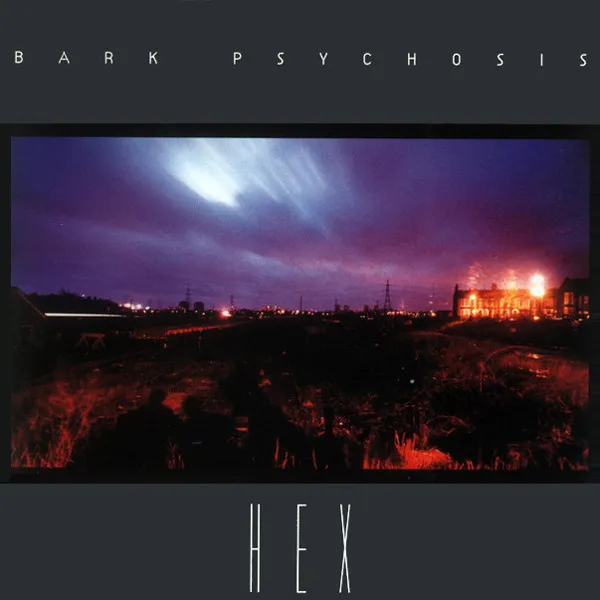
Released in 1994, Hex received widespread critical acclaim, hailed today as a foundational pillar of the post-rock canon. Yet, commercially, it fought an uphill battle, peaking at a modest number 48 on the UK Independent Albums chart. More destructively, the grueling creative process exacted a severe toll on the human beings behind the music.
"It took such a lot out of us," Sutton recalls candidly. "I felt very strongly that this might be our only shot of this, so I’m going to give it my absolute everything. The process of making it destroyed the band."
Keyboardist Daniel Gish departed midway through the recording sessions, and co-founder John Ling exited shortly after its completion.
Boymerang, Parlophone, and the Wilderness Years (1995–2004)
Though Sutton and Simnett attempted to keep the live incarnation of Bark Psychosis afloat temporarily, Sutton’s creative compass was already spinning toward a radical new horizon: the hyper-syncopated, bass-heavy underground sounds of the emerging UK drum ’n’ bass and jungle scene.
Abandoning traditional rock instrumentation entirely, Sutton adopted the moniker Boymerang and released the acclaimed album Balance Of The Force through Parlophone in 1997. Yet, true to his mercurial artistic nature, Sutton’s tenure in electronic music was short-lived.
"Almost overnight, something was telling me, I’ve got to do something else now," he explains.
This internal pivot triggered the genesis of a long-awaited second Bark Psychosis album. Major label Parlophone, however, was hardly receptive to the sudden stylistic shift. "Parlophone weren’t very happy, but I felt like I didn’t have any choice. If it doesn’t feel right, I can’t do it."
A bitter standoff ensued, with Parlophone refusing to release the recordings. It took Sutton years of exhausting legal wrangling simply to reclaim his intellectual property. Eventually, ///CODENAME: dustsucker was released via Fire Records in 2004. Credited to Bark Psychosis and featuring a revolving cast of collaborators alongside Sutton, the record proved that the project’s sophisticated, avant-garde DNA remained entirely intact.
Supporting Context & Metrics
To fully appreciate the cultural footprint of Bark Psychosis, one must analyze the band’s historical positioning within the British music ecosystem of the early-to-mid 1990s.
| Metric / Fact | Detail |
|---|---|
| Year Formed | 1986 (London, UK) |
| Founding Members | Graham Sutton, John Ling |
| Key Releases | All Different Things (12", 1990), Nothing Feels (12", 1990), Manman (EP, 1992), Hex (LP, 1994), ///CODENAME: dustsucker (LP, 2004) |
| Peak Chart Position (Hex) | No. 48 (UK Independent Albums Chart) |
| Genre Signifiers | Post-rock, Ambient, Experimental Rock, Noise-Rock, Jazz-Fusion |
| Notable Production Credits | The Delays (Faded Seaside Glamour), These New Puritans (Crooked Wing / Domino), British Sea Power |
Official Statements & Direct Quotations
The integrity of Graham Sutton’s worldview is anchored in a persistent skepticism toward industry norms and careerist box-ticking. Throughout his career, his decisions have been guided strictly by visceral artistic impulse rather than commercial viability.
-
On the purity of artistic motive:
"Nothing was guided by any sort of idea of a career; it was just, ‘How does this feel? Do we feel good doing this?’ For better or worse, it was done with the purest of motives."
-
On the agonizing creation of Hex:
"I felt very strongly that this might be our only shot of this, so I’m going to give it my absolute everything. The process of making it destroyed the band."
-
On transitioning between musical identities:
"Parlophone weren’t very happy, but I felt like I didn’t have any choice. If it doesn’t feel right, I can’t do it."
-
On accidental entry into record production:
"Geoff Travis from Rough Trade sent me a postcard, with written in big letters: ‘CAN YOU MAKE ME A HIT?’ It seemed like the most ridiculous, bizarre request. After that, it was just word-of-mouth, and it hasn’t stopped."
Future Outlook: Producers, Collaborations, and the Ghost of Bark Psychosis
While Sutton’s days as a full-time touring rock musician are largely behind him, his footprint across the British alternative landscape has only expanded. Following his baptism by fire with Southampton indie-pop outfit The Delays—whose debut LP Faded Seaside Glamour (2004) he produced—Sutton transformed into one of the most sought-after behind-the-scenes producers in the UK. His distinctive sonic ear has since shaped acclaimed works for cutting-edge acts such as These New Puritans and British Sea Power.
Looking back on the legacy of Hex across a four-decade retrospective, Sutton maintains a grounded, humble perspective. He is famously disinclined to romanticize his own past, yet he acknowledges the emotional resonance the album continues to hold for devout listeners.
"It’s enormously gratifying that people still ask me about Hex, because I know how much went into it," Sutton reflects. "And it was done for no other reason, no other purpose, than to try and do something as good as we could make it. So, the fact that people get something out of it, well, that’s nice."
As for whether music fans will ever witness a third studio album under the Bark Psychosis banner, Sutton offers a characteristically pragmatic, smiling non-committal response:
"I don’t know," he says. "I’m just enjoying doing what I’m doing." And besides, he smiles, "I haven’t got the time!"
Whether Bark Psychosis ever stirs from its slumber again is ultimately immaterial. In Hex and ///CODENAME: dustsucker, Sutton and his rotating collaborators left behind a monument to uncompromising sonic architecture—a reminder of what can be achieved when music is treated not as a product to be optimized, but as an absolute, non-negotiable lifeline through existence.