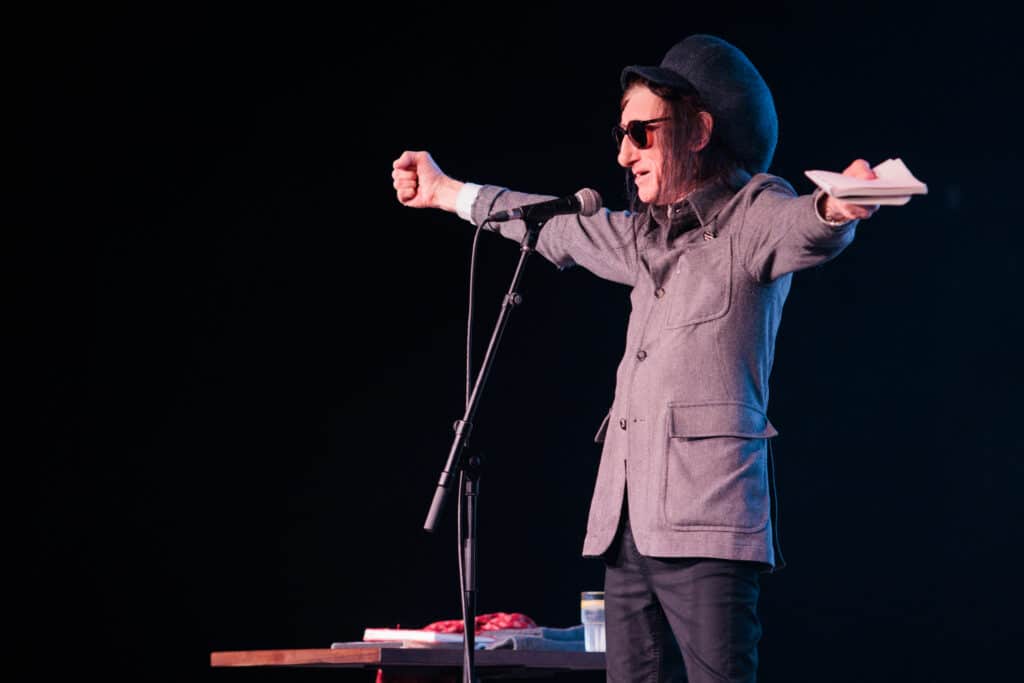
Dr. John Cooper Clarke’s blunt assessment of modern life drops with the effortless weight of a man who has watched the world burn, reinvent itself, and burn again—all from beneath the protective brim of an impeccably tilted fringe and a razor-sharp suit. Speaking over the phone from his home in Essex, the legendary "Poet Laureate of Punk" is unfazed by the sweltering heatwave gripping the nation. One suspects that, come rain, shine, or nuclear winter, Clarke remains permanently encased in his signature sartorial armor.
Modern life’s countless absurdities and systemic failings have long served as his primary creative engine. They pulse through his upcoming book of verse, Have It, hitting shelves on October 1, and they will soon be unspooled from the "hermetically sealed incubator" of his mind onto stages across the United Kingdom.
For decades, the moniker "Bard of Salford" has anchored Clarke within the cultural lexicon, establishing him as a vital voice who treats poetry not as an academic exercise, but as the people’s vernacular. As he prepares for his sweeping autumn UK tour—kicking off at the Palace Theatre in Southend-on-Sea on October 7 and wrapping up at The Queen’s Hall in Edinburgh on November 27—we sat down with the legendary wordsmith to chronicle a career forged in the crucible of live performance. From his early Beatnik roots to dodging flying bottles during the punk explosion, a disastrous four-minute catastrophe in Glasgow, and a global resurgence powered by the Arctic Monkeys, Clarke remains an inimitable fixture of British counterculture.
Detailed Chronology: A Life in Gigs
To understand John Cooper Clarke is to trace the evolution of the modern entertainment landscape through the eyes of an uncompromising satirist. His journey from wide-eyed child in Manchester to international literary icon spans more than half a century of stagecraft.
The Spark: 1958, Manchester
Clarke’s romance with the microphone began early. At just nine years old, sitting in the audience at The Palace in Manchester, he witnessed a masterclass in solo performance that would alter the trajectory of his life: Bob Hope.
"There was only one guy in that building that wasn’t in hysterical laughter. That was Bob Hope. What a position to be in," Clarke recalls.
Though Hope’s jokes about divorce and the American adult world were far beyond a child’s comprehension, Clarke was a willing recipient of mid-century American cultural hegemony. Seeing the legendary comedian live—beyond the slapstick of his cinematic Road movies—cemented Clarke’s desire to become a performer. It taught him the invaluable lesson of utilizing comedy as a Trojan horse to command an audience’s attention.
The Beatnik Beginnings and Parental Skepticism
The path of an avant-garde poet is rarely paved with financial security, a reality vividly illustrated by Clarke’s early family life. His first public recitals were unpaid affairs, performed at benefits for local Beatniks. When he attempted to justify his vocational ambitions to his father by invoking luminaries like Philip Larkin, the paternal reality check was swift and brutal.
"He must’ve looked it up and made a few enquiries because he came back a day later saying, ‘That Philip Larkin is a librarian. Making a living out of poetry? Forget about it kid!’" Clarke laughs.
Undeterred, Clarke spent a lifetime proving his father wrong, cutting his teeth in smoky rooms like Manchester’s Castle Hotel, performing for free and learning the unforgiving nature of public reception.
The Punk Explosion and the Phlegm Years
When the punk rock wave crested in the mid-1970s, Clarke found himself uniquely positioned. Thanks to Howard Devoto and Pete Shelley—architects of the Sex Pistols’ historic debut at the Lesser Free Trade Hall—Clarke was invited into the burgeoning punk club circuit.
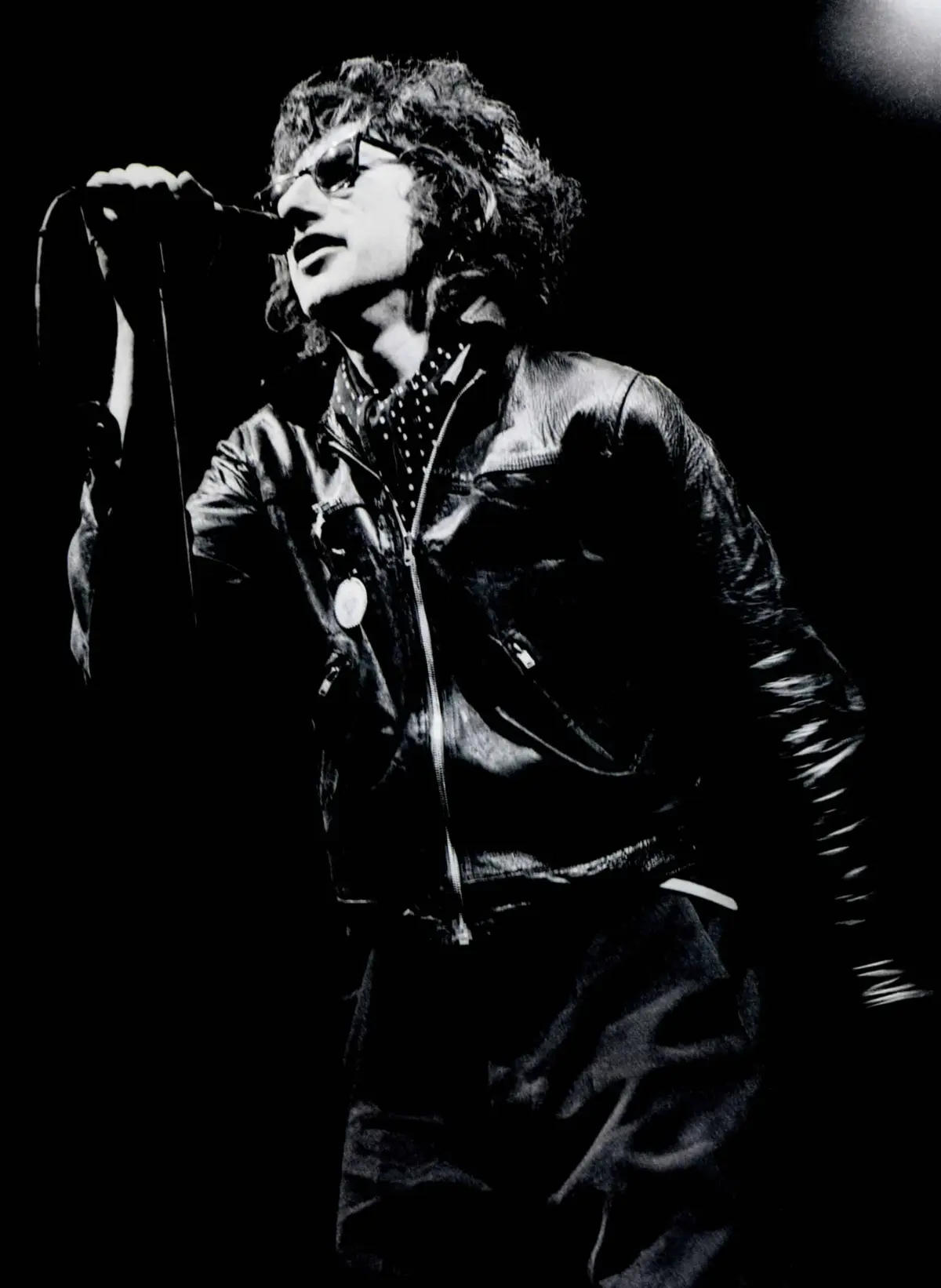
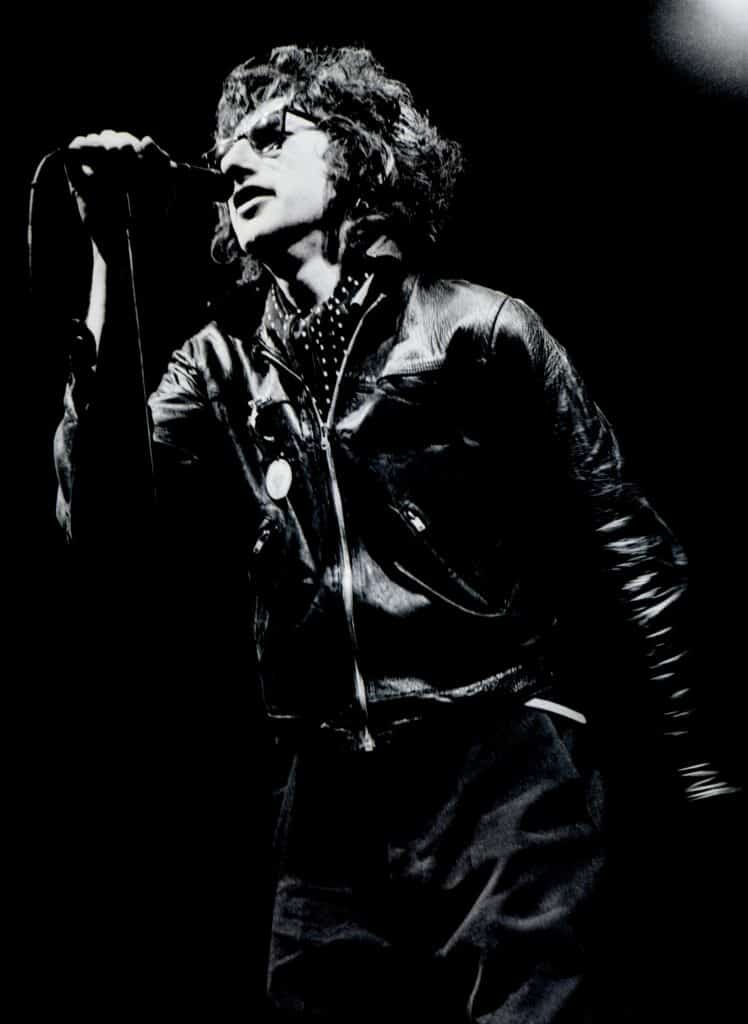
With his monochromatic suits and sharp silhouette, he fit Johnny Rotten’s lazy sartorial manifesto: no long hair, no flares. However, integration into the punk scene came with distinct occupational hazards.
"There was a lot of agg’ with everybody… especially the gobbing situation. That was the worst," Clarke recalls, reflecting on the era’s bizarre music-journalistic trope that treated audience expectoration as the ultimate mark of artistic success. "I was wearing sodding suits—which I hadn’t even finished paying for—and they were getting covered in phlegm. My dry-cleaning bills were prohibitive."
The solution? A temporary pivot to a leather jacket, which allowed him to wipe away the bodily fluids of adoring (and volatile) fans with a liberal application of Dettol.
The Glasgow Apollo: From Catastrophe to Triumph
No retrospective of Clarke’s career is complete without confronting the infamous gig at the Glasgow Apollo. Playing as a special guest alongside the prog-glam outfit Be-Bop Deluxe, Clarke walked out onto the stage of one of the UK’s largest and most intimidating rock venues.
The road crew had warned him relentlessly, betting on his swift demise at the hands of a crowd primed for high-octane rock, not rapid-fire verse.
"I gave it four minutes. When the hatred subsided, I left," he says. "I was seen as the enemy of everything that audience held precious. I remember a barrage of incomprehensible insults in my direction. But no spit! Sticks ’n’ stones etc. At least I wasn’t injured permanently. I did four minutes, called it a draw, then fucked off."
Refusing to let the defeat stand, Clarke returned to the Glasgow Apollo within a year—this time on a punk/new wave bill curated by Elvis Costello, featuring Richard Hell and the Voidoids.
"I went back, and victory was mine. It went from the worst gig, to within a year, being the best, in terms of personal triumph. Now Glasgow is my favourite place in the UK."
International Horizons and the Arctic Monkeys Renaissance
As the decades progressed, Clarke’s audience expanded across unexpected geographies. From daylight festival appearances in Estonia—where audiences sat in stunned, appreciative silence—to massive arena shows at Manchester’s Co-op Live, his reach has only broadened.
Yet, a monumental chapter of his modern resurgence arrived via Sheffield indie titans the Arctic Monkeys, who famously adapted his poem "I Wanna Be Yours" into a global anthem. This collaboration culminated in unforgettable guest appearances alongside the band, including a massive show at Queens’ Forest Hills Stadium in New York.
"You can’t guarantee that everyone who loves the Arctic Monkeys has even heard of me outside of this country… I didn’t expect anybody to know who I was. I just MC’d for them, but they insisted I did the number… To hear that in the States, from so many people, it was validation beyond belief."
Supporting Context & Metrics
To contextualize Dr. John Cooper Clarke’s enduring cultural footprint, consider the foundational pillars of his trade as outlined by the poet himself:
The Prerequisites of Professional Poetry: According to Clarke, a successful career requires precisely two components: the English language and idleness.
Tour Scale: The upcoming 2026 autumn tour bridges historic regional venues—such as Southend-on-Sea’s Palace Theatre—with major cultural hubs like Edinburgh’s Queen’s Hall.
Cultural Legacy: From inspiring generations of punk musicians to shaping modern indie-rock through his lyrical DNA in the Arctic Monkeys’ catalog, Clarke bridges the gap between high literary art and raw street performance.
Official Statements & Industry Impact
Throughout his career, cultural commentators and peers alike have struggled to categorize a talent as singular as Clarke’s. Yet, his primary philosophy remains disarmingly simple: poetry belongs to everyone.
"I think the argument that people don’t like poetry is an urban myth," Clarke asserts. "It’s available to all. People might not paint a picture or play the guitar, but everybody gives it a go with poetry. On loved one’s birthdays or weddings, you know. Roses are red, violets are blue. I’ve always worked on the assumption that people only say they don’t like poetry. But not all poetry is as good as mine!"
Industry analysts note that Clarke’s ability to pivot seamlessly from underground punk dens to stadium stages with modern rock royalty underscores a rare cross-generational appeal. He is simultaneously a historical artifact of Britain’s 1970s counterculture and a fiercely relevant, contemporary voice.
Future Outlook
As Dr. John Cooper Clarke looks toward the publication of his new book, Have It, on October 1, and the subsequent launch of his extensive UK tour, the cultural climate appears custom-built for his brand of apocalyptic wit.
The modern world—fraught with political friction, technological hyper-speed, and relentless socio-economic anxiety—provides no shortage of material for the Bard of Salford. Whether he is stepping out onto the boards at the Palace Theatre in Southend or commanding the room at Edinburgh’s Queen’s Hall, Clarke continues to prove that the human voice, armed with nothing more than razor-sharp timing and a meticulously ironed lapel, remains the most potent weapon in the cultural arsenal.
Fans old and new are advised to secure their tickets promptly. After all, as Clarke has spent the better part of a lifetime demonstrating, missing a front-row seat to history is a luxury poetry fans simply cannot afford.
Dr. John Cooper Clarke UK Tour Dates (Autumn 2026)
Starts: Wednesday, October 7 – Palace Theatre, Southend-On-Sea
Finishes: Friday, November 27 – The Queen’s Hall, Edinburgh
Tickets and tour information are available now via Ticketmaster.