Executive Overview
For over three decades, Jephter McClymont—internationally revered as Luciano—has stood as an unyielding foundational pillar of conscious roots reggae. Affectionately dubbed "The Messenger," his soaring vocal range, unshakeable spiritual conviction, and uplifting lyricism have provided a steady, illuminated beacon of hope across shifting, volatile musical landscapes. From seminal, legacy-defining masterpieces like Where There Is Life and The Messenger to his notoriously physical, acrobatic, and soul-stirring live performances, Luciano’s devotion to his craft remains anchored in something far deeper than temporary industry hype, commercial trends, or algorithm-driven charts.
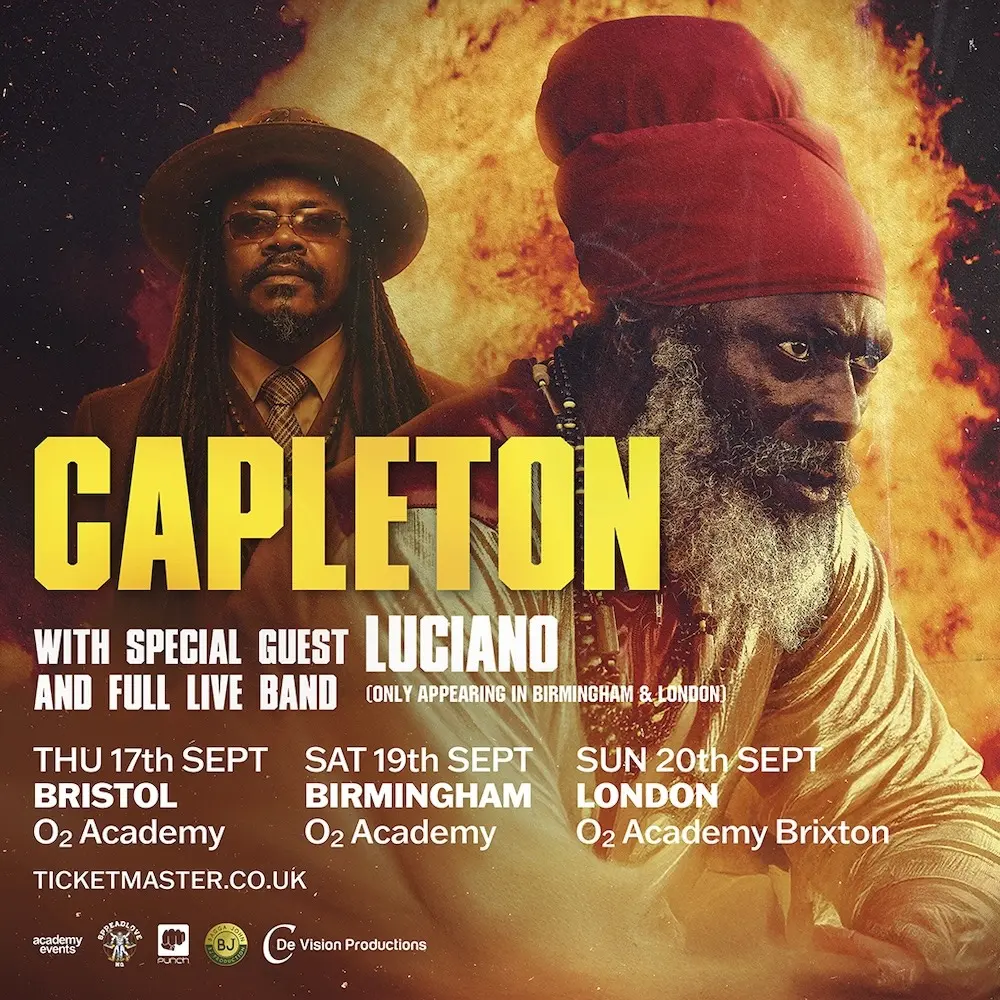
As he prepares to touch down in the United Kingdom alongside fellow dancehall and roots titan Capleton for a series of historic co-headline dates, the elder statesman pauses to break down the personal rituals keeping him grounded on the relentless road of a global touring artist. In an exclusive deep-dive conversation, he reflects on how his parents unwittingly shaped his musical destiny from humble beginnings in Jamaica, the profound spiritual synergy of combining "the Fireman and the Prayerman" on the same stage, and why the enduring global reach of Rastafari culture proves that authentic roots music is still very much alive, well, and kicking against the pricks of a modern, digitized world.
Detailed Chronology: The Evolution of a Messenger
To understand Luciano’s unique positioning in contemporary global music, one must trace the trajectory of a career built on spiritual endurance and artistic integrity.
The Early Roots and Familial Foundations
Born in Manchester, Jamaica, Jephter McClymont’s introduction to music was not a calculated corporate strategy, but an organic inheritance woven into the fabric of his household. His father was a skilled carpenter who crafted his very first guitar by hand, while his mother possessed a powerful, resonant voice that echoed through the family home. Though neither parent achieved commercial stardom or ascended to the main stages of international acclaim, they laid the metaphysical and physical groundwork for their son’s destiny.
McClymont practiced incessantly on the handmade instrument gifted by his father. Looking back, he recognizes that his father was quite literally carving out his future trajectory without even realizing it. This synthesis of his parents’ unfulfilled artistic aspirations became the driving force behind his lifelong journey. By fusing his mother’s vocal passion with his father’s tactile, foundational craftsmanship, Luciano built an artistic identity capable of weathering decades of industry evolution.
The Breakthrough: Defining the 1990s Roots Revival
By the mid-1990s, the Jamaican music scene was undergoing a profound sonic shift toward the fast-paced, digital rhythms of the ragga and dancehall eras. Amidst this high-energy transformation, Luciano emerged as a leading voice of the "conscious roots revival," injecting spiritual depth, acoustic instrumentation, and Rastafarian philosophy back into the mainstream consciousness.
The release of landmark albums such as Where There Is Life (1995) and The Messenger (1997) cemented his status globally. These records were not merely collections of songs; they served as sonic ministries. Tracks like "It’s Me Again Jah" and "Messenger" resonated deeply with audiences searching for spiritual solace in a rapidly accelerating world. Luciano viewed these albums as definitive statements regarding the purpose of his existence. As he explains:
"‘Where There Is Life’ and ‘The Messenger’ are two landmark albums that speak very clearly about the purpose of my existence. Anywhere there is life, there is the Almighty and there is consciousness. So, if there is someone out there who can receive some form of message through the music we create, then we’re going to send that message."
Navigating Decades of Industry Shifts
As the music industry transitioned from physical compact discs to digital streaming platforms, many legacy artists struggled to maintain relevance without compromising their core sound. Luciano, however, remained fiercely protective of his spiritual core. Refusing to chase fleeting commercial trends, he prioritized a lifestyle of simplicity, mindfulness, and direct connection with his audience. This unwavering commitment allowed him to transition from a 90s roots prodigy into a revered global elder statesman of reggae music.
Supporting Context & Metrics: The Philosophy of Grounding
In an era where touring artists frequently face burnout, mental fatigue, and the pressures of constant digital connectivity, Luciano’s survival strategy relies on strict spiritual hygiene and a return to the natural world.
![LUCIANO INTERVIEW: THE MESSENGER ON FAITH, CARPENTRY & ROOTS REGGAE [2026 EXCLUSIVE INTERVIEW] - Viper Mag](https://www.vipermag.com/wp-content/uploads/2026/09/Luciano-Press-Pic-2.jpg)
Maintaining the Core Through Simplicity
When asked how he protects his spiritual core amidst the chaotic whirlwind of the international music industry, Luciano emphasizes the importance of a "normal life." His formula for longevity is remarkably unpretentious:
- Connection to Nature: Morning rituals involving fresh air, watching the sunrise, and feeling the sun against his skin to stay anchored in the present moment.
- Mindful Consumption: Enjoying good music, wholesome food, and cultivating a peaceful daily existence.
- Pre-Show Centering: Utilizing deep-breathing exercises and meditation backstage to regulate his energy before stepping in front of thousands of fans.
This deliberate pacing ensures that when he steps onto the stage—often delivering performances characterized by acrobatic leaps, unbridled passion, and soaring vocal deliveries—his energy is focused, pure, and channelled entirely toward the audience.
Official Statements & Insights
The synergy between Luciano and his contemporaries remains one of the most compelling aspects of his current touring cycle. His upcoming co-headline dates with Capleton—famously pairing "The Prayerman" with "The Fireman"—represent a masterclass in Jamaican musical unity. While Capleton brings a fiery, explosive dancehall intensity, Luciano provides the soothing, meditative balm of roots reggae. Together, they offer audiences a complete spectrum of spiritual and cultural expression.
Reflecting on his creative process, Luciano notes that inspiration often strikes in the most organic ways:
"When it comes to creating music, sometimes I’ll record ideas and lyrics on my phone, or sit with my guitar and work out melodies. Then it just grows from there. That’s how the music comes to life."
This balance of spontaneous mobile voice notes and traditional acoustic instrumentation highlights an artist who embraces modern utility without ever losing his analog soul. He never loses focus on who he is or where he came from, viewing every lyric as a sacred trust handed down from a higher source.
Future Outlook: The Ongoing Mission of "The Messenger"
As Luciano prepares to embark on his highly anticipated UK co-headline tour with Capleton—kicking off in London on September 20th—the cultural relevance of roots reggae is undergoing a quiet yet powerful renaissance. Younger generations of listeners, exhausted by superficial pop paradigms and the relentless noise of social media algorithms, are increasingly seeking out music with substance, history, and spiritual depth.
Luciano’s enduring career serves as a blueprint for this demographic. By demonstrating that an artist can remain steadfastly true to their roots while engaging global audiences across generations, he proves that conscious music is not a relic of the past, but a necessary compass for the future.
Whether he is meditating backstage before a sold-out arena show, watching the sunrise in rural Jamaica, or strumming a guitar built in the spirit of his father’s craftsmanship, Jephter McClymont remains fully dedicated to his calling. As "The Messenger," his work is never truly finished—because as long as there is life, there will always be a message to send.