Executive Overview
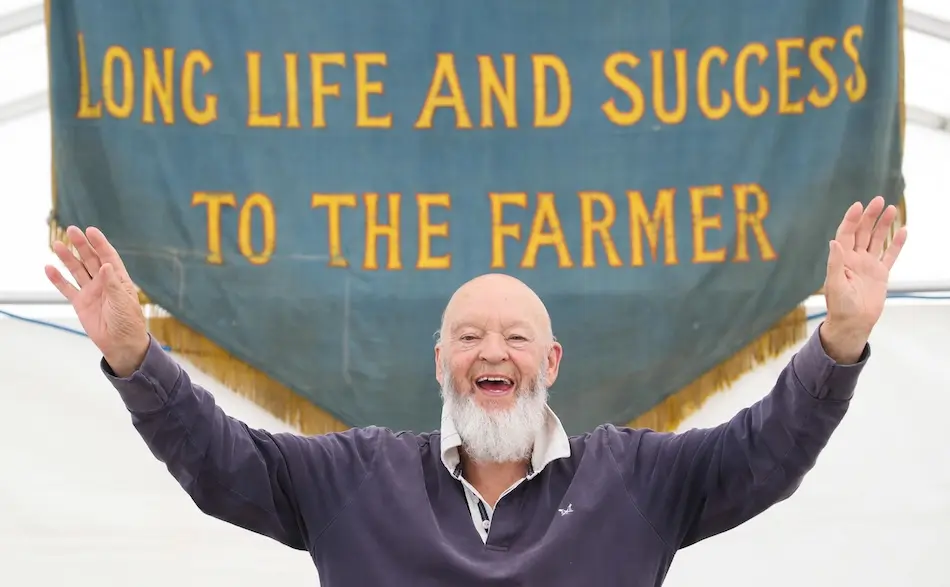
To celebrate the milestone 90th birthday of Sir Michael Eavis, a dedicated retrospective of his life, career, and cultural footprint reveals a remarkable journey spanning more than half a century. From his humble roots as a Somerset dairy farmer to the visionary founder of the world’s most prestigious performing arts event, Eavis has redefined the global festival landscape. Speaking candidly from his home in Pilton, Somerset, the legendary organiser reflects on the decades of turbulent local battles, artistic triumphs, enduring political ethos, and community-driven philanthropy that have cemented his legacy.
This comprehensive review examines Eavis’s extraordinary trajectory: the transition of Worthy Farm from a traditional agricultural enterprise into a cultural powerhouse; the expansion of local social housing developments officially inaugurated by football icon Gary Lineker; and the ongoing ideological mission that continues to anchor the Glastonbury Festival in social activism and Methodist values. As the festival navigates a scheduled fallow year in 2026, Eavis remains as vibrant, engaged, and forward-looking as ever, proving that a life built on conviction, grit, and community can fundamentally alter the cultural fabric of modern Britain.
Detailed Chronology: From Pilton Farm to Global Cultural Phenomenon
The Formative Years and the Spark of 1970
Long before Worthy Farm became synonymous with mud, music, and counter-cultural history, Michael Eavis was shaped by the rhythms of rural Somerset life. Born into a farming family, Eavis absorbed the values of hard work, land stewardship, and a quiet, steadfast Methodism that would subtly guide his moral compass throughout his life.
The pivotal moment arrived in September 1970. Inspired by an open-air concert he witnessed at the nearby Bath Festival of Blues and Progressive Music—headlined by Led Zeppelin—Eavis decided to take a bold gamble. For an admission fee of just £1, which included free milk from the farm, roughly 1,500 people gathered to watch Marc Bolan’s Tyrannosaurus Rex headline what was then called the Pilton Pop, Folk & Blues Festival. It was a modest gathering, but it planted the seed for an enterprise that would eventually rival the scale of ancient cities.
The Decades of Turmoil and Legal Warfare
To look back at the history of Glastonbury Festival is to trace an uphill battle against institutional resistance. During its formative decades, Eavis was locked in an almost perpetual state of conflict with local authorities, parish councils, magistrates, and the police.
In the interview reflecting on his 90th year, Eavis openly acknowledges the immense friction of those early years. "In those days, I was always at war with the council and the village and the local magistrates and the police," he recalls. The opposition was fierce, driven by fears of public disorder, traffic gridlock, and the erosion of rural tranquility. Famously, a local chairman of the magistrates once delivered an ultimatum that encapsulates the high-stakes gamble of the era: "If you do this again, you’ve had it."
Yet, rather than capitulating, Eavis channelled that friction into fuel. He maintains that the intense struggle was essential to forging the festival’s defiant identity. The institutional battles forced the organisation to professionalise, engage with local communities, and ultimately prove that mass counter-cultural gatherings could coexist with rural stewardship. Today, the notion that the festival could easily sell a million tickets if capacity allowed stands in stark contrast to the days when every single licence was a hard-fought legal victory.
Artistic Evolution and Defining Moments
Over the past five decades, Worthy Farm has hosted virtually every major musical act of the modern era. When asked about his favourite iterations of the festival, Eavis maintains a pragmatic, live-in-the-moment perspective: he consistently views the most recent festival as the best one yet.
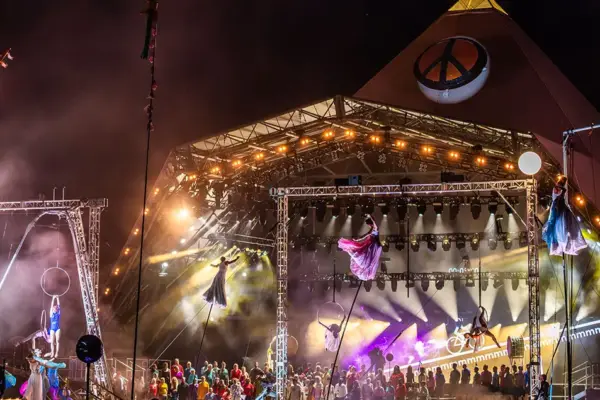
Looking back at the triumphs of recent years, he highlights iconic performances such as Neil Young’s Saturday night headline set. Eavis notes how deeply artists fall in love with the unique ecosystem of Worthy Farm, where the energy of the crowd and the sprawling, theatrical set design create an immersive atmosphere unlike any other festival in the world.
Even during scheduled fallow years—designed to allow the farmland to recover and the local community to rest—Eavis’s creative engine never stops turning. Recent weeks have seen him collaborating with visionary artists and designers like Joe Rush and the creative minds behind Arcadia, proving that his appetite for boundary-pushing art remains as sharp at 90 as it was at 35.
Supporting Context & Metrics: The Dual Empire of Music and Agriculture
While Glastonbury Festival dominates global headlines for several days each summer, Worthy Farm operates 365 days a year as a high-functioning agricultural enterprise. The dual identity of Michael Eavis as both a counter-cultural icon and a traditional dairy farmer is central to understanding his enduring appeal.
The Dairy Industry and Worthy Farm Cheddar
Eavis’s operational dairy herd at Worthy Farm produces milk that is processed into premium cheddar through a long-standing partnership with Wyke Farms. Distributed widely across major retail chains, including the Co-op, Worthy Farm Cheddar has transitioned from a local agricultural product into a national brand.
In a charming anecdote highlighting the unexpected reach of his enterprises, Eavis recalls taking a train trip to Scotland. Upon arriving in Glasgow, he spotted a Co-op store directly across the street and decided to investigate. To his immense delight, shelves were stocked with Worthy Farm Cheddar. For a dairy farmer whose life has been tied to the soil of Somerset, seeing his farm’s produce sold hundreds of miles away encapsulates the surreal, far-reaching impact of his life’s work.
Social Housing and Local Philanthropy
Beyond music and milk, Eavis’s most profound legacy is rooted in radical social responsibility. Recognising the growing crisis of rural housing affordability—where local families and young workers are routinely priced out of rural villages by holiday homes and rising property values—Eavis spearheaded the construction of 52 social houses in Pilton.
These homes were built specifically to ensure that local people could afford to remain in the community where they grew up. The project received national acclaim when football legend and broadcaster Gary Lineker visited Pilton to officially open the development. Lineker’s high-profile coverage brought national attention to the initiative, framing it as a blueprint for rural community preservation.
Reflecting on the housing project, Eavis connects it deeply to his family roots:
"I think my mother would be proud of me for the houses too. They look lovely on a sunny day. I drive that way out of the village, you know, and I see the sun shining out on them and think, ‘How did all this happen?’"
In addition to housing, Glastonbury Festival has distributed tens of millions of pounds to charitable causes over the decades, supporting environmental organisations, international aid agencies, and local community projects. This philanthropic engine is deeply intertwined with Eavis’s lifelong Methodist faith, which emphasises stewardship, community care, and social justice.
Official Statements and Reflections
As part of the exclusive milestone interview conducted at his Pilton home, Sir Michael Eavis shared candid reflections on his life, his philosophy, and his impending birthday celebrations:
-
On reaching 90 and looking back:
"I feel very well actually. It all feels like the culmination of more than 50 years of work… It’s all been a long story of excitement. That’s probably what’s keeping me going!"
-
On the enduring political soul of the festival:
"There will always be a political angle there. And I think people expect that." When asked if his Methodism serves as the foundational key to this moral framework, he readily confirms: "I’m sure it is."
-
On his birthday celebration plans:
"I’m having a party in the village, with family and local people. The plan is to sing three songs with my band." When nudged as to whether Frank Sinatra’s My Way will be on the setlist, he smiles and replies, "That’s a good guess!"—confirming that if anyone has lived and worked strictly on their own terms, it is Sir Michael Eavis.
Future Outlook: Sustaining the Legacy
As Sir Michael Eavis celebrates his 90th birthday, questions naturally arise regarding the long-term future of Worthy Farm and the Glastonbury Festival. The operational reins have increasingly been passed down to his daughter, Emily Eavis, alongside a dedicated team of organisers, environmental scientists, and agricultural experts who ensure the festival modernises while staying true to its founding ethos.
Navigating the Fallow Year and Beyond
The upcoming fallow year provides a crucial operational pause. For the land, it is an essential period of ecological recovery, allowing the pastures to heal after hosting over 200,000 attendees. For the festival organisers, it is a time for strategic planning, infrastructure upgrades, and environmental innovation.
Key focus areas for the festival’s future include:
- Environmental Sustainability: Advancing towards comprehensive carbon neutrality, expanding the ban on single-use plastics, and enhancing renewable energy usage across the site.
- Community Integration: Ensuring that local infrastructure in Pilton and surrounding Somerset villages continues to benefit directly from festival revenues, particularly through affordable housing and local grants.
- Cultural Relevance: Maintaining a delicate balance between booking legendary legacy acts that appeal to older generations and championing cutting-edge, diverse contemporary artists who speak to the festival’s younger demographic.
An Indelible Footprint
Sir Michael Eavis’s journey from a young dairy farmer fighting local magistrates to a globally revered cultural icon demonstrates the power of unyielding vision. As he takes the stage at his village birthday party to sing with his band, he does so not just as a nonagenarian celebrating a personal milestone, but as an architect of modern British culture.
The legacy of Worthy Farm—straddling sustainable agriculture, radical community housing, fierce political activism, and the greatest arts festival on the planet—will endure long into the future. Through every pint of milk, every social home standing bright in the Somerset sun, and every chord struck across the Pilton fields, Michael Eavis has indeed done it his way.