Executive Overview
Everyone has a take on The Beatles. They loom so large over the architecture of modern Western culture that having an opinion on their output feels less like a choice and more like a mandatory civic duty, usually acquired somewhere around the age of twelve. The cultural footprints left by John Lennon, Paul McCartney, George Harrison, and Ringo Starr are so deeply embedded in the bedrock of popular music that it is easy to forget just how radical, volatile, and experimental their trajectory truly was.
From their sweat-soaked genesis pounding out cover versions in the sticky cellars of Hamburg and the cooperative frenzy of the Cavern Club, to the pristine, studio-bound alchemy of EMI’s Abbey Road, The Beatles rewrote the absolute possibilities of what pop music could achieve. Their legacy remains as vivid, fiercely debated, and commercially vital today as it was when the band dissolved in 1970.
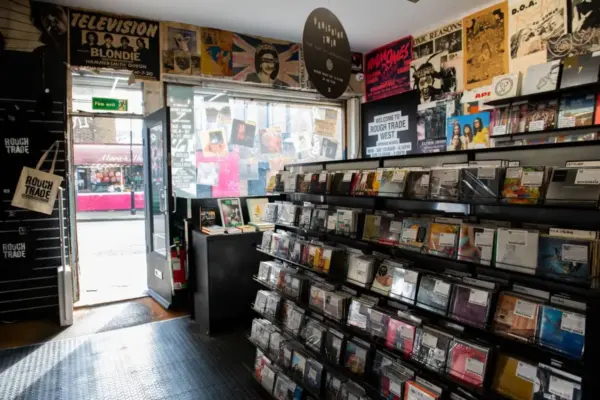
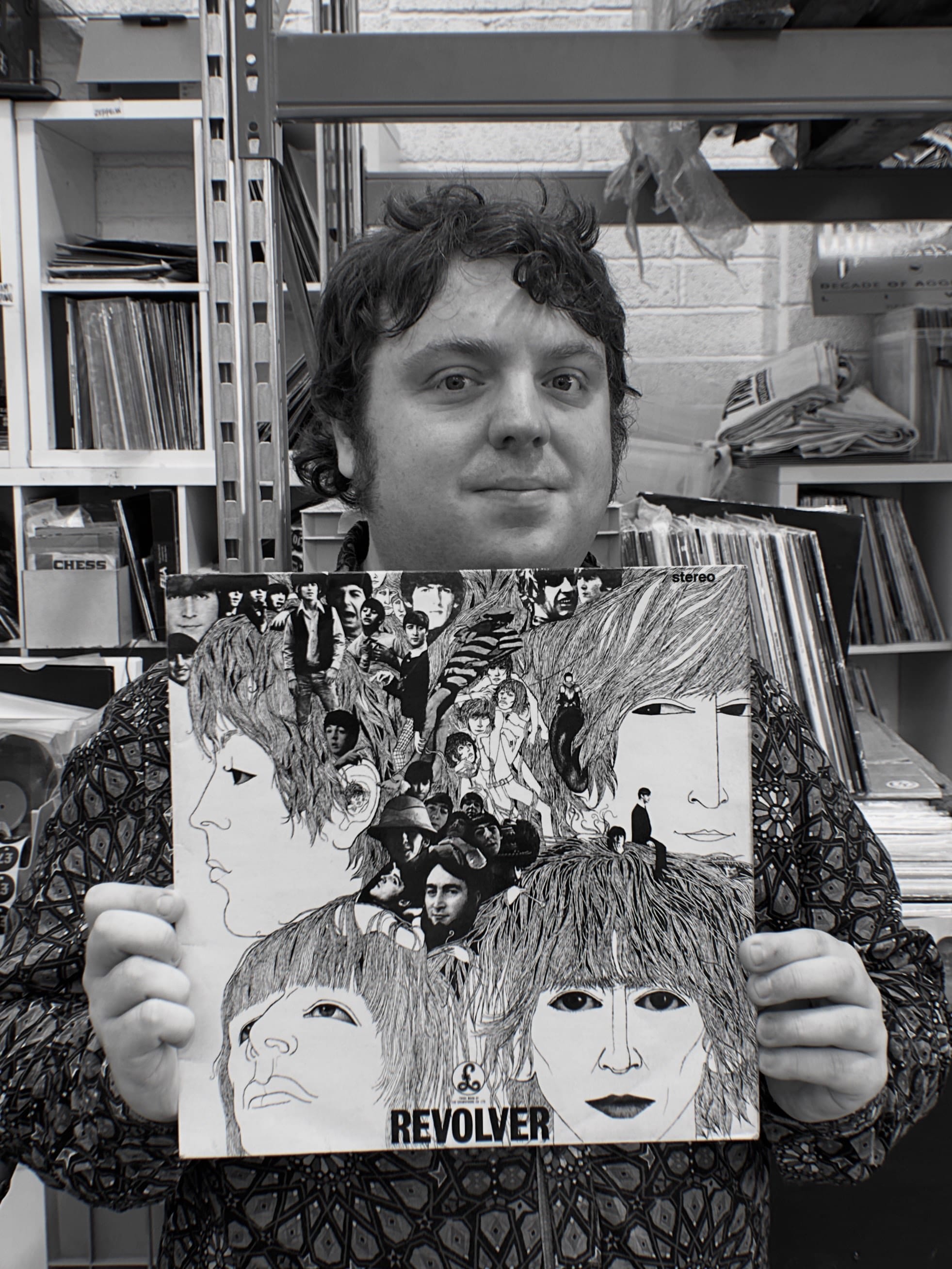
To mark the diamond anniversary of their definitive masterwork, Revolver, Rough Trade’s resident Beatlemaniac and Used Vinyl Assistant, Huw Thomas, stepped up to the ultimate critical chopping block: ranking the top ten studio albums of the most important band in recorded history.
What follows is an authoritative, definitive traversal of that catalogue. It is a journey that moves away from the safe consensus of traditional music journalism and dives headfirst into the Merseybeat pop, the Dylan-soaked folk transitions, the kaleidoscopic psychedelic frontiers, and the fractured, brilliant twilight of the greatest songwriting partnership the world has ever known.
Detailed Chronology: The Top Ten Studio Albums Ranked
Ranking The Beatles is much like arranging master-crafted measuring instruments by length; the baseline standard of quality is so intimidatingly high that even the bottom tier represents a masterclass in songwriting. Here is how their core studio albums stack up, from the respectable foundations to the untouchable peaks.
10. With the Beatles (1963)
The Beatles’ second studio album is an absolute triumph of early-sixties energy. It captures a band that had already conquered Great Britain operating at a blistering, breathless pace. Showcasing a masterclass in balancing fiery R&B covers with burgeoning originals, With the Beatles features the Smokey Robinson-inspired All I’ve Got to Do and the sheer, unbridled vocal attack of Money (That’s What I Want)—arguably John Lennon’s greatest vocal performance ever recorded.
Furthermore, the band had never communicated quite so directly with their rapidly growing fan base: they ring you up on All I’ve Got to Do, send you letters via All My Loving and Please Mr. Postman, and tell the hangers-on to buzz off on Don’t Bother Me. So why put it tenth? Simply because something has to anchor the list. It suffers from a slight structural sag in the middle, burdened by original compositions like Little Child and I Wanna Be Your Man that rank among Lennon and McCartney’s least inspired moments.
- Key Track: Not a Second Time
9. Let It Be (1970)
How’s this for light criticism? Let It Be commits the cardinal artistic sin of failing to entirely transcend reality. Serving as the eventual soundtrack to Michael Lindsay-Hogg’s famously melancholic documentary film, it sounds precisely like what it is: snapshots of a fractured, legendary band drifting through an uncharacteristically aimless month at Twickenham and Apple Studios.
There are undeniably wonderful songs scattered throughout—Across the Universe, Two of Us, and I Me Mine—and the entire affair, much like the fascinating sessions it is drawn from, is dynamically energized by the insertion of keyboard virtuoso Billy Preston. Yet, it remains the Beatles LP that falls shortest of their own impossibly high standards. With only one "new" Lennon-led song present in its original tracklist (the superior Don’t Let Me Down having been relegated to a non-album single before being restored in later re-imaginings), the material desperately needed one final structural pass. Richard Hewson’s controversial 1970 orchestral overdubs go some way toward making it sound like a convincing commercial record, even if it occasionally struggles to sound like a cohesive Beatles record.
- Key Track: Two of Us
8. Help! (1965)
Much like the cinematic caper it accompanied, Help! finds The Beatles at their most heightened, cinematic, and cartoonish. Their previous release, Beatles for Sale, had paired an unusually predictable set of cover versions with glum, acoustic folk originals. Help! boldly cuts the cord, featuring a generous two-song contribution from George Harrison, lashings of Hammond organ, the early introduction of guitar pedals, and—in the form of Yesterday—a solo Paul McCartney performance backed entirely by a string quartet.
While some of the raw Merseybeat vitality was inevitably shed in the process, it is impossible to argue with a song suite that includes I Need You, You’ve Got to Hide Your Love Away, I’ve Just Seen a Face, and the unfairly maligned It’s Only Love. The only true misstep is a frantic, contractual-obligation-style cover of Larry Williams’ Dizzy Miss Lizzy, which feels wildly out of place crashing against the album’s acoustic maturity.
- Key Track: I’ve Just Seen a Face
7. Please Please Me (1963)
“Sexual intercourse began in nineteen sixty-three… between the end of the Chatterley ban and The Beatles’ first LP.” Philip Larkin’s famous poetic verse might have been tongue-in-cheek, but the grumpy British poet was onto something profound. It is easy to grow tired of revisionist historians claiming The Beatles invented music from whole cloth—there are plenty of fantastic British pop records predating 1963. But drop the needle on Please Please Me after digesting your Adam Faith and Cliff Richard singles, and you will feel an unmistakable seismic shift.

Recorded for the most part in a single, breathless 585-minute marathon session in EMI Studio 2, Please Please Me is John, Paul, George, and Ringo building their own red-brick Brill Building out of sheer willpower. The compositional color and, most importantly, the ruthless consistency of quality were entirely groundbreaking.
- Key Track: There’s a Place
6. A Hard Day’s Night (1964)
On record and on celluloid, The Beatles were an indomitable force in 1964; they were the musical Daleks of pop culture—resistance was utterly futile. A Hard Day’s Night is their most impressive sonic onslaught from the height of Beatlemania, proudly boasting a tracklist composed 100% of Lennon-McCartney originals.
Every single track is a winner, with subtle dips into Latin textures (And I Love Her) and traditional country music (I’ll Cry Instead) pointing the way toward the group’s genre-bending future. Though A Hard Day’s Night is not their absolute greatest album, it has a strong claim to being their most perfect one. Modern fans frequently undervalue the early records, but such snobbery is entirely unearned here.

- Key Track: And I Love Her
5. Rubber Soul (1965)
Rubber Soul represents the band’s monumental step-up from pop idols to genuine adult artists. Motown rhythmic syncopation (Drive My Car, You Won’t See Me), explicit echoes of Bob Dylan’s literary cynicism (Norwegian Wood), and proto-hippie sociological musings (Think for Yourself, The Word) paint a vibrant canvas across one of their most conceptually focused releases.
The concentration of certified classics is astonishing. Had The Beatles mysteriously decided to disband at the close of 1966, Rubber Soul would be universally remembered as the foundational catalyst for the entire psychedelic revolution on both sides of the Atlantic.
- Key Track: Girl
4. Abbey Road (1969)
There is a telling moment in The Anthology documentary series where legendary producer George Martin recalls telling Paul McCartney he would agree to produce Abbey Road “only if you let me produce it the way we used to.” This final recorded masterwork is shaped profoundly by the colliding ambitions of McCartney and Martin. It serves as their Sgt. Pepper sequel—a brilliant trial run for the slick, high-concept album blockbusters that would come to define the 1970s.

Its glossy arrangements and inspired, side-two song-cycle are nothing short of miraculous. Disparate, half-formed compositions—two instant-classic contributions from George Harrison, an octopus-themed country canter from Ringo Starr, an eight-minute doom-metal precursor from Lennon, and a McCartney ditty about a homicidal student—mesh together flawlessly. Even a tall Scouse tale about the kinky Polythene Pam becomes plausible under the studio lights. Released while Let It Be languished in post-production purgatory, Abbey Road is an audacious, triumphant curtain call.
- Key Track: I Want You (She’s So Heavy)
3. Revolver (1966)
Revolver has long held the crown as the definitive "cool" Beatles album—the indie kid’s choice. Of all their records, it bears the closest sonic resemblance to modern alternative rock, and the subsequent Britpop generation built vast empires in its kaleidoscopic image. (Indeed, Noel Gallagher and The Chemical Brothers have practically built entire careers off the back of Tomorrow Never Knows).
It wasn’t always universally adored, however. Back in the summer of 1966, Revolver took its fair share of criticism from contemporary peers. Ray Davies of The Kinks bemoaned the "newer electronic stuff," while middle-of-the-road vocal group The Overlanders dismissed the record as "absolutely useless." History has rendered such verdicts laughable. This was the first Beatles album to truly shatter the mold of what a pop record could be, balancing avant-garde tape loops with peerless melodic brilliance.

- Key Track: Eleanor Rigby
2. Sgt. Pepper’s Lonely Hearts Club Band (1967)
For decades, Sgt. Pepper was universally crowned The Beatles’ greatest and most culturally seismic achievement. While its star has dimmed slightly among modern contrarians, its peerless status remains intact. A fascinating sociological theory explains its fluctuating reputation: Pepper immediately brought the older generation into the fold. The Edwardian aesthetic, the East-meets-West orchestration, and the Lewis Carroll-inspired wordplay had an irresistible appeal to middle-aged parents who were otherwise "too old to rock and roll."
That mass middle-class adoption is precisely why it became enshrined in high-culture academia, and ironically, why younger generations periodically rebelled against its omnipresence. Strip away the institutional fatigue, and Sgt. Pepper remains a peerless 20th-century artifact—Britain’s post-war arts boom encapsulated in 39 breathless minutes.
- Key Track: Within You Without You
1. The White Album (1968)
Every devoted fan has a favorite, and The White Album sits firmly at the summit. This is the masterwork where John Lennon, Paul McCartney, and George Harrison were all operating at their absolute, unimpeded peaks as songwriters. It represents the full, unbridled spectrum of human capability, holding an aura of mystery that sits within rock history like the monolith from 2001: A Space Odyssey.

The record grows progressively more haunting, surreal, and unhinged as it unspools. What is that strange, manic gibberish muttered in I’m So Tired? Why is the fade-out of Long, Long, Long so profoundly eerie? Ignore the naysayers who argue it should have been edited down into a concise single LP; no truncated version could ever match this level of thrilling, chaotic brilliance. And yes, Revolution 9 is genuinely one of the most daring, brilliant things they ever committed to tape. It is The Beatles (The White Album). Shut up and listen.
- Key Track: Martha My Dear
Supporting Context & Metrics: The Cultural Footprint
To contextualize the commercial and cultural dominance of these ten records, one must look at the unprecedented scale of The Beatles’ metrics. Active for a mere eight years in the recording studio (1962–1970), the band managed to release 12 original UK studio albums, 13 EPs, and 22 singles, completely reshaping the global entertainment economy.
| Metric / Milestone | Statistical Reality |
|---|---|
| Global Record Sales | Estimated excess of 600 million units worldwide, making them the best-selling music act in history. |
| US Billboard Hot 100 | Achieved 20 number-one hits; famously held the entire top five spots simultaneously in April 1964. |
| UK Chart Success | 17 number-one singles and 15 number-one albums on the official UK charts. |
| Studio Output Efficiency | Released Please Please Me, With the Beatles, A Hard Day’s Night, and Beatles for Sale all within a frantic 24-month window (1963–1964). |
This hyper-accelerated creative output forced a rapid evolution in recording technology. Working primarily at EMI Studios (later renamed Abbey Road) alongside visionary producer George Martin, The Beatles transformed the recording studio from a simple documentation tool into an active, malleable musical instrument. They pioneered the use of backwards masking, automatic double-tracking (ADT), varispeed recording, and multi-track tape experimentation, effectively writing the rulebook for modern audio engineering.

Official Statements and Archival Reflections
The internal dynamics and critical reception of these works have been heavily documented through decades of retrospectives, interviews, and archival releases. Reflecting on the exhausting yet brilliant sessions that birthed their final recorded output, producer George Martin frequently noted the sheer resilience required to helm their late-period sessions.
"The group was disintegrating, but when they got into the studio, professionalism took over. The friction disappeared the moment the red light came on, and what came out was pure magic—an alchemy that could not be replicated by any other group of human beings." — George Martin, The Anthology
Meanwhile, the band members themselves were intensely aware of their collective mythos. Derek Taylor, the group’s legendary press officer, famously prophesied the enduring cultural longevity of the quartet in the liner notes of the 1968 White Album promotional materials:

"The radioactive, cigar-smoking children of AD 2000 will derive as much pleasure from The Beatles as people did in the ’60s."
Whether glowing luminescently under the influence of Beatlemania or dissecting the avant-garde tape loops of Revolver, modern listeners continue to prove Taylor’s prediction entirely accurate.
Future Outlook: The Diamond Anniversary of Revolver
As the music industry marks 60 years since the August 1966 release of Revolver, the appetite for immersive, archival engagement with The Beatles’ catalogue shows zero signs of abating. To celebrate the diamond anniversary, Rough Trade has announced a series of major commemorative events across the United Kingdom.

Fans can participate in three exclusive listening parties followed by high-stakes, Beatles-themed trivia quizzes hosted at Rough Trade Nottingham, Rough Trade Bristol (personally hosted by Huw Thomas), and Rough Trade Liverpool this August. With substantial prizes on the line, attendees are encouraged to bring their absolute A-game.
Furthermore, as Apple Corps and Giles Martin continue to roll out state-of-the-art spatial audio and remixed boxset treatments—with Rubber Soul widely anticipated as the next archival release in line—the legacy of the Fab Four continues to expand into new sonic dimensions.
Finally, if Sir Paul McCartney happens to be reading this and respectfully disagrees with any part of this ranking: feel free to drop by the Rough Trade warehouse, Paul—we can work it out.