The debate surrounding the integration of artificial intelligence (AI) in music production has reached a fever pitch, polarizing creators, engineers, and industry veterans alike. While a significant portion of the global music community views generative AI as an existential threat—citing ethical concerns over data scraping, copyright infringement, and the devaluation of human artistry—a counter-movement led by seasoned innovators is beginning to emerge.
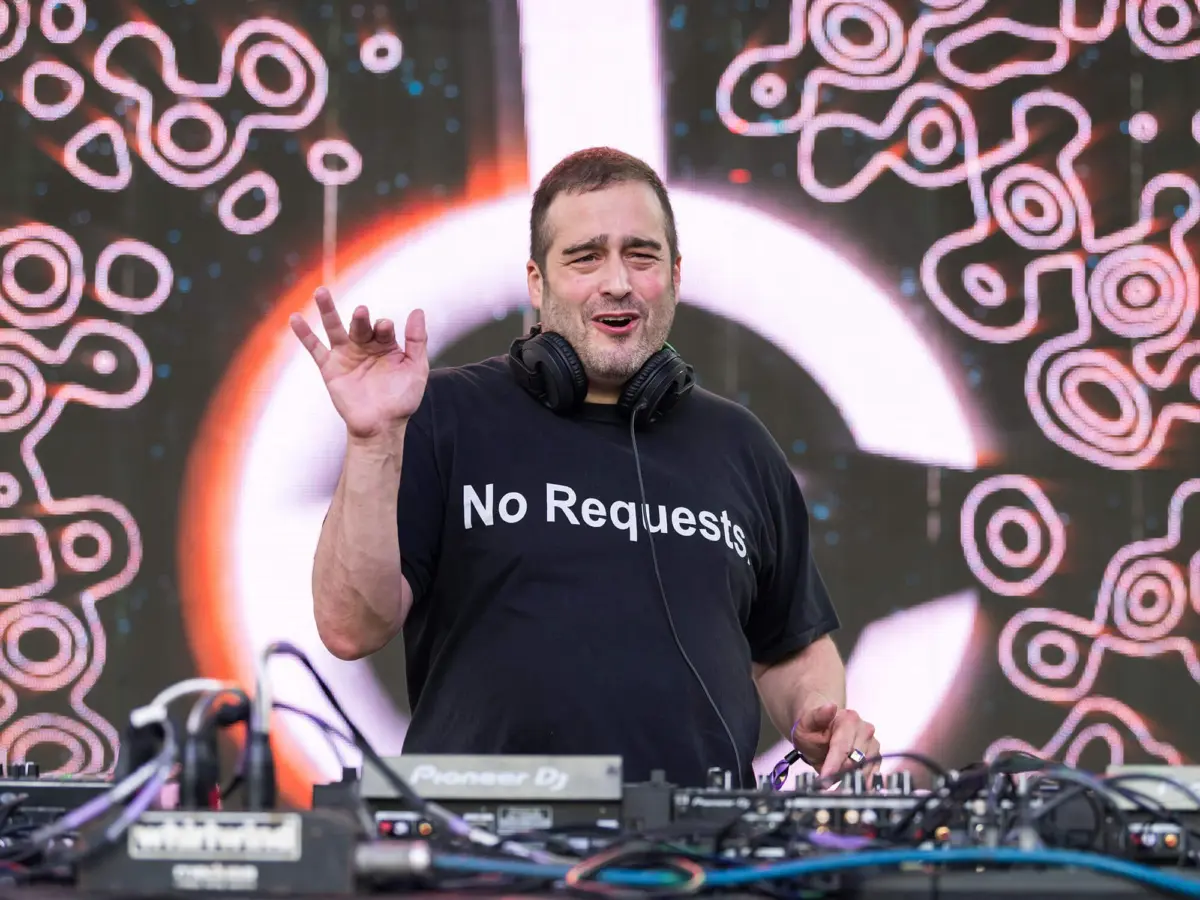
At the forefront of this progressive stance is legendary house producer and sampling pioneer Todd Edwards. In a candid and provocative interview with MusicRadar, Edwards staunchly defended the use of AI tools in the creative process, dismissing the notion that the technology is inherently malicious. Instead, the Grammy-winning producer argued that seasoned professionals view AI as a powerful instrument for sonic exploration, whereas less-experienced creators often perceive it through a lens of fear and defensiveness.
Edwards revealed that he has integrated platforms like Suno Studio into his modern workflow to generate legally safe samples, breathing new life into his creative process after decades of traditional production methods. However, his public endorsement has ignited a fierce backlash across social media, drawing public rebukes from contemporary peers such as Glasgow-based producer Austin Ato. This clash encapsulates a much larger, highly volatile ideological war within the modern music industry: a struggle between the romantic ideals of human-crafted authenticity and the relentless, disruptive march of technological utility.
Detailed Chronology: The Evolution of the AI Sampling Debate
The Rise of Generative Audio Models
Over the past several years, generative artificial intelligence has transitioned from a niche academic experiment into a ubiquitous commercial reality. Platforms designed to synthesize audio, generate loops, and build entire vocal tracks have flooded the market. However, this technological leap has been dogged by controversy. Major platforms, including Suno AI, have faced intense legal scrutiny and public accusations of unauthorized code-scraping, allegedly harvesting copyrighted material from platforms like YouTube, Deezer, and Genius to train their underlying neural networks.
Traditional Production Fatigue
For veterans like Todd Edwards—whose career spans decades of defining garage and house music through intricate, micro-sampled vocal chops—the routine of modern beat-making has occasionally grown stagnant. According to Edwards, the traditional process of tracking down physical records, clearing samples, or relying heavily on subscription-based loop services like Splice became creatively exhausting. Facing what he described as a monotonous loop of conventional sample-hunting, Edwards turned to AI platforms like Suno Studio to bypass legal hurdles and rediscover a sense of boundless musical experimentation.
The MusicRadar Interview and Public Backlash
The controversy hit a boiling point following the publication of Edwards’ interview with MusicRadar. In the feature, Edwards directly addressed his critics, arguing that the industry’s moral outrage over AI is hypocritical. Shortly after the article went live, Edwards shared the piece on his official Instagram account, prompting an immediate wave of commentary from fellow producers, fans, and industry insiders. The comment section swiftly transformed into a battleground, highlighting the deep ideological fracture dividing the electronic music community.
Supporting Context & Metrics: The Hypocrisy of the Sampling Ecosystem
To fully understand Todd Edwards’ perspective, one must examine the broader historical context of sampling within electronic music, hip-hop, and house production. Sampling has always existed in a legal and ethical gray area.
The Underbelly of Uncleared Samples
Edwards’ most incendiary argument targets the widespread, unspoken practice of underground and mainstream producers releasing tracks featuring uncleared samples. Pointing directly to platforms like Beatport, Edwards challenged the moral high ground often claimed by anti-AI critics:
"They say, ‘You’re taking money out of artists’ mouths’, but I’m sorry, I don’t remember every single artist on Beatport clearing samples! Is everyone clearing samples? Because if you’re not, it’s the same thing, just on a smaller scale."
This sentiment exposes a long-standing open secret within dance music culture. While major-label releases undergo rigorous clearance procedures, the global underground thrives on unauthorized re-contextualization. Edwards contends that training an AI model on existing musical data is fundamentally an automated, macro-scale extension of the very ethos that built hip-hop and house music: borrowing, repurposing, and transforming pre-existing cultural artifacts into something entirely new.
AI vs. Loop Libraries (Splice and Beyond)
Another core pillar of Edwards’ defense rests on the equivalence between generative AI and commercial loop libraries. For over a decade, platforms like Splice have democratized music production by offering millions of royalty-free one-shots, MIDI files, and pre-recorded loops created by third-party session musicians.
Edwards argues that dismissing AI as "synthetic" while simultaneously relying entirely on pre-made sample packs is intellectually dishonest:
"They say that it’s synthetic, but you’re using Splice packs. You’re using other people’s sounds and you’re paying a credit to do that. If you build a whole track out of loops, that’s no different, in my mind. The hypocrisy in the industry is insane."
In Edwards’ view, using an AI tool to generate a unique, algorithmically derived texture or melodic loop requires just as much curatorial and compositional vision as dragging and dropping a pre-packaged loop crafted by an anonymous studio musician.
Official Statements and Industry Reactions
The division between pioneering veterans and contemporary creators was laid bare in the comment sections of Edwards’ social media promotion, capturing a generational and philosophical divide.
Todd Edwards: The Pragmatic Visionary
Edwards maintains that the hostility directed toward AI stems from insecurity rather than genuine ethical concern. In his view, experienced producers who possess deep foundational skill sets understand how to bend technology to their creative will, treating it as an advanced paintbrush rather than an automated ghostwriter.
"I resent the way people talk about this technology as if it’s from the devil. I feel like the seasoned producer will see it as a potentially powerful tool, but the amateur or the person that doesn’t have the skillset will see it as a threat."
Austin Ato and the Pro-Ethics Resistance
Conversely, younger and equally respected artists have voiced profound disappointment regarding endorsements of generative AI from industry icons. Glasgow-based producer Austin Ato publicly challenged Edwards on Instagram, writing:
"Todd respectfully, this feels so needless. You have made genre defining music through your own originality and exploration. I know AI is promised as a new land to explore but it’s land built on stolen work and data centres. Please reject this easy way and stay original."
Echoing Ato’s sentiment, numerous other producers and independent artists emphasized that the primary grievance against AI is not necessarily the output quality, but the predatory nature of the underlying data harvesting. Another Instagram user summarized this ethical impasse:
"I understand the potential of using it as a creative tool but the ethics of it are just unacceptable right now… these samples aren’t being generated out of thin air, it’s the stolen work of fellow artists."
Future Outlook: Navigating the AI Frontier in Music Production
As the music industry barrels forward into 2026 and beyond, the friction between technological innovation and intellectual property rights will undoubtedly shape the future of composition and sound design.
The Need for Ethical Frameworks
The core conflict highlighted by the Todd Edwards debate is unlikely to be resolved by moral posturing alone. The industry faces an urgent need for transparent, ethical frameworks that govern how AI models are trained. If technology companies can successfully transition toward ethically sourced training data—compensating original creators through fair licensing agreements and transparent opt-in systems—some of the hostility from artists like Austin Ato may eventually subside.
The Evolution of the Producer’s Toolkit
Ultimately, Todd Edwards’ perspective represents an inevitable reality: tools that streamline the creative process will always find champions among artists looking to break through creative burnout. Just as the advent of digital audio workstations (DAWs), software synthesizers, and auto-tune were met with fierce resistance by purists before becoming industry standards, generative AI is steadily carving out a permanent place in the modern studio.
Whether AI will ultimately be remembered as a democratizing force for musical exploration or an exploitative apparatus that hollows out creator compensation remains to be seen. What is certain, however, is that as long as legendary artists like Todd Edwards continue to champion its potential—and passionate purists continue to defend the sanctity of human labor—the debate over artificial intelligence in music will remain one of the defining cultural flashpoints of our era.