Executive Overview
London’s cultural landscape is preparing for the return of one of its most intellectually inquisitive and conceptually adventurous musical traditions. Nigel Foster’s London Song Festival is set to launch its highly anticipated autumn season, running from 5 November to 11 December. This year’s festival features a meticulously curated sequence of nine distinct concerts, bound together by a unifying, evocative thematic umbrella: "Reaching Out to…" and "Reaching Back to…"
In a world increasingly driven by immediate gratification and hyper-connectivity, the 2025 iteration of the festival carves out a vital sanctuary for art song. It invites audiences to explore spaces, eras, and states of mind where imagination, nostalgia, and intense human longing flourish. Under the artistic direction of acclaimed pianist and curator Nigel Foster, the festival continues its longstanding mission to champion the art song genre. It achieves this by juxtaposing celebrated masterworks with neglected gems, introducing rising-star vocalists and collaborative pianists, and anchoring imaginative programming to milestone historical anniversaries.
This year’s schedule is breathtakingly diverse, weaving together threads from disparate historical epochs and cultural landscapes. The season’s thematic pillars range from the monumental to the whimsical. Programs are dedicated to Ancient Greece, Fantasy & Magic, Shakespearean archetypes through The Seven Ages of Man, and the seductive, esoteric allure of the Mystic East. Interwoven with these broad cultural themes are specific centenary and sesquicentenary tributes. These include the 150th anniversary of Alexander Graham Bell’s patent for the telephone, the 100th anniversary of the publication of A.A. Milne’s beloved children’s classic Winnie-the-Pooh, the centenary of the launch of the first liquid-fueled rocket, and the 150th anniversary of the birth of Spanish master Manuel de Falla.
Beyond its rich thematic tapestry, the festival remains a vital incubator for young vocal talent. The 2025 roster boasts an enviable cohort of established and emerging artists. It showcases prize-winners from prestigious platforms, including the London Song Festival Schubert Song Prize and the newly minted SWAP’ra Rebecca Clarke Pianist Prize. Furthermore, the programming reflects an ongoing dedication to archival excavation. Audiences will encounter a fascinating mix of repertoire that bridges the canonical and the obscure, shedding light on pioneering female composers, forgotten European romantics, and forward-thinking contemporary voices.
Detailed Chronology & Repertoire Analysis: A Season of Nine Concerts
The nine-concert series is a masterclass in thematic programming, where individual recitals function as chapters in a larger narrative about human memory, desire, and cultural exchange. The journey unfolds across London over five weeks, offering concertgoers a dizzying array of poetic and musical landscapes.
Thematic Pillars and Historical Milestones
At the heart of the autumn schedule are recitals that explicitly engage with historical watersheds and literary milestones. The inclusion of unexpected anniversaries—such as the birth of modern telecommunications, the dawn of rocketry, and the creation of the Hundred Acre Wood—demonstrates Foster’s unique capacity to find musical resonance in the most unexpected corners of human history.
- The Telephone and Modern Longing: Celebrating 150 years since Alexander Graham Bell’s patent, programs this season examine the ways technology has altered human connection and isolation. The telephone—a device built to bridge physical distance—serves as a potent metaphor for the vocal art song, which strives to bridge the emotional chasm between artist and listener.
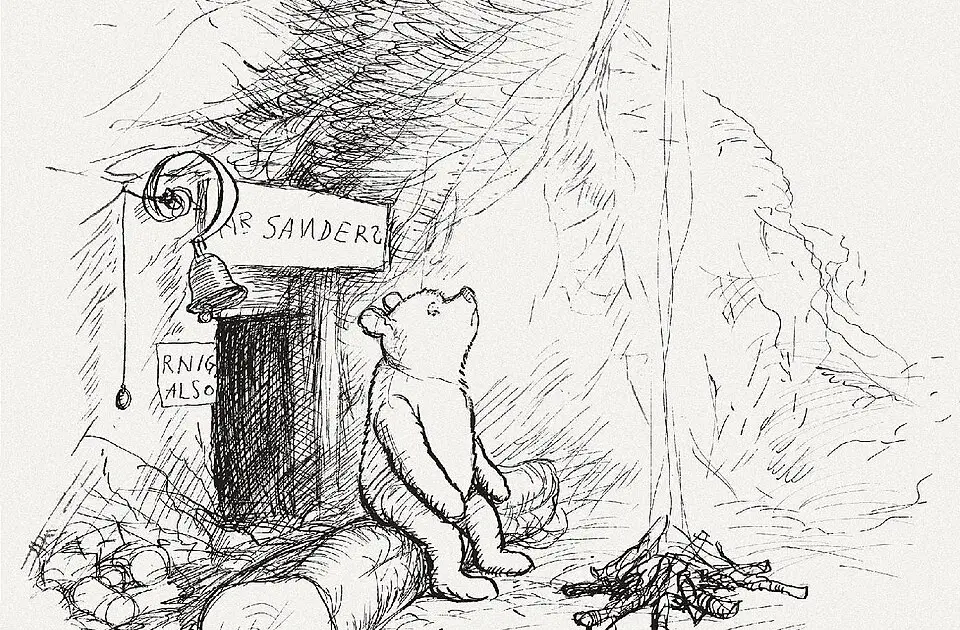
- Whimsical Nostalgia: The centenary of Winnie-the-Pooh invites an exploration of childhood innocence, memory, and pastoral longing. Here, settings of Milne’s verse and related whimsical texts explore how art preserves the ephemeral states of early life.
- Scientific Breakthroughs and Cosmic Desires: The centenary of the first liquid-fueled rocket launch—pioneered by Robert H. Goddard in 1926—inspires thematic explorations of humanity’s urge to reach beyond terrestrial bounds, connecting with programs dedicated to Fantasy, Magic, and the celestial unknown.
- The Falla Sesquicentenary: A clear crown jewel of the festival falls on 26 November, dedicated entirely to Manuel de Falla on the 150th anniversary of his birth. This concert offers an extraordinary comparative study. Falla’s authentic Spanish idioms are juxtaposed with songs written about or inspired by Spain, but composed by an international array of non-Spanish masters. This trans-national dialogue features works by Hugo Wolf, Robert Schumann, Adolf Jensen, Maurice Ravel, Jacques Ibert, Arthur Honegger, Louis Albert, Léo Delibes, William Walton, Frederick Keel, Pyotr Ilyich Tchaikovsky, and Dmitri Shostakovich. It promises to reveal how foreign imaginations conceptualize the passionate, sun-drenched ethos of the Iberian Peninsula.
Navigating the Canon: From the Familiar to the Unexplored
True to the festival’s ethos, the repertoire performed between November and December refuses to rely solely on the safety of standard Lieder and Mélodie cycles. While foundational masterworks are present, the season’s true currency lies in its fearless championing of marginalized and overlooked voices.
Concertgoers will experience a treasure trove of music by composers who have too often languished at the margins of the concert hall. The schedule features works by:
- Erich Wolff & Arthur Somervell: Masters of late-Romantic songcraft.
- Florence Price: The trailblazing African-American composer whose lyrical voice is receiving long-overdue global recognition.
- Harold Fraser-Simpson: Famed for his musical settings of A.A. Milne.
- Nadia Boulanger & Marguerite Canal: Titans and pathbreakers of French musical pedagogy and composition.
- Albert Roussel & Armande de Polignac: Explorers of post-Debussyan harmonic palettes.
- Rebecca Clarke: The brilliant violist and composer whose chamber works and songs display a searing modernist intelligence.
- Constant Lambert, Granville Bantock, and Charles Griffes: Luminaries of British and American musical impressionism and exoticism.
Crucially, the festival also looks firmly to the present day, featuring contemporary works by living composer Edward Picton-Turberville. This ensures that the continuum of the art song remains unbroken, alive to the sensibilities of the twenty-first century.
Supporting Context & Metrics: The Artists and the Incubator
A festival of this scale and intellectual rigor stands or falls on the caliber of its interpreters. Art song is an intimate, unforgiving medium. It demands absolute technical mastery, textual sensitivity, and an innate collaborative synergy between singer and pianist. Nigel Foster has assembled a stellar roster of vocalists and collaborative pianists who embody these exacting standards.
The Vocal Roster
The 2025 season showcases some of the most compelling voices working in British and international classical music today. The roster includes:
- Sopranos: Rachel Munro, Harriet Burns, Lorena Paz Nieto, Erika Baikoff, Natalka Pasicznyk, and Schubert Song Prize winner Siri Bengtsson Marklund.
- Mezzo-Sopranos: Ellen Pearson, Lotte Betts-Dean, Katie Bray, Sian Sulke, and SWAP’ra prize-winner Gabriella Noble.
- Tenors: Laurence Kilsby and Archie Inns.
- Baritones: George Robarts, Michel de Souza, and Jonathan Eyers.
This generation of singers is characterized by intellectual curiosity and versatility. Many of these artists maintain active international careers on the opera stage and in major concert halls, yet they consistently return to the London Song Festival because of its unique artistic freedom.
Fostering the Future: Competitions and Collaborations
A defining hallmark of the London Song Festival is its active investment in the next generation of performers. Rather than simply importing established stars, the festival serves as a vital career springboard through high-profile partnerships and competitions.
- The London Song Festival Schubert Song Prize: This year’s competition victors, soprano Siri Bengtsson Marklund and pianist Bohdana Ravliuk, take their rightful place on the festival stage. Their inclusion validates their immense interpretive potential, offering them a professional platform before an engaged, discerning audience.
- The SWAP’ra Rebecca Clarke Pianist Prize: In an exciting new development, the inaugural winners of this prize—pianists Jasmin Alpress and Alfred Fardell—curate and perform bespoke programs alongside the singers with whom they claimed victory, Gabriella Noble and Archie Inns. This initiative highlights the vital, collaborative nature of the pianist’s role in art song, moving away from the outdated paradigm of the accompanist to celebrate the collaborative pianist as an equal interpretive partner.
Official Statements & Artistic Vision
Discussing the genesis and philosophy behind the 2025 autumn season, artistic director Nigel Foster emphasizes the therapeutic and transformative power of imagination in contemporary cultural life.
"We live in an era where our physical horizons are simultaneously expanded by technology and contracted by geopolitical and social anxieties," Foster notes. "Art song has always possessed a unique superpower: the ability to transport us across centuries, continents, and psychological dimensions within the span of a three-minute poem set to music. By ‘reaching out’ to the edges of the map—whether to Ancient Greece, the Mystic East, or the imaginative worlds of Winnie-the-Pooh and Manuel de Falla—we are not escaping reality; rather, we are interrogating what it means to be human through the heightened lens of longing and desire."
Foster’s curatorial philosophy rejects the notion that classical music festivals must cater exclusively to safe, crowd-pleasing warhorses. By weaving together the historical threads of 1926—from the birth of modern rocketry to the publication of children’s literature—he constructs a cultural mirror that reflects human ingenuity in all its diverse manifestations.
Furthermore, representatives from partner organizations have lauded the festival’s steadfast commitment to emerging talent. A spokesperson for SWAP’ra remarked: "Platforms like the London Song Festival are indispensable for young artists navigating the early stages of their professional lives. By giving prize-winners creative autonomy to curate their own programs—as seen with Jasmin Alpress, Alfred Fardell, Gabriella Noble, and Archie Inns—the festival validates their artistic identities and equips them with the entrepreneurial skills required for a sustainable career in modern classical music."
Future Outlook: The Enduring Relevance of the Art Song
As the London Song Festival prepares to open its doors on 5 November, its broader implications for the classical music ecosystem warrant close examination. In recent decades, the traditional recital format has faced persistent existential questions regarding its relevance in a fast-paced, digital society. Can poetry set to piano accompaniment hold the attention of modern audiences? Can it compete with immersive multimedia spectacles?
The London Song Festival answers these questions with an emphatic affirmative. Its secret lies not in watering down the art form, but in intensifying its context. By embedding standard repertoire within rich, multidisciplinary themes—linking musical works to the history of technology, literature, philosophy, and cultural geography—the festival transforms a passive listening experience into an active intellectual adventure.
Looking toward the future, Foster’s model offers a blueprint for how regional and mid-scale classical music institutions can thrive. It proves that audiences are hungry for depth, narrative coherence, and historical discovery. When a concertgoer sits in a London hall this autumn and hears Florence Price paired with Charles Griffes, or listens to an international cavalcade of composers grapple with the myth of Spain on Manuel de Falla’s sesquicentenary, they are participating in a living, breathing dialogue with the past.
The festival’s embrace of contemporary voices, such as Edward Picton-Turberville, ensures that this dialogue is not merely nostalgic, but forward-looking. Art song is shown to be a living, evolving medium—capable of absorbing the shocks of modernity, the weight of history, and the delicate nuances of individual human longing.
How to Attend
The 2025 autumn season runs from 5 November to 11 December at various intimate venues across London. Full program details, artist biographies, and ticketing information are now live and accessible via the official London Song Festival website at www.londonsongfestival.org/allconcerts. Given the high demand for these intimate recitals and the unique prestige of this year’s anniversary programming, early booking is strongly recommended.