Executive Overview
Nearly three decades after the world of music was rocked by the tragic loss of one of its most defining and fiercely influential voices, the wheels of American jurisprudence have finally ground forward to deliver a watershed verdict. Duane "Keffe D" Davis, a former high-ranking figure within the notorious South Side Compton Crips street gang, has been found guilty of orchestrating the 1996 drive-by shooting that claimed the life of rap superstar Tupac Shakur.
The verdict, handed down on a Monday in a high-security Las Vegas courtroom, marks a monumental milestone in American legal history. It brings closure to what had long endured as one of the most enigmatic, heavily scrutinized, and notoriously baffling cold cases in modern crime annals. For almost thirty years, the murder of Shakur spawned endless waves of conspiracy theories, amateur investigations, speculative documentaries, and profound cultural grief. Until now, the case had never yielded a single criminal indictment, let alone a formal conviction.
Davis, dressed immaculately in a dark black suit, stood impassively as the court clerk read the definitive verdict: guilty on one count of murder with the use of a deadly weapon. The 63-year-old displayed very little visible emotion as his fate was sealed by a jury that deliberated for mere hours before reaching a unanimous consensus. However, as the procedural proceedings wound down, Davis briefly interjected, raising his hand to request his personal belongings—specifically mentioning his mobile phone—before firmly declaring his intention to appeal the decision. Clark County District Court Judge Carli Kierny scheduled his official sentencing for October 13, setting the stage for the final chapter of a trial that has captivated the global public imagination.
The conviction is not merely a legal victory for the prosecution team led by Clark County prosecutors; it is a profound emotional vindication for Shakur’s surviving family members, who sat in the courtroom gallery holding hands, exchanging tearful embraces, and processing the long-overdue realization that accountability has finally been secured. Prosecutors successfully established that while Davis did not personally pull the trigger on the fateful September night in 1996, his role as the mastermind—the orchestrator who procured the firearm and directed the fatal ambush—made him just as culpable under the law as the gunman himself.
Detailed Chronology: From Las Vegas Boulevard to the Courtroom
The Genesis of a Tragedy: September 1996
To understand the gravity of the verdict, one must trace the tragic sequence of events back to the scorching desert night of September 7, 1996. Tupac Shakur, then 25 years old and at the absolute zenith of his creative powers, was in Las Vegas, Nevada, to attend the heavyweight boxing match between Mike Tyson and Bruce Seldon at the MGM Grand casino.
Earlier that evening, a physical altercation erupted inside the casino lobby involving members of Shakur’s entourage and Orlando Anderson, a young South Side Compton Crips gang member who happened to be the nephew of Duane Davis. According to witness statements and subsequent investigative findings, Anderson had previously attempted to rob a member of Shakur’s crew in Compton, creating acute friction and bad blood between the rival camps.
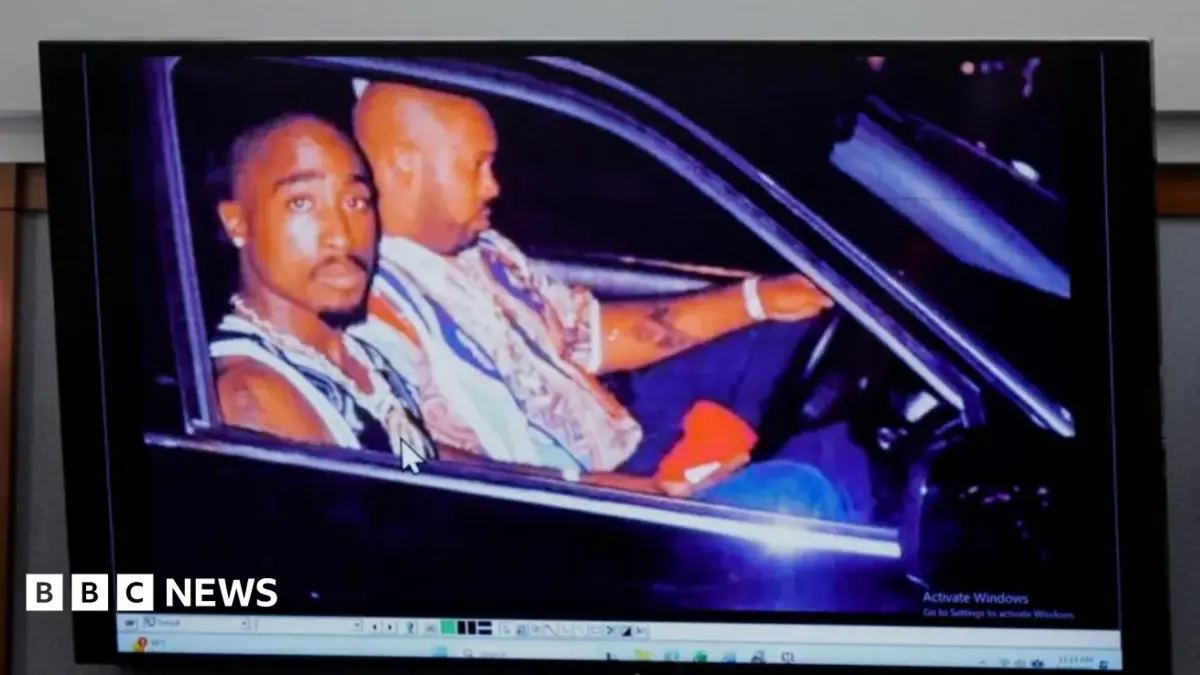
Hours after the casino brawl, Shakur and Death Row Records CEO Marion "Suge" Knight were traveling in a black BMW along Las Vegas Boulevard, heading toward a post-fight celebrity club event. As their vehicle idled at a red light, a white Cadillac pulled up alongside them. From the passenger seat of the Cadillac, shots rang out. A volley of bullets tore into the passenger side of the BMW, striking Shakur multiple times.
Shakur was rushed to the University Medical Center of Southern Nevada, where he fought for his life for six days. Despite aggressive medical intervention, including being placed in a medically induced coma and undergoing multiple surgeries, Shakur succumbed to his internal injuries on September 13, 1996. The case immediately entered a labyrinth of investigative dead ends, hampered by uncooperative witnesses, a code of street silence, and the chaotic environment surrounding the burgeoning East Coast-West Coast rap rivalry of the 1990s.
The Decades-Long Cold Case and the Turning Point
For decades, the investigation into Shakur’s murder languished in the shadows. Orlando Anderson, identified early on as a prime person of interest, consistently denied any involvement in the shooting. In a tragic twist of fate, Anderson’s life was cut short when he was killed in an unrelated gang-related shooting in Los Angeles in 1998, effectively closing off the most direct path to prosecuting the actual shooter.
For years, the investigation seemed destined to remain an unsolved Hollywood mystery. However, the trajectory of the case shifted dramatically when Duane Davis himself began speaking openly about the events of that night. Believing he was shielded by immunity agreements or simply growing comfortable with the passage of time, Davis detailed his involvement in various media interviews, a documentary, and most crucially, in his 2019 memoir, Compton Street Legend.
In his writings and in a remarkably candid 2008 recorded police interview—which prosecutors played extensively for the jury—Davis admitted to being inside the white Cadillac from which the shots were fired. He explicitly stated that he provided the .40-caliber Glock handgun used in the drive-by shooting and handed it to his nephew, Orlando Anderson, immediately before the ambush. These public admissions served as the smoking gun that allowed investigators to revive a moribund case, culminating in Davis’s dramatic arrest outside his Las Vegas home in September 2023.
Inside the Courtroom: Defense Strategy vs. Prosecutorial Rigor
The trial itself was a high-stakes legal battle that pitted the state’s reliance on Davis’s own recorded words against a defense team fighting desperately to dismantle them.
Throughout the courtroom proceedings, Davis’s defense attorneys, spearheaded by attorney Michael Sanft, argued strenuously that their client’s incriminating statements were nothing more than elaborate fabrications. They framed Davis’s media appearances, memoir writing, and interviews as theatrical bravado—exaggerated tales manufactured purely for financial gain, designed to sell books, satisfy true-crime podcasters, and capitalize on the enduring mythos of Tupac Shakur.
During closing arguments, Sanft hammered this narrative home to the jury, insisting that the state lacked definitive physical evidence tying Davis to the crime scene in a manner that met the strict thresholds of criminal law. "There’s no proof," Sanft asserted, urging jurors to dismiss Davis as a notorious storyteller whose words could not be trusted.
The prosecution, however, countered with a meticulously constructed narrative. They argued that Davis’s admissions were too detailed, consistent, and corroborated by external ballistic and investigative reports to be dismissed as mere fiction. Prosecutors painted a compelling picture of a gang boss orchestrating retaliation, utilizing his authority to supply the weapon and direct a coordinated hit.
The jury deliberated for only a few hours on a Monday before rejecting the defense’s arguments entirely, returning a unanimous verdict of guilty.
Supporting Context & Metrics
To fully comprehend the cultural weight of this verdict, one must examine the staggering legacy and statistical footprint of Tupac Shakur’s life and career.
- Global Record Sales: Tupac Shakur remains one of the best-selling music artists of all time, having sold more than 75 million records worldwide across his storied career.
- Posthumous Output: Despite his career being cut short at the tender age of 25, Shakur released numerous multi-platinum albums posthumously, including The Don Killuminati: The 7 Day Theory and All Eyez on Me, which was certified diamond by the RIAA.
- The Timeline of Inaction: The gap of nearly 30 years between Shakur’s assassination in September 1996 and the conviction of Duane Davis in late 2023/2024 stands as one of the longest intervals in American criminal history to achieve justice in a high-profile celebrity homicide.
- Age at Death: Shakur was only 25 years old when he was slain, standing at the absolute peak of his cultural influence as an artist, poet, actor, and social commentator.
- The Suspect: Duane "Keffe D" Davis was 63 years old at the time of his conviction, facing the remainder of his natural life behind bars following Judge Carli Kierny’s scheduling of his formal sentencing for October 13.
Official Statements & Legal Repercussions
The aftermath of the verdict has reverberated across the global entertainment community, drawing reactions from legal experts, civil rights advocates, and figures connected to Shakur’s legacy.
Clark County District Attorney’s Office released statements emphasizing the persistence of their investigative teams. For decades, detectives faced a wall of silence enforced by street codes and fear of retaliation. Prosecutors credited modern investigative persistence and, ironically, the defendant’s own hubris for bridging the evidentiary gap necessary to secure an indictment and subsequent conviction.
Legal analysts have noted that this case establishes a fascinating precedent regarding how modern media—podcasts, memoirs, and recorded interviews—can be weaponized by prosecutors in cold-case revivals. Davis’s decision to monetize his historical notoriety ultimately proved to be his undoing, transforming private underworld actions into public judicial accountability.
Meanwhile, members of the Shakur estate and family representatives expressed a mix of solemn relief and lingering grief. While no legal verdict can restore the life of the fallen icon or reverse the profound cultural deficit left in his absence, the resolution of the criminal case provides a definitive historical record. It officially closes the book on speculation regarding who bore the ultimate responsibility for the coordination of the assassination.
Future Outlook
As the legal proceedings enter their final phase, attention now turns to the impending sentencing hearing scheduled for October 13 before Judge Carli Kierny in the Clark County District Court. Given the gravity of the charge—murder with the use of a deadly weapon—Davis faces the distinct possibility of spending the remainder of his life incarcerated.
Legal teams are already preparing for the appellate phase. True to his demeanor throughout the trial, Davis signaled his immediate intention to challenge the verdict, telling the judge directly: "I would like to appeal this matter." His defense counsel is expected to base their appeal on arguments challenging the admissibility and interpretation of historical interview recordings, as well as assertions regarding the reliability of witness testimony gathered decades after the fact.
Regardless of the appellate maneuvers that lie ahead, the psychological and historical barrier has been shattered. The murder of Tupac Shakur is no longer an untouchable Hollywood ghost story destined to remain forever unresolved in the annals of American unsolved crimes. Accountability has arrived, anchoring the legacy of a hip-hop titan in both cultural immortality and judicial truth.