Executive Overview
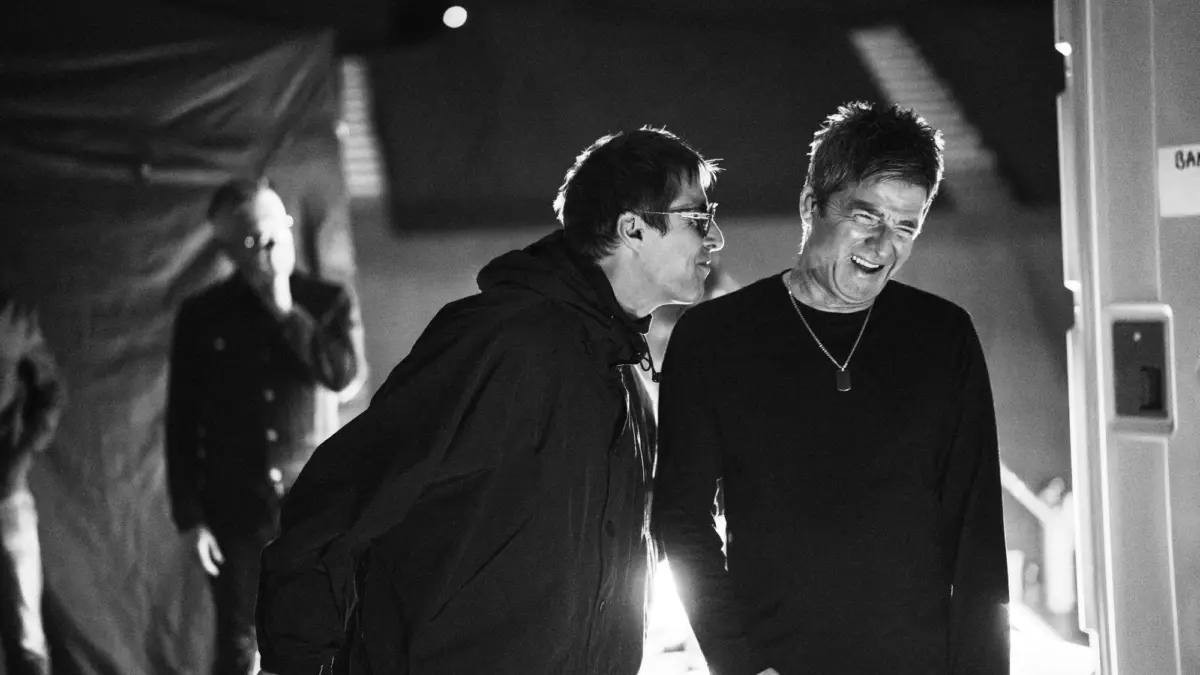
The high-stakes world of Britpop memorabilia has collided headfirst with complex intellectual property law, centering around an upcoming auction that has ignited tensions within the Oasis camp. At the heart of the controversy is a massive, multi-format audio archive comprising 63 live concert recordings alongside more than 100 hours of backstage rehearsals, soundchecks, and unvarnished, unfiltered dialogue between the band’s volatile creative core, Noel and Liam Gallagher.
Assembled during the height of the band’s 1990s cultural dominance by their former sound engineer Huw Richards, the collection is now being brought to market by his son, Owain Richards. Scheduled to go under the hammer with Littleton Auctions, the trove carries an astronomical pre-sale guide price of £1.2 million to £1.6 million.
However, the impending sale has laid bare a profound legal chasm between the ownership of physical assets and the governance of digital copyrights. While the auction house maintains that the transaction is entirely legal, legal experts emphasize that possessing the physical cassette tapes, DATs, and MiniDiscs does not grant the purchaser any right to commercially exploit, broadcast, or release the audio contained within them.
Faced with the prospect of foundational pieces of their early history falling into private hands, the band has already registered formal concerns. As collectors, investors, and legal scholars watch closely, the auction presents a fascinating dilemma: will Oasis step in to acquire their own history, or will they leave a multi-million-pound legal standoff on the table for the highest bidder?
Detailed Chronology: From the Soundboard to the Auction Block
To understand the weight of the current dispute, one must trace the timeline of how these recordings came into existence and how they managed to survive out of the direct control of the band’s management for nearly three decades.
1994–2001: The Huw Richards Era
Between 1994 and 2001, sound engineer Huw Richards occupied an enviable and intimate position within the Oasis touring machine. As the band transitioned from scrappy indie upstarts playing sweaty regional clubs to global stadium-conquering icons defined by the Britpop phenomenon, Richards was stationed directly at the sound desk. Night after night, he captured the raw, unfiltered auditory reality of the band’s live performances.
Unlike sanitized, post-production live albums, Richards’ field recordings captured the complete sonic ecosystem of an Oasis show: the acoustic adjustments, the banter between tracks, the tense verbal clashes between the Gallagher brothers, and the ferocious, distorted delivery of anthems like "Live Forever," "Supersonic," and "Wonderwall." In addition to mixing concerts, Richards recorded exhaustive soundchecks and backstage rehearsals, creating a longitudinal auditory diary of a band hurtling toward rock-and-roll mythology.
The Intervening Years and Stalled Negotiations
For years, the physical media—spanning analogue cassettes, digital audio tapes (DATs), and early digital MiniDiscs—rested quietly within the Richards family archives. As time passed and the cultural footprint of Oasis only magnified, the intrinsic value of these master recordings skyrocketed.
According to Owain Richards, informal discussions took place several years ago between the Richards family and representatives for Oasis. The objective of those talks was to negotiate a private acquisition that would return the recordings safely to the band’s institutional archive. Unfortunately, those discussions ultimately "fizzled away" without a resolution, leaving the family with few alternatives if they wished to monetize the historic collection.
The Present Day: Littleton Auctions Steps In
With private talks at an impasse, Owain Richards partnered with Littleton Auctions to bring the archive to the open market. Littleton Auctions announced that the multi-format collection would be put up for auction, attaching the eye-watering £1.2 million to £1.6 million guide price. The announcement immediately sent ripples through the music industry, alerting the Oasis camp and triggering urgent legal evaluations across both corporate and entertainment law firms.
Supporting Context & Metrics: The Anatomy of a Legal Labyrinth
The core tension of the Littleton Auctions sale hinges on a foundational legal principle that frequently catches memorabilia collectors off guard: the stark dichotomy between physical ownership and intellectual property (IP) rights.
Physical Assets vs. Intellectual Property
To unpack the situation, Euan Lawson of prominent law firm Simkins outlines the fundamental baseline of the transaction:
"Even if a sound engineer owns the physical recordings, there is very little they can do with them, because it is highly unlikely that the engineer has any ownership interest in the intellectual property or has the artists’ consent to exploit their performances."
While a wealthy investor or die-hard Oasis mega-fan can legally purchase the tangible carrier mediums—the actual plastic shells of the cassettes and the magnetic ribbons inside—their rights terminate at the physical boundary of the object. Lawson summarizes this neatly:
"So while the physical tapes may potentially be bought and sold, what a purchaser can actually do with the recordings is a very different question."
Unraveling Copyright and Performer Rights in the UK
Under United Kingdom copyright law, the default initial owner of a sound recording copyright is generally the person or entity that "arranges" for the recording to take place. In controlled studio environments, this is typically the record label that books and finances the studio time, or alternatively, the artist and their management team.
However, live concert recordings complicate this paradigm. During the 1990s, Oasis was signed to Creation Records (which was later absorbed by Sony Music) before eventually establishing their own imprint, Big Brother Recordings, while maintaining distribution ties with Sony. Huw Richards was an independent contractor operating under standard sound engineering terms—terms that typically granted him zero express rights to either the physical tapes or the underlying intellectual property.
Ben Gisbey, another legal expert at Simkins, notes that even if Richards attempted to claim that he "organised" the recordings by plugging his recording deck directly into the soundboard, he immediately runs into the immovable wall of performer rights:
"Oasis may be able to prevent a buyer from commercially exploiting the recordings without their consent by exercising their performer rights."
Without explicit, legally binding permissions from Noel Gallagher, Liam Gallagher, and any other credited performers on those tapes, no third party can broadcast, stream, or commercially press the audio.
Official Statements and Industry Reactions
The collision of high-value cultural artifacts and restrictive copyright law has prompted measured yet firm responses from all principal parties involved in the impending auction.
The Auction House Perspective
Ben Homer, head of Littleton Auctions, has acknowledged the friction caused by the announcement but defends the house’s transparent approach to handling the sale. Confirming that the band’s representatives have been in contact, Homer stated:
"The Oasis camp is aware of the auction and has expressed concerns, which is entirely understandable given the scale and significance of the material. We’re handling everything with full transparency and proper legal process. Our focus is simply on presenting these items responsibly, with verified provenance, and allowing collectors and institutions to engage with an important part of British music history."
Littleton Auctions has taken pains to ensure prospective buyers are fully informed of the regulatory boundaries, ensuring the auction functions strictly as a transfer of historical artifacts rather than a back door to commercial exploitation rights.
The Vendor’s Perspective
Owain Richards, speaking candidly to The Times, expressed mild regret that previous efforts to return the tapes directly to the band fell through. He noted that while the family recognizes the band would ideally prefer the recordings "back in their possession," the collapse of prior negotiations left public auction as the most viable path forward for liquidating the estate’s asset.
The Legal Consensus
Legal analysts remain unified in their assessment of the risks facing potential bidders. Rather than viewing the auction as a straightforward transaction of nostalgic memorabilia, Simkins attorneys warn that any buyer must calculate the long-term strategic game. As Ben Gisbey observes:
"It would be shortsighted to view this simply as a sale of memorabilia. The band may wish to exploit the recordings themselves in future, leaving them with a difficult decision: do they buy the archive themselves now or do they risk any buyer demanding a substantial fee for access to the recordings down the line?"
Future Outlook: What Happens Next?
As the auction date draws closer, several distinct scenarios loom over the British music landscape.
- A Pre-Auction Private Buyout: Despite the breakdown of previous talks, the looming public exposure of these master tapes could compel Oasis’s management team to re-engage with the Richards family or Littleton Auctions. Acquiring the physical archive privately before the hammer falls would permanently neutralize the threat of hostile third-party ownership and secure the band’s historical audio footprint.
- Institutional Acquisition: Major music libraries, universities, or cultural preservation trusts might step in to purchase the physical tapes for archival exhibition. Bound by copyright law, these institutions would display the physical media as historical artifacts without attempting illegal commercial distribution.
- The Speculative Investor Gamble: A wealthy private collector could purchase the archive purely as a status symbol, accepting the reality that the audio can never be publicly released. Alternatively, a high-risk speculator might buy the tapes in the hopes of leveraging them in future negotiations with Oasis, banking on the band eventually paying a premium to regain custody of their own sonic history.
Ultimately, whether these historic tapes find a permanent home in the private vault of a tech billionaire, a public museum, or back within the digital storage drives of Big Brother Recordings, the auction serves as a fascinating case study in modern music law. It stands as a stark reminder that in the modern era of entertainment, owning history and controlling history are two entirely different games.