Executive Overview
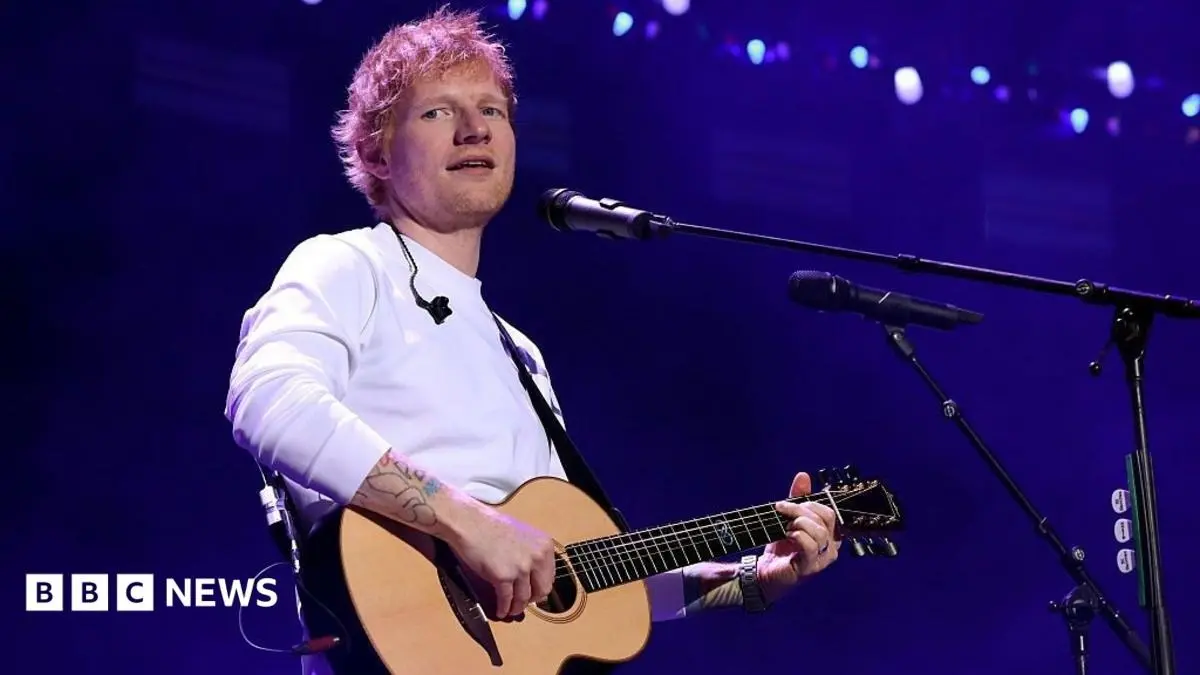
British pop superstar Ed Sheeran stepped onto the stage in Philadelphia under an unprecedented cloud of political tension, marking his first live performance since a major tour controversy erupted. The friction began when American rapper Macklemore was abruptly dropped from the remaining dates of Sheeran’s US Loop Tour following onstage pro-Palestinian remarks. The decision by promoters to remove Macklemore triggered a domino effect: all remaining support acts withdrew in solidarity, ticket prices plummeted, public sales slowed, and Sheeran found himself unwillingly thrust into the center of one of the most volatile and deeply polarized geopolitical debates of the modern era.
Addressing a tense audience before playing his first notes, Sheeran delivered a deeply personal, unscripted opening speech. He apologized for making "mistakes," admitted that he was grappling with difficult decisions, and openly wrestled with the complex intersection of art, global conflict, and free speech. While attempting to distance himself from the role of a political activist, the singer ultimately conceded that the crisis had transcended standard industry politics, becoming an urgent humanitarian issue that he could no longer ignore.
The fallout from the tour cancellation highlights a broader, increasingly intense cultural battleground in the United States and globally. Artists, promoters, venue owners, and fans are increasingly forced to navigate the blurred lines between political expression, artistic freedom, corporate liability, and deeply held moral convictions. This report provides an exhaustive look at the chronology of the controversy, the mechanics behind Macklemore’s dismissal, the financial and logistical impacts on the Loop Tour, the nuanced reactions of concertgoers and protesters, and the broader implications for the entertainment industry at large.
Detailed Chronology: From Stage Remarks to Tour-Wide Boycott
The crisis that ultimately forced Ed Sheeran to publicly apologize in Philadelphia did not materialize overnight. It is the culmination of weeks of escalating tensions, abrupt cancellations, ideological clashes, and a widening chasm between artists and tour promoters.
The Catalyst: Macklemore’s Performance in Early September
The controversy ignited in early September during a stop on the Loop Tour, when rapper Macklemore—serving as a high-profile support act—used his stage time to deliver a passionate address regarding the Israel-Hamas conflict. During the set, Macklemore performed a song dedicated to pro-Palestinian protesters and explicitly referred to the mounting civilian death toll in Gaza as a "genocide," a characterization that the Israeli government and its defenders categorically reject.
Seeking to preempt accusations of bigotry, the rapper explicitly told the crowd that his criticisms of the Israeli government’s military campaign were not intended as an attack on "my Jewish brothers and sisters." Nevertheless, the remarks instantly reverberated through media networks, drawing intense praise from activist groups and severe condemnation from pro-Israel organizations and venue stakeholders.
The Promoter’s Heavy Hand and the Gillette Stadium Ban
As media coverage intensified, the Messina Touring Group—Sheeran’s North American promoters—faced immense pressure from venue executives and billionaire stakeholders. The tipping point arrived when negotiations stalled over upcoming shows at high-profile locations, most notably Gillette Stadium in Boston, Massachusetts.
Billionaire businessman Robert Kraft, owner of Gillette Stadium and the National Football League’s New England Patriots, stepped in directly. Kraft, who is prominent in the American Jewish community and a vocal philanthropist, confirmed that he had barred Macklemore from performing during any of the stadium’s forthcoming shows tied to the tour. Kraft publicly accused the US rapper of engaging in hate speech, arguing that Macklemore was "only sharing selective information and ignoring the actions of Hamas."
Faced with the prospect of massive logistical shutdowns and cancelled venue contracts, Messina Touring Group made the executive decision to drop Macklemore from the remainder of the tour entirely. Sheeran later maintained that this decision was made exclusively by the promoters, operating to preserve venue partnerships, rather than by the singer himself.
The Solidarity Boycott: Support Acts Walk Out
Macklemore’s dismissal sent shockwaves through the touring entourage. Rather than viewing the rapper’s removal as a necessary administrative adjustment, remaining support acts saw it as a dangerous precedent that threatened artistic freedom.
In a rapid succession of announcements, Irish singer-songwriter Aaron Rowe, Danish musician Lukas Graham, and Graham’s backing band, Beoga, announced they were quitting the tour entirely. In their respective statements, the artists argued that Macklemore’s expulsion represented a chilling effect on free speech. They contended that musicians should not be penalized, silenced, or economically sanctioned for expressing humanitarian concerns or engaging in political discourse, regardless of how controversial the topic might be.
The Philadelphia Address: Sheeran Seeks Reconciliation
With his support roster completely wiped out and the tour’s infrastructure straining under the weight of negative publicity, Ed Sheeran took the stage in Philadelphia. Knowing that his opening remarks would set the tone for the remainder of the tour, the British singer chose transparency over corporate evasion.
"I never wanted to be an activist musician, but this has put me in the middle of an important and passionate argument about free speech and the most complex political issue on the planet," Sheeran told the crowd.
He explicitly categorized the events of October 7, 2023—when Hamas-led militants launched unprecedented terror attacks inside Israel—as "horrific" and noted that they "compounded centuries of Jewish pain." Simultaneously, he addressed the subsequent military campaign in Gaza, describing the humanitarian situation there as "catastrophic and unjustifiable and disproportionate."
"My heart has been broken by the scale of devastation and loss of civilian lives, of children’s lives, and this systemic injustice we’re seeing unfold in the West Bank cannot be overlooked," Sheeran continued. Concluding his remarks, the singer apologized for the turmoil, acknowledging that while he was accustomed to dealing with creative and musical criticism, the current climate demanded complex, high-stakes decisions where mistakes were inevitable.
Supporting Context & Metrics: The Financial and Logistical Fallout
The geopolitical storm surrounding the Loop Tour has translated directly into tangible financial metrics and logistical hurdles, demonstrating how modern tour economics are increasingly vulnerable to sociopolitical shocks.
Plummeting Ticket Prices and Softening Sales
Prior to the September controversy, Ed Sheeran’s US Loop Tour was tracking as one of the highest-grossing concert series of the calendar year. However, the cascading sequence of events—Macklemore’s removal, the departure of the entire support lineup, and the polarizing public debate—has measurably impacted consumer behavior.
- Secondary Market Dips: Data from major ticket resale platforms indicates a noticeable downward trend in ticket prices for the remaining US legs. Average resale values for upper-bowl and floor seats have dropped by an estimated 15% to 30% depending on the city, as hesitant buyers weigh the uncertainty of the tour’s atmosphere.
- Primary Sales Stagnation: While core fans have doubled down on their attendance, general public sales for newly opened blocks of tickets have slowed significantly. Promoters have had to deploy targeted marketing campaigns and digital discounts to shore up attendance numbers in critical markets.
- Brand Association and Risk Management: Corporate sponsors and promotional partners have quietly reviewed their associations with the tour, illustrating the high commercial stakes involved when musicians are pulled into polarizing geopolitical fault lines.
Venue Dynamics and the Power of Private Ownership
The clash at Gillette Stadium highlights a critical vulnerability in contemporary live entertainment: the immense leverage held by private venue owners and corporate conglomerates. Unlike public parks or municipal arenas governed by strict government neutrality laws, major NFL and MLB stadiums are privately owned or operated under rigorous corporate guidelines.
When billionaire owners like Robert Kraft exercise veto power over tour lineups, they do so under the banner of protecting venue brand equity, patron safety, and corporate values. This creates an impossible bind for headlining artists like Ed Sheeran, who must balance their artistic autonomy and the independence of their touring crew against the hard commercial realities of securing stadiums capable of holding 50,000 to 80,000 screaming fans.
Official Statements and Public Reactions
The schism generated by the tour controversy has elicited a wide spectrum of responses, ranging from vocal street activism to nuanced audience reflections and sharp institutional rebukes.
Protesters Outside the Gates
Outside the Philadelphia venue, a visible contingent of pro-Palestinian protesters gathered, waving flags and distributing informational pamphlets. Despite the heavy police presence and heightened security, the demonstration remained peaceful and did not disrupt the flow of concertgoers entering the gates.
One demonstrator, identifying himself as Cooper, explained his motivation for standing outside the stadium: "We need more people like Macklemore and other artists who have a voice, who have a public platform, to be able to speak on behalf of the Palestinian people and their struggle for liberation, especially in the United States." He argued that cultural boycotts and artistic solidarity are vital tools for drawing attention to international humanitarian crises.
Inside the Arena: Fan Perspectives
Among the ticket-holders entering the venue, opinions were a mix of escapism, political consciousness, and empathy for the artist’s difficult position. Many expressed a desire to enjoy an evening of world-class music while simultaneously acknowledging the importance of upholding freedom of speech.
Reactions to Sheeran’s speech were immediate as audiences filtered out of the venue post-concert:
- The Pragmatic Fan: "I thought he covered both sides nicely, and I think everyone leaves happy," remarked one attendee, praising the singer’s measured diplomacy.
- The Empathic Fan: Another concertgoer emphasized the emotional honesty of the address, calling it "very sincere, and I think that’s what the people wanted to hear was sincerity, rather than a rehearsed corporate script."
Institutional Responses and Rebuttals
The sharp division over what constitutes legitimate political speech versus hate speech was underscored by the response from figures like Robert Kraft. By branding Macklemore’s remarks as one-sided and inflammatory, Kraft articulated the perspective of many community leaders who argue that artistic platforms are frequently weaponized to promote selective narratives while omitting the foundational atrocities committed by terrorist organizations like Hamas.
Conversely, the departing support acts—Aaron Rowe, Lukas Graham, and Beoga—stood firmly on the principle that silencing artists sets a dangerous precedent. In their view, the suppression of dissenting political viewpoints within the entertainment industry mirrors a broader erosion of democratic discourse, where commercial pressures dictate what can and cannot be said on a public stage.
Future Outlook: The New Normal for Live Entertainment
Ed Sheeran’s tumultuous return to the stage in Philadelphia serves as a watershed moment for the global music industry. It shatters the long-standing illusion that massive pop tours can operate in a vacuum, entirely divorced from the geopolitical realities and social polarizations of the world outside the arena walls.
The Erosion of the "Neutral Entertainer"
For decades, mainstream pop stars have largely adhered to the unwritten rule of commercial neutrality: keep the focus purely on entertainment, avoid alienating segments of the fan base, and sidestep complex foreign policy disputes. However, the events surrounding the Loop Tour demonstrate that neutrality is increasingly becoming an untenable position.
When artists are forced to reckon with humanitarian crises that capture global attention, audiences, critics, and activists no longer accept silence as a neutral stance. Silence is increasingly interpreted as complicity, while speaking out risks immediate professional backlash, corporate censorship, and the dismantling of tour lineups.
Navigating the Road Ahead
As Ed Sheeran and his management team press forward with the remainder of their tour dates, they do so under intense scrutiny. The singer has pledged to spend time "listening and learning," indicating an awareness that his initial approach to handling global politics was insufficient. He has also expressed a commitment to finding ways to contribute meaningfully to the relief of civilian victims caught in the crossfire of the Middle East conflict.
However, the broader industry implications will linger long after the final curtain falls on the Loop Tour. Promoters, venue owners, and artist management agencies are now drafting new risk-mitigation strategies, renegotiating contract clauses regarding political speech, and grappling with the reality that the stage is no longer just a place for music—it has become one of the primary battlegrounds for the soul of global free speech.