LONDON — In an era dominated by generative artificial intelligence, hyper-rendered computer graphics, and algorithms designed to optimize cinematic output, the creators of one of the world’s most beloved flocks of clay characters are standing firmly in defense of the imperfect, the tactile, and the human.
As Shaun the Sheep: The Beast of Mossy Bottom lands in UK cinemas, the creative forces behind Aardman Animations are issuing a reassuring message to the film industry: while technology will inevitably evolve, the foundational art of storytelling cannot be automated.
This philosophy is more than a sentimental marketing pitch; it is the core operating system of a studio that recently celebrated its 50th anniversary. Amid anxieties over how artificial intelligence will reshape creative labor, Aardman’s leadership argues that audiences are hungering for authenticity—for the visible thumbprints of the animator left behind in the clay.
Executive Overview
The release of Shaun the Sheep: The Beast of Mossy Bottom marks the latest chapter for a character who first graced television screens nearly three decades ago. Directed by Steve Cox and Matthew Walker, the new installment introduces a Halloween-flavored narrative that casts Shaun in the role of a mad scientist trying to save the day.
Yet, beneath the surface of this family-friendly comedy lies a broader industry debate. As major Hollywood studios increasingly experiment with AI tools for scriptwriting, pre-visualization, and background generation, traditional stop-motion animation remains an outlier. It is a medium defined by its extreme inefficiency, painstaking physical labor, and deliberate resistance to speed.
Speaking ahead of the film’s theatrical run, producer Richard Beek addressed the looming shadow of generative AI. While acknowledging that technological tools might find minor administrative or technical applications in the future, he expressed absolute confidence in the irreplaceable nature of human creativity.
"Maybe somewhere down the line there’s a tool we use which uses AI, but I don’t think it would ever replace the storytelling and creation of those stories," Beek asserted.
This report examines Aardman’s enduring stance against technological homogenisation, detailing the studio’s half-century history, the meticulous craftsmanship behind The Beast of Mossy Bottom, the ongoing international appeal of dialogue-free animation, and what the future holds for handcrafted cinema in a digital world.

Detailed Chronology: From Bristol Backlot to Global Phenomenon
To understand Aardman’s resilience in the modern technological landscape, one must look back at its improbable origins. Founded in Bristol in 1976 by school friends Sir Peter Lord and Sir David Sproxton, the company began as a modest operation producing animated sequences for television.
Over the subsequent decades, Aardman evolved into a global powerhouse, pioneering the stop-motion genre through iconic creations such as Morph, Wallace and Gromit, Chicken Run, and Shaun the Sheep.
The Evolution of a Woolly Icon
Shaun’s journey to superstardom is a testament to the power of physical comedy. The character made his debut in Nick Park’s 1995 Academy Award-winning Wallace and Gromit short film, A Close Shave. Instantly capturing the public imagination with his cheeky demeanor and expressive eyes, Shaun was spun off into his own self-titled television series in 2007.
Despite the character’s global appeal, executives initially resisted the premise. During the development of both the original television series and Shaun’s first feature film in 2015, studio executives repeatedly urged Aardman to give the sheep a voice. The creators refused.
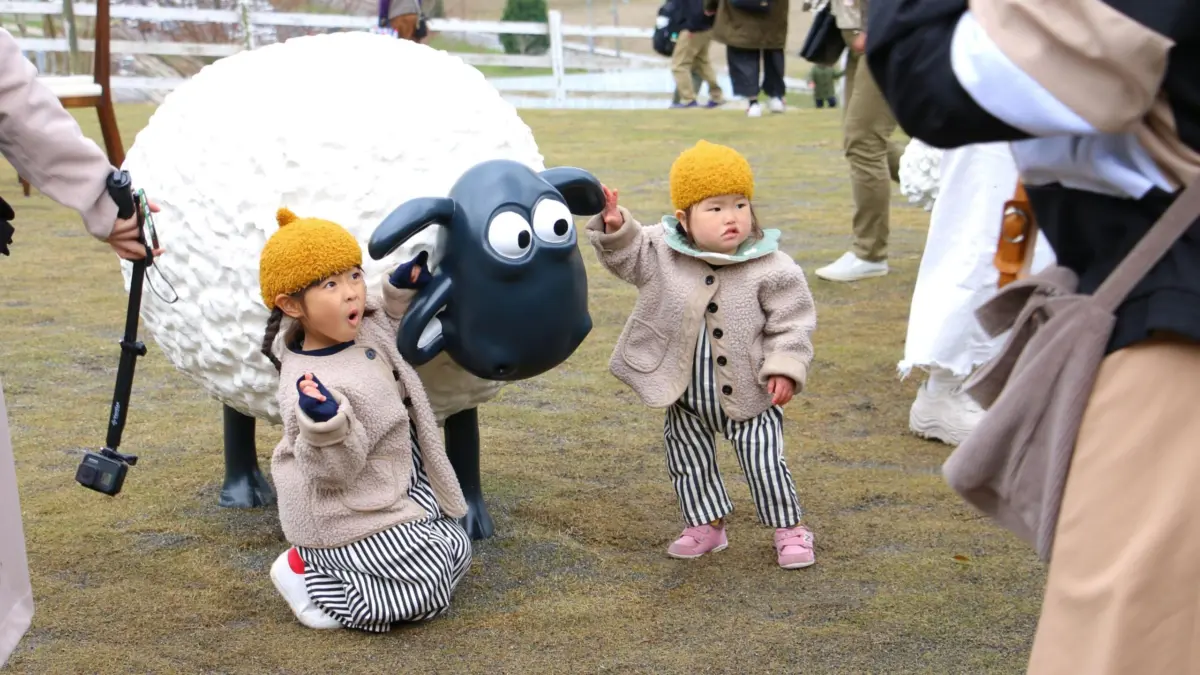
Instead, Shaun—along with the rest of the farmyard cast—communicates entirely through bleats, grunts, murmurs, and highly dynamic physical expressions. This constraint became the franchise’s greatest asset, eliminating language barriers and allowing the character to achieve massive international popularity, particularly in Japan, where he commands a dedicated theme park.
Entering the Horror-Comedy Genre
With The Beast of Mossy Bottom, co-director Matthew Walker and his team sought to push the franchise into uncharted territory by blending the pastoral setting of Mossy Bottom Farm with genre tropes.
"It’s been really exciting to explore a Shaun story in a new genre," Walker explained. "We did sci-fi with Farmageddon and now we’re in Halloween horror, but without the scares—it’s more comedy."
In the film, Shaun must navigate a series of spooky, science-gone-wrong scenarios that riff on classic monster movies, maintaining the slapstick accessibility that has defined the series for generations while offering fresh visual gags for adult viewers.

Supporting Context & Metrics: The Anatomy of Stop-Motion
While CGI rendering farms can generate thousands of frames overnight, stop-motion animation moves at the speed of human hands. A single animator working on a high-end feature film considers a productive day to be two seconds of usable footage—roughly 48 individual frames.
The Personal Touch and Practical Longevity
At the Aardman Academy, students are explicitly taught to embrace imperfection. In an era where digital artists strive for clinical, mathematical perfection, stop-motion artists celebrate the slight variations, thumbprints, and tactile imperfections that prove a human made the object on screen.
Art director Kitty Clay highlights the surprising sustainability and sentimental value built into the physical production process. Remarkably, many of the models utilized in current productions have been in active rotation for two decades.
Furthermore, the props dressing the miniature sets often carry deep personal histories. Clay notes that viewers with a sharp eye can spot household items from her own upbringing integrated into the sets, ranging from her mother’s old ironing board to her grandmother’s vintage lampshade repurposed as a living room fixture. This tangible connection to reality grounds the fantastical narratives in a comforting, lived-in aesthetic that digital artists often struggle to replicate artificially.
Star-Studded Voice Cast and Musical Collaborations
Although Shaun remains famously mute, The Beast of Mossy Bottom features a robust voice cast for its human and supporting animal characters. The ensemble includes:
- Dani Dyer
- Justin Fletcher
- Nina Sosanya
- Paul Whitehouse
- Roman Kemp
In addition to the vocal performances, the film boasts a sonic refresh. British hip-hop duo Rizzle Kicks was enlisted to produce a brand-new remix of Shaun the Sheep’s iconic theme tune, Life’s A Treat, bridging the gap between nostalgic family viewing and contemporary pop culture.
Official Statements & Industry Perspectives
The debate surrounding AI in filmmaking has polarized Hollywood, triggering historic strikes by writers and actors concerned about intellectual property theft and job displacement. Yet, stop-motion studios occupy a unique vantage point in this cultural war. Because their medium is fundamentally physical—requiring sculptors, armature builders, set dressers, and macro-photographers—it is inherently insulated from pure text-to-screen automation.
Producer Richard Beek remains philosophical about technological advancement, drawing a distinction between logistical efficiency and creative genesis.

"Maybe somewhere down the line there’s a tool we use which uses AI, but I don’t think it would ever replace the storytelling and creation of those stories," Beek reiterated. His perspective suggests that while algorithms might eventually assist with routine digital cleanup or lighting adjustments, the emotional resonance of a narrative crafted by human writers and performed by physical animators is fundamentally un-codable.
Industry analysts note that as synthetic media floods digital platforms, consumers may experience "algorithmic fatigue." The deliberate, unhurried craftsmanship of studios like Aardman could paradoxically see a surge in value precisely because it represents the antithesis of automated generation. When every image on the internet can be faked or synthesized in seconds, the knowledge that a human spent three days moving a tiny piece of clay a millimeter at a time acquires a profound emotional weight.
Future Outlook: Distribution and the Road Ahead
As Shaun the Sheep: The Beast of Mossy Bottom completes its theatrical run across UK cinemas this week and next, its distribution strategy reflects the modern hybrid media landscape. Following its big-screen release, the film will transition to home viewing platforms, becoming available on Sky Cinema and NOW TV.
Looking forward, Aardman faces the dual challenge of preserving its historic legacy while navigating a rapidly shifting entertainment economy. Yet, the studio’s fifty-year survival suggests a remarkable adaptability rooted in stubborn traditionalism.
By refusing to compromise on the physical nature of their craft, Aardman has turned limitation into a competitive advantage. As long as audiences continue to seek out the warmth of handmade art, Shaun the Sheep and his clay companions will remain safely grazing in pastures far removed from the reach of the algorithm.