Executive Overview
A profound constitutional and operational crisis has erupted between the White House and the American news media, fundamentally altering the relationship between the executive branch and the Fourth Estate. The friction reached a boiling point on Monday when major United States television networks enacted an unprecedented total blackout of official pool coverage, pulling out of White House rotation duties in direct retaliation for the administration’s ban on three prominent news organizations: CNN, Politico, and MS NOW.
The standoff escalated rapidly over the weekend after the Trump administration revoked the press credentials of the three outlets, citing what President Donald Trump described as a "cumulative" history of unfavorable coverage and "fake news." In response, CNN, Politico, and MS NOW filed a joint lawsuit in the U.S. District Court for Washington, D.C., on Monday morning, seeking an immediate injunction to declare the bans unconstitutional under the First Amendment and to halt enforcement by presidential aides.
The legal challenge argues that the administration’s actions represent an illegal, viewpoint-based restriction designed to punish independent journalism. Within hours of the filing, the broader media ecosystem mobilized in solidarity. The core institutional television networks—ABC, CBS, CNN, Fox News, and NBC—announced they were indefinitely suspending their participation in the White House television pool. This cooperative mechanism has historically allowed networks to share resources, costs, and physical space while broadcasting presidential events to the American public.
With the traditional pool booths standing empty and dark, and major networks refusing to provide substitute coverage, the administration’s information pipeline has faced severe disruption. While the White House has attempted to backfill these critical broadcasting slots with alternative outlets like Real America’s Voice, the broader geopolitical and domestic implications of a fractured state media apparatus are profound. This developing conflict represents the most severe institutional confrontation over press freedom in modern American history, setting the stage for a landmark legal battle that could ultimately reach the Supreme Court.
Detailed Chronology of Events
The current constitutional showdown is the culmination of months of escalating tensions between the White House and the mainstream press, transforming from rhetorical hostility into direct institutional exclusion and legal warfare.
The Spark: Revocation of Credentials
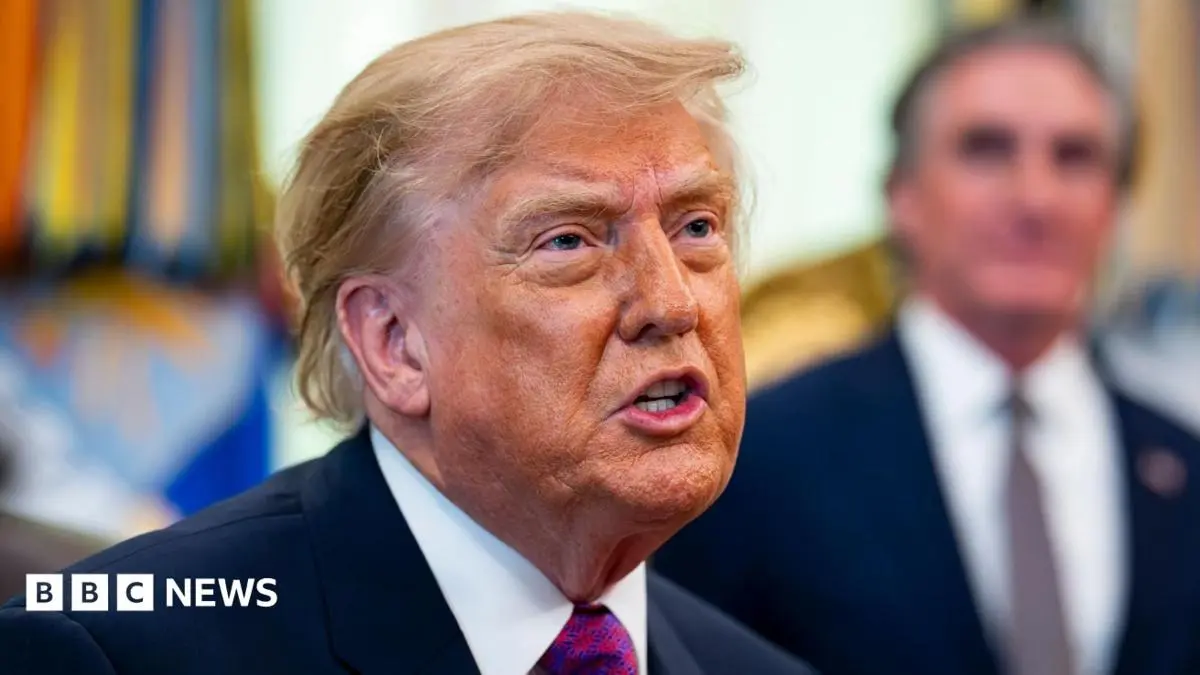
The immediate crisis began last week when the White House abruptly announced that CNN, Politico, and MS NOW would have their press credentials revoked without prior warning or administrative process. Initially, President Trump offered no specific reporting to justify the sweeping bans. However, he later clarified during an informal press exchange that the decision was driven by "cumulative stories over the last few years."
When pressed by reporters about whether other outlets could face similar punishments, Trump ominously remarked that there "may be others to join them," explicitly naming the New York Times and the Washington Post as prime examples of organizations engaging in what he termed "fake news."
The Lawsuit and First Amendment Arguments
Recognizing the existential threat to their reporting capabilities, attorneys for CNN, Politico, and MS NOW moved swiftly. On Monday morning, the organizations formally filed a joint lawsuit in the U.S. District Court for the District of Columbia.
The legal filing argues that the White House’s decision to strip journalists of their credentials solely because administration officials object to their editorial output is a direct violation of the First Amendment. The First Amendment explicitly forbids the government from abridging the freedom of the press—a constitutional safeguard that federal courts have historically interpreted as prohibiting state actors from discriminating against media entities based on the content or viewpoint of their coverage. The plaintiffs have asked a federal judge to issue an emergency ruling declaring the bans unconstitutional and issuing an injunction to prevent presidential aides from enforcing them.
The Monday Morning Blackout and Pool Boycott
The operational fallout was immediate and visible. CNN was originally scheduled to lead the vital five-network television pool rotation for President Trump’s high-profile trip to New York City, where he was slated to meet with UN officials, New York City Mayor Zohran Mamdani, and French President Emmanuel Macron.
However, by dawn on Monday, the situation on the ground had drastically changed. The five-seat CNN booth located in the basement of the White House press area—a space typically buzzing with activity from the early hours of the morning—was completely abandoned. Monitors and broadcasting screens inside the booth were turned off, and CNN crews were forced to set up outside the secure perimeter of the White House grounds, broadcasting live from a public pavement.
Demonstrating unprecedented solidarity, the broader broadcasting apparatus reacted immediately. Fox News Washington bureau chief Bryan Boughton, who currently holds the rotating administrative role responsible for coordinating media crews covering the White House, circulated an internal email obtained by the BBC. The message stated clearly: "Effective today, the TV pool will not be covering designated as pool coverage" of President Trump.
The email confirmed that the decision was a direct protest against the administration "preventing" CNN from fulfilling its required pool duties for the New York delegation, adding that "there will be no replacement pool put in place."
Consequently, the core White House media slot remained vacant. The administration was forced to scramble, listing the conservative outlet Real America’s Voice as a "secondary" crew for the presidential trip to New York.
Supporting Context & Metrics
To fully understand the gravity of the current standoff, one must examine the operational mechanics of the White House press corps, the historical evolution of press access, and the broader pattern of hostility between the current administration and media institutions.
The Mechanics of the White House Press Pool
The White House press pool is an indispensable logistical lifeline for American journalism. Established decades ago to manage the immense space and financial constraints of covering the leader of the free world, the pool operates on a cooperative sharing model.
- The Big Five: ABC, CBS, CNN, Fox News, and NBC represent the core infrastructure required to distribute live, high-definition television coverage of presidential movements, foreign trips, and official engagements to millions of American households.
- Cost and Efficiency: Maintaining permanent camera positions, satellite trucks, and reporting teams on the White House grounds is financially prohibitive for individual mid-tier or smaller outlets. The pool system allows participating networks to share raw video feeds, audio recordings, and written transcripts, ensuring that the public receives continuous coverage without overwhelming physical security limits.
- The Historical Shift: Historically, this vital mechanism was managed for over a century by the White House Correspondents’ Association (WHCA). However, in a major structural break in February, the White House announced it was wresting direct control of the press pool away from the WHCA, placing management entirely under the purview of executive branch officials.
A Pattern of Exclusion and Legal Actions
The ban on CNN, Politico, and MS NOW is not an isolated incident, but rather part of a broader, aggressive administrative strategy to reshape media access.
- The Associated Press Conflict: In February, the administration targeted the Associated Press (AP), barring its reporters and photographers from restricted-access areas such as the Oval Office and Air Force One. The punitive measure was enacted because the AP persisted in using the term "Gulf of Mexico" rather than the administration’s preferred nomenclature, "Gulf of America." The AP subsequently filed a federal lawsuit, and that legal battle remains active in the court system.
- A History of Contentious Relations: This administration has consistently leveraged litigation as a tool against media organizations. Beyond the current actions, the White House and its allies have launched a series of high-profile lawsuits against major global outlets, including the New York Times, the Wall Street Journal, and the British Broadcasting Corporation (BBC).
- Financial and Legal Fallout: Some of these aggressive legal challenges have already resulted in multi-million-dollar settlements where media corporations conceded to terms out of court, while other battles—such as the ongoing lawsuit against the BBC—continue to wind through judicial channels.
Official Statements
The war of words accompanying the physical and legal actions highlights the profound ideological chasm separating the administration from the journalistic community.
The White House and President Trump’s Response
President Trump took to his proprietary social media platform, Truth Social, to launch a blistering attack on the media organizations challenging his authority. Unabashed in his rhetoric, Trump dismissed the plaintiffs as "Third Rate Clowns" and labeled the institutional press as a "Crooked and Corrupt Press" that actively seeks to "trivialise and demean" his presidential achievements.
In his Truth Social statement, Trump wrote:
"Fake News people and publications that only write negatively, and who violate our National Security by writing false and defamatory stories with unknown ‘sources,’ shouldn’t be allowed access to the most important Office anywhere in the World."
He further asserted that his legal and administrative teams would "almost without question" file an appeal against any temporary injunctions granted by the federal district court.
The Media Coalition’s Joint Position
In stark contrast, the joint statement issued by CNN, Politico, and MS NOW emphasizes the foundational threat that executive overreach poses to democratic governance:
"Without notice or process, the White House revoked our journalists’ credentials because it objected to our reporting. Left unchallenged, this threatens press freedom and the public’s right to independent journalism free from government interference."
Amplifying this sentiment, the five major television networks—ABC, CBS, CNN, Fox News, and NBC—released a unified declaration underscoring the public’s stake in the matter:
"The public has a vital interest in receiving accurate, independent information about its government. No administration should restrict a news organisation because it objects to its reporting."
Future Outlook & Precedents
As this constitutional crisis enters its next phase, legal scholars, media analysts, and political observers are anxiously watching to see how the judicial system and the executive branch will navigate uncharted waters.
Judicial Precedents and Historical Parallels
Federal courts have long guarded the First Amendment rights of journalists regarding access to public forums and government spaces. Landmark legal battles from previous decades—such as Sherrill v. Knight (1978), in which the D.C. Circuit Court of Appeals ruled that the Secret Service could not arbitrarily deny a White House press pass without due process and clear, published standards—will serve as vital legal bedrock for the current plaintiffs.
While previous administrations have occasionally clashed with individual outlets, legal experts note that the current administration’s systematic exclusion of entire organizations based on broad ideological disagreements far exceeds historical norms.
- The Obama Precedent: In stark contrast to the current sweeping bans, the Obama administration attempted to exclude Fox News from a single press pool interview with an administration official in 2009. However, following immediate and unified pushback from the other four network pool members, the Obama administration quickly reversed course and granted Fox News access. Crucially, the Obama White House never attempted to bar Fox News from universal pool coverage or revoke its physical White House credentials; the dispute was limited to a single administrative interview.
Potential Trajectories and Long-Term Implications
The immediate future hinges upon the decision of the U.S. District Court in Washington. If a federal judge grants the emergency injunction sought by CNN, Politico, and MS NOW, the administration will be legally compelled to restore press credentials immediately, setting up a high-stakes appellate battle. Conversely, should the court side with the executive branch, it could permanently redefine the boundaries of presidential authority over media access, effectively granting future administrations the power to curate the press corps based on political alignment.
Regardless of the initial judicial ruling, the broader implications for the American media landscape are profound. The decision by major networks to pull out of pool duties demonstrates a rare and potent display of institutional unity. However, sustained disruption of the traditional pool system risks altering how millions of citizens consume news about their government, accelerating a fractured, partisan information ecosystem. As the legal briefs are filed and court dates loom, the fundamental question of whether a democratic government can selectively silence its critics remains hanging in the balance.