Executive Overview
The landscape of British weekend television is on the brink of a historic transformation. As the glitter settles on the monumental conclusion of the 2025 series of Strictly Come Dancing, the BBC’s flagship entertainment behemoth is preparing for its most radical structural evolution in two decades. Following the departure of enduring broadcasting icons Tess Daly and Claudia Winkleman—who stepped down in tandem at the close of last year’s competition—producers faced the unenviable task of replacing a presenting duo whose chemistry and cultural footprint had defined Saturday and Sunday nights for generations of viewers.
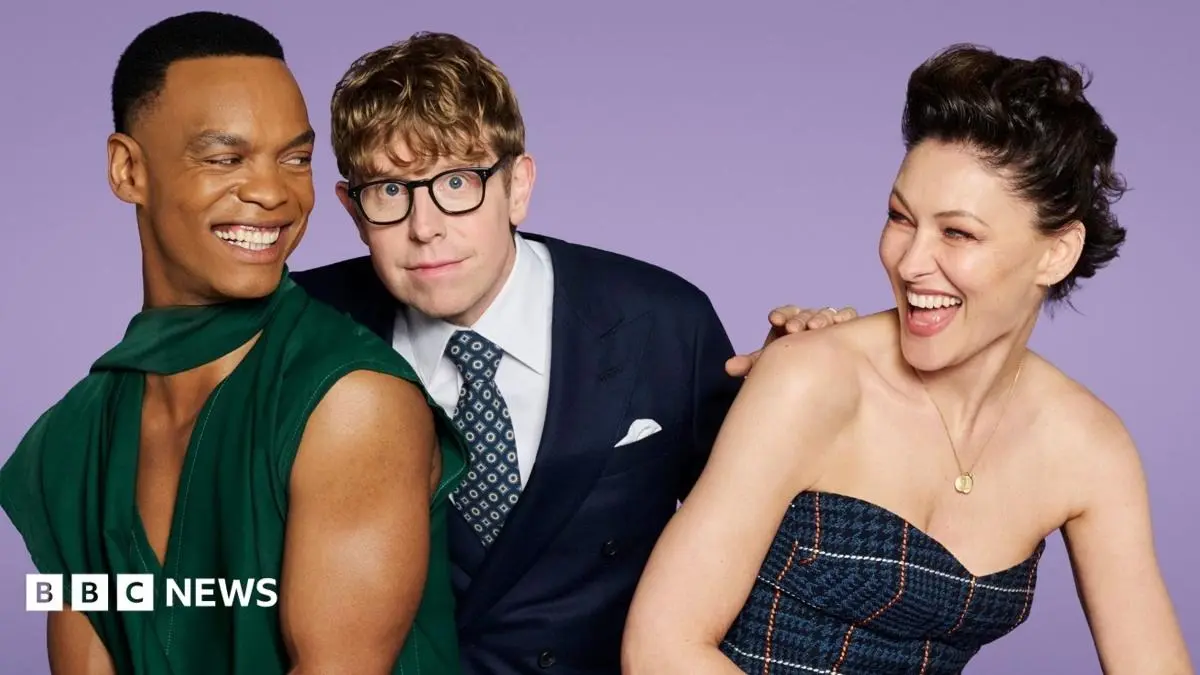
Rather than opting for a traditional succession plan, the BBC has torn up the broadcasting playbook. Beginning later this month, Strictly Come Dancing will return to our screens under the stewardship of an unprecedented three-way presenting coalition: television anchor Emma Willis, comedian Josh Widdicombe, and fan-favorite professional dancer Johannes Radebe.
Far from replicating the strictly demarcated duties of their predecessors—where Daly maintained the main floor and Winkleman presided over the iconic upstairs "Clauditorium"—this new trio has confirmed that traditional boundaries have been entirely dismantled. In exclusive interviews, the incoming hosts have revealed that they will operate without "fixed roles," utilizing a dynamic, fluid approach that Widdicombe has humorously likened to "Total Football."
This comprehensive report examines the strategic mechanics behind the BBC’s boldest casting gamble, explores the audition chemistry tests that birthed the three-person lineup, debunks early tabloid speculation regarding backstage reporting duties, and analyzes what this structural overhaul means for the future of the nation’s best-loved television institution.
Detailed Chronology: From the End of an Era to the Birth of a Trio
To understand the magnitude of the upcoming 2026 series premiere, one must first look back at the seismic shift that occurred at the end of last year. Tess Daly, who anchored the ballroom floor from the show’s very inception in 2004, alongside Claudia Winkleman—who joined as co-host in 2014 following the sad passing of the legendary Sir Bruce Forsyth—announced that the 2025 grand finale would be their final curtain call. Their joint departure left a vacuum at the heart of Saturday night television, sparking months of intense media speculation regarding who could possibly step into two of the most scrutinized roles in British media.
Rumor mills worked overtime throughout the winter months, with bookmakers and tabloid newspapers cycling through dozens of potential pairings. Names ranged from seasoned broadcasting veterans to former contestants and viral social media personalities. However, behind closed doors at BBC Television Centre, executives were quietly cooking up a concept that defied conventional television formatting.
The evolution of the new presenting team was revealed during a recent appearance by Willis, Widdicombe, and Radebe on Richard Osman’s popular podcast, The Rest is Entertainment. According to the trio, the decision to hire three hosts was a late-stage, high-stakes gamble born out of experimentation.
Willis detailed the rigorous audition process, noting that the producers subjected prospective lineups to extensive "chemistry tests" to determine who could carry the demanding live broadcast. After exhausting various traditional duos, the production team decided to throw caution to the wind.
"This is the last one and this is a wild card," producers reportedly told the candidates during the final stages of vetting. "We’re just like, ‘What happens if we do three?’"
The response from the commissioning editors was as honest as it was daring: "It’s so much of a wild card, we don’t really have a script for you either. So we’re going to sit down, get it up on the screen and we’ll have a little tinker all together."
That collaborative "tinker" proved to be the genesis of the new presenting dynamic. Rather than trying to force three personalities into rigid structural boxes, the production team realized that the natural comedic timing, warmth, and contrasting professional backgrounds of Willis, Widdicombe, and Radebe offered a broader spectrum of storytelling capabilities than any previous format.
Supporting Context & Metrics: Breaking the Mold of Traditional Television Hosting
The traditional structure of Strictly Come Dancing was a masterclass in television geography. For over a decade, viewers grew accustomed to a reliable spatial dichotomy:
- The Ballroom Floor (Tess Daly): Formal, poised, and authoritative, acting as the narrative anchor who kept the strict time constraints of a live BBC One broadcast, liaising directly with the judging panel, and guiding the nervous celebrities through the adjudication process.
- The Clauditorium (Claudia Winkleman): Empathetic, chaotic, playful, and deeply informal, providing the emotional decompression chamber where contestants caught their breath, analyzed their scores, and bantered with their professional partners.
This formula became the gold standard of reality television format design. However, the appointment of Willis, Widdicombe, and Radebe signals a departure from spatial segregation.
Speaking candidly about the lack of division, Emma Willis dismissed the notion that anyone was directly filling a specific pair of shoes. "No one’s replacing anybody—at the minute it’s all very kind of open," she told Richard Osman.
Addressing persistent tabloid rumors regarding specific job titles—such as reports claiming Johannes Radebe would serve as a dedicated "backstage roving reporter"—Willis firmly set the record straight: "There’s definitely no backstage roving reporter, which is what has been reported quite a bit."
Josh Widdicombe elaborated on the team’s operational philosophy using a tactical sports metaphor that has quickly become the defining descriptor of the new era. "We’re going to be like Total Football," Widdicombe explained, referencing the legendary Dutch tactical system where any outfield player can take over the role of any other player on the pitch at any given time. "We’re going to be moving everywhere."
This fluid approach means that viewers could see Widdicombe interviewing judges on the floor, Willis doling out comfort in the upstairs lounge, or Radebe seamlessly bridging the gap between technical dance critique and emotional support.
Official Statements & Insights from the New Presenters
The transition from their respective previous careers into the Strictly presenting chair has elicited a mixture of profound excitement and natural apprehension from the trio.
For Johannes Radebe, the shift is uniquely emotional. Having spent years as one of the show’s most beloved professional dancers—capturing the hearts of the nation with his choreographic brilliance, infectious joy, and memorable partnerships—stepping to the other side of the microphone represents a major pivot.
Radebe confessed that while his new role is "very, very exciting," it has not come without moments of psychological adjustment. He admitted to feeling a "little bit of a tinge" of FOMO (fear of missing out) when watching his former professional colleagues sweat through choreography rehearsals in the training studios. Having lived and breathed the grueling physical reality of the competition, watching from the sidelines requires a new perspective.
However, Radebe’s deep institutional knowledge of the show is precisely what producers value most. Unlike external presenters who must learn the culture of the show from scratch, Radebe enters the role with an encyclopedic understanding of how the professional dancers tick, how the celebrities cope with pressure, and how the production cogs turn.
"I will definitely be doing a little bit of prying and finding out the truth," Radebe noted, highlighting the unique advantage he holds. Knowing everyone on a deeply personal level allows him to ask questions that traditional interviewers might miss, digging past the PR-trained responses to extract genuine, unfiltered reactions from the cast.
Emma Willis brings a wealth of live broadcasting pedigree to the table, having fronted some of the largest entertainment formats on British television, including Big Brother, The Voice UK, and The Circle. Her ability to command a live studio audience with calm authority will be a stabilizing anchor for the unpredictable three-way dynamic.
Meanwhile, Josh Widdicombe brings sharp, observational comedic instincts honed through years as a stand-up comedian and co-host of The Last Leg. Widdicombe’s self-deprecating humor and quick-witted banter are expected to inject a fresh, contemporary comedic energy into the Saturday night broadcasts, balancing the emotional gravity of the competition with levity and wit.
Future Outlook: What the 2026 Series Means for the Future of BBC Entertainment
As the countdown to the live shows continues, television critics and entertainment analysts are closely monitoring how the BBC’s high-profile gamble will be received by the viewing public. Strictly Come Dancing is not merely a television show; it is a British cultural institution, an anchor of autumn and winter weekends that regularly commands audience shares exceeding ten million viewers.
Messing with a winning formula is always fraught with risk. When beloved hosts step down, audience resistance is a natural psychological hurdle. However, by choosing a trio rather than a direct duo replacement, the BBC has cleverly mitigated the trap of direct comparison. Willis, Widdicombe, and Radebe cannot be compared head-to-head with Daly and Winkleman because they are playing an entirely different game.
Key Factors to Watch in the Upcoming Series:
- Pacing and Chemistry on Live TV: Maintaining a cohesive narrative arc across a live, two-hour broadcast with three distinct presenters requires immaculate timing. The success of the "Total Football" approach will rely heavily on the non-verbal communication and mutual trust between Willis, Widdicombe, and Radebe.
- The Balance of Authority and Humor: With two established comedians/broadcasters and one professional dancer, the team must strike the right balance between respecting the competitive integrity of the dance scores and delivering lighthearted entertainment.
- Audience Reception: How the core demographic of Strictly traditionalists adapts to the absence of fixed roles will be the ultimate litmus test for the format’s longevity.
Industry insiders suggest that if this trio successfully pulls off the fluidity they are promising, it could redefine how entertainment television formats are structured across the board. The era of rigid, compartmentalized presenting roles may be giving way to a more collaborative, ensemble-driven style of television—one where spontaneity trumps scripted tradition.
As rehearsals ramp up and the premiere date draws closer, anticipation has reached fever pitch. The glitterball is polished, the dancefloor is laid, and three very different broadcasters are preparing to step into the spotlight. For Strictly Come Dancing, the future has arrived—and it refuses to stay in its lane.