Few television phenomena in recent years have captured the public imagination quite like The Traitors. With its intoxicating blend of psychological warfare, institutional paranoia, strategic backstabbing, and the inimitable, theatrical oversight of host Claudia Winkleman, the reality-competition format has established itself as a modern cultural touchstone. Yet, beneath the roaring open fires of the Scottish highlands castle, the frantic round-table accusations, and the cloaked midnight murders lies the show’s most potent, covert weapon: its soundtrack.
Far from being a passive acoustic backdrop, the audio landscape of The Traitors actively shapes, manipulates, and weaponizes the viewer’s perception. A brooding orchestral swell warns of an impending betrayal, while a brilliantly misplaced, tongue-in-cheek chord turns a tense kitchen breakfast into a dark comedy of manners. The music operates as an unreliable narrator, deployed by producers to amplify dramatic tension or lead the audience down elaborate paths of misdirection.
This deep dive examines how composers Sam Watts and German production house 2wei—alongside cinematic powerhouses like Bleeding Fingers—engineered a sonic universe that treats a reality television game with the epic gravity of a blockbuster feature film. By fusing high-drama orchestration, trailer-music tropes, and haunting pop covers, the creative teams behind The Traitors managed a paradoxical feat: making murder feel undeniably, intoxicatingly fun.
Detailed Chronology & The Genesis of a Sound
Conceiving the Soundscape: "Dark, But Fun"
When the BBC first sought to adapt the psychological deception format, network executives harbored deep reservations about centering a prime-time series around the mechanics of murder and betrayal. Sam Watts, a seasoned composer whose credits include Planet Earth and The Sarah Jane Adventures, was brought on early in the development cycle to craft the opening theme and core incidental score.
Watts approached the project with a deliberate philosophy. Knowing the BBC’s initial hesitation regarding the dark premise, he realized the music could not plunge unreservedly into grim, unrelenting horror. The turning point arrived when producers shared early footage of Claudia Winkleman against the misty backdrop of the Highland castle.
"That’s when I knew it was going to be a bit camp and high drama and all the glorious things that Claudia brings to the show," Watts recalls. He settled on a tonal tightrope walk: a sound that was fundamentally dark, yet undeniably fun.
Drawing inspiration from childhood touchstones—specifically Bernard Hoffer’s gloriously over-the-top, bombastic Thundercats theme—Watts set out to compose a title sequence that commanded attention. He wanted a piece that would cut through household chatter, compelling viewers to sprint back from the kitchen upon hearing the opening notes. More importantly, he needed a hook: a hummable, unforgettable melody that would instantly brand the show’s burgeoning global identity. Recorded with a full live orchestra and heavily layered with electronic elements, the resulting theme became one of the most ambitious compositions of Watts’s career, bleeding seamlessly into the two dozen incidental cues that now soundtrack international adaptations across the globe.
Amplifying the Tension: The Trailer Aesthetic
To maintain an unyielding atmosphere of psychological pressure, the production team consciously abandoned traditional reality television scoring conventions. Sarah Fay, a producer on the civilian series, noted that the objective was to construct an edge-of-your-seat cinematic drama that evoked prestige serials like Succession alongside the witty, twist-laden whodunnit energy of Rian Johnson’s Knives Out.
To achieve this movie-trailer aesthetic, the production enlisted film trailer composers—including Hans Zimmer’s renowned collective, Bleeding Fingers—to inject high-octane cinematic mechanics into the television cut. Central to this approach was the liberal deployment of trailer-music mainstays, most notably the “Braam”: a signature, klaxon-like sub-bass punctuation mark first popularized in Hollywood by composer Hans Zimmer for Christopher Nolan’s Inception.
By treating every hour-long episode like a continuous theatrical trailer, the sound design ensures that viewers are kept in a perpetual state of psychological suspense, waiting for the pressure chamber to detonate.
Supporting Context & Metrics: The Anatomy of a Cover
While the original score established the foundational gravity of the castle, the emotional texture of The Traitors was dramatically expanded through the integration of haunting, deconstructed pop covers. Tracks like a chillingly eerie reinvention of Britney Spears’ Toxic and a descent-into-Hades rendition of Tears for Fears’ Mad World became instantaneous fan favorites.
Surprisingly, these defining sonic textures were not originally commissioned for the television series. Both tracks were the brainchild of 2wei (pronounced zwei), a Hamburg-based production house founded in 2016 by lifelong friends and collaborators Simon Heeger and Christian Vorländer.
The 2wei Phenomenon: From LA Ad Agencies to Highland Castles
Heeger and Vorländer honed their craft in Los Angeles, writing music for high-end commercial advertising and Hollywood film trailers. Vorländer’s work on the Mad Max franchise—celebrated for its thunderous percussion and massive orchestral scale—laid the ideological bedrock for 2wei’s signature style.
Their breakthrough moment arrived when they reimagined Destiny’s Child’s Survivor for the cinematic trailer of Alicia Vikander’s Tomb Raider reboot. From there, the 2wei sound—characterized by epic drums, sweeping orchestral strings, and towering female vocal performances—permeated blockbuster trailers, video games like League of Legends, and high-profile cinematic universes including Wonder Woman.
When The Traitors premiered, Heeger and Vorländer had no advance knowledge that their music had been licensed for the British adaptation. They only discovered their involvement when British friends flooded their inboxes in sheer disbelief. "We were just flipping out," Heeger remarks. "It’s completely different to how we ever thought it would be used."
The Commercial Sweet Spot
Heeger credits their background in the commercial advertising sector as the secret to their success within the reality-television landscape. In advertising, composers are tasked with conveying complex emotional arcs in a matter of seconds. Similarly, The Traitors relies on rapid tonal shifts, abrupt cliffhangers, and sudden betrayals.
"You need music that comes to the point right away but still has a boldness to it," Heeger explains. "It’s a sweet spot, and it’s not easy to convey, but every now and then it works quite well."
Fan Engagement and Cultural Penetration
The cultural resonance of the show’s audio design extends far beyond broadcast television. On streaming platforms such as Spotify, hundreds of user-generated playlists are dedicated entirely to the background music of The Traitors. Fans categorize these tracks for distinct psychological experiences: some curate selections for themed murder-mystery parties and Halloween events, while others lean into atmospheric sub-genres labeled "gentle tension" or "chill elder emo watching Traitors."
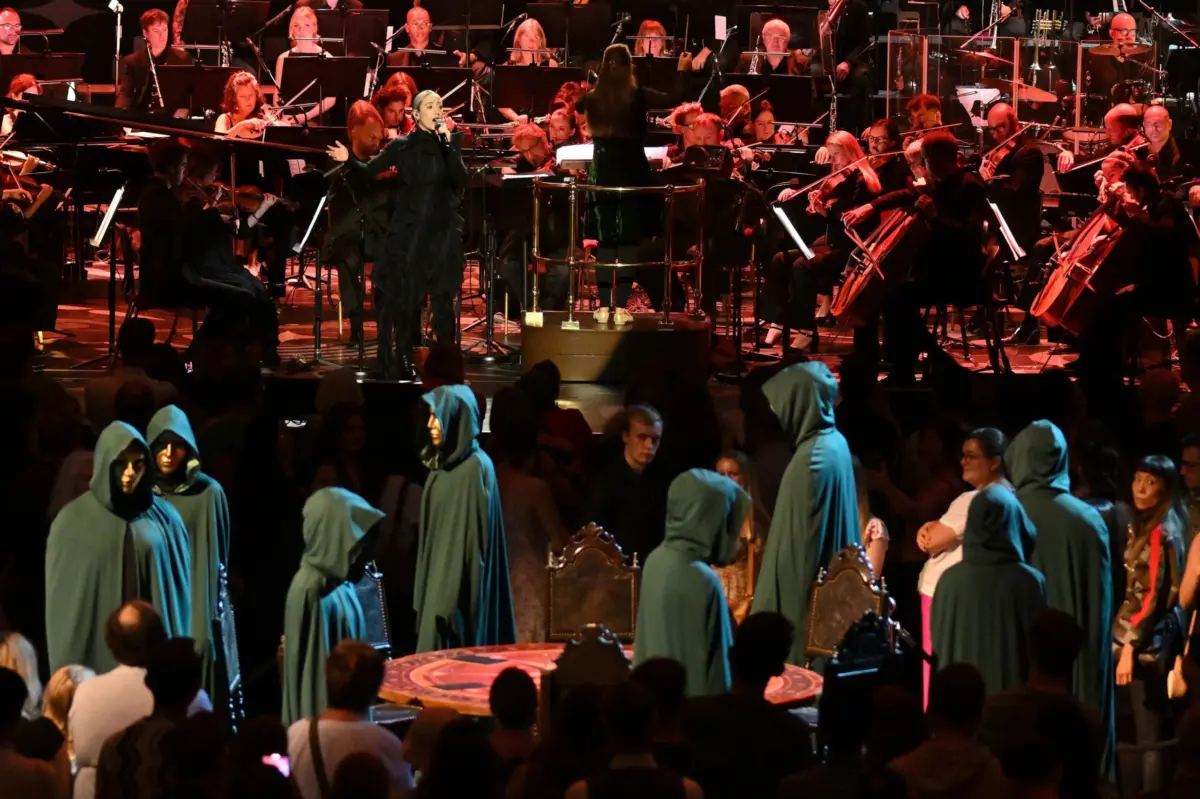
The soundtrack’s popularity reached an institutional zenith when the BBC dedicated an entire evening at the prestigious BBC Proms concert series to performing the show’s musical arrangements live, cementing the score as a legitimate piece of modern orchestral art.
Official Statements and Industry Insights
The deliberate intersection of lighthearted camp and dark suspense remains the driving ethos behind the creative execution of the series. Industry stakeholders have repeatedly emphasized that the music acts as the essential social lubricant for an inherently brutal format.
"I remember the BBC was quite reluctant to even think about a show with murder as a main feature, so I knew I didn’t want the music to go really dark… I just went with that – dark but fun."
— Sam Watts, Composer
"We wanted to just supersize it and make it feel like a drama, not like your usual reality show. We wanted to make it feel like that edge-of-your-seat cinematic drama with, you know, elements of Succession, and we wanted it to feel like Knives Out when you get into the castle!"
— Sarah Fay, Producer
"In adverts, you only have a few seconds to convey a certain emotion and, especially in Traitors, where there are cliffhangers and moments that you don’t expect, you need music that comes to the point right away but still has a boldness to it."
— Simon Heeger, Co-founder of 2wei
Watts underscores that the underlying humor of the score is precisely what gives the show its rewatch value and mass appeal. By infusing the arrangements with a playful wink, the production ensures that audiences can stomach the emotional cruelty of the banishments and assassinations.
"A lot of my music has a wink in it and, for The Traitors, it’s a little silly and slightly over the top," Watts reflects. "I think it helps the nastier side of things—the murder, the plotting—feel a bit more fun."
Future Outlook
As The Traitors continues to expand into an international multi-format powerhouse with localized adaptations spawning across the globe—from the United States and Australia to France, Spain, and beyond—the architectural blueprint of its sound design has been cemented as an industry standard.
The success of Sam Watts’s foundational themes and 2wei’s dramatic pop interpretations has signaled a broader evolution in unscripted television. Broadcasters and production houses are increasingly abandoning generic, royalty-free library cues in favor of bespoke, cinematic-grade compositions that elevate reality television into high-art psychological drama.
Future iterations of the franchise will undoubtedly push these sonic boundaries further, experimenting with immersive audio technologies and even grander orchestral arrangements. However, the core mandate established in the Scottish highlands will remain unchanged: keep the stakes impossibly high, keep the psychological pressure mounting, and always ensure that the murder remains deliciously, compellingly fun.