Executive Overview
In the modern landscape of urban music production, where algorithms frequently dictate tempo, aesthetic, and structural arrangements, true sonic innovation has become an increasingly rare commodity. Producers are often nudged toward conformity, chasing fleeting viral trends rather than cultivating enduring artistic signatures. Yet, away from the hyper-saturated hubs of London and Los Angeles, the UK Midlands continues to function as a quiet crucible for uncompromising creativity.
Enter A Class—a Birmingham-born producer, sound architect, and compositional polymath whose work bridges the gritty, asphalt-bound realities of British rap with the sweeping, emotional grandeur of cinematic orchestration.
For A Class, beatmaking is not merely about stringing together heavy 808s and standard-issue hi-hat rolls; it is an exercise in spatial geometry and emotional puzzle-solving. Over a career that has evolved quietly yet purposefully, he has carved out an expansive lane for himself. His credits read like a cultural blueprint of modern British black music and media, spanning foundational collaborations with Birmingham rap royalty such as Jaykae, Mowgs, and RK, to high-profile contributions to critically acclaimed, award-winning television and national theatre productions.
Part of Viper Magazine’s exclusive Sonic Architects interview series—which looks beyond the surface-level metrics of modern music to examine the rigorous engineering and psychological philosophies driving today’s top creators—this deep-dive explores how an aspiring rapper transitioned into a master of sound design. In our extensive conversation, A Class breaks down the exact technical catalysts that sparked his journey, the West Coast American influences that quietly shaped his ear, the realities of scoring for BAFTA-winning television screens, and his upcoming long-form project, M.U.S.A.
Detailed Chronology: From Crude Grime to Cinematic Mastery
The Genesis of a Sound Designer
Every great producer has a humble origin story, and for A Class, the journey did not begin behind a mixing desk or with a sophisticated digital audio workstation (DAW). It started with the raw, youthful ambition of wanting to hear his own voice over an instrumental.
"My production journey began because I used to spit bars and wanted my own beats," A Class recalls with a laugh, reflecting on his early experiments with the software of the era.
During the formative years of the UK underground scene, A Class immersed himself in the hyper-energetic, high-BPM worlds of Grime and Bassline—genres defined by their rugged low-end frequencies, square-wave synths, and raw, unrehearsed urgency. However, his initial attempts at beatmaking were, by his own brutally honest admission, far from polished.
"I made Grime and Bassline, but I was ass [laughs], my beats were horrid."
Rather than becoming discouraged by the initial gap between his creative vision and his technical execution, A Class experienced a profound paradigm shift. The music itself was cool, but it was the deep, labyrinthine science of audio engineering that truly captured his imagination. The underlying mechanics of how sound behaves, how frequencies interact, and how software can manipulate acoustic space became his primary obsession.
"Then I kind of fell in love with figuring out how to become good," he explains. "So the music is cool, but the actual understanding of how to control sound is what has kept my attention this long."
This intellectual curiosity transformed him from a rudimentary beatmaker into an acoustic architect. He began treating frequencies with the meticulousness of a structural engineer, discovering that depth, space, and texture could communicate emotion just as effectively as lyrical content.
Building an Aesthetic: The Cinematic Blueprint
When asked to define the core stylistic identity of his sound, A Class does not point to a specific genre classification or rhythmic swing. Instead, he looks to the silver screen.
"Hi, my name’s A Class, I’m from Birmingham," he states, establishing his regional pride. "I would say my production style is cinematic. Most of my beats could be used in movies because of the depth carried in my production."
This cinematic quality is not accidental. While many contemporary producers compress their mixes to achieve maximum loudness for mobile phone speakers and compressed streaming algorithms, A Class builds mixes with dynamic range and horizontal space in mind. His soundscapes are layered with sweeping string arrangements, sub-bass frequencies that vibrate at visceral physical levels, and atmospheric textures that evoke deserted urban landscapes at midnight.
This signature depth has made him a sought-after collaborator for artists who require more than just a standard loop to ride. By supplying Birmingham heavyweights like Jaykae, Mowgs, and RK with uncompromising sonic backdrops, A Class helped anchor the Midlands as a distinct, unignorable voice within the broader UK rap ecosystem.
Supporting Context & Metrics: Beyond the Beatbox
Expanding into Television, Film, and Theatre
While A Class maintains deep roots in the rap underground, his career has long since broken out of traditional musical silos. The modern entertainment industry increasingly demands cross-disciplinary talent—composers who understand the kinetic energy of street culture yet possess the technical sophistication to score narrative drama. A Class fits this brief perfectly, resulting in a resume that stretches far beyond the recording studio.
Most notably, A Class contributed his sonic identity to jungle, the critically acclaimed, visually arresting Amazon Prime television series that swept the cultural zeitgeist and walked away with two BAFTA awards. Tasked with producing the show’s striking intro music, A Class brought his characteristic atmospheric grit to a medium that demands immediate narrative immersion.
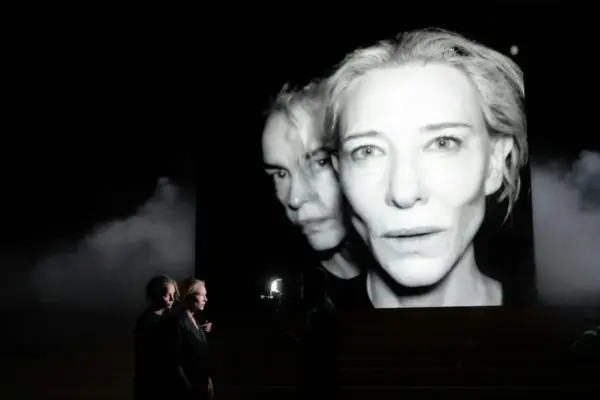
His reach extends further into mainstream prestige television with work on Netflix’s vibrant musical drama champion, a series celebrating the intricacies of the British-Jamaican music scene. Furthermore, his collaborative ambition crossed over into the dramatic arts when he composed and curated soundscapes for a high-profile, UK-wide touring theatre production of William Shakespeare’s Romeo and Juliet.
These multi-medium credits underline a crucial metric of modern artistic longevity: adaptability. In an era where linear career paths are vanishing, A Class’s ability to pivot seamlessly from a gritty rap 16-bar loop to a BAFTA-winning television sequence proves that foundational sound design is a universally translatable art form.
The Foundational DNA: West Coast Roots and Production Icons
Every architect of sound stands on the shoulders of giants. While A Class is fiercely original in his execution, his creative DNA was forged by a distinct mixture of American West Coast atmosphere and generational production royalty.
"Back in the day, I was highly inspired by Brotha Lynch Hung and the West Coast," A Class reveals.
The influence of Sacramento’s horrorcore pioneer Brotha Lynch Hung points directly to A Class’s affinity for dark, menacing, and richly atmospheric compositions. Unlike the bright, polished synthesizer-heavy G-funk of Los Angeles, underground Northern California rap provided a blueprint for cinematic, brooding tension—an aesthetic that heavily informs A Class’s darker beat structures.
Of course, no survey of foundational production influences would be complete without acknowledging the titans of the golden era, though A Class quickly filters them through his own analytical lens.
"Other than the usual Dr. Dre and Timbo [Timbaland], I really appreciated Boi-1da because he would actually produce records for multiple types of artists; not stick to one sound, but perfect bringing the best out of the artist’s style."
This philosophy—prioritizing the elevation of the artist over the imposition of a rigid producer signature—explains why A Class can transition so effortlessly between aggressive street rap, television scoring, and classical theatre adaptations. For him, the beat is not a vehicle to showcase his own ego, but a sonic frame designed to capture and amplify the unique essence of whoever steps in front of the microphone or the camera.
Official Statements & Industry Philosophy
The Democratization of Production Software
Beyond his technical achievements in the studio and on stage, A Class is a vocal advocate for the accessibility of music production software. In an industry historically plagued by gatekeeping, high financial barriers to entry, and complex licensing frameworks, he believes that the tools required to create high-art audio should be within reach of every aspiring creator, regardless of their socioeconomic background.
During our conversation for Viper Magazine’s Sonic Architects series, A Class touched upon the societal responsibility of software developers and established artists to foster the next generation of talent. When technology is democratized—when a teenager in a council estate in Birmingham has access to the same spatial audio plug-ins and virtual instruments as a multi-platinum engineer in Los Angeles—the entire cultural landscape benefits.
His perspective challenges the traditional elite model of music production. By viewing software not as an exclusive luxury good, but as a public utility for creative expression, A Class aligns himself with a progressive faction of modern producers who view mentorship and tool accessibility as essential duties.
Future Outlook: The Horizon of M.U.S.A
As A Class looks toward the future, the momentum he has built across multiple creative industries shows no signs of slowing down. With his cinematic fingerprint now permanently stamped onto British television history through jungle and champion, and his theatrical credentials cemented via Romeo and Juliet, the producer is turning his attention back to his core musical output.
Currently on the horizon is his forthcoming long-form project, titled M.U.S.A. While details surrounding the release remain closely guarded, industry insiders and fans of his work can anticipate a masterclass in atmospheric arrangement. M.U.S.A promises to synthesize his extensive experiences across rap, film scoring, and spatial sound design into a singular, cohesive auditory journey—one that refuses to pander to short attention spans or algorithmic fatigue.
Join the Inner Circle
This comprehensive feature is just a fraction of the conversation. The complete, uncut interview with A Class is part of Viper Magazine’s exclusive long-form content series, now hosted on their dedicated Substack platform.
To read the full, unedited dialogue with A Class and gain unrestricted access to an extensive archive of deep-dives into the true architects of hip-hop and global youth culture, head over to the Viper Substack.
Explore more artist features and industry analysis via More Viper Interviews.