Executive Overview
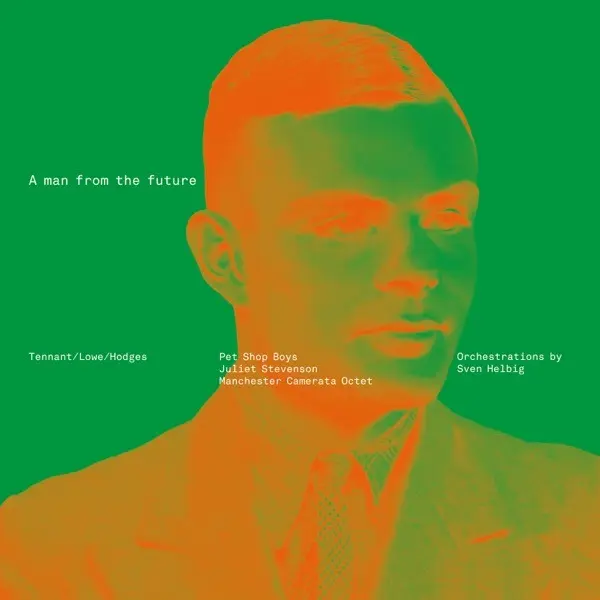
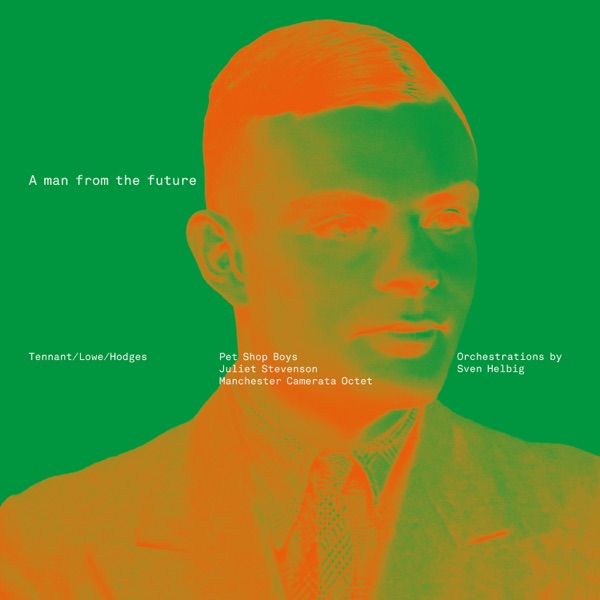
Few musical pairings could be considered as naturally suited to translating the life, tragedy, and monumental legacy of pioneering mathematician, cryptanalyst, and computer science trailblazer Alan Turing into a sonic landscape as the Pet Shop Boys. Comprising the visionary duo of Neil Tennant and Chris Lowe, the iconic British synth-pop act has long combined intellectual rigor with sweeping melodic pop architecture. Their ambitious conceptual project charts the breathtaking highs and devastating lows of Turing’s existence, transforming historical biography into an immersive, emotionally resonant auditory experience.
Developed in close collaboration with Andrew Hodges, Turing’s definitive biographer, the project originally materialized between 2012 and 2013. It made its grand live debut in July 2014 during a special performance alongside the BBC Concert Orchestra at London’s historic Royal Albert Hall. In the decade since that initial premiere, the work has undergone meticulous refinement. Tennant and Lowe reworked the material alongside original orchestrator Sven Helbig, crafting a definitive recorded body of work.
The resulting masterpiece weaves together masterfully delivered spoken-word passages—courtesy of acclaimed actor Juliet Stevenson—and Tennant’s signature melancholic, narrative-driven lyricism. These elements float seamlessly over Lowe’s evocative synthesizers and lush orchestral string arrangements, charting Turing’s life in striking chronological detail. For an electronic act that recently celebrated some of its highest-charting commercial success in decades, pivoting to an avant-garde orchestral concept piece might seem unconventional on paper. Yet, when viewed through the lens of shared historical resilience, artistic pioneering, and the quiet endurance of institutional scrutiny regarding their sexuality, the project emerges as a deeply personal and boldly defiant masterwork in the Pet Shop Boys’ illustrious catalog.
Detailed Chronological Journey: From Public School Rebel to Historical Martyr
The conceptual journey unfolds in a precise, chronological sequence across multiple movements, each illuminating a distinct, critical chapter of Turing’s extraordinary and tragic life.
Act I: The Genesis of Independence
The album opens with “Natural Wonders Every Child Should Know,” an evocative piece that immediately establishes the psychological and social environment of Turing’s youth. Set against the backdrop of a “moderately distinguished public school,” the track highlights an intellectual independence that set the young Turing apart from his peers. The lyrics capture a stark isolation and a burgeoning defiance:
“One could conform, rebel, or withdraw / And Alan withdrew.”
This early withdrawal was not merely antisocial behavior; it was the defensive architecture of a mind that operated on entirely different frequencies. As the narrative progresses, the awakening of Turing’s sexuality—alongside his harrowing early experiences of first love and its subsequent, abrupt loss—paves the way for a man permanently alienated from societal expectations. He consistently refused to conform, instead carving out a solitary, revolutionary pathway through the intellectual landscape of mid-20th-century Britain.
Act II: Machines, Enigma, and Computing
Moving into his academic and professional prime, the composition tracks Turing’s trajectory from Cambridge University—encapsulated in the piece “He Dreamed of Machines”—to the hallowed, secretive grounds of Bletchley Park during the Second World War.
In “The Enigma,” the music captures the breathless urgency of cryptanalysis. Here, Turing’s genius directly altered the course of modern history by breaking the German Enigma code, saving millions of lives and tipping the scales for the Allied forces. This wartime triumph flows directly into the dawn of the digital age with “Memory Control,” a movement dedicated to his foundational theoretical work in computer science. Turing’s conceptualization of the Turing machine laid the theoretical groundwork for every modern computer, smartphone, and server in existence today.
Act III: Persecution, Trial, and Tragedy
Yet, the breathtaking heights of his professional achievements are starkly juxtaposed against the institutionalized cruelty of the era. The narrative confronts the devastating turning point of 1952 in “The Trial,” capturing the legal persecution Turing faced following the revelation of a relationship with another man, which led to his criminal conviction for "gross indecency."
Strip-searched of his security clearance and subjected to horrific chemical castration as an alternative to imprisonment, Turing’s spirit and body were systematically broken by the state he had saved. The chronology reaches its agonizing crescendo in “Only In His Death,” which details his apparent suicide by cyanide poisoning at the age of 41—a tragic end for a man whose mind was still decades ahead of humanity.
Supporting Context & Metrics: Resonance, Geography, and Historical Irony
The sonic architecture of the record is laden with subtle, geographical, and historical nuances that elevate the project from a standard biographical album to a work of high art.
Geographical and Musical Symbolism
Significantly, the string arrangements and choral vocals featured throughout the project were performed entirely by Manchester-based musicians. This creative choice serves as a poignant nod to Turing’s later years at the University of Manchester, where he contributed crucially to the development of early British computers (such as the Manchester Mark 1). It is also the very city where he was arrested, tried, and ultimately died—transforming Manchester from a site of historical trauma into a physical vessel for his artistic resurrection.
The Irony of State Chronology
The details packed into the eponymous final track place Turing’s persecution within a broader, chilling historical context. The lyrics highlight a devastating historical alignment: Turing was criminally charged on the exact day Queen Elizabeth II ascended to the British throne. It would take an agonizing 62 years—until 2013—for a posthumous royal pardon to be formally issued.
This stark timeline underscores the sustained, systemic hostility directed toward homosexuality throughout the 20th century and well into the modern era. However, the legacy of this injustice catalyzed legislative reform. Since the Pet Shop Boys first began work on this piece, the historic "Alan Turing Law" has been introduced and expanded, retroactively pardoning tens of thousands of men prosecuted under historical laws criminalizing homosexuality in the United Kingdom.
Official Perspectives and Behind-the-Scenes Insights
The realization of a project bridging high-art orchestration, pop sensibilities, and historical biography required a unique convergence of creative minds.
The Creative Partnership: Hodges and Helbig
Andrew Hodges, whose definitive 1983 biography Alan Turing: The Enigma served as the foundational text for the project, praised the Pet Shop Boys for their ability to distill complex mathematical and emotional concepts into accessible, moving art. Hodges noted that the collaboration successfully captured not just the mechanical genius of Turing’s code-breaking machines, but the deep vulnerability and humanity of a man caught between the heroic demands of wartime service and the unforgiving bigotry of peacetime bureaucracy.
Meanwhile, orchestrator Sven Helbig—who worked closely with Tennant and Lowe to refine the score over a decade—emphasized the delicate balance required to merge electronic music with classical orchestration. "We wanted Chris [Lowe’s] synthesizer soundscapes to feel like logical extensions of the Manchester computers Turing helped build," Helbig explained in retrospective interviews surrounding the record’s release. "The electronics represent the cold, logical architecture of his mind, while the strings and Juliet Stevenson’s spoken-word delivery represent the warm, beating heart that the state ultimately tried to extinguish."
Future Outlook: Legacy, Cultural Impact, and Permanent Resonance
As this monumental project settles into the broader cultural consciousness, its implications stretch far beyond the traditional boundaries of the pop music market. By turning a critical lens toward historical injustice through the medium of synth-pop and orchestral arrangement, the Pet Shop Boys have cemented their status not merely as pop chameleons, but as cultural historians of the highest order.
Cultural Longevity
The work arrives at a time when technology, artificial intelligence, and digital ethics are dominating global discourse—discourse that invariably traces back to Turing’s foundational queries, such as "Can machines think?" By linking these universal technological questions to the human rights struggles of queer individuals, the Pet Shop Boys have ensured that Turing’s story remains an urgent, living warning against intolerance.
Next Steps for the Project
Industry insiders and music critics alike are speculating on the potential for the live show to return on an international scale. Given the rapturous critical reception of its Royal Albert Hall premiere and subsequent revisions, cultural institutions across Europe and North America have expressed interest in mounting fully staged orchestral performances of the work. Accompanied by visual projections that blend historical Bletchley Park archives with modern digital art, these potential performances could bring Turing’s story to entirely new generations of listeners.
Ultimately, the Pet Shop Boys have achieved something extraordinary. They have taken the broken life of a mathematical genius and woven it into a timeless monument of sound. In doing so, Neil Tennant and Chris Lowe have ensured that Alan Turing’s voice—amplified by strings, synthesizers, and spoken verse—will continue to echo across the digital age he helped create.