Executive Overview
In the modern era, the struggles of conception are frequently discussed through the lens of reproductive endocrinology, in-vitro fertilization clinics, and psychological support networks. Yet, historical research reveals that the emotional, social, and physical toll of reproductive challenges is far from a contemporary invention. In medieval Europe, childlessness was a profound source of personal grief and public scrutiny. Within a society where both the foundational tenets of the Church and the survival obligations of familial lineages dictated that the primary purpose of marriage was procreation, couples unable to conceive found themselves navigating a complex labyrinth of medical theories, religious expectations, and unsolicited well-meaning advice.
Recent historical scholarship into medieval reproductive disorders uncovers how everyday people—ranging from prosperous 14th-century Italian merchants to ordinary peasant families—understood fertility and actively sought remedies. Far from being passive subjects of fatalism, medieval couples drew upon a sophisticated, albeit radically different, framework of medical science and spiritual intervention. They consulted elite physicians, experimented with herbal poultices recommended by female healers, wore prayer-inscribed belts, and sought the intercession of hermits and saints.
While the scientific paradigms of the Middle Ages have long been superseded by modern biomedicine, the socio-emotional dynamics of infertility—the unsolicited advice of relatives, the internal grief of unfulfilled expectations, and the intersection of faith and science—remain remarkably resonant today. This investigation explores how medieval society conceptualized reproductive failure, the remedies they deployed, and the striking parallels between historical and contemporary experiences of childlessness.
Detailed Chronology: Case Studies from the Archives
To understand how medieval individuals approached reproductive struggles, historians look to surviving personal correspondence, civic records, and hagiographical texts. These documents offer rare, intimate glimpses into the lives of couples grappling with childlessness across centuries.
The 14th-Century Predicament of Francesco and Margherita Datini
One of the most thoroughly documented cases of medieval infertility centers on Francesco and Margherita Datini, a prominent merchant couple living in 14th-century Italy. Francesco was a self-made man who amassed substantial wealth through trade, establishing a vast commercial empire based in Prato. Yet, after several years of marriage, the couple remained childless.
Their condition did not remain a private matter. In a society fixated on lineage and inheritance, friends and family frequently commented on their lack of offspring. In one surviving letter, a family friend congratulated Francesco on his phenomenal financial prosperity, but added a pointed critique: “I would rather see [Margherita] become fatter by making children than in gathering money.”
The Datinis’ correspondence reveals that they actively sought solutions to their childlessness. They consulted licensed medical physicians—an expensive and prestigious route available to the elite merchant class. However, because medical intervention was only one facet of medieval healthcare, Margherita’s social circle inundated her with alternative remedies:
- Herbal Poultices: Margherita’s sister offered to purchase a specialized poultice—a concoction of herbs and fats placed directly on the abdomen—crafted by a local female healer who claimed high success rates with other women.
- Sacred Armor: Recommendations also included protective amulets, such as a belt inscribed with holy prayers designed to ward off barrenness.
- Charitable Works: In the same correspondence network, Margherita’s brother-in-law advised that the couple should actively seek divine favor through increased charitable giving to the poor.
Despite consulting physicians, wearing protective tokens, and engaging in pious acts, the Datinis never conceived a child together. Paradoxically, surviving records indicate that Francesco fathered illegitimate children with other women, underscoring the social double standard of the era, where reproductive failure was almost invariably projected onto the female body.
The 12th-Century Pilgrimage of Godric of Finchale
While merchant letters provide insight into the domestic and social pressures of the urban elite, hagiographical records—accounts of the lives of saints—illuminate the deep emotional trauma experienced across different social strata.
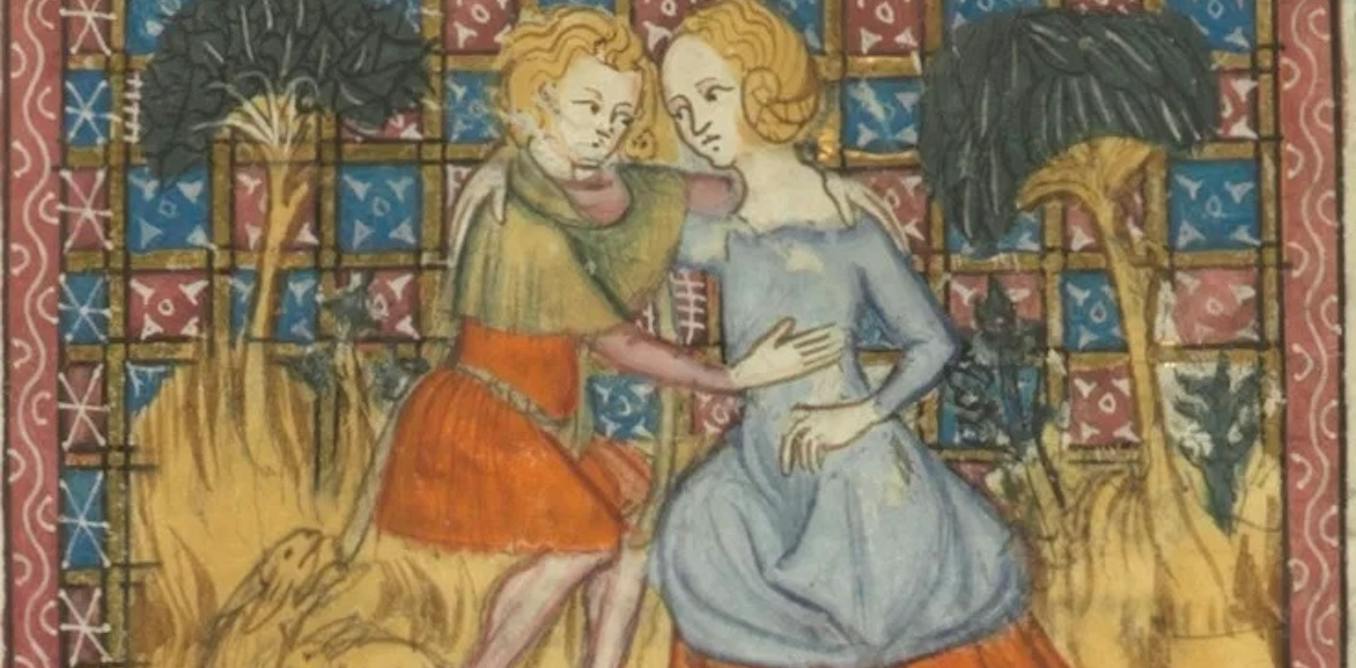
In late 12th-century England, the official biographer of the hermit Godric of Finchale recorded the harrowing plight of an unnamed husband and wife. After suffering a devastating series of miscarriages and stillbirths, the couple made a pilgrimage to the holy man seeking spiritual relief. According to the biographer, “they were both deeply distressed and felt that God’s judgment was standing over them in a dreadful way.”
For this couple, the inability to carry a child to term was interpreted not merely as a biological mishap, but as a terrifying sign of divine displeasure. Their narrative highlights how grief over pregnancy loss was amplified by the medieval theological worldview, which frequently sought moral or spiritual explanations for physical tragedies.
Supporting Context & Metrics: Explaining Infertility in the Middle Ages
Medieval explanations for reproductive disorders generally fell into two major, complementary categories: the natural-medical framework and the spiritual-theological framework. Rather than viewing science and religion as conflicting forces, medieval thinkers integrated both into a coherent worldview.
1. The Medical Framework: Humoral Theory
Medieval European physicians did not operate in a scientific vacuum; their understanding of reproduction was built upon a rich intellectual tradition. They drew heavily from the ancient Greek medicine of Hippocrates and Galen, which had been meticulously preserved, translated, and expanded upon by Arabic-speaking scholars in the medieval Islamic world before being translated into Latin between the 11th and 13th centuries.
The cornerstone of this medical system was the theory of the humours, which posited that every human body contained a delicate balance of four primary qualities:
- Heat
- Cold
- Moisture
- Dryness
Reproductive health required a precise equilibrium of these qualities. Infertility and sexual dysfunction were frequently diagnosed as a consequence of excess coldness in the body, which was believed to congeal seed and stifle generative capacities.
Consequently, medical treatments for infertility often focused on warming the body. Physicians prescribed specialized diets and remedies featuring "hot" spices—such as cinnamon, ginger, and pepper. While humoral medicine has long been replaced by modern endocrinology and genetics, it provided medieval patients with a logical, systematic explanation for their conditions and a clear pathway to therapeutic intervention.
2. The Theological Framework: Divine Will and Biblical Precedent
Parallel to humoral medicine was the religious explanation. The Hebrew Bible and Christian scriptures offered powerful narratives of infertility, featuring prominent matriarchs—such as Sarah, Rachel, Hannah, and Elizabeth—who experienced prolonged barrenness before miraculously conceiving special children, often in their advanced years.
These biblical archetypes deeply shaped medieval theology. Preachers and theologians taught that God could grant or withhold fertility directly. While this belief could occasionally be weaponized by detractors to imply that a childless couple was being punished for hidden sins (as seen in the advice given to Margherita Datini), mainstream churchmen offered a more consoling perspective.
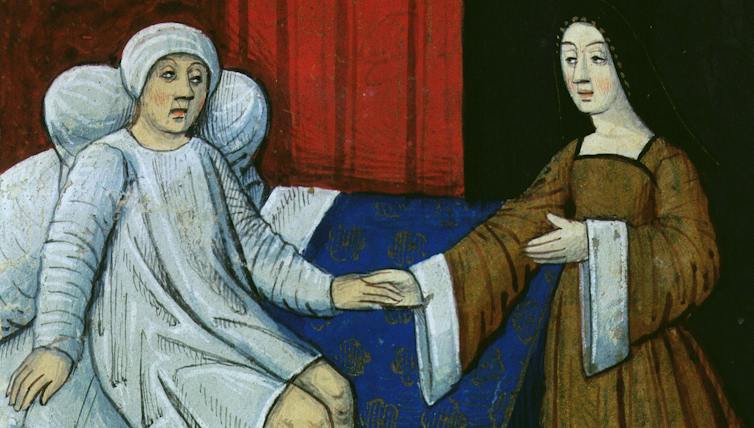
The Golden Legend—a vastly popular medieval collection of hagiography—explicitly reassured believers that “God punishes not nature, but sin, and therefore when he closes a woman’s womb, he does this in order to open it miraculously later on.” Thus, infertility was frequently framed not as a permanent punishment, but as a divine trial designed to test faith or pave the way for a greater spiritual destiny.
Official Perspectives: The Silence of the Archives
One of the greatest challenges facing historians of medieval reproduction is an inherent bias in the surviving historical record.
The Triumph Bias
Medical treatises, miracle collections, and institutional archives almost exclusively recorded success stories. When a physician successfully treated a patient, or when a pilgrimage to a saint resulted in a miraculous birth, the event was documented, celebrated, and preserved for posterity.
Conversely, failures were rarely written down. Doctors had little professional incentive to chronicle their unsuccessful treatments, and chroniclers of saintly miracles rarely recorded the heartbroken couples who returned home empty-handed. This "triumph bias" creates a skewed impression that medieval remedies were universally effective or that faith uniformly brought psychological resolution. In reality, thousands of couples lived out their lives in quiet, undocumented sorrow.
The Psychological Toll
While practical documents like the Datinis’ business letters omit emotional introspection, historians can infer the immense psychological pressure couples endured. Unsolicited advice from extended family members—recommending everything from herbal poultices to charitable donations—frequently exacerbated feelings of inadequacy and stress. The public nature of marriage meant that a private medical struggle was perpetually subjected to communal and religious oversight.
Future Outlook: Resonating Echoes Across the Centuries
The historical exploration of medieval infertility offers profound reflections on the human condition across time. While contemporary society benefits from advanced reproductive technologies—such as in-vitro fertilization (IVF), surrogate arrangements, and sophisticated hormonal treatments—the emotional architecture of infertility has changed remarkably little.
Parallels Between Past and Present
- Unsolicited Advice: Just as Margherita Datini’s sister pressed herbal poultices and prayer belts upon her, modern infertile couples frequently encounter well-meaning friends and relatives offering unsolicited remedies, lifestyle suggestions, or folk wisdom.
- The Blame Dynamic: Despite modern medical understanding of male-factor infertility, historical societal tendencies to disproportionately place the emotional and physical burden of childlessness upon women persist in various cultural contexts today.
- The Intersect of Hope and Science: Modern individuals navigating fertility treatments often balance cutting-edge medical interventions with complementary therapies (such as acupuncture, herbal supplements, or spiritual mindfulness), mirroring the medieval synthesis of humoral medicine and prayer.
As historical research continues to unearth the intimate details of everyday life in the Middle Ages, it bridges the gap between past epochs and modern realities. The struggles of medieval couples remind us that the deep-seated human desire to create and nurture life—and the profound grief when that desire goes unfulfilled—is a timeless experience that unites humanity across the centuries.