Executive Overview
The ethical, legal, and creative boundaries of generative artificial intelligence have collided with British broadcasting history in a high-stakes controversy surrounding the Royal Mail. The daughter of the late, revered British broadcaster and narrator Paul Vaughan has accused the historic postal service of deploying an unauthorized AI replica of her father’s iconic voice for a national Christmas advertising campaign.
Vaughan, who passed away in 2014 at the age of 89, was a foundational fixture of British media for decades. Renowned for his warm, authoritative, and unmistakably English timbre, his voice was famously described by The Daily Telegraph with the hyperbolic yet widely accepted tribute: "When God speaks, he uses Paul Vaughan’s voice." Generations of Britons grew up listening to him narrate landmark BBC documentaries such as Horizon, cultural programs on BBC Radio 4 including Kaleidoscope, and beloved audiobooks such as HarperCollins’ classic Paddington editions.
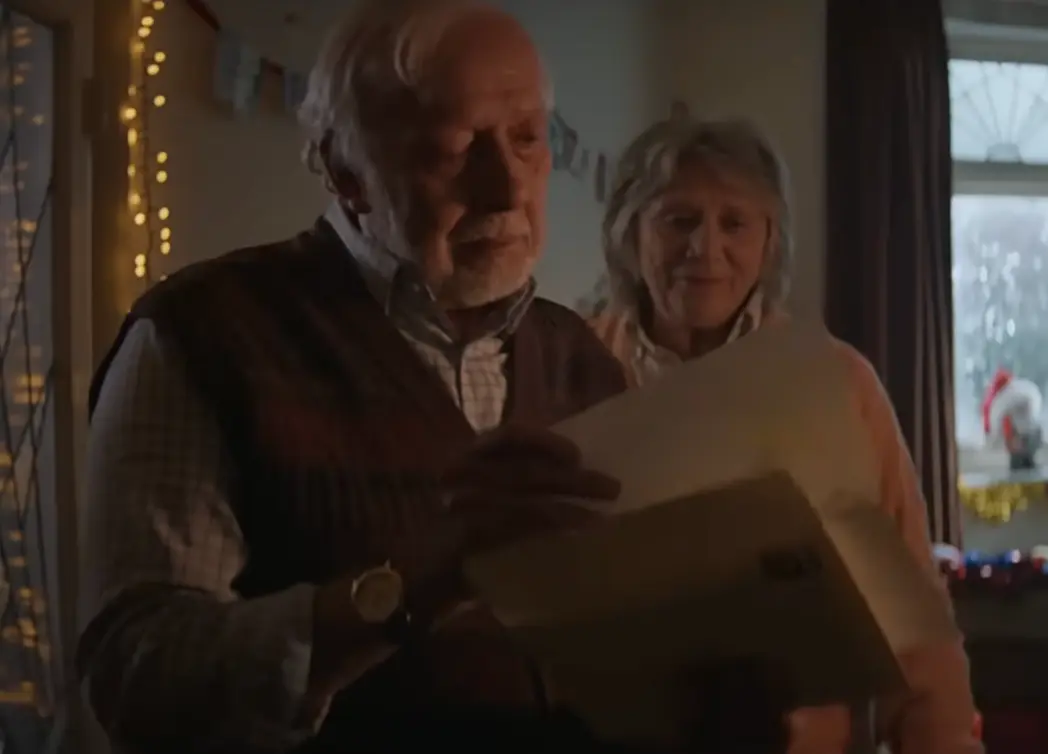
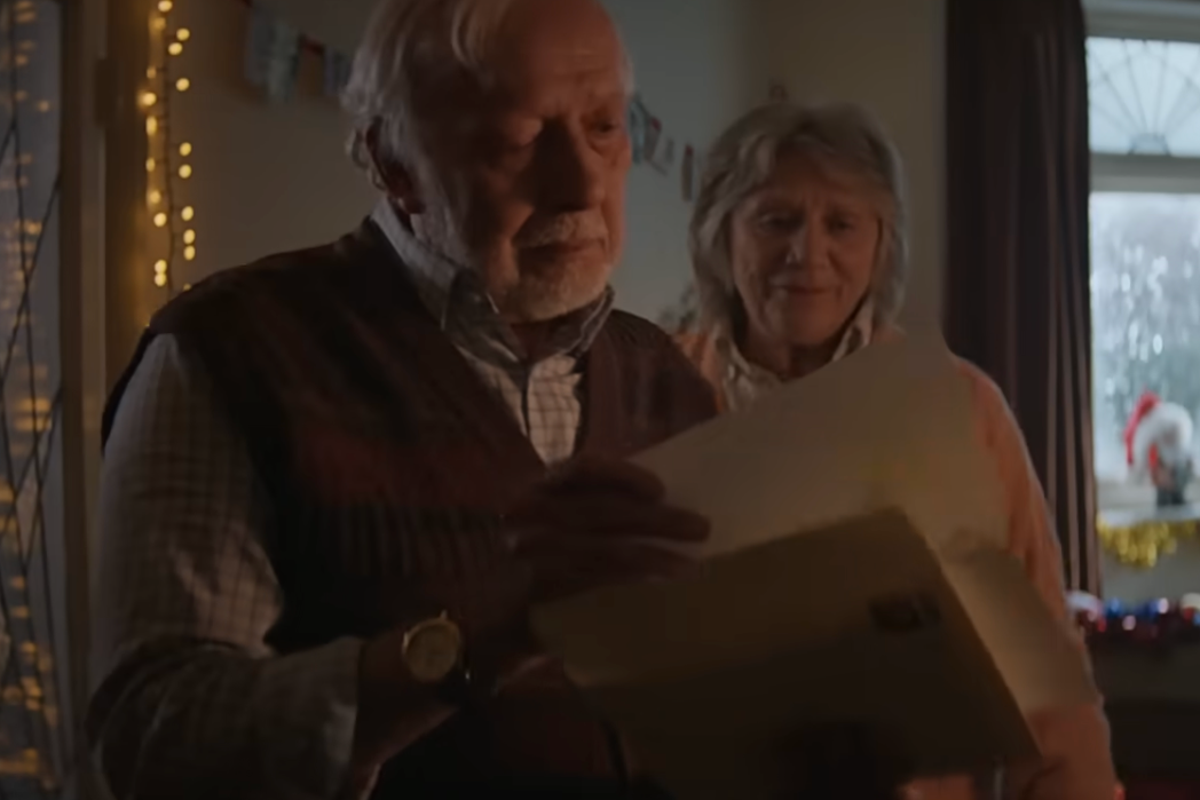
When Lucy Vaughan tuned into her television in November 2025, expecting standard holiday programming, she was met with a startling auditory ghost. Hearing a festive commercial celebrating human connection and the enduring value of handwritten letters, both she and her husband, Darren, immediately recognized the voice. It belonged, unmistakably, to her late father. Knowing that Vaughan had never collaborated with the Royal Mail during his lifetime, Lucy suspected foul play. Her instincts proved correct, triggering a cascading investigation that has exposed vulnerabilities within commercial supply chains, reignited ferocious debates regarding intellectual property in the age of synthetic media, and prompted swift calls for legislative reform to protect the livelihoods and estates of voice actors.
Detailed Chronology: How the Commercial Came to Life
To understand how the voice of a beloved, deceased British broadcaster ended up embedded in a modern corporate Christmas campaign, one must trace the intricate subcontracting web behind the production.
The advertising campaign was commissioned by the Royal Mail and overseen by advertising agency Darwin & the Machines. To handle the live-action elements of the commercial, the agency partnered with independent production company Untold Studios, which filmed real actors for the cozy, sentiment-driven holiday spot. However, the crucial task of producing the voiceover was subcontracted to Fameplay, a Czechia-based AI production company backed by Czech Media Invest. Crucially, Czech Media Invest is chaired by Daniel Kretinsky—whose EP group also holds a controlling stake in the Royal Mail itself.
According to insider accounts shared with industry publication Deadline, the production process was fraught with creative friction. A well-placed source revealed that Juraj Felix of Fameplay—who was physically present during the filming sessions—exhibited an intense, near-obsessive fixation on incorporating AI-generated voiceovers into the project. This enthusiasm was met with stiff resistance from members of the traditional production team, who explicitly warned Felix against utilizing synthetic voice technology for such a venerable, trusted British brand.
Despite these warnings, the AI route was pursued. The voiceover was reportedly generated using technology licensed from ElevenLabs, a global leader and giant in the AI audio sector. When the finished advertisement aired in November 2025, it successfully blended traditional live-action cinematography with a synthetic narration designed to evoke nostalgia, warmth, and authority.
However, the creators failed to anticipate the sharp ears of the Vaughan family. Upon recognizing her father’s cadence, pitch, and vocal grain, Lucy Vaughan went public with her grievances. The revelation that an AI model had seemingly learned from—and subsequently mimicked—decades of archival public domain recordings of a deceased artist sent shockwaves through the UK creative industries. In response to the public outcry and private pressure, ElevenLabs reportedly added Paul Vaughan to its "No Go Voices" registry, effectively barring its platform from directly cloning his vocal profile moving forward. Nevertheless, the systemic questions raised by the incident remain entirely unresolved.
Supporting Context & Metrics: The Anatomy of a Voice and the AI Goldrush
Paul Vaughan’s distinctive vocal profile made him an ideal, albeit unwitting, candidate for synthetic training models. Generative AI audio platforms rely heavily on vast datasets of high-quality, clean audio samples to train neural networks. Vaughan’s extensive career provided an expansive footprint in the public domain: decades of BBC broadcasts, educational documentaries, public information films, and commercial audiobook recordings.
The economics of modern advertising heavily favor synthetic media. Traditional voiceover artists command substantial union rates, residual payments, and usage fees based on regional reach and broadcast duration. By contrast, AI generation offers brands a frictionless, hyper-economical alternative: zero residuals, instant iterations, and the ability to manufacture bespoke tonal qualities—such as "warm, authoritative, and unmistakably English"—with the click of a button.
Yet, this efficiency comes at a profound ethical cost. Industry analysts point out that the commercial devaluation of human voice talent threatens an entire ecosystem of professional narrators, actors, and voice-over artists. The Vaughan controversy highlights a glaring loophole in corporate compliance: advertising agencies and external production houses frequently rely on automated checks or generalized prompts ("created using prompts and not designed to replicate any specific individual"), which routinely fail to catch subtle infringements on the unique acoustic signatures of real people, living or dead.
Furthermore, the timing of the Royal Mail incident could not be more poignant. Just one month prior to the scandal breaking, a coalition of prominent British screen actors—including Nicola Coughlan, Luke Evans, and Hugh Bonneville—launched a high-profile campaign titled Save Our Voices Now. The coalition was formed specifically to lobby the UK government for robust, enforceable legal protections safeguarding actors, voice artists, and their estates against the unauthorized harvesting and replication of their performances by generative AI models. The Royal Mail controversy has instantly transformed this campaign from a proactive advocacy effort into an urgent, defensive necessity.
Official Statements and Industry Fallout
As the story gained traction across national and international media outlets, stakeholders issued carefully managed responses, deflecting responsibility while attempting to contain the public relations disaster.
A spokesperson for the Royal Mail defended the company’s position by emphasizing its reliance on external suppliers:
"The Christmas advertisement was produced for Royal Mail by external partners and featured real actors. As is increasingly common, the voiceover was AI-generated and we were advised that it was created using prompts and was not designed to replicate any specific individual. The production partners also carried out checks and advised that these did not identify any resemblance concerns."
This sentiment of corporate insulation was mirrored by the technology providers involved. Both Fameplay and ElevenLabs formally denied that the Royal Mail narration constituted a direct, deliberate clone of Paul Vaughan. However, when pressed directly by journalists regarding whether ElevenLabs’ underlying AI models had ingested archival training data featuring Vaughan’s voice work, ElevenLabs declined to comment.
The grieving family, meanwhile, has expressed profound indignation. Speaking to Deadline, Lucy Vaughan did not mince words:
"It’s outrageous. They have not bothered to do their background searches to figure out who this voice is."
She added that her father would have utterly loathed the foundational premise of generative AI—specifically, the practice of synthetic models systematically displacing human laborers and robbing working artists of their craft and livelihoods.
The BBC, HarperCollins, and other entities historically associated with Vaughan’s body of work have faced renewed scrutiny regarding how archival recordings are protected, licensed, or potentially scraped by third-party technology firms operating in legal grey areas.
Future Outlook: Legislative Reform and the Protection of Digital Estates
The Royal Mail AI voice scandal serves as a watershed moment for the United Kingdom’s creative economy, exposing a dangerous regulatory vacuum that leaves estates, actors, and broadcasters legally exposed.
At present, UK copyright law offers limited recourse against voice simulation. While traditional audio recordings are protected under copyright, the style, timbre, and cadence of a person’s speaking voice do not enjoy explicit, standalone intellectual property status akin to a trademark or portrait right. This legal ambiguity allows AI firms and advertising agencies to skate close to the wind, utilizing vague prompt-based defenses ("not designed to replicate any specific individual") to sidestep liability.
Industry leaders, legal experts, and union representatives are now rallying behind the Save Our Voices Now initiative, demanding several key legislative interventions:
- Explicit Post-Mortem Publicity Rights: Establishing clear legal frameworks that protect the likeness, voice, and persona of deceased individuals from commercial exploitation without explicit estate consent.
- Mandatory Transparency in AI Procurement: Forcing advertising agencies and corporate clients to fully disclose the origin of training datasets used in commercial generative audio production.
- Stricter Vetting Protocols: Holding primary brands—such as the Royal Mail—financially and legally accountable for the sourcing practices of their subcontracted creative and technical partners, eliminating the "external partner" defense.
For the family of Paul Vaughan, no policy change can undo the unsettling experience of hearing a synthetic ghost of their late patriarch pitch holiday postage stamps. However, the uproar surrounding his legacy may ultimately serve as the catalyst that protects the next generation of British voices from being quietly digitized, commercialized, and erased.