Executive Overview
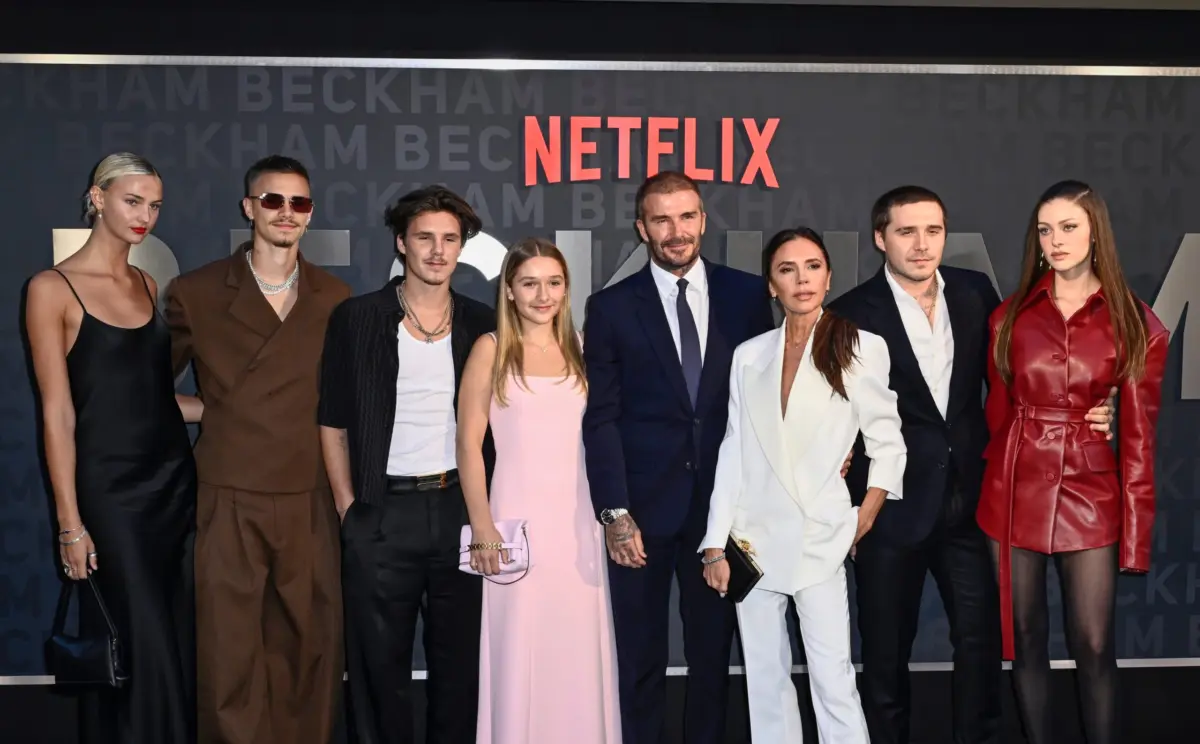
The intersection of celebrity lineage, personal ambition, and the relentless machinery of modern music management has once again thrust the Beckham family into the cultural spotlight. Cruz Beckham, the 21-year-old musician and youngest son of global icons David and Victoria Beckham, has spent the past several years attempting to carve out an authentic identity within the competitive indie-rock scene. However, doing so under the immense shadow of "Brand Beckham" presents an almost insurmountable paradox: while the family name provides immediate visibility and access, it simultaneously invites intense cynicism, critical scrutiny, and deliberate efforts by industry insiders to dismantle that very association.
According to explosive new revelations in journalist Alison Boshoff’s book, Brand Beckham: The Fame. the Feuds. the Fallout, Cruz’s initial foray into the music industry was nearly defined by a deliberate distancing strategy. When the budding artist and his indie band, The Breakers, initially signed with high-profile management firm TaP—the powerhouse agency responsible for masterminding the international careers of pop icons like Dua Lipa and Ellie Goulding—the strategic playbook was clear. TaP executives reportedly intended to strip away the crutches of his familial pedigree, advising Cruz to drop his surname and aggressively distance himself from his pop-royalty parents.
Yet, this calculated roadmap was allegedly upended by none other than Victoria Beckham herself. Driven by maternal pride—or perhaps an inability to resist championing her son’s nascent talent—Victoria reportedly scuppered the management’s strategy by posting a video of Cruz performing at a pub owned by family friend Guy Ritchie. This single digital footprint shattered the carefully constructed illusion of an independent, surname-agnostic newcomer.
The resulting friction culminated in a split between Cruz and TaP, setting off a chain reaction that highlights the treacherous tightrope second-generation stars must walk. Against the backdrop of broader familial turmoil—including an ongoing, highly publicized estrangement from eldest son Brooklyn—Cruz has continued to push forward, relaunching his band, releasing new music, and preparing for a major festival slot at Reading and Leeds. This in-depth report explores the mechanics of "Brand Beckham," the clash between high-powered management and maternal instinct, and the difficult reality of establishing artistic legitimacy under a magnifying glass.
Detailed Chronology: From Secretive Startups to Public Showdowns
The trajectory of Cruz Beckham’s musical ambitions has been anything but conventional. Having watched his mother achieve global superstardom as Posh Spice and his father cement a legendary status across international football pitches, Cruz naturally gravitated toward the creative arts. However, the path from bedroom guitarist to credible indie-rock frontman required navigating the delicate sensitivities of an industry deeply suspicious of nepotism.
The TaP Management Era and the "Brand Beckham" Blueprint
When Cruz, then in his late teens, formed his indie outfit The Breakers, securing representation was a critical first step. Signing with TaP management signaled serious intent. TaP is not a boutique agency dealing in local novelties; it is an international juggernaut known for cultivating chart-topping, critically respected artists.
However, accepting representation from such a heavy-hitting firm came with strict conditions. Industry veterans at TaP understood that contemporary audiences—particularly within the indie and alternative music scenes—are hyper-vigilant regarding nepotism babies. To grant Cruz genuine artistic license and secure critical immunity, the management team formulated a clean break: erase the legacy. They advised Cruz to drop "Beckham" from his professional moniker, effectively operating incognito to let the music speak for itself.
The Turning Point: Victoria’s Interference
The strategy, while sound in theory, underestimated the complex dynamics of the Beckham household. According to Alison Boshoff’s Brand Beckham: The Fame. the Feuds. the Fallout, Victoria Beckham struggled with the mandate to render her son anonymous.
The tipping point occurred when Victoria shared footage on social media of Cruz performing live at a pub owned by film director and longtime family friend Guy Ritchie. To the outside observer, it was a harmless, supportive mother sharing her son’s milestone. To TaP management, it was a catastrophic breach of strategy.
A source cited in Boshoff’s book lays bare the frustration of the management team:
"The whole point was to distance him from being Posh Spice’s baby boy – she scuppered it."
The posting of the video effectively neutralized any narrative of organic, underground discovery. It signaled that no matter how hard management tried to isolate Cruz from his lineage, the gravitational pull of "Brand Beckham" remained too strong—fueled, ironically, by the matriarch herself.
The Amicable Split and the 2025 Relaunch
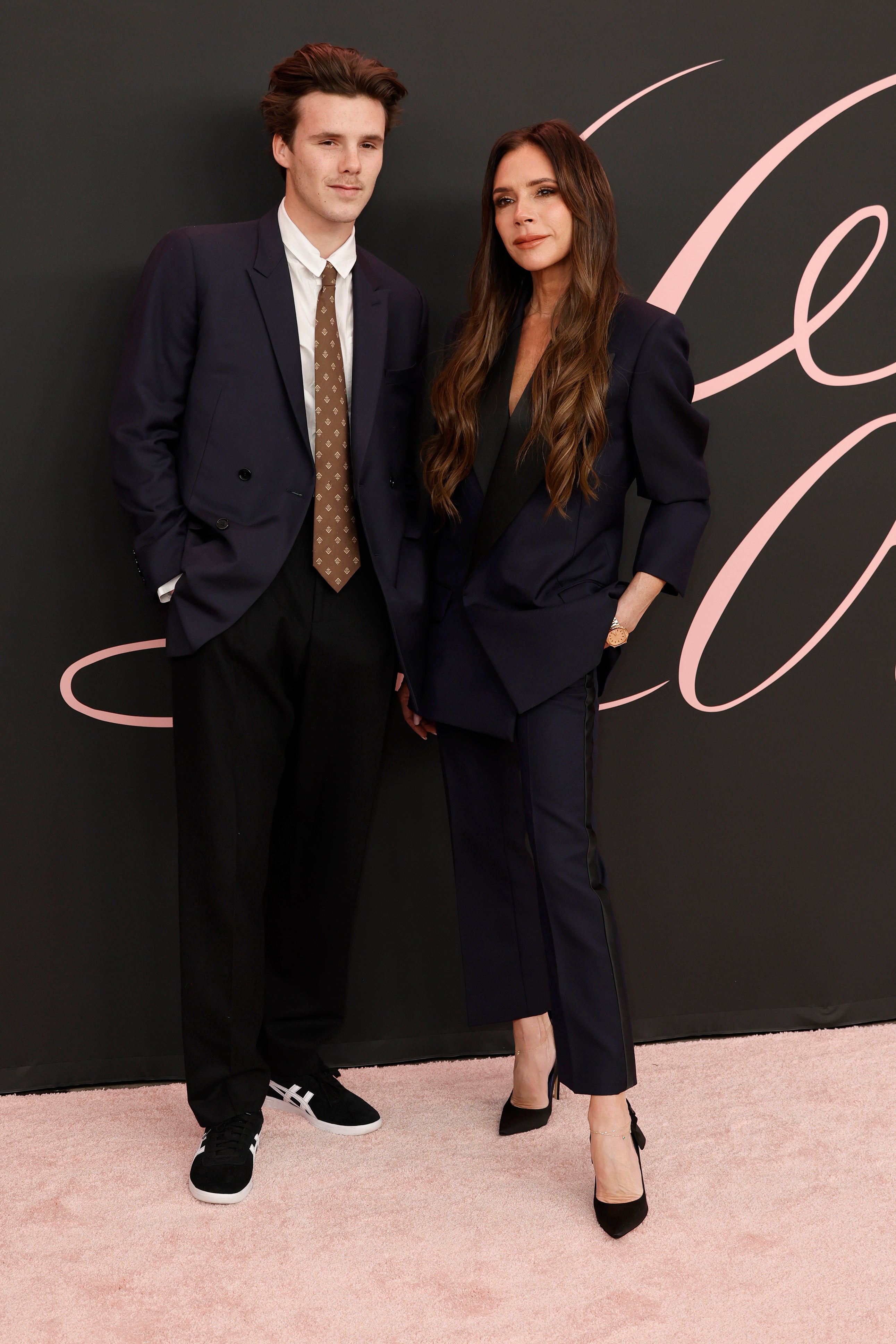
By 2024, the writing was on the wall. Cruz and TaP mutually agreed to part ways. While public statements framed the separation diplomatically—with TaP noting that they focus on making artists as successful as possible, and adding that "it wasn’t possible in the circumstances"—the underlying reality was clear: the commercial vision of the agency and the familial reality of the Beckhams were fundamentally incompatible.
Refusing to be deterred, Cruz pivoted quickly. He aligned himself with a new management team that was evidently more accommodating of his famous surname. In 2025, he officially relaunched The Breakers, dropping the single "Optics" to establish a fresh sonic footprint. This release was followed by a series of intimate London showcase gigs designed to prove his mettle in front of live audiences, culminating in high-profile bookings, including a coveted slot at the Reading and Leeds festival.
Supporting Context & Metrics: The Nepotism Debate and Critical Reception
Cruz Beckham’s entry into the music industry does not happen in a vacuum. It sits squarely within a broader cultural conversation regarding "nepo babies"—the children of celebrities who inherit access, capital, and platforms to launch their own careers.
The Critic’s Dilemma
Reviewing Cruz’s live performances reveals the profound catch-22 that accompanies his career. When The Independent’s music editor, Roisin O’Connor, reviewed one of Cruz’s London dates at the Courtyard Theatre, she captured the precarious nature of his position:
"Is he any good? Certainly, he’s an adept guitar player and clearly has a genuine enthusiasm for music. He’s in a tricky predicament: cynics will argue the only reason he gets any press is because of his name, but then, wouldn’t any other band get the breathing space to hone their craft, with at least a couple of years playing live shows before being thrust into the spotlight? He can’t win."
This analysis highlights the dual-edged sword of his upbringing. On one hand, Cruz enjoys a safety net that allows him to pursue music full-time without the crushing financial precarity faced by independent artists of his age. On the other hand, every chord he strikes is evaluated not just on its sonic merit, but as a symptom of privilege. Skeptics argue that without his parents, his band would likely be playing to empty rooms in suburban pubs rather than commanding national press coverage. Supporters, conversely, argue that his instrumental competence and earnest dedication deserve fair evaluation, independent of his surname.
Brand Valuation and Media Metrics
To understand why "Brand Beckham" is so fiercely guarded—and why management firms fought so hard to shield Cruz from it—one must look at the immense financial and cultural valuation of the family name. Built over three decades of professional sports, pop stardom, high fashion, and strategic global PR, the Beckham enterprise commands an estimated valuation in the hundreds of millions of dollars.
Every member of the family functions as a node in an interconnected media network. However, while brands like David’s global partnerships and Victoria’s luxury fashion house rely on sleek, controlled luxury, entering the gritty, authentic world of indie rock requires an entirely different aesthetic. For TaP management, keeping Cruz separate wasn’t just about avoiding the "nepo baby" label; it was about protecting the integrity of a nascent artistic product from the suffocating gloss of corporate celebrity culture.
Official Statements and Collateral Family Friction
The complexities of Cruz’s career decisions do not exist in isolation; they unfold against a turbulent backdrop of widespread familial estrangement and high-profile public drama that has tested the resilience of the Beckham brand over the past year.
The Brooklyn Beckham Fallout
While David and Victoria publicly supported Cruz by attending his intimate London gigs in early 2026, their presence served as a poignant reminder of the fractured state of their family unit. Earlier in the year, the family’s carefully curated image of unbreakable unity was shattered by their eldest son, Brooklyn Beckham.
Brooklyn, 27, who has publicly pivoted through various career iterations from photography to gourmet cooking, shocked the entertainment world in January by releasing an explosive statement on social media confirming that he was entirely estranged from his parents.
In a series of candid and uncompromising posts, Brooklyn wrote:

"I do not want to reconcile with my family. I’m not being controlled, I’m standing up for myself for the first time in my life."
Among the numerous allegations contained within his statement, Brooklyn singled out deeply personal grievances, notably claiming that his first dance with his wife, Nicola Peltz, was "hijacked" by his mother Victoria, who he alleged "danced very inappropriately on me in front of everyone."
David and Victoria’s Public Stance
For a brand built entirely on immaculate public relations, the public airing of familial grievances presented an unprecedented crisis. David and Victoria have largely opted for a strategy of dignified silence, refusing to engage in a tit-for-tat social media war with their eldest son.
However, in a rare and measured interview addressing the public scrutiny, Victoria reflected on the pressures of maintaining a family under the relentless gaze of the media for over three decades. Speaking in April, she remarked:
"We’ve always tried to be the best parents that we can be. And you know, we’ve been in the public eye for more than 30 years right now, and all we’ve ever tried to do is protect our children and love our children. And you know, that’s all I really want to say about it."
This philosophy of protective motherhood—while articulated in the context of the Brooklyn estrangement—sheds profound light on her reported interference with Cruz’s management. For Victoria, the instinct to support, display, and validate her children publicly appears to override strategic corporate advice every single time. Whether shielding an adult son from perceived unfair treatment or celebrating a musical milestone on social media, her maternal impulses consistently supersede the detached calculations of PR consultants.
Future Outlook: Can Cruz Forge a Sustainable Path?
As Cruz Beckham prepares to take the stage at the Reading and Leeds festival later this month, his career stands at a critical crossroads. The intervention by his mother and the subsequent split from TaP management mark the end of phase one of his musical journey. He is no longer trying to hide behind an assumed identity or an anonymous moniker; he is leaning fully into his reality as a Beckham who happens to play guitar.
The upcoming festival performances will serve as a definitive stress-test for his artistic viability. In the anarchic, youth-dominated environment of a major rock festival, pedigree matters very little to festival-goers who demand energy, authenticity, and sonic punch. If The Breakers can deliver a compelling live set, the persistent murmurs of nepotism may begin to fade, replaced by a grudging—or enthusiastic—respect for his musicianship.
At the same time, the broader "Brand Beckham" enterprise continues to evolve. With Brooklyn remaining estranged and David and Victoria navigating their golden years in the public eye, the mantle of the next generation falls increasingly upon Cruz and his siblings.
Ultimately, Cruz Beckham’s musical odyssey illustrates the fundamental friction between manufactured pop strategy and authentic family loyalty. While management tried to engineer an anonymous indie artist, a mother’s pride ensured that the world knew exactly whose son was plugging in his guitar. Whether that public visibility acts as a springboard to lasting musical credibility or a permanent anchor of cynicism will depend entirely on the chords he strikes next.